

Spelt Bread
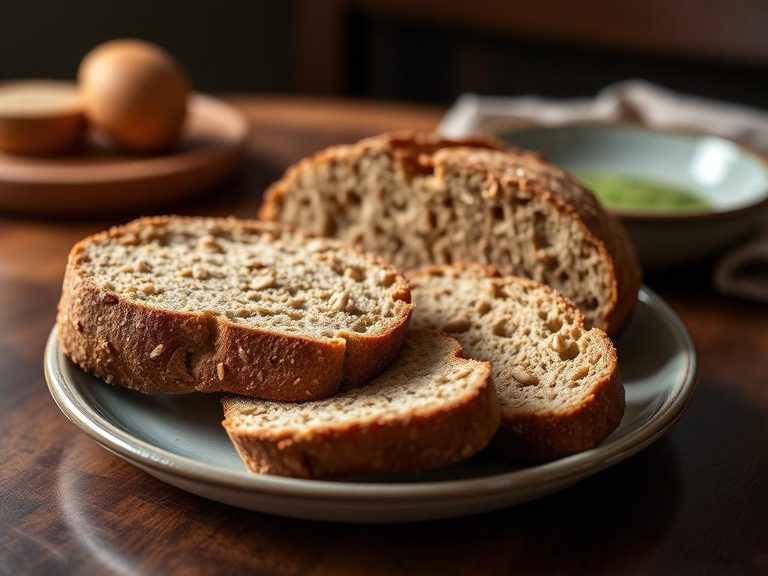
Spelt bread is a hearty, flavorful loaf made primarily from spelt flour, an ancient grain related to wheat. It typically includes water, yeast, salt, and sometimes honey or oil, and has been a staple in European diets for centuries, particularly in Germany, Switzerland, and parts of Italy.
🍳 View the full Spelt Bread recipe →
🍽️ Nutrition at a glance
Spelt bread is a good source of complex carbohydrates and dietary fiber, with a moderate amount of plant-based protein. A standard slice (about 30-40 grams) provides roughly 80-100 calories, along with key nutrients like iron, magnesium, and B vitamins.
Nutrition breakdown
| Calories | 100 kcal |
| Protein | 4 g |
| Carbs | 18 g |
| Fat | 1 g |
| Fiber | 3 g |
| Sugar | 1 g |
| Sodium | 200 mg |
| Manganese | 1.0 mg |
| Phosphorus | 100 mg |
| Magnesium | 30 mg |
| Iron | 1.5 mg |
| Thiamin (B1) | 0.1 mg |
| Niacin (B3) | 2.0 mg |
| Zinc | 1.0 mg |
| Selenium | 15 µg |
Per 1 slice (40 g) · estimated, varies by recipe
💡 What's interesting
Culturally, spelt was a vital grain in ancient Roman and medieval European agriculture, valued for its resilience in poor soils. Nutritionally, its gluten structure is more water-soluble than modern wheat, which some people find easier to digest, though it is not suitable for those with celiac disease.
🍽️ Related dishes



AI estimate may be inaccurate · Terms