Cheese, cottage, lowfat, 2% milkfat
Whole food · Dairy and Egg Products

Photo: Wikipedia
Low-fat cottage cheese is a fresh, curdled dairy product with a mild, slightly tangy flavor and a distinctive lumpy texture of soft curds suspended in creamy whey. It's a nutritional powerhouse, packing a remarkable 11 grams of high-quality protein into every 100-gram serving for just 84 calories, making it one of the most protein-dense foods available.
💚 Why it's loved
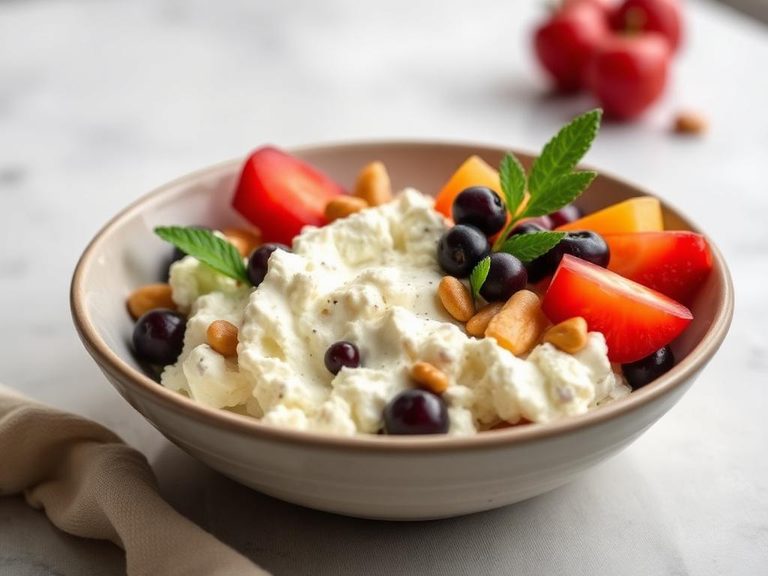
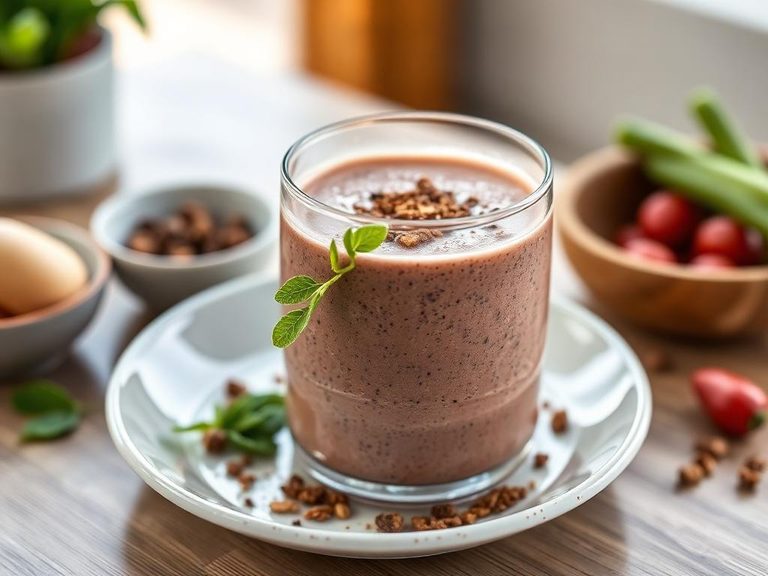
People love it for its incredible versatility—it can be a savory base for toppings, a creamy addition to smoothies, or a sweet snack with fruit. Its mild flavor makes it a blank canvas, and its high-protein, low-fat profile has cemented its status as a staple in fitness and health-conscious diets.
⚠️ Watch-outs & how to enjoy it better
Its unique, lumpy texture is polarizing and can be off-putting to some. Those watching their sodium intake should check labels, as some brands can be surprisingly high. For individuals with a dairy allergy or severe lactose intolerance, it's unsuitable; however, its low lactose content often makes it tolerable for those with mild sensitivity.
Key benefits
- Excellent source of complete protein for muscle maintenance and satiety
- Very low in fat and calories, supporting weight management goals
- Rich in calcium for bone health
- Contains phosphorus and selenium, important micronutrients
- Provides casein protein, which digests slowly for sustained energy
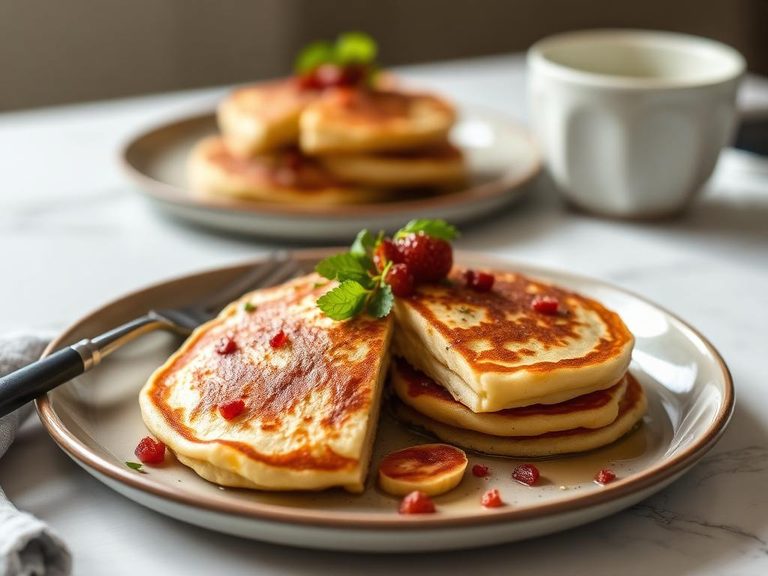
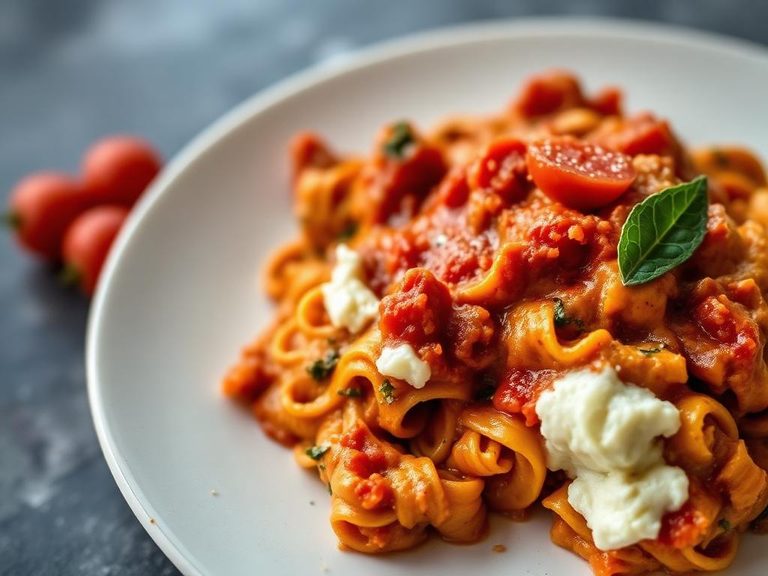
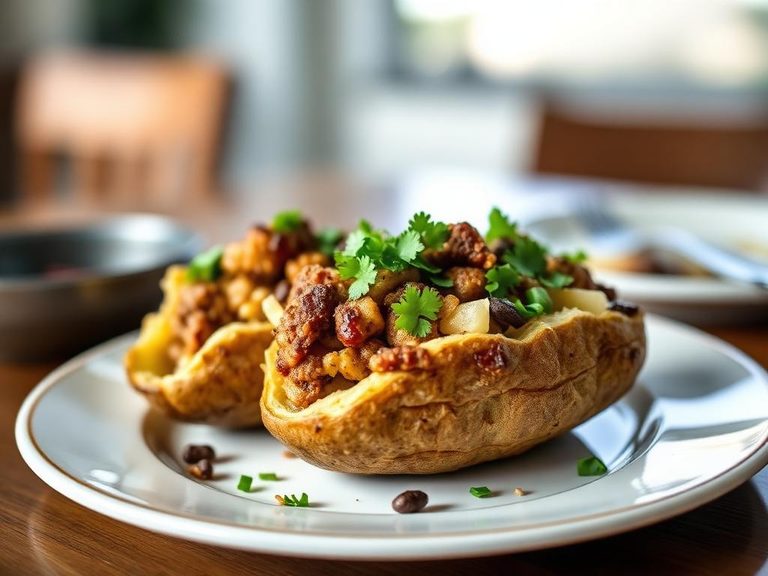
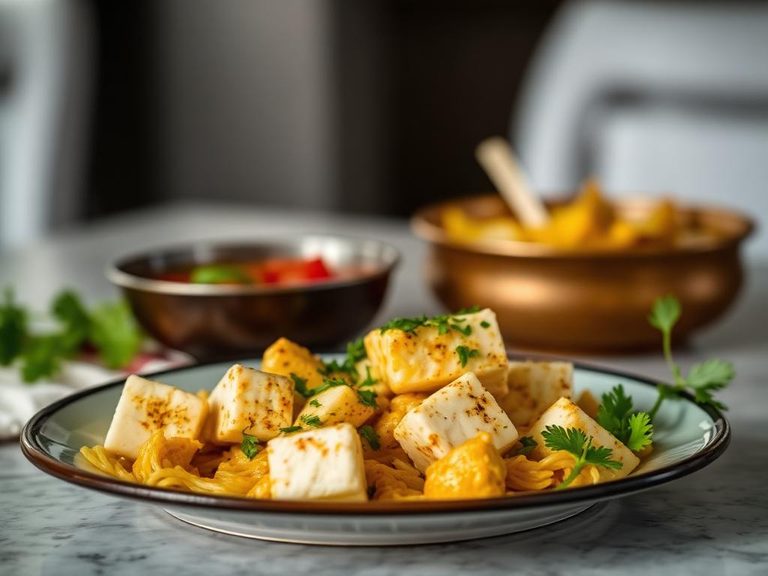
🍽️ Popular dishes
🌍 Where it's eaten
💡 Did you know?
The 'cottage' in its name refers to its historical preparation in farmhouses, where it was made from the leftover whey of cheese-making, making it a frugal, home-style food long before it became a diet staple.
Full nutrition (scales with serving)
| Water | 81.1 g |
| Energy (Atwater General Factors) | 82.0 kcal |
| Energy (Atwater Specific Factors) | 84.0 kcal |
| Energy | 84.0 kcal |
| Energy | 352 kj |
| Nitrogen | 1.7 g |
| Protein | 11.0 g |
| Total lipid (fat) | 2.3 g |
| Total fat (NLEA) | 1.9 g |
| Ash | 1.3 g |
| Carbohydrate, by difference | 4.3 g |
| Sugars, Total | 4.1 g |
| Sucrose | 0.00 g |
| Glucose | 0.00 g |
| Fructose | 0.00 g |
| Lactose | 4.0 g |
| Maltose | 0.00 g |
| Galactose | 0.12 g |
| Calcium, Ca | 103 mg |
| Iron, Fe | 0.13 mg |
| Magnesium, Mg | 8.9 mg |
| Phosphorus, P | 148 mg |
| Potassium, K | 120 mg |
| Sodium, Na | 321 mg |
| Zinc, Zn | 0.61 mg |
| Copper, Cu | 0.03 mg |
| Manganese, Mn | 0.01 mg |
| Selenium, Se | 14.6 ug |
| Thiamin | 0.02 mg |
| Riboflavin | 0.23 mg |
| Niacin | 0.09 mg |
| Pantothenic acid | 0.51 mg |
| Vitamin B-6 | 0.06 mg |
| Folate, total | 10.0 ug |
| Vitamin B-12 | 0.42 ug |
| Vitamin A, RAE | 69.0 ug |
| Retinol | 69.0 ug |
| Vitamin E (alpha-tocopherol) | 0.08 mg |
| Tocopherol, beta | 0.00 mg |
| Tocopherol, gamma | 0.00 mg |
| Tocopherol, delta | 0.00 mg |
| Tocotrienol, alpha | 0.00 mg |
| Tocotrienol, beta | 0.00 mg |
| Tocotrienol, gamma | 0.00 mg |
| Tocotrienol, delta | 0.00 mg |
| Fatty acids, total saturated | 1.3 g |
| SFA 4:0 | 0.04 g |
| SFA 6:0 | 0.04 g |
| SFA 8:0 | 0.03 g |
| SFA 10:0 | 0.06 g |
| SFA 11:0 | 0.00 g |
| SFA 12:0 | 0.06 g |
| SFA 14:0 | 0.20 g |
| SFA 15:0 | 0.02 g |
| SFA 16:0 | 0.57 g |
| SFA 17:0 | 0.01 g |
| SFA 18:0 | 0.23 g |
| SFA 20:0 | 0.00 g |
| SFA 22:0 | 0.00 g |
| SFA 24:0 | 0.00 g |
| Fatty acids, total monounsaturated | 0.47 g |
| MUFA 14:1 c | 0.02 g |
| MUFA 15:1 | 0.00 g |
| MUFA 16:1 c | 0.02 g |
| MUFA 17:1 | 0.00 g |
| MUFA 17:1 c | 0.00 g |
| MUFA 18:1 c | 0.42 g |
| MUFA 20:1 | 0.00 g |
| MUFA 20:1 c | 0.00 g |
| MUFA 22:1 c | 0.00 g |
| MUFA 24:1 c | 0.00 g |
| Fatty acids, total polyunsaturated | 0.07 g |
| PUFA 18:2 c | 0.06 g |
| PUFA 18:2 n-6 c,c | 0.05 g |
| PUFA 18:2 CLAs | 0.01 g |
| PUFA 18:3 c | 0.01 g |
| PUFA 18:3 n-3 c,c,c (ALA) | 0.01 g |
| PUFA 18:3 n-6 c,c,c | 0.00 g |
| PUFA 18:3i | 0.00 g |
| PUFA 18:4 | 0.00 g |
| PUFA 20:2 c | 0.00 g |
| PUFA 20:2 n-6 c,c | 0.00 g |
| PUFA 20:3 c | 0.00 g |
| PUFA 20:3 n-3 | 0.00 g |
| PUFA 20:3 n-6 | 0.00 g |
| PUFA 20:3 n-9 | 0.00 g |
| PUFA 20:4 | 0.00 g |
| PUFA 20:4c | 0.00 g |
| PUFA 20:5c | 0.00 g |
| PUFA 20:5 n-3 (EPA) | 0.00 g |
| PUFA 22:2 | 0.00 g |
| PUFA 22:5 c | 0.00 g |
| PUFA 22:4 | 0.00 g |
| PUFA 22:5 n-3 (DPA) | 0.00 g |
| PUFA 22:6 c | 0.00 g |
| PUFA 22:6 n-3 (DHA) | 0.00 g |
| Fatty acids, total trans | 0.07 g |
| Fatty acids, total trans-monoenoic | 0.06 g |
| TFA 16:1 t | 0.01 g |
| TFA 18:1 t | 0.05 g |
| TFA 22:1 t | 0.00 g |
| Fatty acids, total trans-dienoic | 0.01 g |
| TFA 18:2 t not further defined | 0.01 g |
| Cholesterol | 12.0 mg |
FAQ
What's the difference between low-fat and non-fat cottage cheese?
Low-fat (like 2% milkfat) has a slightly richer, creamier mouthfeel. Non-fat versions are leaner but can sometimes have a drier or more 'chalky' texture. Nutritionally, the protein content is very similar, but the fat and calorie counts are lower in non-fat varieties.
Why does my cottage cheese sometimes taste watery?
The liquid is whey, a natural byproduct. It's not a sign of spoilage. You can pour it off for a thicker consistency or stir it back in for extra creaminess and nutrients.
Is it good for building muscle?
Yes, it's excellent. It's high in casein protein, which digests slowly and provides a steady stream of amino acids to muscles, making it an ideal food for between meals or before bed to support recovery.