

Candies, milk chocolate coated peanuts
Whole food · Sweets
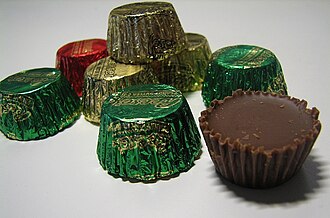
Photo: Wikipedia
A classic candy where roasted, crunchy peanuts are enrobed in a smooth, sweet milk chocolate shell. The texture is a satisfying snap of chocolate followed by the nutty, salty bite of the peanut, creating a beloved sweet-savory balance. Nutritionally, it's a dense energy source, providing significant fats and sugars alongside a notable protein boost from the peanuts.
Calorie split: 9% protein · 36% carbs · 55% fat
↓ Full nutrition💚 Why it's loved
People adore the perfect marriage of creamy, sweet chocolate and the salty, crunchy, savory depth of roasted peanuts, a texture and flavor contrast that is universally comforting. It's a nostalgic treat often associated with movie theaters, holidays, and simple indulgences, making it a versatile and emotionally satisfying snack.
⚠️ Watch-outs & how to enjoy it better
The high sugar and fat content can lead to blood-sugar spikes and is calorie-dense, making it a concern for those managing weight or diabetes. Peanuts are a top allergen, and the product may contain cross-contamination. To counteract, practice strict portion control (e.g., a small handful), and pair it with a source of fiber or additional protein (like a piece of fruit) to slow sugar absorption.
Key benefits
- Provides quick energy from carbohydrates and fats
- Contains plant-based protein from peanuts
- Offers dietary fiber from the nut component
- Source of minerals like magnesium and phosphorus from peanuts
- Convenient, shelf-stable snack for on-the-go energy
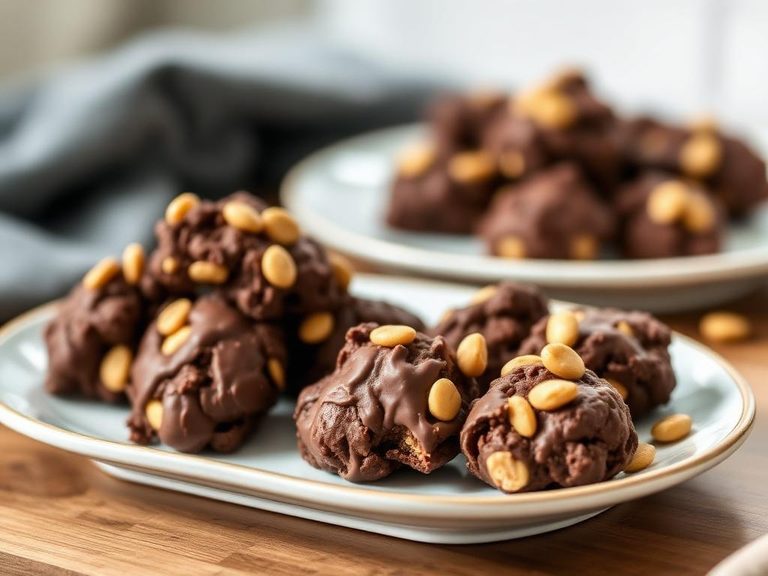
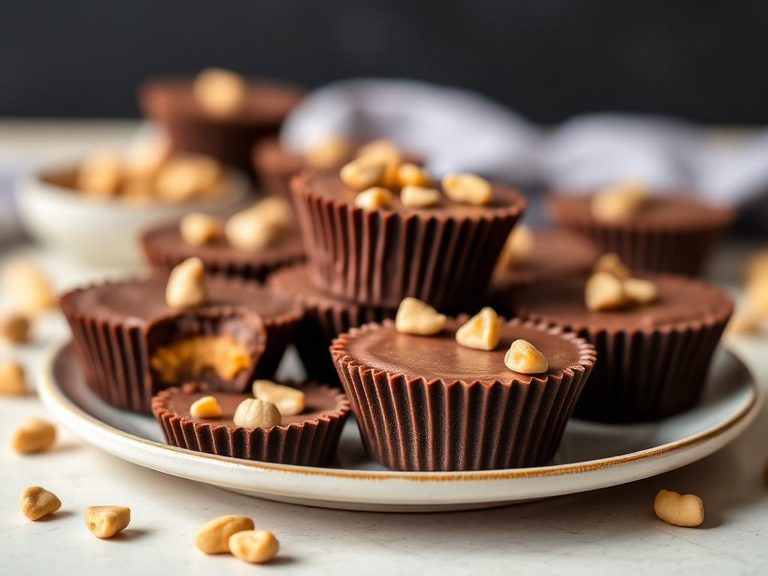
🍽️ Popular dishes
🌍 Where it's eaten
💡 Did you know?
The process of enrobing peanuts in chocolate was industrialized in the early 20th century, but the concept of chocolate-covered nuts dates back to the 19th century, with early forms often being hand-dipped.
Full nutrition (USDA data · scales with serving)
| Water | 1.9 g |
| Energy | 519 kcal |
| Energy | 2172 kj |
| Protein | 13.1 g |
| Total lipid (fat) | 33.5 g |
| Ash | 1.8 g |
| Carbohydrate, by difference | 49.7 g |
| Fiber, total dietary | 4.7 g |
| Total Sugars | 37.6 g |
| Calcium, Ca | 104 mg |
| Iron, Fe | 1.3 mg |
| Magnesium, Mg | 96.0 mg |
| Phosphorus, P | 212 mg |
| Potassium, K | 502 mg |
| Sodium, Na | 41.0 mg |
| Zinc, Zn | 2.6 mg |
| Copper, Cu | 0.54 mg |
| Manganese, Mn | 0.94 mg |
| Selenium, Se | 5.4 ug |
| Vitamin C, total ascorbic acid | 0.00 mg |
| Thiamin | 0.12 mg |
| Riboflavin | 0.17 mg |
| Niacin | 4.2 mg |
| Pantothenic acid | 0.74 mg |
| Vitamin B-6 | 0.10 mg |
| Folate, total | 51.0 ug |
| Folic acid | 0.00 ug |
| Folate, food | 51.0 ug |
| Folate, DFE | 51.0 ug |
| Choline, total | 47.8 mg |
| Vitamin B-12 | 0.53 ug |
| Vitamin B-12, added | 0.00 ug |
| Vitamin A, RAE | 41.0 ug |
| Retinol | 41.0 ug |
| Carotene, beta | 0.00 ug |
| Carotene, alpha | 0.00 ug |
| Cryptoxanthin, beta | 0.00 ug |
| Vitamin A, IU | 131 iu |
| Lycopene | 0.00 ug |
| Lutein + zeaxanthin | 4.0 ug |
| Vitamin E (alpha-tocopherol) | 2.4 mg |
| Vitamin E, added | 0.00 mg |
| Vitamin D (D2 + D3), International Units | 0.00 iu |
| Vitamin D (D2 + D3) | 0.00 ug |
| Vitamin K (phylloquinone) | 4.0 ug |
| Alcohol, ethyl | 0.00 g |
| Caffeine | 14.0 mg |
| Theobromine | 145 mg |
Fat & fatty acid profile (per 100g)
| Fatty acids, total saturated | 14.6 g |
| SFA 4:0 | 0.45 g |
| SFA 6:0 | 0.03 g |
| SFA 8:0 | 0.04 g |
| SFA 10:0 | 0.09 g |
| SFA 12:0 | 0.09 g |
| SFA 13:0 | 0.00 g |
| SFA 14:0 | 0.60 g |
| SFA 15:0 | 0.06 g |
| SFA 16:0 | 6.7 g |
| SFA 17:0 | 0.06 g |
| SFA 18:0 | 5.8 g |
| SFA 20:0 | 0.15 g |
| SFA 22:0 | 0.02 g |
| SFA 24:0 | 0.00 g |
| Fatty acids, total monounsaturated | 12.9 g |
| MUFA 14:1 | 0.05 g |
| MUFA 15:1 | 0.00 g |
| MUFA 16:1 | 0.09 g |
| MUFA 17:1 | 0.01 g |
| MUFA 18:1 | 12.6 g |
| MUFA 20:1 | 0.14 g |
| MUFA 22:1 | 0.00 g |
| MUFA 24:1 c | 0.00 g |
| Fatty acids, total polyunsaturated | 4.3 g |
| PUFA 18:2 | 4.2 g |
| PUFA 18:3 | 0.04 g |
| PUFA 18:4 | 0.00 g |
| PUFA 20:2 n-6 c,c | 0.00 g |
| PUFA 20:3 | 0.00 g |
| PUFA 20:4 | 0.00 g |
| PUFA 20:5 n-3 (EPA) | 0.00 g |
| PUFA 22:5 n-3 (DPA) | 0.00 g |
| PUFA 22:6 n-3 (DHA) | 0.00 g |
| Cholesterol | 9.0 mg |
Amino acid profile (per 100g)
Estimated from Candies, honey-combed, with peanut butter — USDA does not publish this profile for Candies.
| Tryptophan | 0.09 g |
| Threonine | 0.21 g |
| Isoleucine | 0.24 g |
| Leucine | 0.61 g |
| Lysine | 0.27 g |
| Methionine | 0.10 g |
| Cystine | 0.09 g |
| Phenylalanine | 0.47 g |
| Tyrosine | 0.33 g |
| Valine | 0.31 g |
| Arginine | 1.1 g |
| Histidine | 0.22 g |
| Alanine | 0.36 g |
| Aspartic acid | 1.2 g |
| Glutamic acid | 2.0 g |
| Glycine | 0.56 g |
| Proline | 0.55 g |
| Serine | 0.58 g |
FAQ
Are milk chocolate coated peanuts a good source of protein?
They provide a moderate amount of protein (about 13g per 100g) primarily from the peanuts, but this comes with a high amount of sugar and fat, so they are not considered a lean protein source.
Why do some people get a sticky residue on their teeth from these?
The combination of sugar from the chocolate and the starchy texture of the peanut can create a paste that adheres to teeth. Drinking water or eating a fibrous food afterward can help.
Is this a good snack for hiking?
Yes, it's a popular trail snack because it's calorie-dense, providing quick energy from carbs and sustained energy from fats and protein. However, it can melt in high heat and is not suitable for those with peanut allergies.
Nutrient density (calculated · NRF9.3)
Nutrient Rich Foods index: beneficial nutrients (protein, fiber, vitamins, minerals) minus saturated fat, added sugar & sodium, per 100 kcal.
NRF9.3 index — Fulgoni, Keast & Drewnowski, 2009. Computed from USDA nutrients.
Weight-loss friendliness (composite index)
Energy density 5.19 kcal/g · 10% calories from protein · 4.7 g fiber · 37.6 g sugar per 100 g.
Composite of energy density (Rolls et al., 1999), protein & fiber satiety, minus sugar. A calculated heuristic — ranks satiety-per-calorie, not a clinical measure.
Dietary load (calculated from USDA values)
Potential renal acid load. Positive = acid-forming, negative = alkaline-forming.
Sodium-to-potassium ratio: 0.08 (lower is better — aim for ≤ 1)
Sodium:potassium per WHO potassium guidance. Computed from USDA nutrients.