

Candies, chocolate covered, low sugar or low calorie
Whole food · Sweets
A glossy, satisfying bite that delivers the deep, complex notes of cocoa with a smooth, creamy melt, all while being significantly lighter on sugar and calories than traditional chocolate. Its firm snap gives way to a rich, velvety interior, offering a guilt-free indulgence that doesn't compromise on the essential chocolate experience. Nutritionally, it stands out with a substantial protein and fat content relative to its lower carbohydrate profile.
Calorie split: 8% protein · 26% carbs · 66% fat
↓ Full nutrition💚 Why it's loved
People love it for delivering the authentic, deep flavor and satisfying texture of quality chocolate without the sugar crash, making it a favorite for mindful snacking and post-meal treats. Its versatility shines in both standalone enjoyment and as a sophisticated ingredient in healthier dessert recipes.
⚠️ Watch-outs & how to enjoy it better
The higher fat content, while satiating, means it is still calorie-dense and should be enjoyed in moderation. Some formulations may use sugar alcohols like maltitol, which can cause digestive discomfort in sensitive individuals. To counteract this, pair a piece with a handful of nuts or a piece of fruit to balance the fat with fiber and additional nutrients, and always check labels for specific sugar alcohols if you have a sensitive stomach.
Key benefits
- Provides a significant source of plant-based protein from cocoa solids.
- Higher in fat than carbs, which can promote satiety and slower energy release.
- Contains dietary fiber from cocoa, supporting digestive health.
- Offers a lower-sugar alternative to standard milk chocolate for calorie-conscious consumers.
- Rich in cocoa butter, a source of stearic and oleic acids.
🍽️ Popular dishes
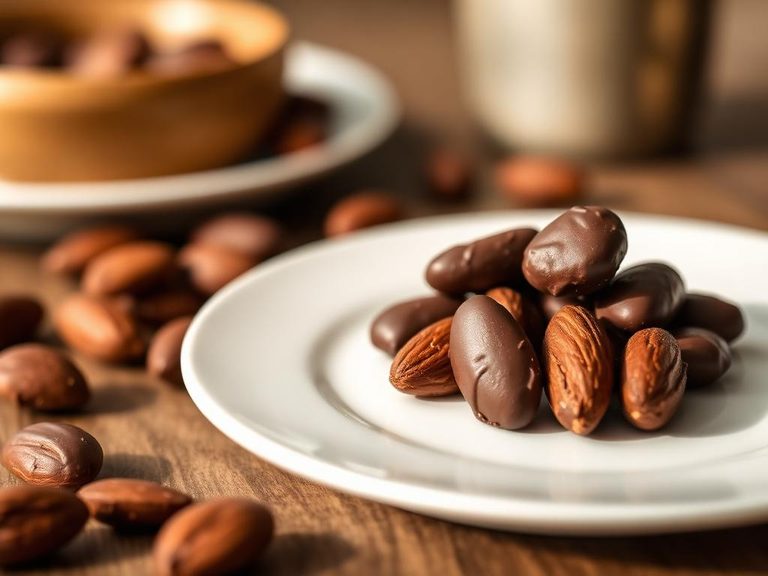

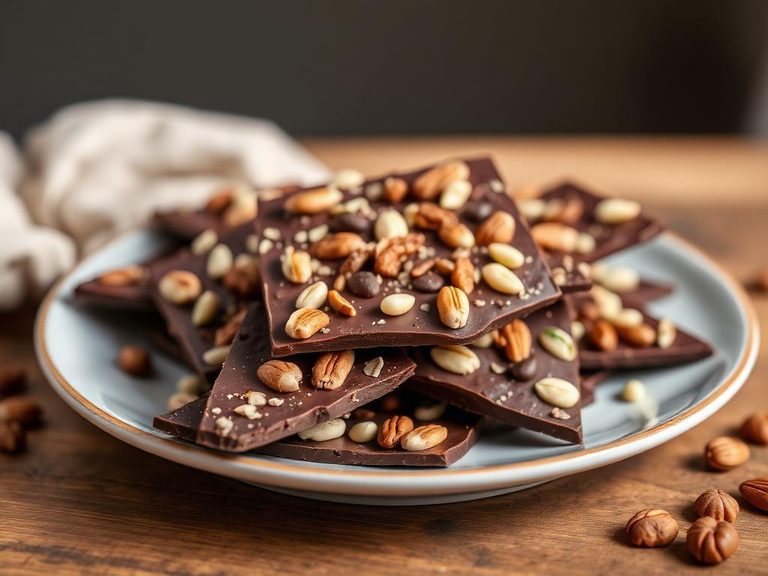
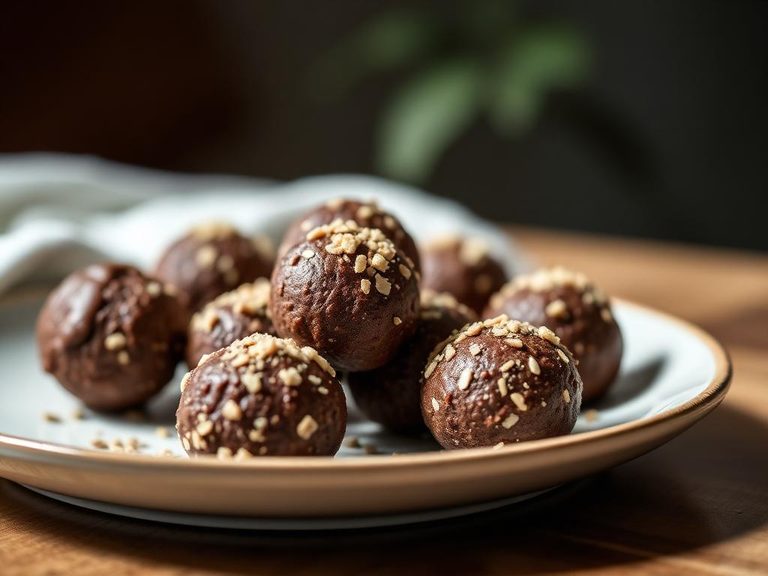


🌍 Where it's eaten
💡 Did you know?
The 'snap' of a good chocolate bar is so prized that professional tasters judge its quality partly by the sound it makes when broken.
Full nutrition (USDA data · scales with serving)
| Water | 4.0 g |
| Energy | 590 kcal |
| Energy | 2467 kj |
| Protein | 12.4 g |
| Total lipid (fat) | 43.3 g |
| Ash | 2.7 g |
| Carbohydrate, by difference | 37.7 g |
| Fiber, total dietary | 3.5 g |
| Total Sugars | 14.6 g |
| Starch | 0.44 g |
| Calcium, Ca | 285 mg |
| Iron, Fe | 1.4 mg |
| Magnesium, Mg | 129 mg |
| Phosphorus, P | 332 mg |
| Potassium, K | 606 mg |
| Sodium, Na | 111 mg |
| Zinc, Zn | 2.5 mg |
| Copper, Cu | 0.85 mg |
| Manganese, Mn | 0.89 mg |
| Selenium, Se | 4.9 ug |
| Fluoride, F | 12.9 ug |
| Vitamin C, total ascorbic acid | 1.4 mg |
| Thiamin | 0.20 mg |
| Riboflavin | 0.48 mg |
| Niacin | 2.3 mg |
| Vitamin B-6 | 0.18 mg |
| Folate, total | 25.0 ug |
| Folic acid | 0.00 ug |
| Folate, food | 25.0 ug |
| Folate, DFE | 25.0 ug |
| Choline, total | 50.1 mg |
| Vitamin B-12 | 0.85 ug |
| Vitamin B-12, added | 0.00 ug |
| Vitamin A, RAE | 55.0 ug |
| Retinol | 54.0 ug |
| Carotene, beta | 13.0 ug |
| Carotene, alpha | 0.00 ug |
| Cryptoxanthin, beta | 0.00 ug |
| Vitamin A, IU | 204 iu |
| Lycopene | 0.00 ug |
| Lutein + zeaxanthin | 6.0 ug |
| Vitamin E (alpha-tocopherol) | 2.6 mg |
| Vitamin E, added | 0.00 mg |
| Vitamin D (D2 + D3), International Units | 3.0 iu |
| Vitamin D (D2 + D3) | 0.10 ug |
| Vitamin D3 (cholecalciferol) | 0.10 ug |
| Vitamin K (phylloquinone) | 7.5 ug |
| Alcohol, ethyl | 0.00 g |
| Caffeine | 9.0 mg |
| Theobromine | 150 mg |
Fat & fatty acid profile (per 100g)
| Fatty acids, total saturated | 21.7 g |
| SFA 4:0 | 0.22 g |
| SFA 6:0 | 0.14 g |
| SFA 8:0 | 0.66 g |
| SFA 10:0 | 0.69 g |
| SFA 12:0 | 5.1 g |
| SFA 13:0 | 0.00 g |
| SFA 14:0 | 2.4 g |
| SFA 15:0 | 0.00 g |
| SFA 16:0 | 6.9 g |
| SFA 17:0 | 0.04 g |
| SFA 18:0 | 5.4 g |
| SFA 20:0 | 0.10 g |
| SFA 22:0 | 0.07 g |
| SFA 24:0 | 0.04 g |
| Fatty acids, total monounsaturated | 10.9 g |
| MUFA 14:1 | 0.00 g |
| MUFA 15:1 | 0.00 g |
| MUFA 16:1 | 0.19 g |
| MUFA 17:1 | 0.00 g |
| MUFA 18:1 | 10.6 g |
| MUFA 20:1 | 0.04 g |
| MUFA 22:1 | 0.00 g |
| Fatty acids, total polyunsaturated | 4.3 g |
| PUFA 18:2 | 4.2 g |
| PUFA 18:3 | 0.20 g |
| PUFA 18:4 | 0.00 g |
| PUFA 20:2 n-6 c,c | 0.00 g |
| PUFA 20:3 | 0.00 g |
| PUFA 20:4 | 0.00 g |
| PUFA 20:5 n-3 (EPA) | 0.00 g |
| PUFA 22:4 | 0.00 g |
| PUFA 22:5 n-3 (DPA) | 0.00 g |
| PUFA 22:6 n-3 (DHA) | 0.00 g |
| Fatty acids, total trans | 0.12 g |
| Cholesterol | 22.0 mg |
Amino acid profile (per 100g)
Estimated from Candies, honey-combed, with peanut butter — USDA does not publish this profile for Candies.
| Tryptophan | 0.09 g |
| Threonine | 0.21 g |
| Isoleucine | 0.24 g |
| Leucine | 0.61 g |
| Lysine | 0.27 g |
| Methionine | 0.10 g |
| Cystine | 0.09 g |
| Phenylalanine | 0.47 g |
| Tyrosine | 0.33 g |
| Valine | 0.31 g |
| Arginine | 1.1 g |
| Histidine | 0.22 g |
| Alanine | 0.36 g |
| Aspartic acid | 1.2 g |
| Glutamic acid | 2.0 g |
| Glycine | 0.56 g |
| Proline | 0.55 g |
| Serine | 0.58 g |
FAQ
How does 'low sugar' chocolate differ from regular chocolate?
It replaces a significant portion of the sucrose with sugar alcohols (like erythritol or maltitol), fiber (like inulin), or high-intensity sweeteners (like stevia), reducing the net carbohydrate and calorie count while aiming to preserve taste and texture.
Is the higher fat content in low-sugar chocolate unhealthy?
Not necessarily. The fat is primarily cocoa butter, which contains stearic acid (considered neutral for cholesterol) and oleic acid (also found in olive oil). It's the total calorie intake and dietary context that matter most.
Can I bake with low-sugar chocolate chips?
Yes, but with adjustments. They may melt and set differently due to the alternative sweeteners. It's best for recipes where the chocolate is a mix-in (like cookies) rather than the main structure (like a ganache). Check the package for baking-specific instructions.
Nutrient density (calculated · NRF9.3)
Nutrient Rich Foods index: beneficial nutrients (protein, fiber, vitamins, minerals) minus saturated fat, added sugar & sodium, per 100 kcal.
NRF9.3 index — Fulgoni, Keast & Drewnowski, 2009. Computed from USDA nutrients.
Weight-loss friendliness (composite index)
Energy density 5.90 kcal/g · 8% calories from protein · 3.5 g fiber · 14.6 g sugar per 100 g.
Composite of energy density (Rolls et al., 1999), protein & fiber satiety, minus sugar. A calculated heuristic — ranks satiety-per-calorie, not a clinical measure.
Dietary load (calculated from USDA values)
Potential renal acid load. Positive = acid-forming, negative = alkaline-forming.
Sodium-to-potassium ratio: 0.18 (lower is better — aim for ≤ 1)
Sodium:potassium per WHO potassium guidance. Computed from USDA nutrients.