

Beverages, coffee substitute, cereal grain beverage, prepared with water
Whole food · Beverages

Photo: Wikipedia
A light, amber-hued beverage brewed from roasted cereal grains like barley, rye, or chicory root, offering a warm, nutty, and slightly earthy flavor without the caffeine of coffee. Its texture is thin and smooth, similar to black tea, with a subtle, toasty aroma. Nutritionally, it is exceptionally low in calories and contains negligible fat and protein, making it a hydrating, nearly calorie-free drink.
Calorie split: 7% protein · 87% carbs · 6% fat
↓ Full nutrition💚 Why it's loved
People love it for its comforting, roasted-grain flavor that mimics coffee without the stimulant effects, making it a soothing ritual for evenings or for those avoiding caffeine. Its versatility allows it to be enjoyed hot or cold, often with a splash of milk or a sweetener.
⚠️ Watch-outs & how to enjoy it better
Its mild, earthy taste can be perceived as bland or overly simple by those accustomed to bold coffee flavors. Individuals monitoring blood sugar should note it contains simple carbs (1.3g per 100g), though the amount is very low; pairing it with a source of protein or fat (like a handful of nuts) can help ensure stable energy levels.
Key benefits
- Naturally caffeine-free, suitable for any time of day.
- Very low in calories (6 kcal per 100g).
- Contains a small amount of dietary fiber (0.4g per 100g).
- Provides a mild, comforting alternative to coffee or tea.
🍽️ Popular dishes
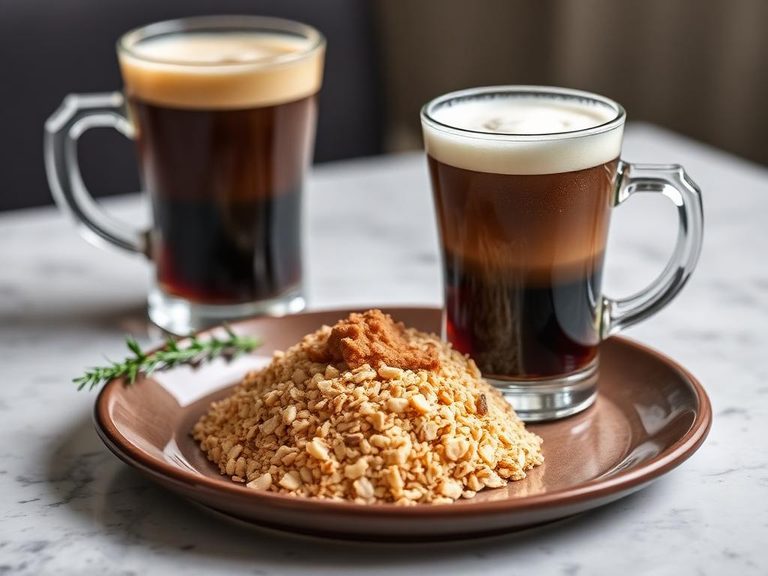
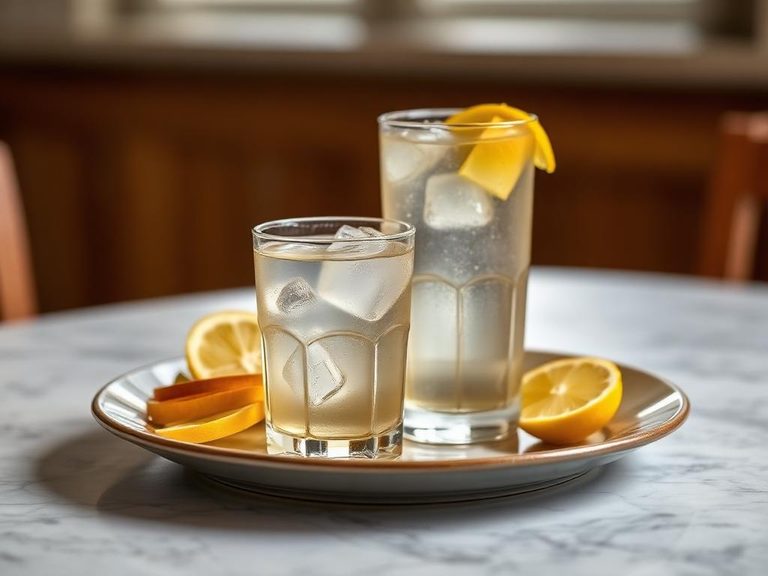

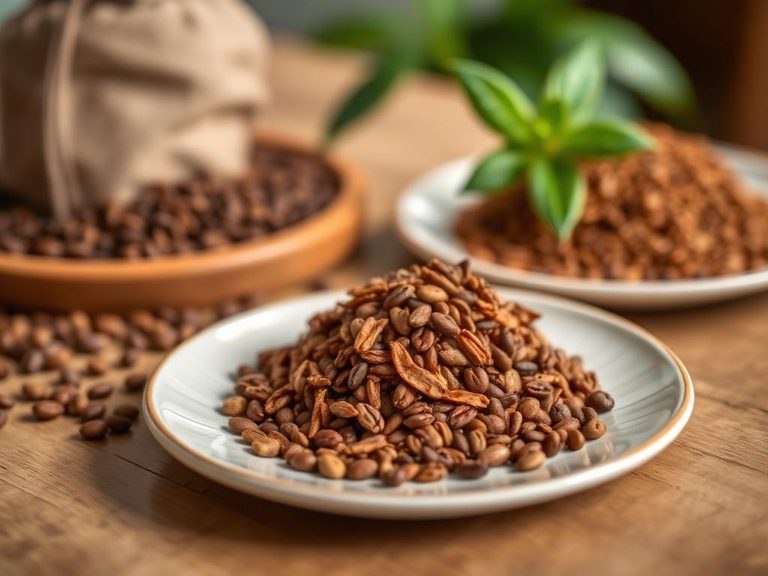
🌍 Where it's eaten
💡 Did you know?
Postum, a famous brand of this beverage, was created in 1895 and marketed as a 'health drink' that would 'build robust bodies' and was even endorsed by some doctors as a coffee substitute for patients with nervous conditions.
Full nutrition (USDA data · scales with serving)
| Water | 98.4 g |
| Energy | 6.0 kcal |
| Energy | 25.0 kj |
| Protein | 0.10 g |
| Total lipid (fat) | 0.04 g |
| Ash | 0.18 g |
| Carbohydrate, by difference | 1.3 g |
| Fiber, total dietary | 0.40 g |
| Total Sugars | 0.08 g |
| Calcium, Ca | 4.0 mg |
| Iron, Fe | 0.08 mg |
| Magnesium, Mg | 5.0 mg |
| Phosphorus, P | 10.0 mg |
| Potassium, K | 41.0 mg |
| Sodium, Na | 5.0 mg |
| Zinc, Zn | 0.01 mg |
| Copper, Cu | 0.01 mg |
| Manganese, Mn | 0.02 mg |
| Selenium, Se | 1.1 ug |
| Vitamin C, total ascorbic acid | 0.00 mg |
| Thiamin | 0.01 mg |
| Riboflavin | 0.00 mg |
| Niacin | 0.29 mg |
| Pantothenic acid | 0.02 mg |
| Vitamin B-6 | 0.01 mg |
| Folate, total | 1.0 ug |
| Folic acid | 0.00 ug |
| Folate, food | 1.0 ug |
| Folate, DFE | 1.0 ug |
| Choline, total | 0.20 mg |
| Vitamin B-12 | 0.00 ug |
| Vitamin B-12, added | 0.00 ug |
| Vitamin A, RAE | 0.00 ug |
| Retinol | 0.00 ug |
| Carotene, beta | 0.00 ug |
| Carotene, alpha | 0.00 ug |
| Cryptoxanthin, beta | 0.00 ug |
| Vitamin A, IU | 0.00 iu |
| Lycopene | 0.00 ug |
| Lutein + zeaxanthin | 3.0 ug |
| Vitamin E (alpha-tocopherol) | 0.02 mg |
| Vitamin E, added | 0.00 mg |
| Vitamin D (D2 + D3), International Units | 0.00 iu |
| Vitamin D (D2 + D3) | 0.00 ug |
| Vitamin K (phylloquinone) | 0.00 ug |
| Alcohol, ethyl | 0.00 g |
| Caffeine | 0.00 mg |
| Theobromine | 0.00 mg |
Fat & fatty acid profile (per 100g)
| Fatty acids, total saturated | 0.01 g |
| SFA 4:0 | 0.00 g |
| SFA 6:0 | 0.00 g |
| SFA 8:0 | 0.00 g |
| SFA 10:0 | 0.00 g |
| SFA 12:0 | 0.00 g |
| SFA 13:0 | 0.00 g |
| SFA 14:0 | 0.00 g |
| SFA 15:0 | 0.00 g |
| SFA 16:0 | 0.01 g |
| SFA 17:0 | 0.00 g |
| SFA 18:0 | 0.00 g |
| SFA 20:0 | 0.00 g |
| SFA 22:0 | 0.00 g |
| SFA 24:0 | 0.00 g |
| Fatty acids, total monounsaturated | 0.01 g |
| MUFA 14:1 | 0.00 g |
| MUFA 15:1 | 0.00 g |
| MUFA 16:1 | 0.00 g |
| MUFA 17:1 | 0.00 g |
| MUFA 18:1 | 0.01 g |
| MUFA 20:1 | 0.00 g |
| MUFA 22:1 | 0.00 g |
| Fatty acids, total polyunsaturated | 0.02 g |
| PUFA 18:2 | 0.02 g |
| PUFA 18:3 | 0.00 g |
| PUFA 18:4 | 0.00 g |
| PUFA 20:2 n-6 c,c | 0.00 g |
| PUFA 20:3 | 0.00 g |
| PUFA 20:4 | 0.00 g |
| PUFA 20:5 n-3 (EPA) | 0.00 g |
| PUFA 22:5 n-3 (DPA) | 0.00 g |
| PUFA 22:6 n-3 (DHA) | 0.00 g |
| Fatty acids, total trans | 0.00 g |
| Cholesterol | 0.00 mg |
Amino acid profile (per 100g)
Estimated from Beverages, carbonated, tonic water — USDA does not publish this profile for Beverages.
| Tryptophan | 0.00 g |
| Threonine | 0.00 g |
| Isoleucine | 0.00 g |
| Leucine | 0.00 g |
| Lysine | 0.00 g |
| Methionine | 0.00 g |
| Cystine | 0.00 g |
| Phenylalanine | 0.00 g |
| Tyrosine | 0.00 g |
| Valine | 0.00 g |
| Arginine | 0.00 g |
| Histidine | 0.00 g |
| Alanine | 0.00 g |
| Aspartic acid | 0.00 g |
| Glutamic acid | 0.00 g |
| Glycine | 0.00 g |
| Proline | 0.00 g |
| Serine | 0.00 g |
FAQ
Is this the same as chicory coffee?
Not exactly. While both are coffee substitutes, chicory coffee is made specifically from roasted chicory root, which has a more bitter, distinctive flavor. Cereal grain beverages are made from a blend of roasted grains like barley, rye, and sometimes include chicory as one ingredient among others.
Can I drink this if I'm gluten-free?
It depends on the specific grains used. Many cereal grain beverages contain barley or rye, which contain gluten. You must check the product label for a certified gluten-free claim if you have celiac disease or gluten sensitivity.
Does it have any health benefits over regular coffee?
Its primary benefit is being caffeine-free, which can help with sleep and anxiety for some people. It is also very low in calories and acid, making it gentler on the stomach for those with acid reflux. However, it lacks the significant antioxidant compounds found in coffee.
Nutrient density (calculated · NRF9.3)
Nutrient Rich Foods index: beneficial nutrients (protein, fiber, vitamins, minerals) minus saturated fat, added sugar & sodium, per 100 kcal.
NRF9.3 index — Fulgoni, Keast & Drewnowski, 2009. Computed from USDA nutrients.
Weight-loss friendliness (composite index)
Energy density 0.06 kcal/g · 7% calories from protein · 0.4 g fiber · 0.1 g sugar per 100 g.
Composite of energy density (Rolls et al., 1999), protein & fiber satiety, minus sugar. A calculated heuristic — ranks satiety-per-calorie, not a clinical measure.
Dietary load (calculated from USDA values)
Potential renal acid load. Positive = acid-forming, negative = alkaline-forming.
Sodium-to-potassium ratio: 0.12 (lower is better — aim for ≤ 1)
Sodium:potassium per WHO potassium guidance. Computed from USDA nutrients.