

Grain coffee blend
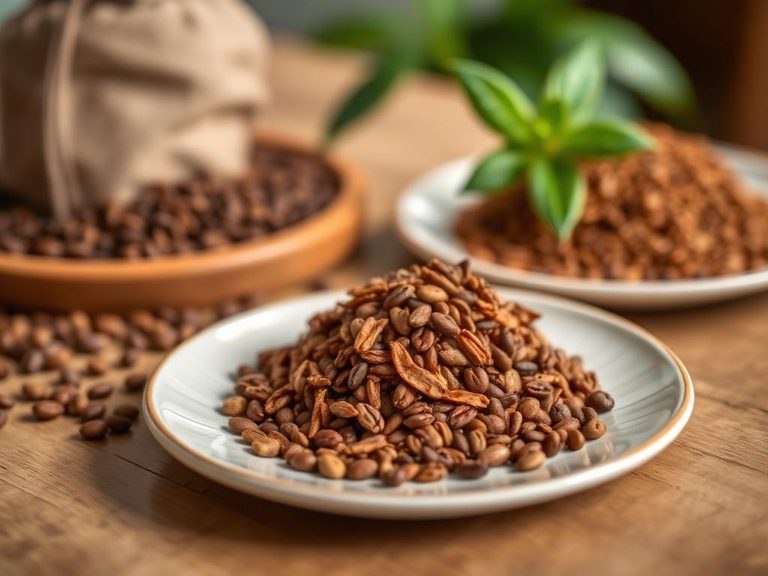
Grain coffee blend is a caffeine-free beverage made from roasted grains, legumes, and herbs, designed to mimic the taste and ritual of traditional coffee. Common ingredients include roasted barley, rye, chicory root, and sometimes dandelion root or beets. It originated in Europe as a coffee substitute during times of scarcity and remains popular in various forms globally.
🍽️ Nutrition at a glance
This beverage is very low in calories, fat, and protein, with its primary contribution being small amounts of carbohydrates and dietary fiber from the roasted grains. It provides minimal micronutrients, with trace amounts of minerals like potassium and magnesium.
Nutrition breakdown
| Calories | 15 kcal |
| Protein | 0.5 g |
| Carbs | 3.5 g |
| Fat | 0.1 g |
| Fiber | 1 g |
| Sugar | 0.2 g |
| Sodium | 5 mg |
| Potassium | 40 mg |
| Magnesium | 10 mg |
| Iron | 0.3 mg |
| Phosphorus | 15 mg |
| Manganese | 0.2 mg |
| Niacin (B3) | 0.5 mg |
Per 1 cup (240 g) · estimated, varies by recipe
💡 What's interesting
Culturally, grain coffee blends have been used for centuries as a coffee alternative during wars or economic hardships, and they remain a staple in some European and Asian cuisines. Nutritionally, they offer a way to enjoy a coffee-like experience without caffeine, making them suitable for those sensitive to stimulants.
🍽️ Related dishes


AI estimate may be inaccurate · Terms