

Bacon, turkey, unprepared
Whole food · Sausages and Luncheon Meats

Photo: Wikipedia
Unprepared turkey bacon is a lean, smoky alternative to pork bacon, made from seasoned and cured turkey meat. It has a firmer, slightly chewy texture with a milder, less fatty bite than traditional bacon. Nutritionally, it offers a high-protein, low-carb profile with significantly less fat than its pork counterpart.
Calorie split: 29% protein · 3% carbs · 68% fat
↓ Full nutrition💚 Why it's loved
People love turkey bacon for delivering a familiar smoky, savory flavor and crispy texture with a lighter nutritional footprint. It's a versatile staple for breakfasts, sandwiches, and salads where a bacon-like accent is desired without the heaviness.
⚠️ Watch-outs & how to enjoy it better
It can be higher in sodium than some other deli meats and may contain additives like nitrates. Those monitoring sodium intake should check labels and consider rinsing slices or pairing with potassium-rich foods like avocado or spinach. Opt for brands with minimal additives.
Key benefits
- High in protein for muscle maintenance
- Lower in total fat than pork bacon
- Zero carbohydrates, suitable for low-carb diets
- Provides B vitamins like niacin and B12
- Often lower in calories per serving
🍽️ Popular dishes
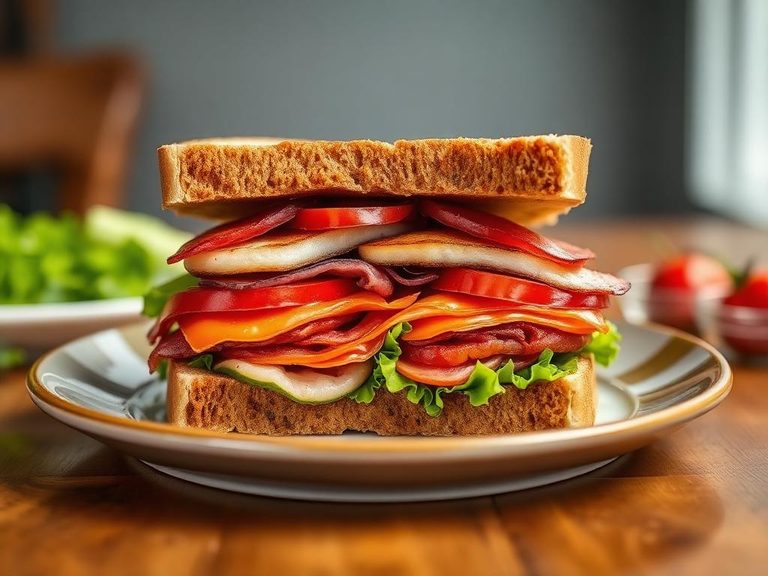
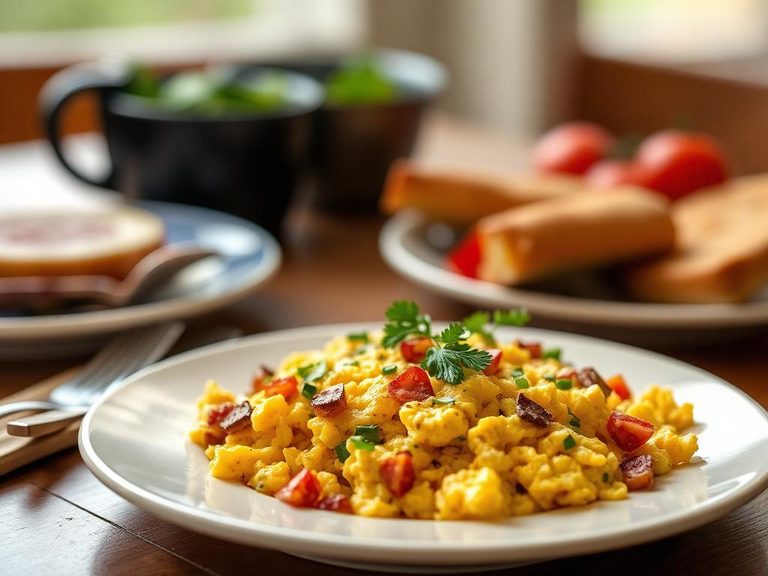
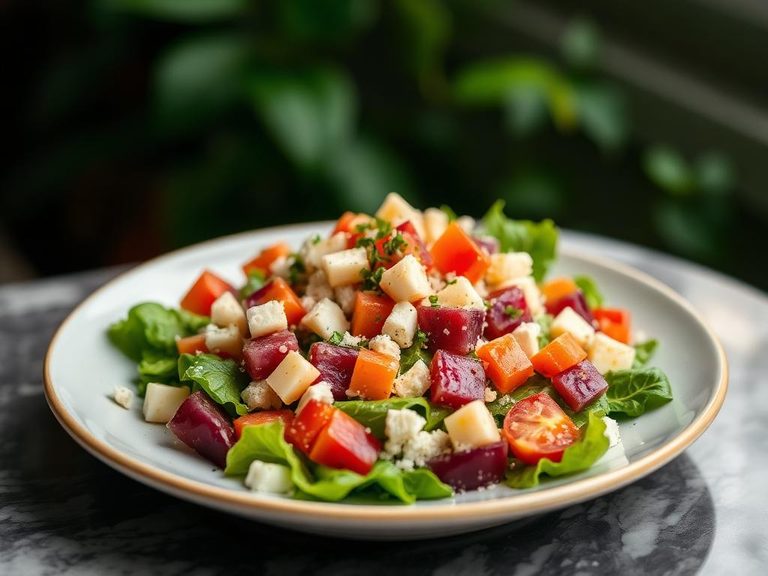
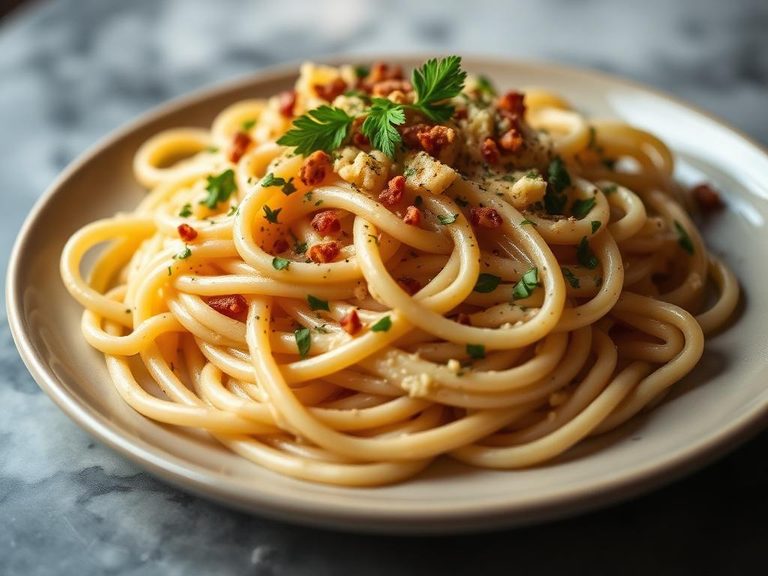
🌍 Where it's eaten
💡 Did you know?
Turkey bacon was popularized in the 1980s and 1990s as a 'healthier' bacon alternative, but its texture is achieved by grinding turkey meat and forming it into strips, unlike whole-cut pork bacon.
Full nutrition (USDA data · scales with serving)
| Water | 61.8 g |
| Energy | 226 kcal |
| Energy | 944 kj |
| Protein | 15.9 g |
| Total lipid (fat) | 16.9 g |
| Ash | 3.4 g |
| Carbohydrate, by difference | 1.9 g |
| Sucrose | 2.4 g |
| Calcium, Ca | 80.0 mg |
| Iron, Fe | 1.4 mg |
| Magnesium, Mg | 16.0 mg |
| Phosphorus, P | 222 mg |
| Potassium, K | 349 mg |
| Sodium, Na | 1069 mg |
| Zinc, Zn | 2.5 mg |
| Copper, Cu | 0.07 mg |
| Manganese, Mn | 0.02 mg |
| Selenium, Se | 15.8 ug |
| Thiamin | 0.03 mg |
| Riboflavin | 0.24 mg |
| Niacin | 4.0 mg |
| Pantothenic acid | 0.68 mg |
| Vitamin B-6 | 0.24 mg |
| Folate, total | 10.0 ug |
| Folate, food | 10.0 ug |
| Vitamin B-12 | 1.2 ug |
| Vitamin A, RAE | 10.0 ug |
| Retinol | 10.0 ug |
| Carotene, beta | 0.00 ug |
| Carotene, alpha | 0.00 ug |
| Cryptoxanthin, beta | 0.00 ug |
| Vitamin A, IU | 34.0 iu |
| Lycopene | 0.00 ug |
| Lutein + zeaxanthin | 0.00 ug |
| Vitamin E (alpha-tocopherol) | 0.11 mg |
| Tocopherol, beta | 0.00 mg |
| Tocopherol, gamma | 0.00 mg |
| Tocopherol, delta | 0.00 mg |
| Tocotrienol, alpha | 0.00 mg |
| Tocotrienol, beta | 0.00 mg |
| Tocotrienol, gamma | 0.00 mg |
| Tocotrienol, delta | 0.00 mg |
| Alcohol, ethyl | 0.00 g |
| Caffeine | 0.00 mg |
| Theobromine | 0.00 mg |
Fat & fatty acid profile (per 100g)
| Fatty acids, total saturated | 4.5 g |
| SFA 4:0 | 0.00 g |
| SFA 6:0 | 0.00 g |
| SFA 8:0 | 0.00 g |
| SFA 10:0 | 0.00 g |
| SFA 12:0 | 0.03 g |
| SFA 14:0 | 0.14 g |
| SFA 15:0 | 0.02 g |
| SFA 16:0 | 3.1 g |
| SFA 17:0 | 0.04 g |
| SFA 18:0 | 1.2 g |
| SFA 20:0 | 0.02 g |
| SFA 22:0 | 0.01 g |
| SFA 24:0 | 0.00 g |
| Fatty acids, total monounsaturated | 6.2 g |
| MUFA 14:1 | 0.02 g |
| MUFA 15:1 | 0.00 g |
| MUFA 16:1 | 0.50 g |
| MUFA 16:1 c | 0.48 g |
| MUFA 17:1 | 0.02 g |
| MUFA 18:1 | 5.6 g |
| MUFA 18:1 c | 5.5 g |
| MUFA 20:1 | 0.09 g |
| MUFA 22:1 | 0.00 g |
| MUFA 22:1 c | 0.00 g |
| MUFA 24:1 c | 0.00 g |
| Fatty acids, total polyunsaturated | 4.7 g |
| PUFA 18:2 | 4.3 g |
| PUFA 18:2 n-6 c,c | 4.2 g |
| PUFA 18:2 CLAs | 0.02 g |
| PUFA 18:3 | 0.25 g |
| PUFA 18:3 n-3 c,c,c (ALA) | 0.24 g |
| PUFA 18:3 n-6 c,c,c | 0.01 g |
| PUFA 18:3i | 0.00 g |
| PUFA 18:4 | 0.00 g |
| PUFA 20:2 n-6 c,c | 0.03 g |
| PUFA 20:3 | 0.02 g |
| PUFA 20:3 n-3 | 0.00 g |
| PUFA 20:3 n-6 | 0.01 g |
| PUFA 20:4 | 0.11 g |
| PUFA 20:5 n-3 (EPA) | 0.01 g |
| PUFA 22:4 | 0.02 g |
| PUFA 22:5 n-3 (DPA) | 0.01 g |
| PUFA 22:6 n-3 (DHA) | 0.01 g |
| Fatty acids, total trans | 0.18 g |
| Fatty acids, total trans-monoenoic | 0.15 g |
| TFA 16:1 t | 0.01 g |
| TFA 18:1 t | 0.14 g |
| TFA 22:1 t | 0.00 g |
| TFA 18:2 t not further defined | 0.04 g |
| Fatty acids, total trans-polyenoic | 0.04 g |
| Cholesterol | 86.0 mg |
Amino acid profile (per 100g)
| Hydroxyproline | 0.33 g |
FAQ
Is turkey bacon fully cooked?
Most commercially sold turkey bacon is pre-cooked and cured, but it must be heated to a safe internal temperature of 165°F (74°C) before eating to ensure food safety and achieve the desired crispiness.
Can I use turkey bacon in recipes that call for pork bacon?
Yes, it's a common 1:1 substitute in dishes like salads, soups, or as a topping. However, it renders less fat and may have a slightly different texture, so cooking times might need adjustment.
How does the nutrition compare to pork bacon?
Per 100g, turkey bacon typically has about 30-40% less fat and fewer calories than regular pork bacon, while protein content is similar. Sodium levels can be comparable, so always check the label.
Nutrient density (calculated · NRF9.3)
Nutrient Rich Foods index: beneficial nutrients (protein, fiber, vitamins, minerals) minus saturated fat, added sugar & sodium, per 100 kcal.
NRF9.3 index — Fulgoni, Keast & Drewnowski, 2009. Computed from USDA nutrients.
Weight-loss friendliness (composite index)
Energy density 2.26 kcal/g · 28% calories from protein · 0.0 g fiber · 0.0 g sugar per 100 g.
Composite of energy density (Rolls et al., 1999), protein & fiber satiety, minus sugar. A calculated heuristic — ranks satiety-per-calorie, not a clinical measure.
Dietary load (calculated from USDA values)
Potential renal acid load. Positive = acid-forming, negative = alkaline-forming.
Sodium-to-potassium ratio: 3.06 (lower is better — aim for ≤ 1)
Sodium:potassium per WHO potassium guidance. Computed from USDA nutrients.