

Asparagus, frozen, cooked, boiled, drained, without salt
Whole food · Vegetables and Vegetable Products
Frozen asparagus, once boiled and drained, offers a tender-crisp bite and a mild, earthy sweetness that's a convenient year-round staple. Nutritionally, it's a standout for its high protein-to-calorie ratio and impressive fiber content, making it a surprisingly filling and nutrient-dense vegetable.
Calorie split: 51% protein · 33% carbs · 16% fat
↓ Full nutrition💚 Why it's loved
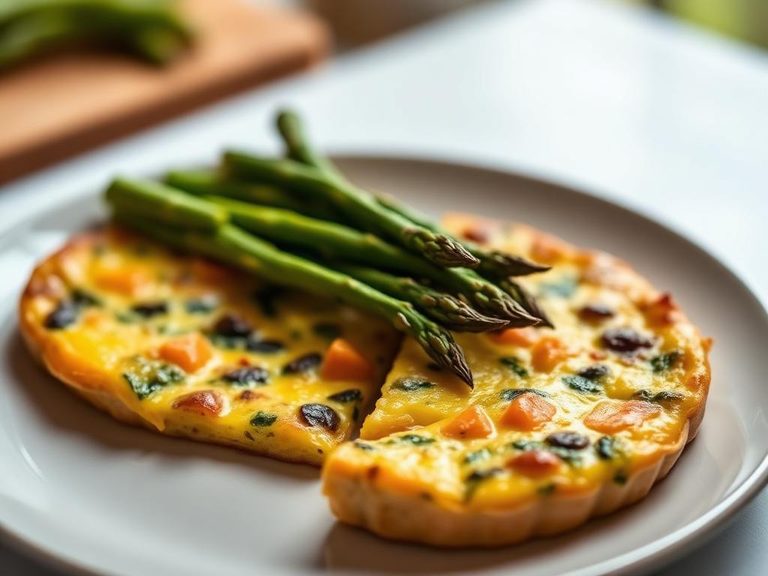
People love it for its unique, grassy flavor that pairs beautifully with everything from eggs to lemon butter, and its satisfying snap. It's a versatile ingredient that brings a touch of elegance and freshness to quick weeknight meals or classic holiday feasts.
⚠️ Watch-outs & how to enjoy it better
Some may find the flavor too grassy or the texture slightly mushy if overcooked. A key caution is its natural oxalate content, which can be a concern for individuals prone to certain kidney stones; pairing it with calcium-rich foods like cheese or yogurt can help bind oxalates. To avoid a watery dish, ensure it's thoroughly drained after boiling.
Key benefits
- Excellent source of plant-based protein for its calorie count
- High in dietary fiber, supporting digestive health
- Very low in fat and naturally low in calories
- Good source of vitamins K and folate
- Convenient and reduces food waste with a long shelf life
🍽️ Popular dishes
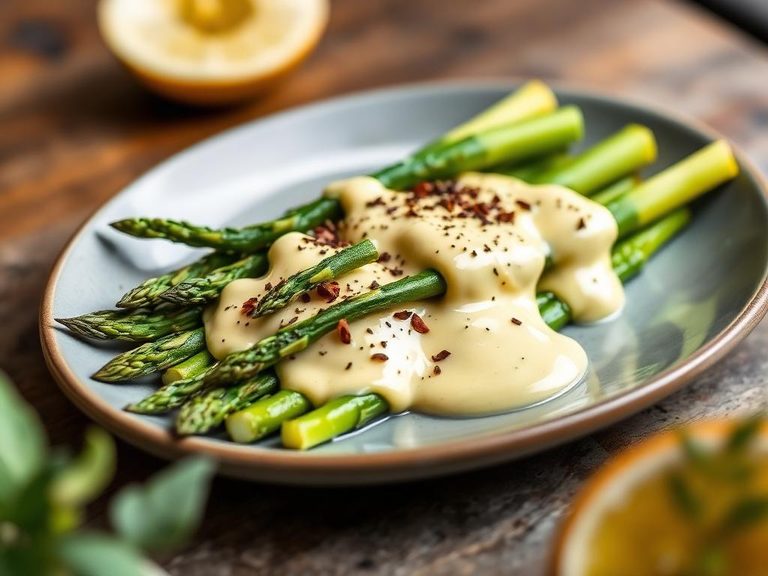
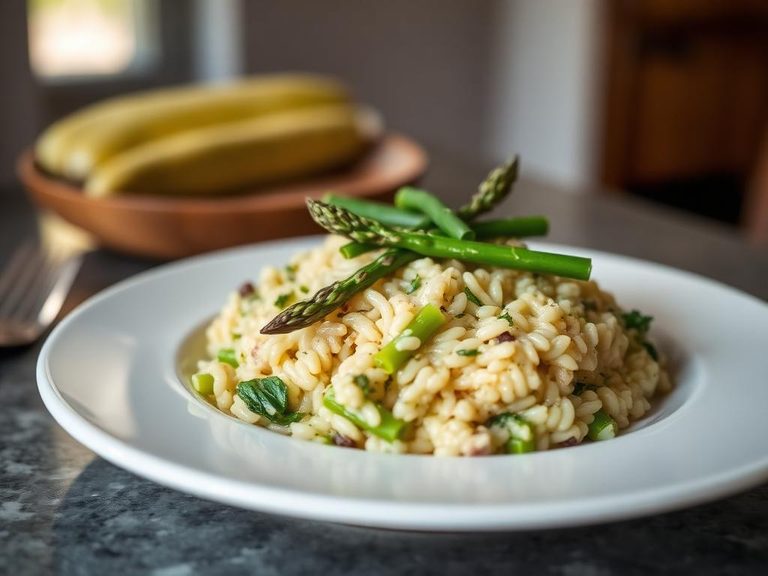
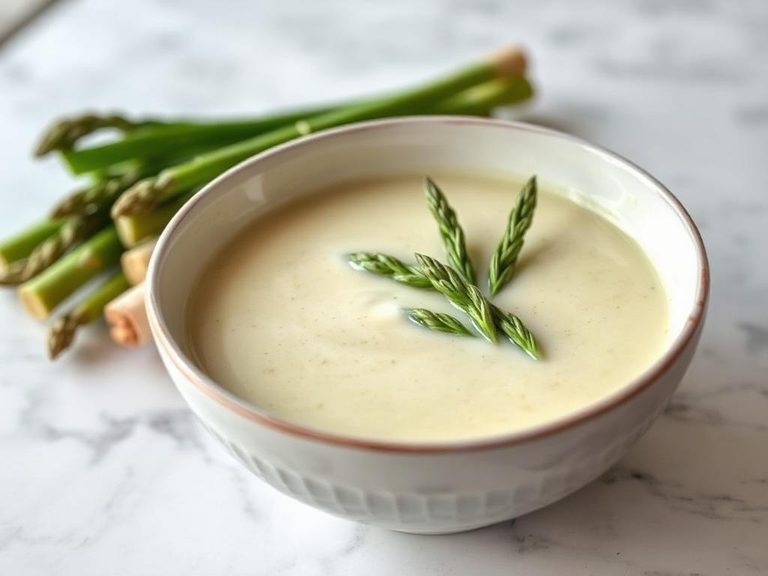

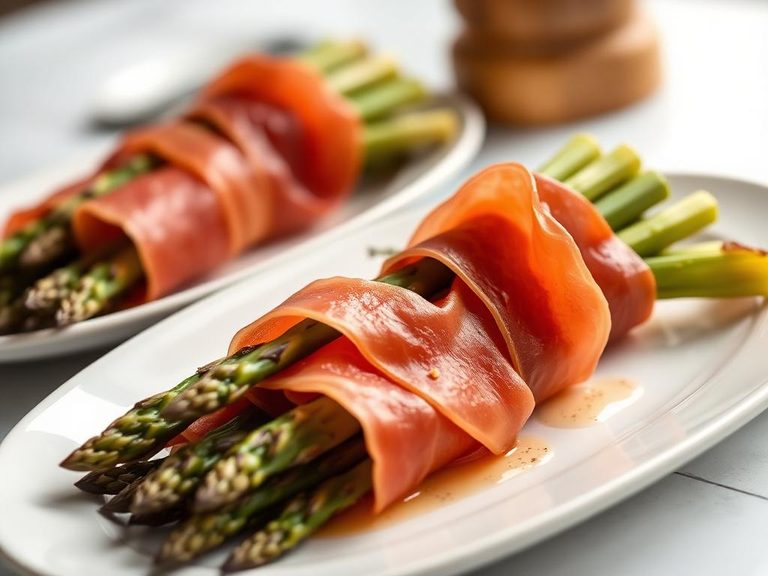
🌍 Where it's eaten
💡 Did you know?
Asparagus is a member of the lily family, and a single spear can grow up to 10 inches in just 24 hours under ideal conditions.
Full nutrition (USDA data · scales with serving)
| Water | 94.1 g |
| Energy | 18.0 kcal |
| Energy | 74.0 kj |
| Protein | 3.0 g |
| Total lipid (fat) | 0.42 g |
| Ash | 0.61 g |
| Carbohydrate, by difference | 1.9 g |
| Fiber, total dietary | 1.6 g |
| Total Sugars | 0.32 g |
| Calcium, Ca | 18.0 mg |
| Iron, Fe | 0.56 mg |
| Magnesium, Mg | 10.0 mg |
| Phosphorus, P | 49.0 mg |
| Potassium, K | 172 mg |
| Sodium, Na | 3.0 mg |
| Zinc, Zn | 0.41 mg |
| Copper, Cu | 0.10 mg |
| Manganese, Mn | 0.14 mg |
| Selenium, Se | 3.9 ug |
| Vitamin C, total ascorbic acid | 24.4 mg |
| Thiamin | 0.07 mg |
| Riboflavin | 0.10 mg |
| Niacin | 1.0 mg |
| Pantothenic acid | 0.16 mg |
| Vitamin B-6 | 0.02 mg |
| Folate, total | 135 ug |
| Folic acid | 0.00 ug |
| Folate, food | 135 ug |
| Folate, DFE | 135 ug |
| Choline, total | 20.9 mg |
| Betaine | 0.70 mg |
| Vitamin B-12 | 0.00 ug |
| Vitamin B-12, added | 0.00 ug |
| Vitamin A, RAE | 40.0 ug |
| Retinol | 0.00 ug |
| Carotene, beta | 483 ug |
| Carotene, alpha | 0.00 ug |
| Cryptoxanthin, beta | 0.00 ug |
| Vitamin A, IU | 806 iu |
| Lycopene | 24.0 ug |
| Lutein + zeaxanthin | 618 ug |
| Vitamin E (alpha-tocopherol) | 1.2 mg |
| Vitamin E, added | 0.00 mg |
| Tocopherol, beta | 0.02 mg |
| Tocopherol, gamma | 0.17 mg |
| Tocopherol, delta | 0.00 mg |
| Tocotrienol, alpha | 0.02 mg |
| Tocotrienol, beta | 0.00 mg |
| Tocotrienol, gamma | 0.00 mg |
| Tocotrienol, delta | 0.00 mg |
| Vitamin D (D2 + D3), International Units | 0.00 iu |
| Vitamin D (D2 + D3) | 0.00 ug |
| Vitamin K (phylloquinone) | 80.0 ug |
| Alcohol, ethyl | 0.00 g |
| Caffeine | 0.00 mg |
| Theobromine | 0.00 mg |
Fat & fatty acid profile (per 100g)
| Fatty acids, total saturated | 0.10 g |
| SFA 4:0 | 0.00 g |
| SFA 6:0 | 0.00 g |
| SFA 8:0 | 0.00 g |
| SFA 10:0 | 0.00 g |
| SFA 12:0 | 0.00 g |
| SFA 14:0 | 0.00 g |
| SFA 16:0 | 0.09 g |
| SFA 18:0 | 0.01 g |
| Fatty acids, total monounsaturated | 0.01 g |
| MUFA 16:1 | 0.00 g |
| MUFA 18:1 | 0.01 g |
| MUFA 20:1 | 0.00 g |
| MUFA 22:1 | 0.00 g |
| Fatty acids, total polyunsaturated | 0.18 g |
| PUFA 18:2 | 0.17 g |
| PUFA 18:3 | 0.01 g |
| PUFA 18:4 | 0.00 g |
| PUFA 20:4 | 0.00 g |
| PUFA 20:5 n-3 (EPA) | 0.00 g |
| PUFA 22:5 n-3 (DPA) | 0.00 g |
| PUFA 22:6 n-3 (DHA) | 0.00 g |
| Fatty acids, total trans | 0.00 g |
| Cholesterol | 0.00 mg |
Amino acid profile (per 100g)
| Tryptophan | 0.03 g |
| Threonine | 0.08 g |
| Isoleucine | 0.11 g |
| Leucine | 0.13 g |
| Lysine | 0.14 g |
| Methionine | 0.03 g |
| Cystine | 0.04 g |
| Phenylalanine | 0.07 g |
| Tyrosine | 0.05 g |
| Valine | 0.11 g |
| Arginine | 0.14 g |
| Histidine | 0.05 g |
| Alanine | 0.14 g |
| Aspartic acid | 0.34 g |
| Glutamic acid | 0.48 g |
| Glycine | 0.10 g |
| Proline | 0.16 g |
| Serine | 0.11 g |
FAQ
Is frozen asparagus as nutritious as fresh?
Yes, often more so. Asparagus is typically flash-frozen at peak ripeness, locking in nutrients that can degrade in fresh spears during transport and storage.
How do I prevent frozen asparagus from getting mushy?
Avoid overcooking. Add it to soups or stir-fries in the last few minutes, or simply boil just until heated through and tender-crisp (about 3-5 minutes). Patting it dry after thawing also helps.
Why does asparagus make urine smell unusual?
This is caused by the breakdown of asparagusic acid, a sulfur-containing compound unique to asparagus. The metabolites are excreted in urine, creating a distinctive scent for those who can perceive it.
Nutrient density (calculated · NRF9.3)
Nutrient Rich Foods index: beneficial nutrients (protein, fiber, vitamins, minerals) minus saturated fat, added sugar & sodium, per 100 kcal.
NRF9.3 index — Fulgoni, Keast & Drewnowski, 2009. Computed from USDA nutrients.
Weight-loss friendliness (composite index)
Energy density 0.18 kcal/g · 66% calories from protein · 1.6 g fiber · 0.3 g sugar per 100 g.
Composite of energy density (Rolls et al., 1999), protein & fiber satiety, minus sugar. A calculated heuristic — ranks satiety-per-calorie, not a clinical measure.
Dietary load (calculated from USDA values)
Potential renal acid load. Positive = acid-forming, negative = alkaline-forming.
Sodium-to-potassium ratio: 0.02 (lower is better — aim for ≤ 1)
Sodium:potassium per WHO potassium guidance. Computed from USDA nutrients.