Strawberries, raw
Whole food · Fruits and Fruit Juices
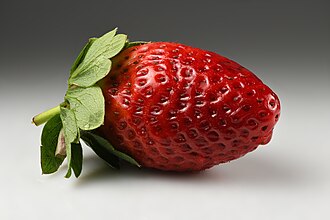
Photo: Wikipedia
A vibrant, heart-shaped berry prized for its juicy, sweet-tart flesh and fragrant aroma. Its bright red exterior and delicate, seed-speckled surface make it a visual delight. Despite its sweetness, it's remarkably low in calories, offering a burst of vitamin C and antioxidants with minimal fat.
💚 Why it's loved
People adore strawberries for their perfect balance of sweetness and acidity, making them a versatile treat from breakfast bowls to elegant desserts. Their iconic status in spring and summer, coupled with romantic and wholesome cultural associations, cements their popularity.
⚠️ Watch-outs & how to enjoy it better
Strawberries are on the Environmental Working Group's 'Dirty Dozen' list for potential pesticide residues, so thorough washing is recommended. They also contain natural fruit sugars, so portion control is wise for those monitoring blood sugar. Their seeds can occasionally irritate the digestive tract in sensitive individuals.
Key benefits
- Excellent source of vitamin C, supporting immune function.
- Rich in antioxidants like anthocyanins and ellagic acid.
- High water content aids hydration.
- Provides dietary fiber for digestive health.
- Low in calories and naturally fat-free.
🍽️ Popular dishes
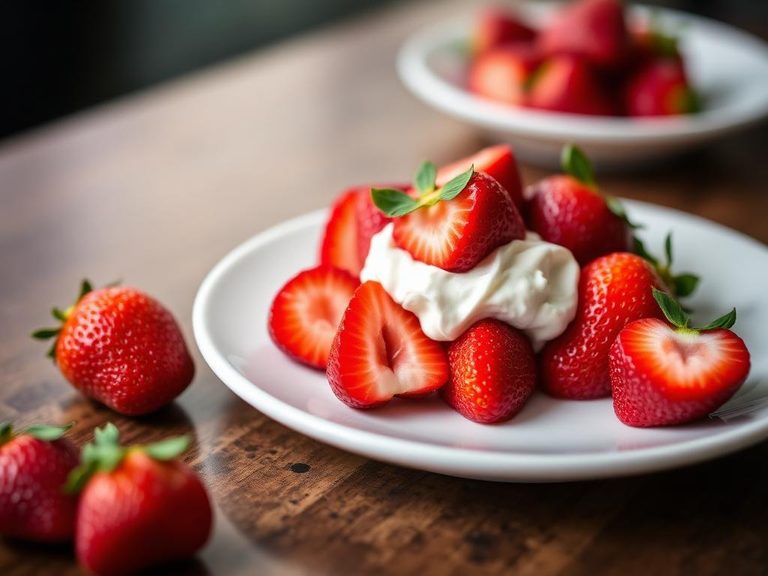
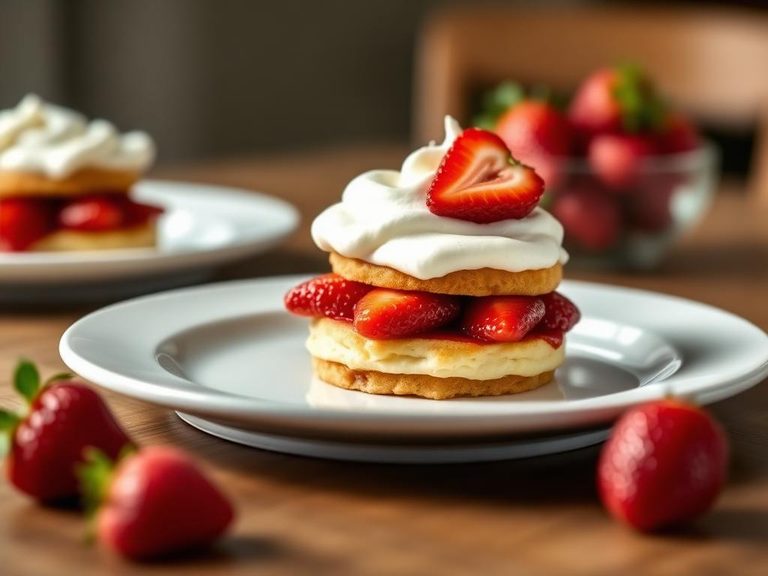

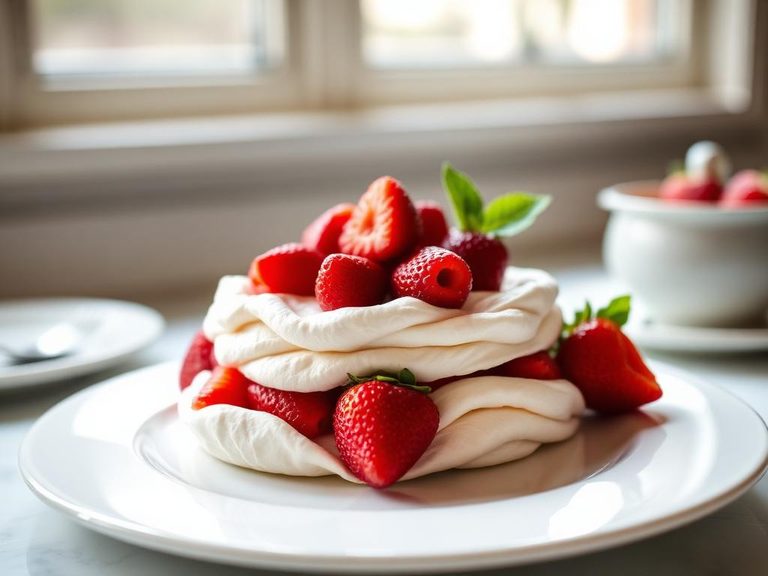
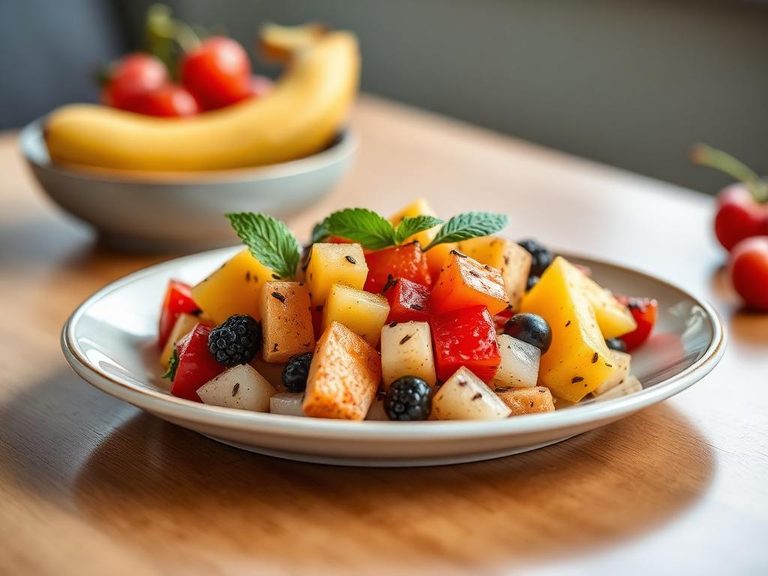
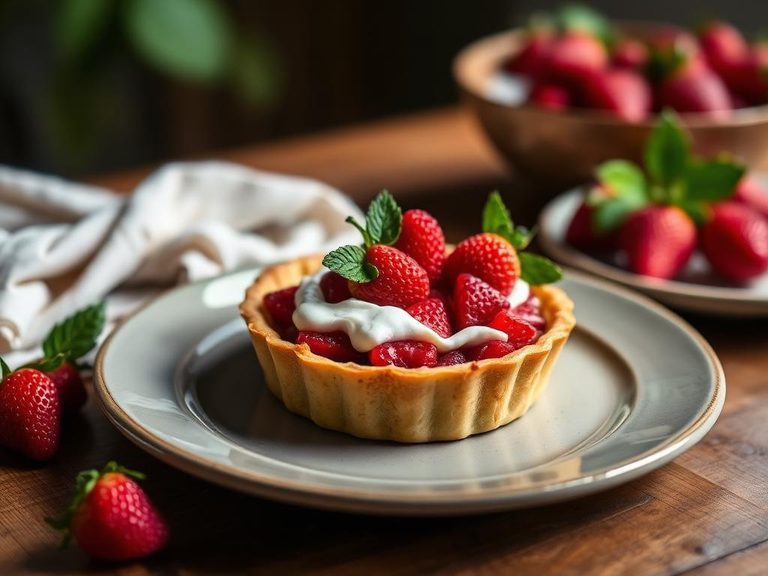
🌍 Where it's eaten
💡 Did you know?
The tiny 'seeds' on the outside of a strawberry are actually the plant's true fruits, called achenes, each containing a single seed.
Full nutrition (scales with serving)
| Water | 91.1 g |
| Energy (Atwater General Factors) | 35.0 kcal |
| Energy (Atwater Specific Factors) | 31.0 kcal |
| Energy | 31.0 kcal |
| Energy | 132 kj |
| Nitrogen | 0.10 g |
| Protein | 0.64 g |
| Total lipid (fat) | 0.22 g |
| Total fat (NLEA) | 0.17 g |
| Ash | 0.41 g |
| Carbohydrate, by difference | 7.6 g |
| Carbohydrate, by summation | 7.1 g |
| Fiber, total dietary | 1.8 g |
| Fiber, soluble | 0.70 g |
| Fiber, insoluble | 0.90 g |
| Sugars, Total | 5.3 g |
| Sucrose | 0.11 g |
| Glucose | 2.4 g |
| Fructose | 2.8 g |
| Lactose | 0.00 g |
| Maltose | 0.00 g |
| Galactose | 0.00 g |
| Starch | 0.04 g |
| Calcium, Ca | 12.0 mg |
| Iron, Fe | 0.28 mg |
| Magnesium, Mg | 11.8 mg |
| Phosphorus, P | 20.0 mg |
| Potassium, K | 89.0 mg |
| Sodium, Na | 10.0 mg |
| Zinc, Zn | 0.18 mg |
| Copper, Cu | 0.12 mg |
| Manganese, Mn | 0.28 mg |
| Selenium, Se | 0.40 ug |
| Vitamin C, total ascorbic acid | 56.0 mg |
| Thiamin | 0.03 mg |
| Riboflavin | 0.02 mg |
| Niacin | 0.39 mg |
| Pantothenic acid | 0.12 mg |
| Vitamin B-6 | 0.04 mg |
| Folate, total | 8.0 ug |
| Vitamin A, RAE | 1.0 ug |
| Carotene, beta | 7.0 ug |
| Carotene, alpha | 0.00 ug |
| Cryptoxanthin, beta | 0.00 ug |
| Lycopene | 0.00 ug |
| Lutein + zeaxanthin | 22.0 ug |
| Vitamin K (phylloquinone) | 2.1 ug |
| Vitamin K (Dihydrophylloquinone) | 0.00 ug |
| Fatty acids, total saturated | 0.00 g |
| SFA 4:0 | 0.00 g |
| SFA 6:0 | 0.00 g |
| SFA 8:0 | 0.00 g |
| SFA 10:0 | 0.00 g |
| SFA 12:0 | 0.00 g |
| SFA 14:0 | 0.00 g |
| SFA 15:0 | 0.00 g |
| SFA 16:0 | 0.00 g |
| SFA 17:0 | 0.00 g |
| SFA 18:0 | 0.00 g |
| SFA 20:0 | 0.00 g |
| SFA 22:0 | 0.00 g |
| SFA 24:0 | 0.00 g |
| Fatty acids, total monounsaturated | 0.00 g |
| MUFA 14:1 c | 0.00 g |
| MUFA 16:1 c | 0.00 g |
| MUFA 18:1 | 0.00 g |
| MUFA 18:1 c | 0.00 g |
| MUFA 20:1 | 0.00 g |
| MUFA 20:1 c | 0.00 g |
| MUFA 22:1 | 0.00 g |
| MUFA 22:1 c | 0.00 g |
| Fatty acids, total polyunsaturated | 0.00 g |
| PUFA 18:2 | 0.00 g |
| PUFA 18:2 c | 0.00 g |
| PUFA 18:3 | 0.00 g |
| PUFA 18:3 c | 0.00 g |
| PUFA 18:4 | 0.00 g |
| PUFA 20:4 | 0.00 g |
| PUFA 20:4c | 0.00 g |
| PUFA 20:5c | 0.00 g |
| PUFA 20:5 n-3 (EPA) | 0.00 g |
| PUFA 22:2 | 0.00 g |
| PUFA 22:6 c | 0.00 g |
| PUFA 22:6 n-3 (DHA) | 0.00 g |
| Tryptophan | 0.00 g |
| Threonine | 0.00 g |
| Isoleucine | 0.00 g |
| Leucine | 0.00 g |
| Lysine | 0.00 g |
| Methionine | 0.00 g |
| Cystine | 0.00 g |
| Phenylalanine | 0.00 g |
| Tyrosine | 0.00 g |
| Valine | 0.00 g |
| Arginine | 0.00 g |
| Histidine | 0.00 g |
| Alanine | 0.00 g |
| Aspartic acid | 0.14 g |
| Glutamic acid | 0.13 g |
| Glycine | 0.00 g |
| Proline | 0.00 g |
| Serine | 0.00 g |
FAQ
Are the seeds on strawberries edible?
Yes, the tiny seeds (achenes) on the exterior are completely edible and a good source of fiber.
How should I store fresh strawberries?
Store them unwashed in a single layer on a paper towel in the refrigerator's crisper drawer. Wash just before eating to prevent mold.
Why are some strawberries white inside?
This is often due to a condition called 'white shoulder' or 'albino,' caused by uneven ripening, often from temperature fluctuations or genetics. It's safe to eat but may be less sweet.