

Salad dressing, caesar, fat-free
Whole food · Fats and Oils

Photo: Wikipedia
This is a light, tangy, and creamy dressing that delivers the classic Caesar flavor profile without any fat. It has a smooth, pourable consistency and a bright, savory taste with a hint of sweetness from added sugar. Nutritionally, it's a low-calorie option primarily composed of carbohydrates.
Calorie split: 4% protein · 94% carbs · 2% fat
↓ Full nutrition💚 Why it's loved
People love it for providing the iconic, craveable Caesar taste—garlicky, tangy, and savory—while keeping a meal light. It's a versatile staple for quick salads, wraps, and as a dip.
⚠️ Watch-outs & how to enjoy it better
The high carbohydrate content, largely from added sugars and starches, can cause a quicker blood sugar rise compared to a fat-based dressing. It often contains high sodium levels and may include common allergens like egg or soy. To counteract, pair your salad with a solid protein source (like grilled chicken or chickpeas) and healthy fats (like avocado or nuts) to slow digestion and add satiety.
Key benefits
- Very low in fat and calories
- Provides a classic savory, umami flavor boost
- Adds moisture and flavor to salads without significant fat
- A convenient way to enhance vegetable intake
🍽️ Popular dishes
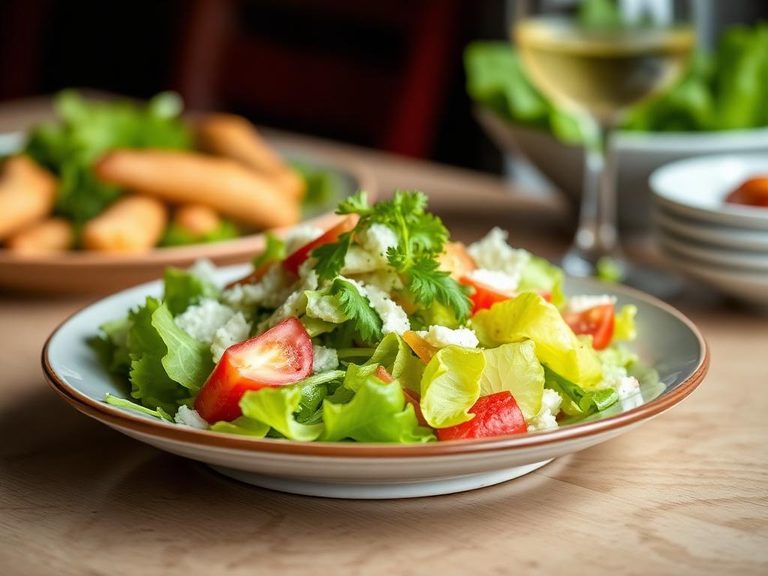
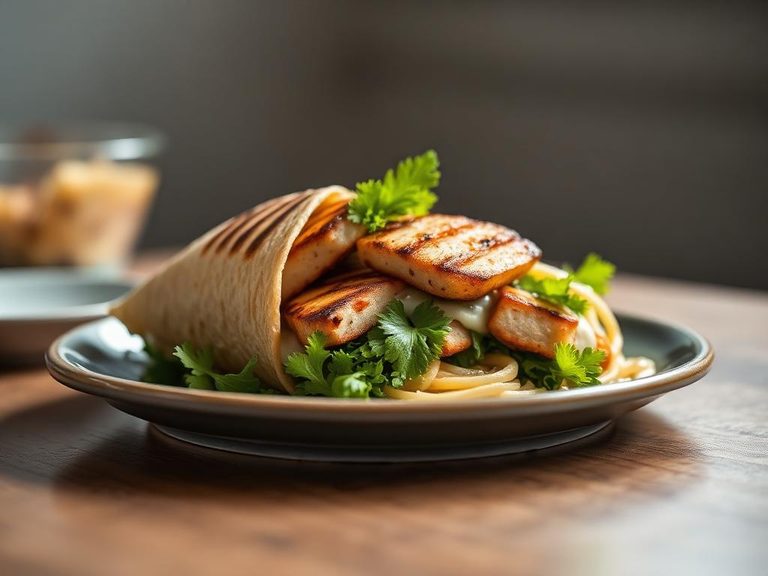
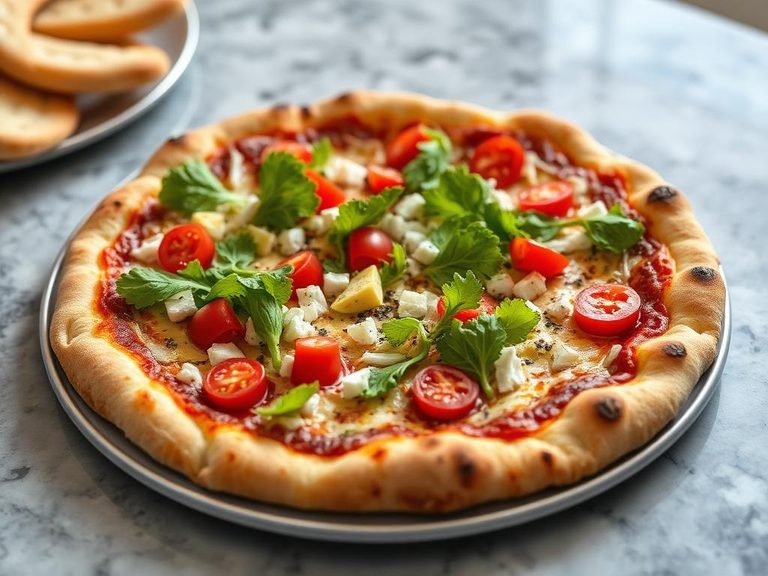
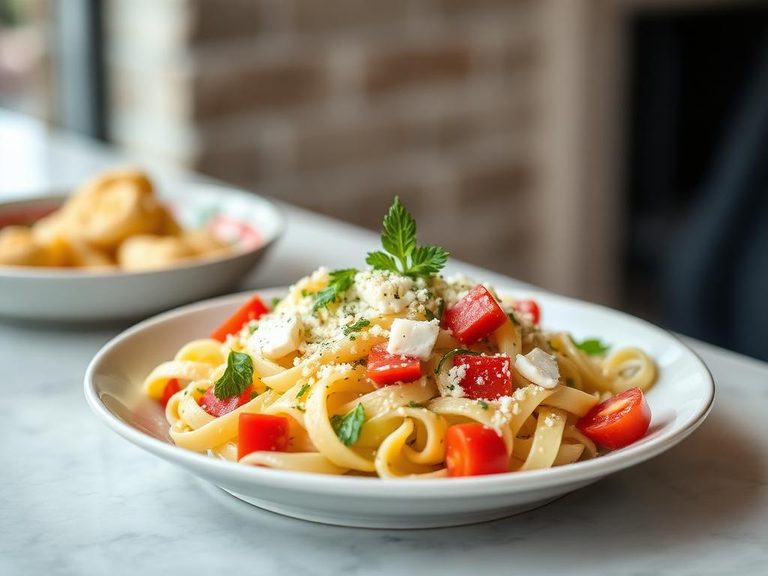
🌍 Where it's eaten
💡 Did you know?
The original Caesar salad was invented in Tijuana, Mexico, by Italian-American restaurateur Caesar Cardini in the 1920s, and the classic recipe notably did not contain anchovies.
Full nutrition (USDA data · scales with serving)
| Water | 64.1 g |
| Energy | 131 kcal |
| Energy | 547 kj |
| Protein | 1.5 g |
| Total lipid (fat) | 0.23 g |
| Ash | 3.5 g |
| Carbohydrate, by difference | 30.7 g |
| Fiber, total dietary | 0.20 g |
| Total Sugars | 8.8 g |
| Calcium, Ca | 33.0 mg |
| Iron, Fe | 0.29 mg |
| Magnesium, Mg | 4.0 mg |
| Phosphorus, P | 30.0 mg |
| Potassium, K | 48.0 mg |
| Sodium, Na | 1265 mg |
| Zinc, Zn | 0.30 mg |
| Copper, Cu | 0.02 mg |
| Manganese, Mn | 0.04 mg |
| Selenium, Se | 2.2 ug |
| Vitamin C, total ascorbic acid | 0.10 mg |
| Thiamin | 0.03 mg |
| Riboflavin | 0.01 mg |
| Niacin | 0.03 mg |
| Pantothenic acid | 0.03 mg |
| Vitamin B-6 | 0.04 mg |
| Folate, total | 2.0 ug |
| Folic acid | 0.00 ug |
| Folate, food | 2.0 ug |
| Folate, DFE | 2.0 ug |
| Choline, total | 2.4 mg |
| Vitamin B-12 | 0.04 ug |
| Vitamin B-12, added | 0.00 ug |
| Vitamin A, RAE | 1.0 ug |
| Retinol | 1.0 ug |
| Carotene, beta | 0.00 ug |
| Carotene, alpha | 0.00 ug |
| Cryptoxanthin, beta | 0.00 ug |
| Vitamin A, IU | 4.0 iu |
| Lycopene | 0.00 ug |
| Lutein + zeaxanthin | 0.00 ug |
| Vitamin E (alpha-tocopherol) | 0.02 mg |
| Vitamin E, added | 0.00 mg |
| Vitamin D (D2 + D3), International Units | 0.00 iu |
| Vitamin D (D2 + D3) | 0.00 ug |
| Vitamin D3 (cholecalciferol) | 0.00 ug |
| Vitamin K (phylloquinone) | 0.00 ug |
| Alcohol, ethyl | 0.00 g |
| Caffeine | 0.00 mg |
| Theobromine | 0.00 mg |
Fat & fatty acid profile (per 100g)
| Fatty acids, total saturated | 0.10 g |
| SFA 4:0 | 0.01 g |
| SFA 6:0 | 0.00 g |
| SFA 8:0 | 0.00 g |
| SFA 10:0 | 0.00 g |
| SFA 12:0 | 0.00 g |
| SFA 13:0 | 0.00 g |
| SFA 14:0 | 0.01 g |
| SFA 15:0 | 0.00 g |
| SFA 16:0 | 0.04 g |
| SFA 17:0 | 0.00 g |
| SFA 18:0 | 0.02 g |
| SFA 20:0 | 0.00 g |
| SFA 22:0 | 0.00 g |
| SFA 24:0 | 0.00 g |
| Fatty acids, total monounsaturated | 0.04 g |
| MUFA 14:1 | 0.00 g |
| MUFA 15:1 | 0.00 g |
| MUFA 16:1 | 0.00 g |
| MUFA 17:1 | 0.00 g |
| MUFA 18:1 | 0.04 g |
| MUFA 20:1 | 0.00 g |
| MUFA 22:1 | 0.00 g |
| MUFA 24:1 c | 0.00 g |
| Fatty acids, total polyunsaturated | 0.01 g |
| PUFA 18:2 | 0.01 g |
| PUFA 18:3 | 0.00 g |
| PUFA 18:4 | 0.00 g |
| PUFA 20:2 n-6 c,c | 0.00 g |
| PUFA 20:3 | 0.00 g |
| PUFA 20:4 | 0.00 g |
| PUFA 20:5 n-3 (EPA) | 0.00 g |
| PUFA 22:4 | 0.00 g |
| PUFA 22:5 n-3 (DPA) | 0.00 g |
| PUFA 22:6 n-3 (DHA) | 0.00 g |
| Cholesterol | 1.0 mg |
Amino acid profile (per 100g)
Estimated from Salad dressing, sesame seed dressing, regular — USDA does not publish this profile for Salad dressing.
| Tryptophan | 0.05 g |
| Threonine | 0.05 g |
| Isoleucine | 0.05 g |
| Leucine | 0.08 g |
| Lysine | 0.14 g |
| Methionine | 0.03 g |
| Cystine | 0.00 g |
| Phenylalanine | 0.09 g |
| Tyrosine | 0.10 g |
| Valine | 0.07 g |
| Arginine | 0.40 g |
| Histidine | 0.03 g |
| Alanine | 0.00 g |
| Aspartic acid | 0.00 g |
| Glutamic acid | 0.46 g |
| Glycine | 0.00 g |
| Proline | 0.00 g |
| Serine | 0.00 g |
FAQ
How is fat-free Caesar dressing different from regular?
Fat-free versions replace the traditional oil and egg yolk base with thickeners like starches and gums, and use sugar or other sweeteners to mimic the richness and balance the tang of vinegar and lemon.
Is it suitable for a keto diet?
Generally, no. The high carbohydrate content (over 30g per 100g) makes it incompatible with the strict carb limits of a ketogenic diet.
Can I use it as a marinade?
Yes, its acidic and flavorful profile works well as a short-term marinade for chicken or fish, but it won't provide the same tenderizing effect as an oil-based marinade.
Nutrient density (calculated · NRF9.3)
Nutrient Rich Foods index: beneficial nutrients (protein, fiber, vitamins, minerals) minus saturated fat, added sugar & sodium, per 100 kcal.
NRF9.3 index — Fulgoni, Keast & Drewnowski, 2009. Computed from USDA nutrients.
Weight-loss friendliness (composite index)
Energy density 1.31 kcal/g · 4% calories from protein · 0.2 g fiber · 8.8 g sugar per 100 g.
Composite of energy density (Rolls et al., 1999), protein & fiber satiety, minus sugar. A calculated heuristic — ranks satiety-per-calorie, not a clinical measure.
Dietary load (calculated from USDA values)
Potential renal acid load. Positive = acid-forming, negative = alkaline-forming.
Sodium-to-potassium ratio: 26.35 (lower is better — aim for ≤ 1)
Sodium:potassium per WHO potassium guidance. Computed from USDA nutrients.