

Rolls, hamburger, whole grain white, calcium-fortified
Whole food · Baked Products

Photo: Wikipedia
A soft, pillowy hamburger bun crafted from whole grain white flour, offering a subtly nutty flavor and a tender crumb. It is fortified with calcium, providing a notable boost to bone-supporting minerals in a familiar, everyday form. At 255 kcal per 100g, it delivers a balanced mix of carbohydrates and protein with moderate fat.
Calorie split: 15% protein · 73% carbs · 12% fat
↓ Full nutrition💚 Why it's loved
People love it for its soft texture and mild, slightly sweet taste that complements a wide range of fillings without overpowering them. It’s a staple in casual dining, backyard barbecues, and quick meals, making it a culturally familiar and convenient choice.
⚠️ Watch-outs & how to enjoy it better
The 9.3g of sugar per 100g can contribute to blood-sugar spikes, especially for those managing diabetes or insulin resistance. Pair it with protein (like grilled chicken or legumes) and healthy fats (like avocado or olive oil) to slow glucose absorption, and opt for smaller portions or open-faced servings to reduce carb load.
Key benefits
- Provides calcium for bone health
- Contains whole grain fiber for digestive support
- Good source of plant-based protein
- Moderate fat content
- Versatile base for meals and snacks
🍽️ Popular dishes

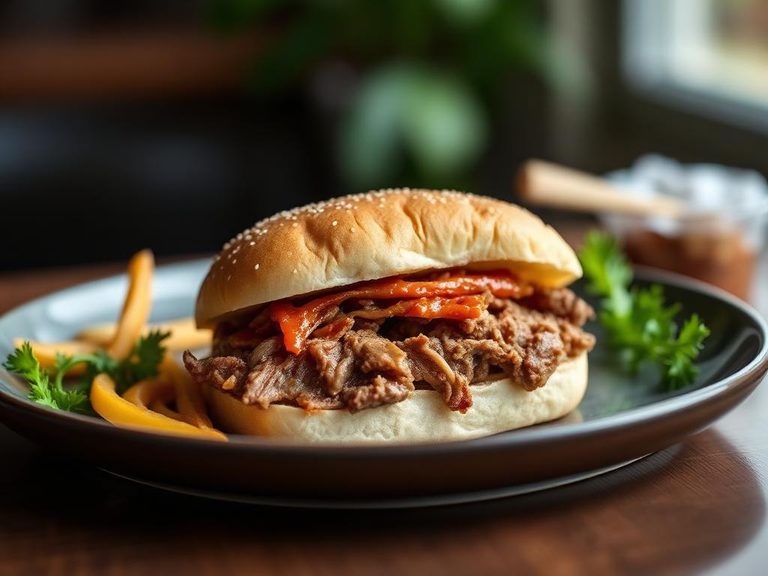



🌍 Where it's eaten
💡 Did you know?
Hamburger buns were popularized in the U.S. in the late 19th century, but the term 'hamburger' itself comes from the German city of Hamburg, where minced beef patties were a local specialty.
Full nutrition (USDA data · scales with serving)
| Water | 38.7 g |
| Energy | 255 kcal |
| Energy | 1065 kj |
| Protein | 9.3 g |
| Total lipid (fat) | 3.5 g |
| Ash | 2.0 g |
| Carbohydrate, by difference | 46.5 g |
| Fiber, total dietary | 2.3 g |
| Total Sugars | 9.3 g |
| Calcium, Ca | 233 mg |
| Iron, Fe | 2.6 mg |
| Magnesium, Mg | 38.0 mg |
| Phosphorus, P | 153 mg |
| Potassium, K | 190 mg |
| Sodium, Na | 512 mg |
| Zinc, Zn | 2.0 mg |
| Copper, Cu | 0.18 mg |
| Manganese, Mn | 0.93 mg |
| Selenium, Se | 14.0 ug |
| Vitamin C, total ascorbic acid | 0.00 mg |
| Thiamin | 0.52 mg |
| Riboflavin | 0.32 mg |
| Niacin | 4.7 mg |
| Vitamin B-6 | 0.10 mg |
| Folate, total | 140 ug |
| Folic acid | 33.0 ug |
| Folate, food | 106 ug |
| Folate, DFE | 163 ug |
| Choline, total | 12.9 mg |
| Vitamin B-12 | 0.00 ug |
| Vitamin B-12, added | 0.00 ug |
| Vitamin A, RAE | 0.00 ug |
| Retinol | 0.00 ug |
| Carotene, beta | 1.0 ug |
| Carotene, alpha | 0.00 ug |
| Cryptoxanthin, beta | 0.00 ug |
| Vitamin A, IU | 2.0 iu |
| Lycopene | 0.00 ug |
| Lutein + zeaxanthin | 52.0 ug |
| Vitamin E (alpha-tocopherol) | 0.33 mg |
| Vitamin E, added | 0.00 mg |
| Vitamin D (D2 + D3), International Units | 0.00 iu |
| Vitamin D (D2 + D3) | 0.00 ug |
| Vitamin K (phylloquinone) | 5.0 ug |
| Alcohol, ethyl | 0.00 g |
| Caffeine | 0.00 mg |
| Theobromine | 0.00 mg |
Fat & fatty acid profile (per 100g)
| Fatty acids, total saturated | 1.2 g |
| SFA 4:0 | 0.00 g |
| SFA 6:0 | 0.00 g |
| SFA 8:0 | 0.00 g |
| SFA 10:0 | 0.00 g |
| SFA 12:0 | 0.00 g |
| SFA 14:0 | 0.00 g |
| SFA 15:0 | 0.00 g |
| SFA 16:0 | 0.68 g |
| SFA 17:0 | 0.00 g |
| SFA 18:0 | 0.25 g |
| SFA 20:0 | 0.02 g |
| SFA 22:0 | 0.02 g |
| Fatty acids, total monounsaturated | 0.56 g |
| MUFA 14:1 | 0.00 g |
| MUFA 15:1 | 0.00 g |
| MUFA 16:1 | 0.05 g |
| MUFA 17:1 | 0.00 g |
| MUFA 18:1 | 0.51 g |
| MUFA 20:1 | 0.00 g |
| MUFA 22:1 | 0.00 g |
| Fatty acids, total polyunsaturated | 1.2 g |
| PUFA 18:2 | 1.1 g |
| PUFA 18:3 | 0.14 g |
| PUFA 18:4 | 0.00 g |
| PUFA 20:2 n-6 c,c | 0.00 g |
| PUFA 20:3 | 0.00 g |
| PUFA 20:4 | 0.00 g |
| PUFA 20:5 n-3 (EPA) | 0.00 g |
| PUFA 22:5 n-3 (DPA) | 0.00 g |
| PUFA 22:6 n-3 (DHA) | 0.00 g |
| Fatty acids, total trans | 0.00 g |
| Cholesterol | 0.00 mg |
Amino acid profile (per 100g)
Estimated from Rolls, dinner, wheat — USDA does not publish this profile for Rolls.
| Tryptophan | 0.12 g |
| Threonine | 0.24 g |
| Isoleucine | 0.32 g |
| Leucine | 0.59 g |
| Lysine | 0.20 g |
| Methionine | 0.14 g |
| Cystine | 0.20 g |
| Phenylalanine | 0.42 g |
| Tyrosine | 0.25 g |
| Valine | 0.38 g |
| Arginine | 0.35 g |
| Histidine | 0.19 g |
| Alanine | 0.29 g |
| Aspartic acid | 0.40 g |
| Glutamic acid | 2.9 g |
| Glycine | 0.32 g |
| Proline | 0.96 g |
| Serine | 0.42 g |
FAQ
What makes whole grain white flour different from regular white flour?
Whole grain white flour is milled from the entire wheat kernel but processed to have a lighter color and milder flavor than traditional whole wheat, while retaining more fiber and nutrients than refined white flour.
Is this bun suitable for people with gluten intolerance?
No, unless specifically labeled gluten-free, this bun contains wheat and is not suitable for those with celiac disease or gluten sensitivity.
How does calcium fortification benefit the body?
Calcium fortification adds extra calcium to support bone health, muscle function, and nerve signaling, which is especially helpful for those who may not get enough from dairy or other sources.
Nutrient density (calculated · NRF9.3)
Nutrient Rich Foods index: beneficial nutrients (protein, fiber, vitamins, minerals) minus saturated fat, added sugar & sodium, per 100 kcal.
NRF9.3 index — Fulgoni, Keast & Drewnowski, 2009. Computed from USDA nutrients.
Weight-loss friendliness (composite index)
Energy density 2.55 kcal/g · 15% calories from protein · 2.3 g fiber · 9.3 g sugar per 100 g.
Composite of energy density (Rolls et al., 1999), protein & fiber satiety, minus sugar. A calculated heuristic — ranks satiety-per-calorie, not a clinical measure.
Dietary load (calculated from USDA values)
Potential renal acid load. Positive = acid-forming, negative = alkaline-forming.
Sodium-to-potassium ratio: 2.69 (lower is better — aim for ≤ 1)
Sodium:potassium per WHO potassium guidance. Computed from USDA nutrients.