

Rice, white, long-grain, parboiled, unenriched, dry
Whole food · Cereal Grains and Pasta

Photo: Wikipedia
Parboiled long-grain white rice is a starchy, golden-hued grain that has been partially boiled in its husk before milling. This process gives it a firmer, less sticky texture and a slightly nutty flavor compared to regular white rice. Nutritionally, it's a dense source of energy, providing about 374 calories and 81 grams of carbohydrates per 100g dry weight.
Calorie split: 8% protein · 89% carbs · 3% fat
↓ Full nutrition💚 Why it's loved
People love it for its reliable, fluffy texture that separates beautifully, making it ideal for dishes where distinct grains are desired. Its mild, slightly earthy flavor serves as a perfect canvas for bold sauces and spices.
⚠️ Watch-outs & how to enjoy it better
Despite a lower glycemic index, it is still a high-carbohydrate food that can cause blood sugar spikes if eaten in large portions alone. To counteract this, pair it with protein (like lentils or chicken) and healthy fats (like ghee or olive oil), and practice portion control. Some may find its texture less comforting than stickier rice varieties.
Key benefits
- Higher in certain B vitamins than regular white rice due to parboiling.
- Lower glycemic index than many other white rice varieties.
- Firm texture holds up well in pilafs and salads without becoming mushy.
- Long shelf life and quick cooking time compared to brown rice.
🍽️ Popular dishes
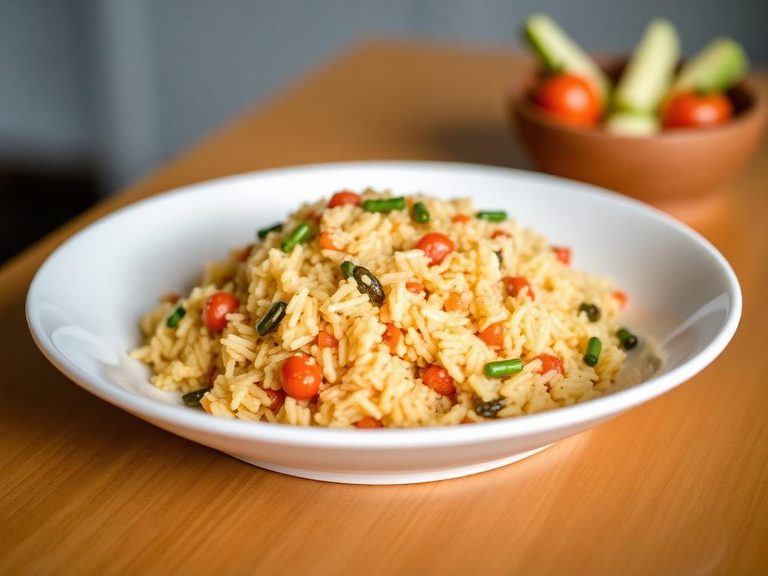
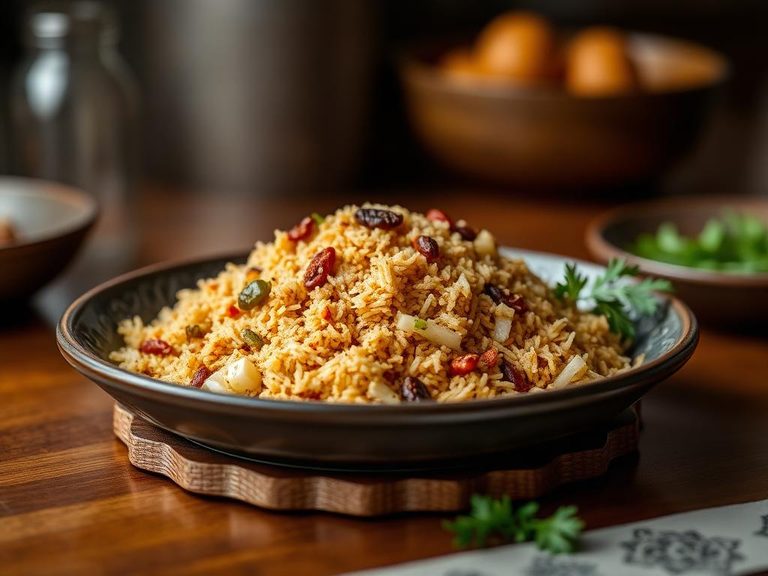
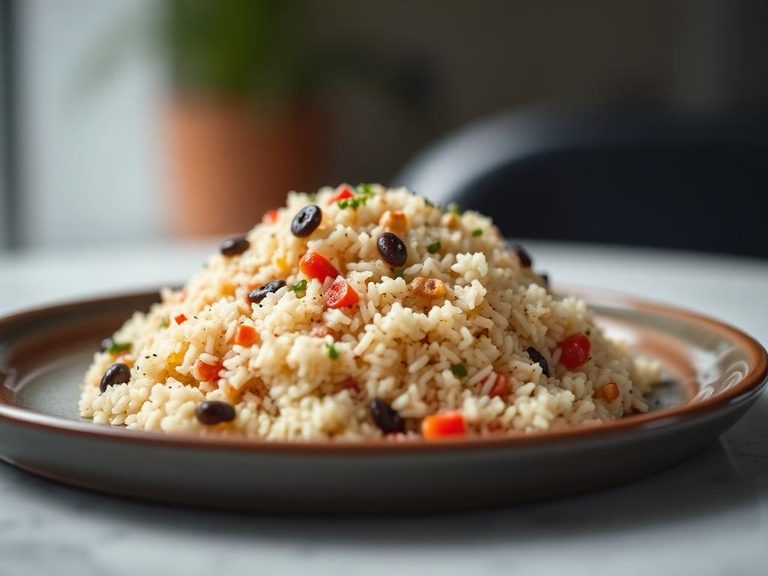
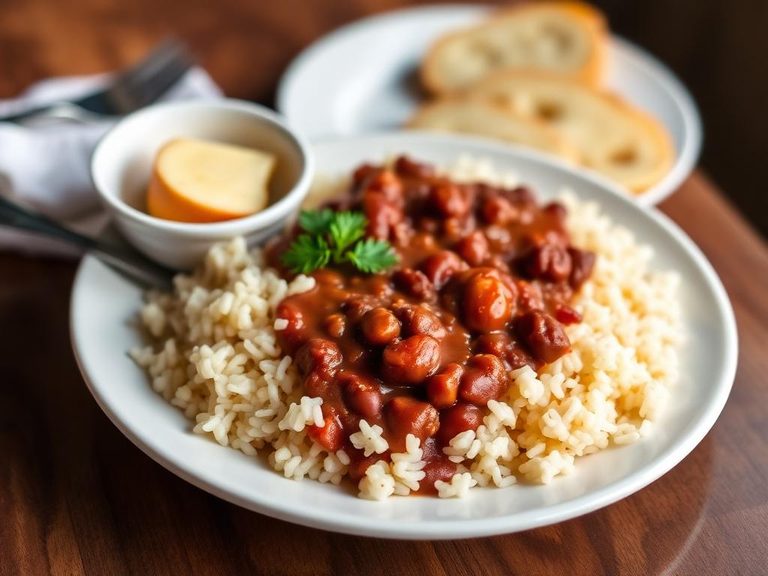
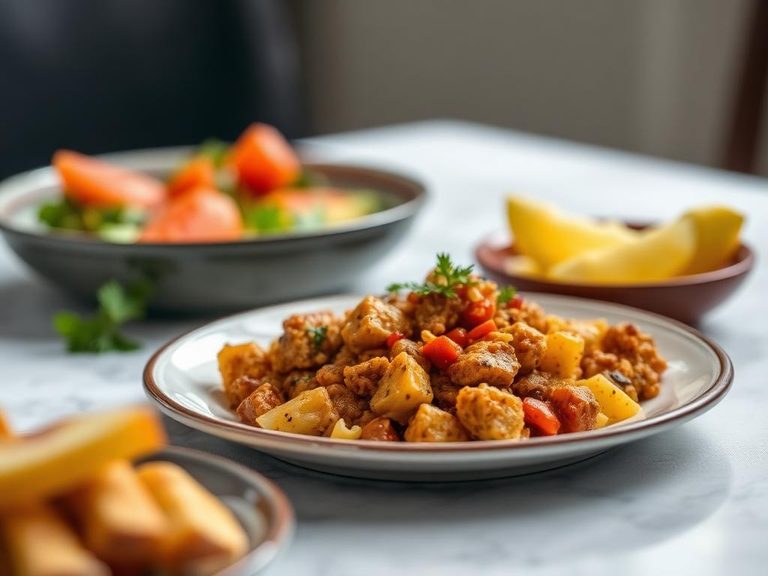
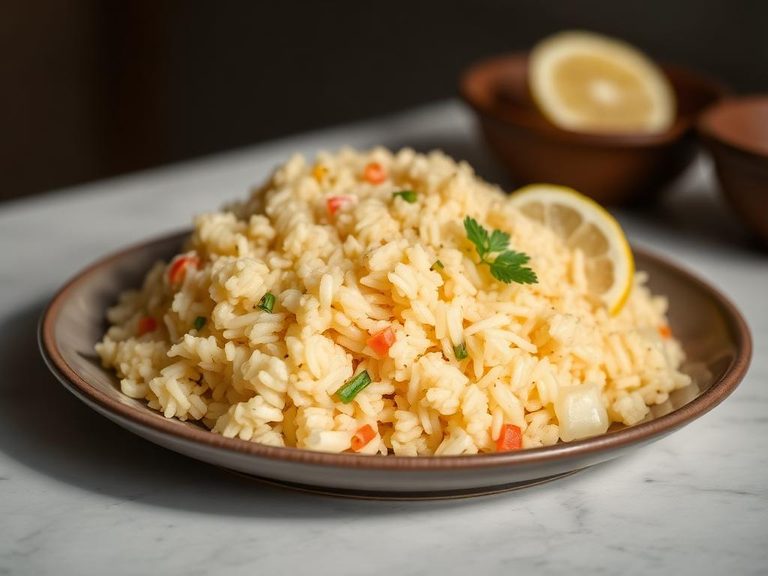
🌍 Where it's eaten
💡 Did you know?
The parboiling process forces some nutrients from the husk into the grain itself, which is why parboiled rice often has a slightly yellow tint and retains more vitamins than standard milled white rice.
Full nutrition (USDA data · scales with serving)
| Water | 9.9 g |
| Energy | 374 kcal |
| Energy | 1564 kj |
| Protein | 7.5 g |
| Total lipid (fat) | 1.0 g |
| Ash | 0.71 g |
| Carbohydrate, by difference | 80.9 g |
| Fiber, total dietary | 1.8 g |
| Total Sugars | 0.33 g |
| Sucrose | 0.21 g |
| Glucose | 0.11 g |
| Fructose | 0.02 g |
| Lactose | 0.00 g |
| Maltose | 0.00 g |
| Galactose | 0.00 g |
| Starch | 68.3 g |
| Calcium, Ca | 71.0 mg |
| Iron, Fe | 0.74 mg |
| Magnesium, Mg | 27.0 mg |
| Phosphorus, P | 153 mg |
| Potassium, K | 174 mg |
| Sodium, Na | 2.0 mg |
| Zinc, Zn | 1.0 mg |
| Copper, Cu | 0.28 mg |
| Manganese, Mn | 1.0 mg |
| Selenium, Se | 19.9 ug |
| Vitamin C, total ascorbic acid | 0.00 mg |
| Thiamin | 0.22 mg |
| Riboflavin | 0.05 mg |
| Niacin | 5.0 mg |
| Pantothenic acid | 0.67 mg |
| Vitamin B-6 | 0.45 mg |
| Folate, total | 8.0 ug |
| Folic acid | 0.00 ug |
| Folate, food | 8.0 ug |
| Folate, DFE | 8.0 ug |
| Vitamin B-12 | 0.00 ug |
| Vitamin B-12, added | 0.00 ug |
| Retinol | 0.00 ug |
| Vitamin A, IU | 0.00 iu |
| Vitamin E (alpha-tocopherol) | 0.03 mg |
| Vitamin E, added | 0.00 mg |
| Tocopherol, beta | 0.02 mg |
| Tocopherol, gamma | 0.17 mg |
| Tocopherol, delta | 0.00 mg |
| Tocotrienol, alpha | 0.05 mg |
| Tocotrienol, beta | 0.00 mg |
| Tocotrienol, gamma | 0.00 mg |
| Tocotrienol, delta | 0.00 mg |
| Vitamin D (D2 + D3), International Units | 0.00 iu |
| Vitamin D (D2 + D3) | 0.00 ug |
| Vitamin K (phylloquinone) | 0.10 ug |
| Alcohol, ethyl | 0.00 g |
Fat & fatty acid profile (per 100g)
| Fatty acids, total saturated | 0.29 g |
| SFA 4:0 | 0.00 g |
| SFA 6:0 | 0.00 g |
| SFA 8:0 | 0.00 g |
| SFA 10:0 | 0.00 g |
| SFA 12:0 | 0.00 g |
| SFA 14:0 | 0.00 g |
| SFA 15:0 | 0.00 g |
| SFA 16:0 | 0.28 g |
| SFA 17:0 | 0.00 g |
| SFA 18:0 | 0.02 g |
| SFA 20:0 | 0.00 g |
| SFA 22:0 | 0.00 g |
| SFA 24:0 | 0.00 g |
| Fatty acids, total monounsaturated | 0.26 g |
| MUFA 14:1 | 0.00 g |
| MUFA 16:1 | 0.00 g |
| MUFA 18:1 | 0.26 g |
| MUFA 20:1 | 0.00 g |
| MUFA 22:1 | 0.00 g |
| Fatty acids, total polyunsaturated | 0.32 g |
| PUFA 18:2 | 0.30 g |
| PUFA 18:3 | 0.02 g |
| PUFA 18:4 | 0.00 g |
| PUFA 20:4 | 0.00 g |
| PUFA 20:5 n-3 (EPA) | 0.00 g |
| PUFA 22:5 n-3 (DPA) | 0.00 g |
| PUFA 22:6 n-3 (DHA) | 0.00 g |
| Cholesterol | 0.00 mg |
Amino acid profile (per 100g)
| Tryptophan | 0.10 g |
| Threonine | 0.27 g |
| Isoleucine | 0.34 g |
| Leucine | 0.66 g |
| Lysine | 0.21 g |
| Methionine | 0.18 g |
| Cystine | 0.15 g |
| Phenylalanine | 0.40 g |
| Tyrosine | 0.22 g |
| Valine | 0.47 g |
| Arginine | 0.65 g |
| Histidine | 0.18 g |
| Alanine | 0.43 g |
| Aspartic acid | 0.80 g |
| Glutamic acid | 1.4 g |
| Glycine | 0.36 g |
| Proline | 0.48 g |
| Serine | 0.37 g |
FAQ
What's the difference between parboiled and regular white rice?
Parboiled rice is steamed in its husk before milling, which drives nutrients into the grain and results in a firmer texture, slightly yellow color, and a lower glycemic index than regular polished white rice.
Do I need to wash parboiled rice before cooking?
While not as critical as with regular white rice, a quick rinse can remove surface starch and any residual dust, helping the grains stay separate after cooking.
Why is my parboiled rice hard or crunchy?
Parboiled rice requires more water and a slightly longer cooking time than regular white rice. Ensure you use the correct water ratio (typically 1:2.5) and let it steam covered off the heat for 5-10 minutes after cooking.
Nutrient density (calculated · NRF9.3)
Nutrient Rich Foods index: beneficial nutrients (protein, fiber, vitamins, minerals) minus saturated fat, added sugar & sodium, per 100 kcal.
NRF9.3 index — Fulgoni, Keast & Drewnowski, 2009. Computed from USDA nutrients.
Weight-loss friendliness (composite index)
Energy density 3.74 kcal/g · 8% calories from protein · 1.8 g fiber · 0.3 g sugar per 100 g.
Composite of energy density (Rolls et al., 1999), protein & fiber satiety, minus sugar. A calculated heuristic — ranks satiety-per-calorie, not a clinical measure.
Dietary load (calculated from USDA values)
Potential renal acid load. Positive = acid-forming, negative = alkaline-forming.
Sodium-to-potassium ratio: 0.01 (lower is better — aim for ≤ 1)
Sodium:potassium per WHO potassium guidance. Computed from USDA nutrients.