Restaurant, Chinese, fried rice, without meat
Whole food · Restaurant Foods

Photo: Wikipedia
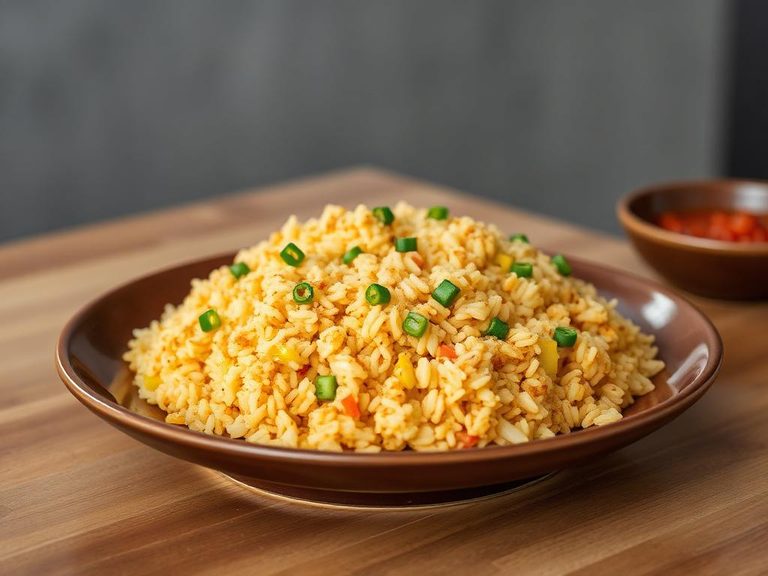
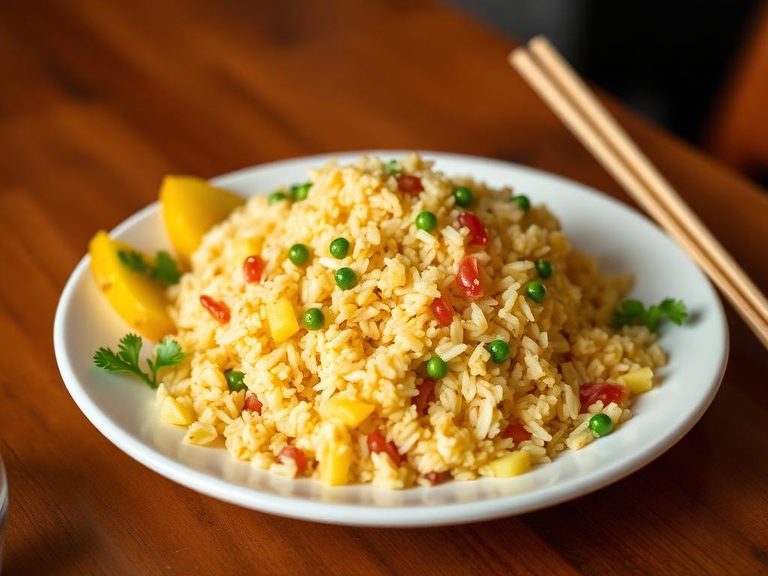
A classic, comforting dish of wok-fried rice grains, typically with egg, vegetables, and a savory sauce, offering a satisfying chew and a savory, umami-rich flavor profile. Nutritionally, it's a high-carb, low-fat energy source, with the protein primarily coming from the egg and rice itself.
💚 Why it's loved
People love it for its comforting, savory flavor and incredible versatility—it's the ultimate 'clean out the fridge' meal that can be customized with any available vegetables or sauces. It's a staple of home cooking and takeout culture, offering a quick, satisfying, and nostalgic bite.
⚠️ Watch-outs & how to enjoy it better
As a high-carb, low-fiber dish, it can cause a rapid rise in blood sugar, making portion control important for those managing glucose levels. It's also often high in sodium from soy sauce. To counteract this, pair it with a side of steamed greens or a protein like tofu or chicken to add fiber and slow digestion, and consider using low-sodium soy sauce or reducing the overall sauce amount.
Key benefits
- Quick and efficient way to use leftover rice and vegetables.
- Provides a good source of quick energy from complex carbohydrates.
- Naturally low in fat and contains no added sugar.
- A simple, budget-friendly, and filling meal option.
🍽️ Popular dishes
🌍 Where it's eaten
💡 Did you know?
The best fried rice is traditionally made with day-old, refrigerated rice because the grains are drier and less sticky, preventing a mushy result.
Full nutrition (scales with serving)
| Water | 59.3 g |
| Energy (Atwater General Factors) | 174 kcal |
| Energy | 174 kcal |
| Energy | 729 kj |
| Nitrogen | 0.61 g |
| Protein | 3.8 g |
| Total lipid (fat) | 3.2 g |
| Total fat (NLEA) | 2.2 g |
| Ash | 1.1 g |
| Carbohydrate, by difference | 32.5 g |
| Sugars, Total | 0.62 g |
| Sucrose | 0.37 g |
| Glucose | 0.12 g |
| Fructose | 0.12 g |
| Lactose | 0.00 g |
| Maltose | 0.00 g |
| Galactose | 0.00 g |
| Calcium, Ca | 11.0 mg |
| Iron, Fe | 0.46 mg |
| Magnesium, Mg | 9.7 mg |
| Phosphorus, P | 44.0 mg |
| Potassium, K | 69.0 mg |
| Sodium, Na | 361 mg |
| Zinc, Zn | 0.69 mg |
| Copper, Cu | 0.09 mg |
| Manganese, Mn | 0.43 mg |
| Choline, total | 5.5 mg |
| Choline, free | 1.5 mg |
| Choline, from phosphocholine | 0.50 mg |
| Choline, from phosphotidyl choline | 2.2 mg |
| Choline, from glycerophosphocholine | 1.3 mg |
| Choline, from sphingomyelin | 0.00 mg |
| Betaine | 0.20 mg |
| Vitamin A, RAE | 22.0 ug |
| Retinol | 10.0 ug |
| Carotene, beta | 128 ug |
| Carotene, alpha | 38.0 ug |
| Cryptoxanthin, beta | 0.00 ug |
| Lycopene | 3.0 ug |
| Lutein + zeaxanthin | 103 ug |
| Vitamin D (D2 + D3), International Units | 0.00 iu |
| Vitamin D (D2 + D3) | 0.00 ug |
| Vitamin D2 (ergocalciferol) | 0.00 ug |
| Vitamin D3 (cholecalciferol) | 0.00 ug |
| Fatty acids, total saturated | 0.49 g |
| SFA 4:0 | 0.00 g |
| SFA 6:0 | 0.00 g |
| SFA 8:0 | 0.00 g |
| SFA 10:0 | 0.00 g |
| SFA 11:0 | 0.00 g |
| SFA 12:0 | 0.00 g |
| SFA 14:0 | 0.01 g |
| SFA 15:0 | 0.00 g |
| SFA 16:0 | 0.35 g |
| SFA 17:0 | 0.00 g |
| SFA 18:0 | 0.11 g |
| SFA 20:0 | 0.01 g |
| SFA 22:0 | 0.01 g |
| SFA 24:0 | 0.01 g |
| Fatty acids, total monounsaturated | 0.59 g |
| MUFA 14:1 c | 0.00 g |
| MUFA 15:1 | 0.00 g |
| MUFA 16:1 c | 0.01 g |
| MUFA 17:1 | 0.00 g |
| MUFA 17:1 c | 0.00 g |
| MUFA 18:1 c | 0.57 g |
| MUFA 20:1 | 0.01 g |
| MUFA 20:1 c | 0.01 g |
| MUFA 22:1 c | 0.00 g |
| MUFA 24:1 c | 0.00 g |
| Fatty acids, total polyunsaturated | 1.1 g |
| PUFA 18:2 c | 1.0 g |
| PUFA 18:2 n-6 c,c | 1.00 g |
| PUFA 18:2 CLAs | 0.00 g |
| PUFA 18:3 c | 0.12 g |
| PUFA 18:3 n-3 c,c,c (ALA) | 0.12 g |
| PUFA 18:3 n-6 c,c,c | 0.01 g |
| PUFA 18:3i | 0.00 g |
| PUFA 18:4 | 0.00 g |
| PUFA 20:2 c | 0.00 g |
| PUFA 20:2 n-6 c,c | 0.00 g |
| PUFA 20:3 c | 0.00 g |
| PUFA 20:3 n-3 | 0.00 g |
| PUFA 20:3 n-6 | 0.00 g |
| PUFA 20:3 n-9 | 0.00 g |
| PUFA 20:4 | 0.00 g |
| PUFA 20:4c | 0.00 g |
| PUFA 20:5c | 0.00 g |
| PUFA 20:5 n-3 (EPA) | 0.00 g |
| PUFA 22:2 | 0.00 g |
| PUFA 22:5 c | 0.00 g |
| PUFA 22:4 | 0.00 g |
| PUFA 22:5 n-3 (DPA) | 0.00 g |
| PUFA 22:6 c | 0.00 g |
| PUFA 22:6 n-3 (DHA) | 0.00 g |
| Fatty acids, total trans | 0.01 g |
| Fatty acids, total trans-monoenoic | 0.00 g |
| TFA 16:1 t | 0.00 g |
| TFA 18:1 t | 0.00 g |
| TFA 22:1 t | 0.00 g |
| Fatty acids, total trans-dienoic | 0.01 g |
| TFA 18:2 t not further defined | 0.01 g |
FAQ
Why is my homemade fried rice mushy?
The most common reason is using freshly cooked, warm rice. The grains are too moist and will steam instead of fry. Always use cold, day-old rice for the best, separate-grain texture.
Is fried rice healthy?
It can be a part of a balanced diet. Its healthiness depends on the amount of oil and sodium used. Making it at home allows you to control these factors, and adding plenty of vegetables boosts its nutritional value.
What's the difference between Chinese and other Asian fried rice?
Chinese fried rice often features a savory, soy-based flavor and common ingredients like egg, peas, and carrots. Variations like Thai Pineapple Fried Rice use sweet and savory notes with curry powder and fruit, while Indonesian Nasi Goreng is known for its sweet soy sauce (kecap manis) and shrimp paste base.