

Okra, cooked, boiled, drained, without salt
Whole food · Vegetables and Vegetable Products

Photo: Wikipedia
Okra, when boiled and drained, transforms into a tender, slightly crisp pod with a mild, grassy flavor and a distinctive, slippery texture. This low-calorie vegetable is a powerhouse of dietary fiber, providing 2.5 grams per 100 grams, which aids in digestion and promotes a feeling of fullness. Its subtle taste makes it a versatile canvas for a wide range of seasonings and culinary preparations.
Calorie split: 27% protein · 66% carbs · 7% fat
↓ Full nutrition💚 Why it's loved
People love okra for its unique, satisfying texture and its ability to act as a natural thickener in stews and soups, adding body without extra calories. It's also cherished in many cultures as a staple vegetable that can be fried, stewed, or pickled, offering a comforting and familiar taste.
⚠️ Watch-outs & how to enjoy it better
The mucilaginous (slimy) texture can be off-putting to some, and it's often a result of boiling. To counteract this, you can roast or grill the okra instead, or add a splash of acidic ingredient like lemon juice or vinegar to the cooking water. While generally healthy, its fiber content may cause digestive discomfort for those unaccustomed to high-fiber foods, so it's best to increase intake gradually.
Key benefits
- Excellent source of dietary fiber (2.5g per 100g)
- Very low in calories (22 kcal per 100g)
- Provides essential vitamins and minerals like Vitamin C and folate
- Contains antioxidants that support overall health
- Naturally low in fat (0.21g per 100g)
🍽️ Popular dishes
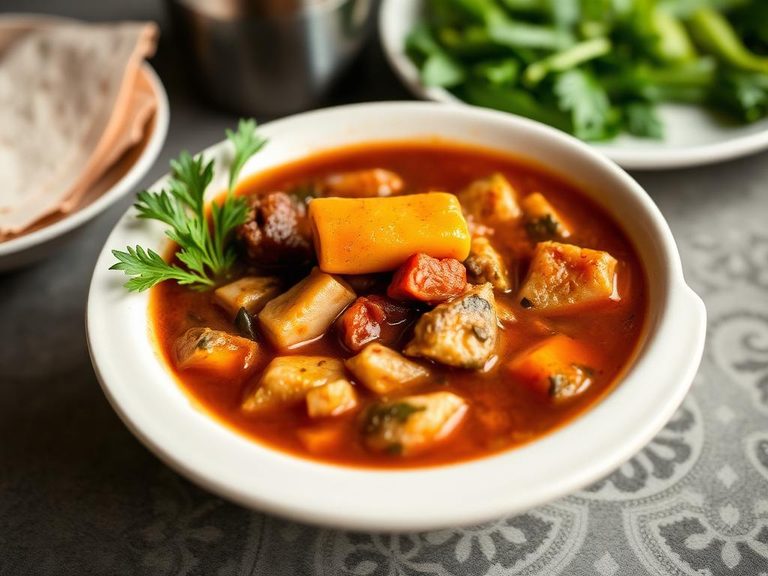
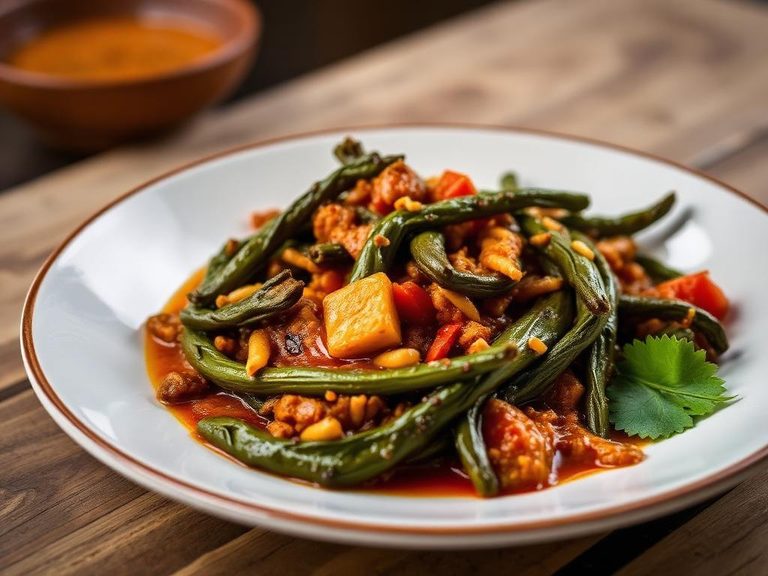
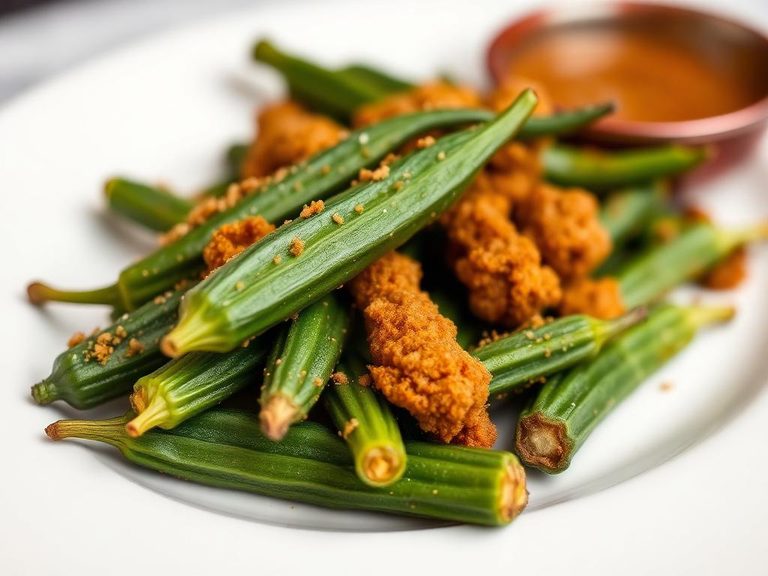
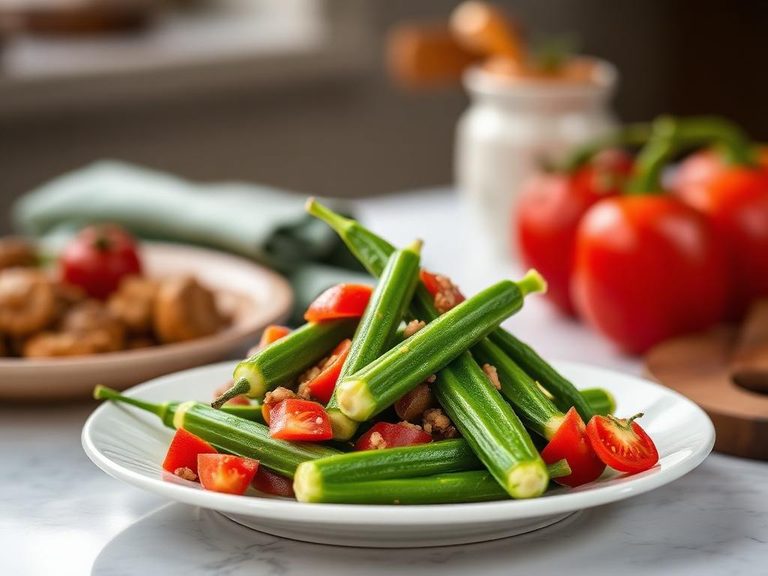
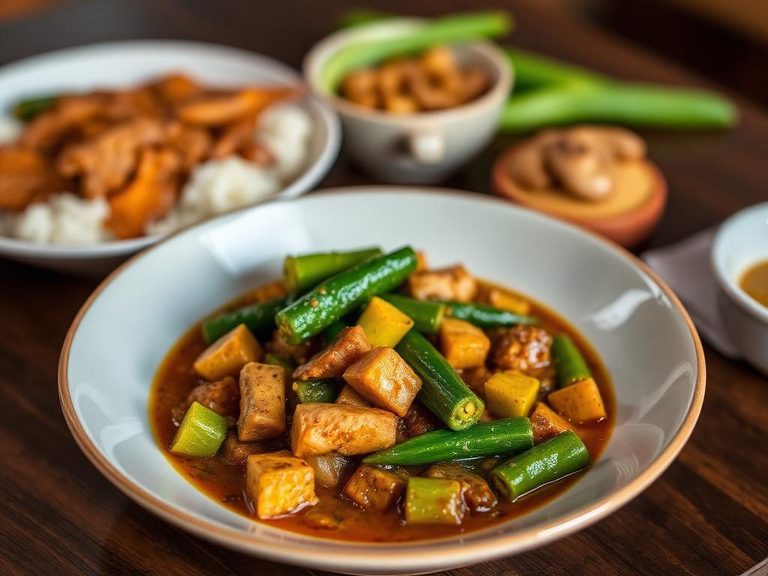
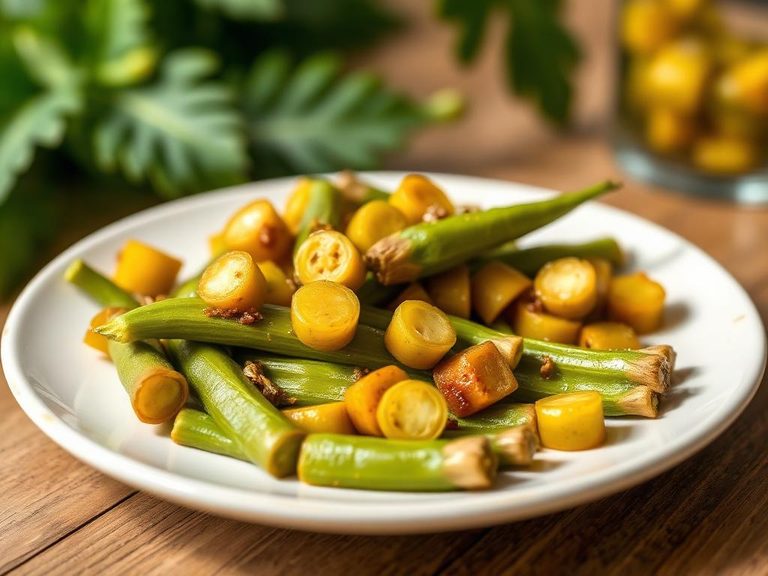
🌍 Where it's eaten
💡 Did you know?
The word 'okra' is derived from the Igbo word 'ọkụrụ', and the plant is believed to have been first domesticated in the Ethiopian region or West Africa.
Full nutrition (USDA data · scales with serving)
| Water | 92.6 g |
| Energy | 22.0 kcal |
| Energy | 94.0 kj |
| Protein | 1.9 g |
| Total lipid (fat) | 0.21 g |
| Ash | 0.84 g |
| Carbohydrate, by difference | 4.5 g |
| Fiber, total dietary | 2.5 g |
| Total Sugars | 2.4 g |
| Calcium, Ca | 77.0 mg |
| Iron, Fe | 0.28 mg |
| Magnesium, Mg | 36.0 mg |
| Phosphorus, P | 32.0 mg |
| Potassium, K | 135 mg |
| Sodium, Na | 6.0 mg |
| Zinc, Zn | 0.43 mg |
| Copper, Cu | 0.09 mg |
| Manganese, Mn | 0.29 mg |
| Selenium, Se | 0.40 ug |
| Vitamin C, total ascorbic acid | 16.3 mg |
| Thiamin | 0.13 mg |
| Riboflavin | 0.06 mg |
| Niacin | 0.87 mg |
| Pantothenic acid | 0.21 mg |
| Vitamin B-6 | 0.19 mg |
| Folate, total | 46.0 ug |
| Folic acid | 0.00 ug |
| Folate, food | 46.0 ug |
| Folate, DFE | 46.0 ug |
| Choline, total | 8.7 mg |
| Vitamin B-12 | 0.00 ug |
| Vitamin B-12, added | 0.00 ug |
| Vitamin A, RAE | 14.0 ug |
| Retinol | 0.00 ug |
| Carotene, beta | 170 ug |
| Carotene, alpha | 0.00 ug |
| Cryptoxanthin, beta | 0.00 ug |
| Vitamin A, IU | 283 iu |
| Lycopene | 0.00 ug |
| Lutein + zeaxanthin | 390 ug |
| Vitamin E (alpha-tocopherol) | 0.27 mg |
| Vitamin E, added | 0.00 mg |
| Tocopherol, beta | 0.00 mg |
| Tocopherol, gamma | 0.16 mg |
| Tocopherol, delta | 0.00 mg |
| Tocotrienol, alpha | 0.00 mg |
| Tocotrienol, beta | 0.00 mg |
| Tocotrienol, gamma | 0.00 mg |
| Tocotrienol, delta | 0.00 mg |
| Vitamin D (D2 + D3), International Units | 0.00 iu |
| Vitamin D (D2 + D3) | 0.00 ug |
| Vitamin K (phylloquinone) | 40.0 ug |
| Alcohol, ethyl | 0.00 g |
| Caffeine | 0.00 mg |
| Theobromine | 0.00 mg |
Fat & fatty acid profile (per 100g)
| Fatty acids, total saturated | 0.04 g |
| SFA 4:0 | 0.00 g |
| SFA 6:0 | 0.00 g |
| SFA 8:0 | 0.00 g |
| SFA 10:0 | 0.00 g |
| SFA 12:0 | 0.00 g |
| SFA 14:0 | 0.00 g |
| SFA 16:0 | 0.04 g |
| SFA 18:0 | 0.00 g |
| Fatty acids, total monounsaturated | 0.03 g |
| MUFA 16:1 | 0.00 g |
| MUFA 18:1 | 0.03 g |
| MUFA 20:1 | 0.00 g |
| MUFA 22:1 | 0.00 g |
| Fatty acids, total polyunsaturated | 0.05 g |
| PUFA 18:2 | 0.04 g |
| PUFA 18:3 | 0.00 g |
| PUFA 18:4 | 0.00 g |
| PUFA 20:4 | 0.00 g |
| PUFA 20:5 n-3 (EPA) | 0.00 g |
| PUFA 22:5 n-3 (DPA) | 0.00 g |
| PUFA 22:6 n-3 (DHA) | 0.00 g |
| Fatty acids, total trans | 0.00 g |
| Cholesterol | 0.00 mg |
Amino acid profile (per 100g)
| Tryptophan | 0.02 g |
| Threonine | 0.06 g |
| Isoleucine | 0.07 g |
| Leucine | 0.10 g |
| Lysine | 0.07 g |
| Methionine | 0.02 g |
| Cystine | 0.02 g |
| Phenylalanine | 0.06 g |
| Tyrosine | 0.08 g |
| Valine | 0.09 g |
| Arginine | 0.08 g |
| Histidine | 0.03 g |
| Alanine | 0.07 g |
| Aspartic acid | 0.14 g |
| Glutamic acid | 0.25 g |
| Glycine | 0.04 g |
| Proline | 0.04 g |
| Serine | 0.04 g |
FAQ
How can I reduce the sliminess of boiled okra?
To reduce the mucilaginous texture, avoid overcooking. You can also add a small amount of acid like lemon juice or vinegar to the boiling water, or cook the okra in a dish with acidic ingredients like tomatoes. Some prefer to cook okra whole or in larger pieces to minimize the release of slime.
Is boiled okra a good source of protein?
While boiled okra contains 1.87 grams of protein per 100 grams, it is not considered a significant source of protein compared to legumes, meat, or dairy. It's best enjoyed as part of a balanced diet alongside other protein-rich foods.
Can I freeze boiled okra?
Yes, boiled okra can be frozen. After boiling and draining, spread the okra on a baking sheet and freeze until solid, then transfer to a freezer-safe bag. This method helps prevent the pieces from sticking together. It's best used within 6-12 months for optimal quality.
Nutrient density (calculated · NRF9.3)
Nutrient Rich Foods index: beneficial nutrients (protein, fiber, vitamins, minerals) minus saturated fat, added sugar & sodium, per 100 kcal.
NRF9.3 index — Fulgoni, Keast & Drewnowski, 2009. Computed from USDA nutrients.
Weight-loss friendliness (composite index)
Energy density 0.22 kcal/g · 34% calories from protein · 2.5 g fiber · 2.4 g sugar per 100 g.
Composite of energy density (Rolls et al., 1999), protein & fiber satiety, minus sugar. A calculated heuristic — ranks satiety-per-calorie, not a clinical measure.
Dietary load (calculated from USDA values)
Potential renal acid load. Positive = acid-forming, negative = alkaline-forming.
Sodium-to-potassium ratio: 0.04 (lower is better — aim for ≤ 1)
Sodium:potassium per WHO potassium guidance. Computed from USDA nutrients.