

Flour, 00
Whole food · Cereal Grains and Pasta
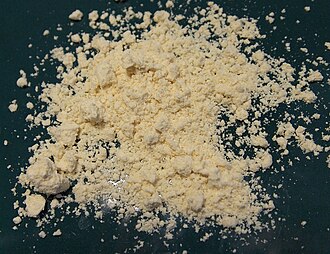
Photo: Wikipedia
Flour 00 is an ultra-fine Italian milled wheat flour, prized for its silky, powdery texture and neutral, subtly sweet flavor that creates exceptionally smooth doughs. Nutritionally, it is a dense source of carbohydrates, providing 357 kcal and 74.4g of carbs per 100g, with moderate protein and very low fat. Its defining characteristic is its incredibly low ash content and fine grind, which yields a delicate, tender crumb in baked goods.
Calorie split: 13% protein · 83% carbs · 4% fat
↓ Full nutrition💚 Why it's loved
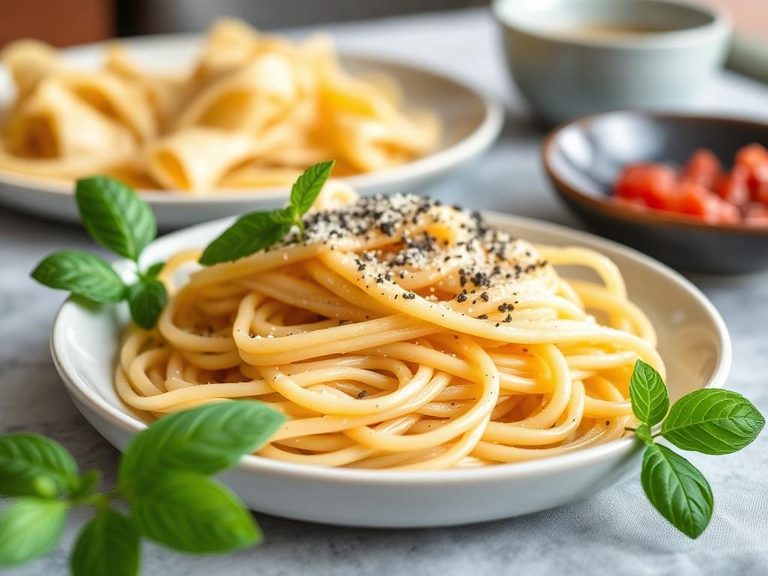
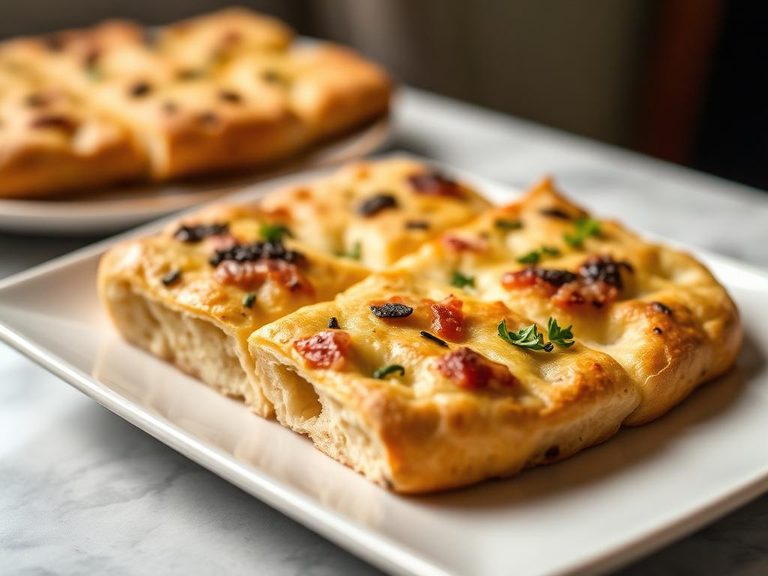
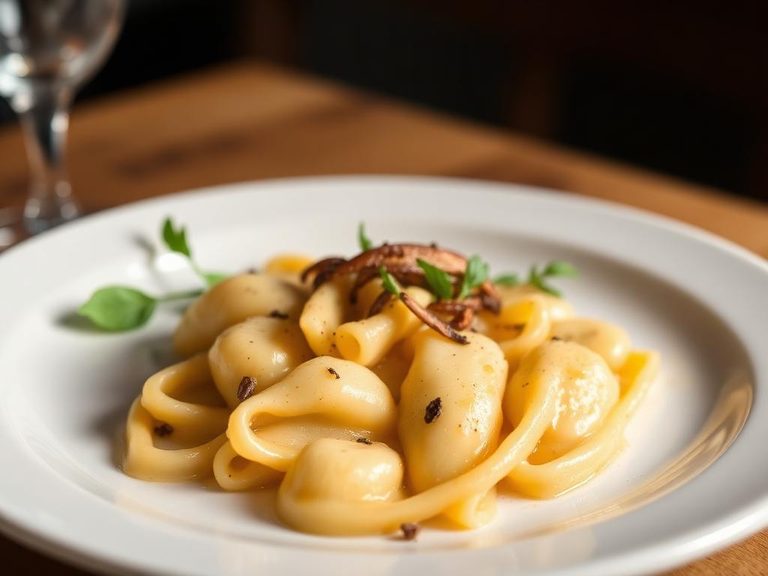
People love it for its unparalleled ability to produce a supple, tender, and chewy texture in pasta and pizza crusts, a cornerstone of Italian culinary tradition. Its neutral taste and fine grind make it a versatile canvas for both savory and sweet applications.
⚠️ Watch-outs & how to enjoy it better
Its high glycemic load can cause rapid blood-sugar spikes, making it less suitable for those managing diabetes or insulin resistance. As a wheat product, it is a common allergen for those with celiac disease or gluten sensitivity. To counteract this, pair it with protein (like eggs in pasta) or fat (like olive oil in dough) to slow digestion, and practice strict portion control.
Key benefits
- Creates a silky, elastic dough ideal for pasta and pizza
- Provides a neutral flavor that allows other ingredients to shine
- High in carbohydrates for quick energy
- Low in fat and sugar, making it a versatile base ingredient
- Fine texture ensures a smooth, non-gritty mouthfeel in finished dishes
🍽️ Popular dishes



🌍 Where it's eaten
💡 Did you know?
The '00' designation refers to the Italian flour grading system, indicating the finest possible grind with the lowest ash (mineral) content, not the protein level.
Full nutrition (USDA data · scales with serving)
| Water | 12.2 g |
| Energy (Atwater General Factors) | 357 kcal |
| Energy (Atwater Specific Factors) | 366 kcal |
| Nitrogen | 1.8 g |
| Protein | 11.4 g |
| Total lipid (fat) | 1.5 g |
| Ash | 0.46 g |
| Carbohydrate, by difference | 74.4 g |
| Fiber, total dietary | 2.7 g |
| Calcium, Ca | 18.7 mg |
| Iron, Fe | 0.99 mg |
| Magnesium, Mg | 25.8 mg |
| Phosphorus, P | 106 mg |
| Potassium, K | 136 mg |
| Sodium, Na | 0.00 mg |
| Zinc, Zn | 0.79 mg |
| Copper, Cu | 0.17 mg |
| Manganese, Mn | 0.55 mg |
| Selenium, Se | 10.3 ug |
| Molybdenum, Mo | 34.4 ug |
| Thiamin | 0.13 mg |
| Riboflavin | 0.09 mg |
| Niacin | 1.4 mg |
| Vitamin B-6 | 0.06 mg |
| Folate, total | 13.5 ug |
Fat & fatty acid profile (per 100g)
Estimated from Pasta, gluten-free, corn flour and quinoa flour, cooked, ANCIENT HARVEST — USDA does not publish this profile for Flour.
| Fatty acids, total saturated | 0.15 g |
| SFA 4:0 | 0.00 g |
| SFA 6:0 | 0.00 g |
| SFA 8:0 | 0.00 g |
| SFA 10:0 | 0.00 g |
| SFA 12:0 | 0.00 g |
| SFA 14:0 | 0.01 g |
| SFA 15:0 | 0.00 g |
| SFA 16:0 | 0.09 g |
| SFA 17:0 | 0.00 g |
| SFA 18:0 | 0.04 g |
| SFA 20:0 | 0.01 g |
| SFA 22:0 | 0.00 g |
| SFA 24:0 | 0.00 g |
| Fatty acids, total monounsaturated | 0.66 g |
| MUFA 14:1 | 0.00 g |
| MUFA 15:1 | 0.17 g |
| MUFA 16:1 | 0.00 g |
| MUFA 16:1 c | 0.00 g |
| MUFA 17:1 | 0.00 g |
| MUFA 18:1 | 0.48 g |
| MUFA 18:1 c | 0.47 g |
| MUFA 20:1 | 0.01 g |
| MUFA 22:1 | 0.00 g |
| MUFA 22:1 c | 0.00 g |
| MUFA 24:1 c | 0.00 g |
| Fatty acids, total polyunsaturated | 0.95 g |
| PUFA 18:2 | 0.91 g |
| PUFA 18:2 n-6 c,c | 0.91 g |
| PUFA 18:2 CLAs | 0.00 g |
| PUFA 18:3 | 0.03 g |
| PUFA 18:3 n-3 c,c,c (ALA) | 0.03 g |
| PUFA 18:3 n-6 c,c,c | 0.00 g |
| PUFA 18:3i | 0.00 g |
| PUFA 18:4 | 0.00 g |
| PUFA 20:2 n-6 c,c | 0.00 g |
| PUFA 20:3 | 0.00 g |
| PUFA 20:3 n-3 | 0.00 g |
| PUFA 20:3 n-6 | 0.00 g |
| PUFA 20:4 | 0.00 g |
| PUFA 20:5 n-3 (EPA) | 0.00 g |
| PUFA 22:4 | 0.00 g |
| PUFA 22:5 n-3 (DPA) | 0.00 g |
| PUFA 22:6 n-3 (DHA) | 0.00 g |
| Fatty acids, total trans | 0.01 g |
| Fatty acids, total trans-monoenoic | 0.00 g |
| TFA 16:1 t | 0.00 g |
| TFA 18:1 t | 0.00 g |
| TFA 22:1 t | 0.00 g |
| TFA 18:2 t not further defined | 0.00 g |
| Fatty acids, total trans-polyenoic | 0.00 g |
| Cholesterol | 0.00 mg |
Amino acid profile (per 100g)
Estimated from Pasta, gluten-free, corn flour and quinoa flour, cooked, ANCIENT HARVEST — USDA does not publish this profile for Flour.
| Tryptophan | 0.02 g |
| Threonine | 0.10 g |
| Isoleucine | 0.09 g |
| Leucine | 0.35 g |
| Lysine | 0.16 g |
| Methionine | 0.06 g |
| Cystine | 0.07 g |
| Phenylalanine | 0.15 g |
| Tyrosine | 0.12 g |
| Valine | 0.11 g |
| Arginine | 0.18 g |
| Histidine | 0.09 g |
| Alanine | 0.21 g |
| Aspartic acid | 0.19 g |
| Glutamic acid | 0.46 g |
| Glycine | 0.12 g |
| Proline | 0.29 g |
| Serine | 0.15 g |
| Hydroxyproline | 0.00 g |
FAQ
What does '00' mean in flour?
It's an Italian grading system for flour fineness. '00' is the finest grind, with the lowest ash (mineral) content, resulting in a very smooth, white flour.
Is flour 00 the same as all-purpose flour?
Not exactly. While both are refined wheat flours, 00 is much finer and typically has a lower protein content than standard all-purpose flour, making it better for tender pasta and pizza doughs.
Can I use flour 00 for cakes and cookies?
Yes, it's excellent for cakes, cookies, and pastries where a tender, delicate crumb is desired. Its fine texture creates a lighter result than some all-purpose flours.
Is flour 00 gluten-free?
No, it is made from wheat and contains gluten. It is not suitable for individuals with celiac disease or gluten intolerance.
Nutrient density (calculated · NRF9.3)
Nutrient Rich Foods index: beneficial nutrients (protein, fiber, vitamins, minerals) minus saturated fat, added sugar & sodium, per 100 kcal.
NRF9.3 index — Fulgoni, Keast & Drewnowski, 2009. Computed from USDA nutrients.
Weight-loss friendliness (composite index)
Energy density 3.57 kcal/g · 13% calories from protein · 2.7 g fiber · 0.0 g sugar per 100 g.
Composite of energy density (Rolls et al., 1999), protein & fiber satiety, minus sugar. A calculated heuristic — ranks satiety-per-calorie, not a clinical measure.
Dietary load (calculated from USDA values)
Potential renal acid load. Positive = acid-forming, negative = alkaline-forming.
Sodium-to-potassium ratio: 0.00 (lower is better — aim for ≤ 1)
Sodium:potassium per WHO potassium guidance. Computed from USDA nutrients.