

Emu, ground, cooked, pan-broiled
Whole food · Poultry Products

Photo: Wikipedia
Emu is a large, lean red meat from Australia's national bird, offering a deep, rich flavor reminiscent of premium beef but with a subtly sweeter, cleaner finish. Pan-broiled, it develops a satisfying sear while remaining remarkably tender and juicy. Its standout nutritional profile is its exceptionally high protein density paired with very low fat, making it a powerhouse for muscle-focused diets.
Calorie split: 73% protein · 0% carbs · 27% fat
↓ Full nutrition💚 Why it's loved
People love emu for its robust, beef-like flavor that isn't gamey, making it an approachable exotic meat. Its versatility allows it to be used in any dish from steaks to burgers, providing a nutritious, red-meat alternative that cooks quickly.
⚠️ Watch-outs & how to enjoy it better
As a very lean meat, it can dry out and become tough if overcooked, which is a common pitfall for those accustomed to fattier cuts. To counteract this, use a meat thermometer to pull it at 130°F (54°C) for medium-rare, and let it rest before slicing against the grain. Its high protein content may also be a consideration for individuals with specific kidney conditions who are on protein-restricted diets.
Key benefits
- Exceptionally high in protein (28.4g per 100g) for muscle repair and satiety.
- Very low in fat (4.65g) and contains zero carbohydrates or sugar.
- A good source of iron, zinc, and B vitamins, particularly B12.
- Leaner than most red meats like beef or lamb, supporting heart-healthy diets.
- Often raised on open pastures with a lower environmental footprint than conventional livestock.
🍽️ Popular dishes
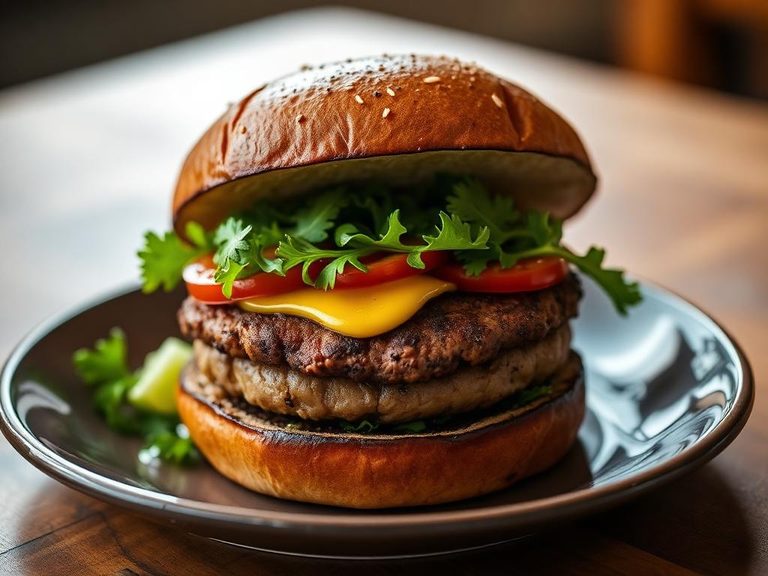
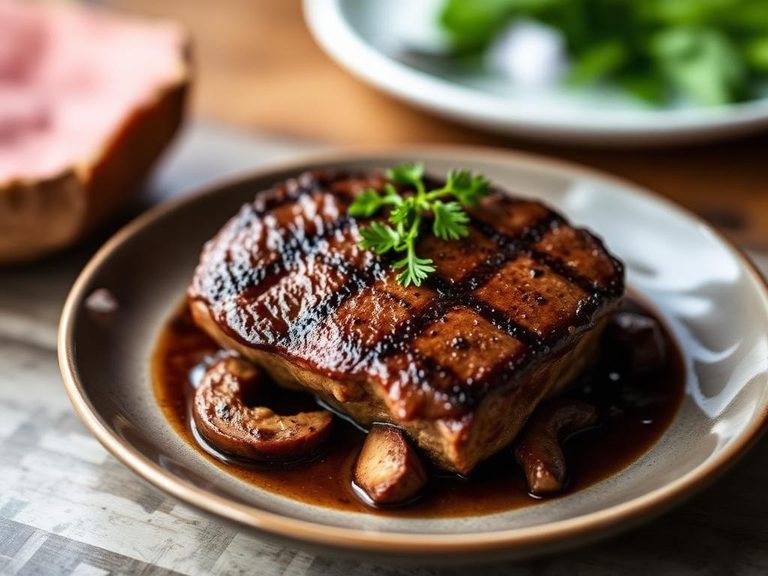
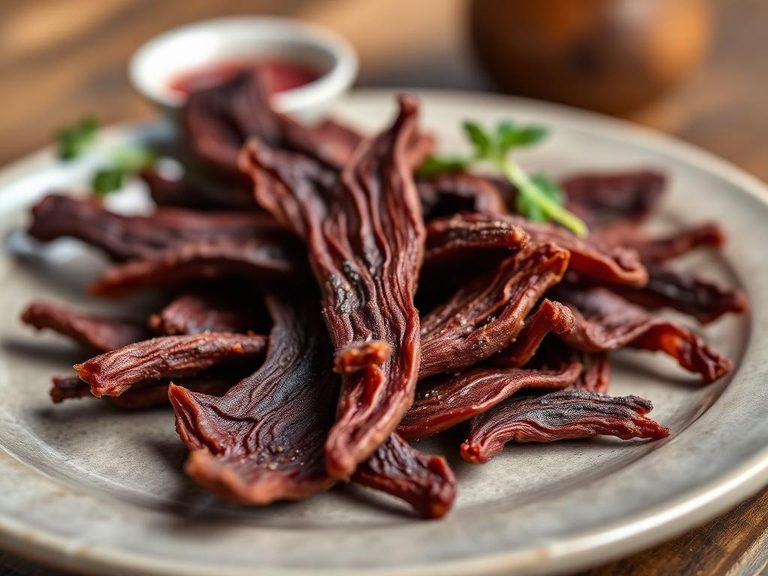
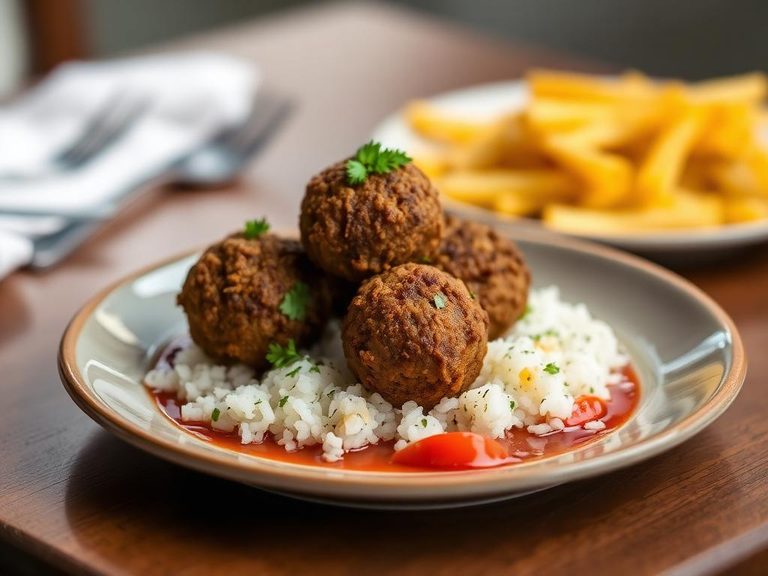
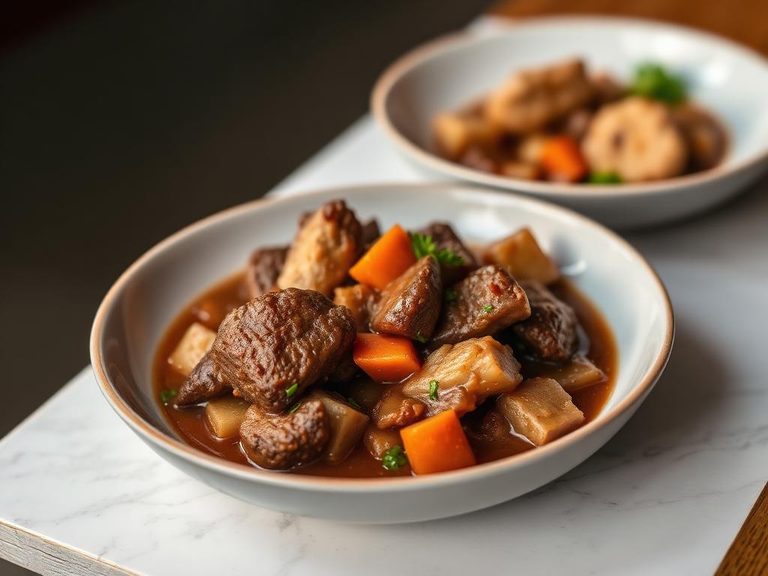
🌍 Where it's eaten
💡 Did you know?
Emu oil, rendered from the bird's fat, has been used for millennia by Indigenous Australians as a healing balm for skin ailments and is now a popular ingredient in modern cosmetics.
Full nutrition (USDA data · scales with serving)
| Water | 65.8 g |
| Energy | 163 kcal |
| Energy | 683 kj |
| Protein | 28.4 g |
| Total lipid (fat) | 4.7 g |
| Ash | 1.2 g |
| Carbohydrate, by difference | 0.00 g |
| Fiber, total dietary | 0.00 g |
| Total Sugars | 0.00 g |
| Calcium, Ca | 8.0 mg |
| Iron, Fe | 5.0 mg |
| Magnesium, Mg | 29.0 mg |
| Phosphorus, P | 269 mg |
| Potassium, K | 375 mg |
| Sodium, Na | 65.0 mg |
| Zinc, Zn | 4.6 mg |
| Copper, Cu | 0.24 mg |
| Manganese, Mn | 0.03 mg |
| Selenium, Se | 43.5 ug |
| Vitamin C, total ascorbic acid | 0.00 mg |
| Thiamin | 0.32 mg |
| Riboflavin | 0.55 mg |
| Niacin | 8.9 mg |
| Pantothenic acid | 3.1 mg |
| Vitamin B-6 | 0.83 mg |
| Folate, total | 9.0 ug |
| Folic acid | 0.00 ug |
| Folate, food | 9.0 ug |
| Folate, DFE | 9.0 ug |
| Vitamin B-12 | 8.5 ug |
| Vitamin A, RAE | 0.00 ug |
| Retinol | 0.00 ug |
| Carotene, beta | 0.00 ug |
| Carotene, alpha | 0.00 ug |
| Cryptoxanthin, beta | 0.00 ug |
| Vitamin A, IU | 0.00 iu |
| Lycopene | 0.00 ug |
| Lutein + zeaxanthin | 0.00 ug |
| Vitamin E (alpha-tocopherol) | 0.24 mg |
| Vitamin K (phylloquinone) | 3.6 ug |
| Alcohol, ethyl | 0.00 g |
| Caffeine | 0.00 mg |
| Theobromine | 0.00 mg |
Fat & fatty acid profile (per 100g)
| Fatty acids, total saturated | 1.2 g |
| SFA 4:0 | 0.00 g |
| SFA 6:0 | 0.00 g |
| SFA 8:0 | 0.00 g |
| SFA 10:0 | 0.00 g |
| SFA 12:0 | 0.00 g |
| SFA 14:0 | 0.01 g |
| SFA 15:0 | 0.00 g |
| SFA 16:0 | 0.80 g |
| SFA 17:0 | 0.01 g |
| SFA 18:0 | 0.42 g |
| SFA 20:0 | 0.00 g |
| SFA 22:0 | 0.00 g |
| Fatty acids, total monounsaturated | 2.0 g |
| MUFA 14:1 | 0.00 g |
| MUFA 15:1 | 0.00 g |
| MUFA 16:1 | 0.16 g |
| MUFA 17:1 | 0.00 g |
| MUFA 18:1 | 1.8 g |
| MUFA 20:1 | 0.01 g |
| MUFA 22:1 | 0.00 g |
| Fatty acids, total polyunsaturated | 0.68 g |
| PUFA 18:2 | 0.51 g |
| PUFA 18:3 | 0.03 g |
| PUFA 18:3 n-6 c,c,c | 0.00 g |
| PUFA 18:4 | 0.00 g |
| PUFA 20:2 n-6 c,c | 0.01 g |
| PUFA 20:3 | 0.00 g |
| PUFA 20:4 | 0.14 g |
| PUFA 20:5 n-3 (EPA) | 0.00 g |
| PUFA 22:5 n-3 (DPA) | 0.00 g |
| PUFA 22:6 n-3 (DHA) | 0.00 g |
| Fatty acids, total trans | 0.15 g |
| Cholesterol | 87.0 mg |
Amino acid profile (per 100g)
| Tryptophan | 0.19 g |
| Threonine | 0.81 g |
| Isoleucine | 0.92 g |
| Leucine | 1.6 g |
| Lysine | 1.7 g |
| Methionine | 0.54 g |
| Cystine | 0.20 g |
| Phenylalanine | 0.81 g |
| Tyrosine | 0.61 g |
| Valine | 0.95 g |
| Arginine | 1.3 g |
| Histidine | 0.62 g |
| Alanine | 1.1 g |
| Aspartic acid | 2.5 g |
| Glutamic acid | 2.8 g |
| Glycine | 0.90 g |
| Proline | 1.2 g |
| Serine | 0.68 g |
| Hydroxyproline | 0.19 g |
FAQ
How does emu meat taste compared to beef?
It has a very similar taste to lean beef but is often described as slightly sweeter, richer, and cleaner-tasting, with a fine-grained texture.
Is emu meat red or white?
It is classified as red meat due to its high myoglobin content, which gives it its deep red color and rich flavor.
How should I cook emu to avoid it becoming tough?
Cook it quickly over high heat (grilling, pan-broiling) to medium-rare or medium doneness. Overcooking is the main cause of toughness in such a lean meat.
Nutrient density (calculated · NRF9.3)
Nutrient Rich Foods index: beneficial nutrients (protein, fiber, vitamins, minerals) minus saturated fat, added sugar & sodium, per 100 kcal.
NRF9.3 index — Fulgoni, Keast & Drewnowski, 2009. Computed from USDA nutrients.
Weight-loss friendliness (composite index)
Energy density 1.63 kcal/g · 70% calories from protein · 0.0 g fiber · 0.0 g sugar per 100 g.
Composite of energy density (Rolls et al., 1999), protein & fiber satiety, minus sugar. A calculated heuristic — ranks satiety-per-calorie, not a clinical measure.
Dietary load (calculated from USDA values)
Potential renal acid load. Positive = acid-forming, negative = alkaline-forming.
Sodium-to-potassium ratio: 0.17 (lower is better — aim for ≤ 1)
Sodium:potassium per WHO potassium guidance. Computed from USDA nutrients.