Cheese, ricotta, whole milk
Whole food · Dairy and Egg Products

Photo: Wikipedia
Whole milk ricotta is a fresh, Italian whey cheese with a luxuriously creamy, slightly grainy texture and a delicate, milky sweetness. Its nutrition profile is balanced, offering a solid protein punch (7.54g per 100g) alongside satisfying fats, making it a creamy yet nutrient-dense staple. It's the ultimate culinary chameleon, equally at home in sweet and savory applications.
💚 Why it's loved
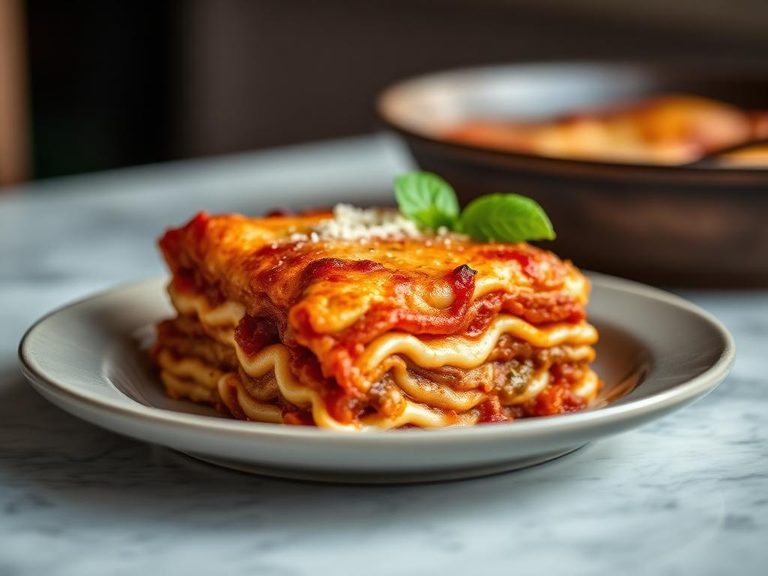
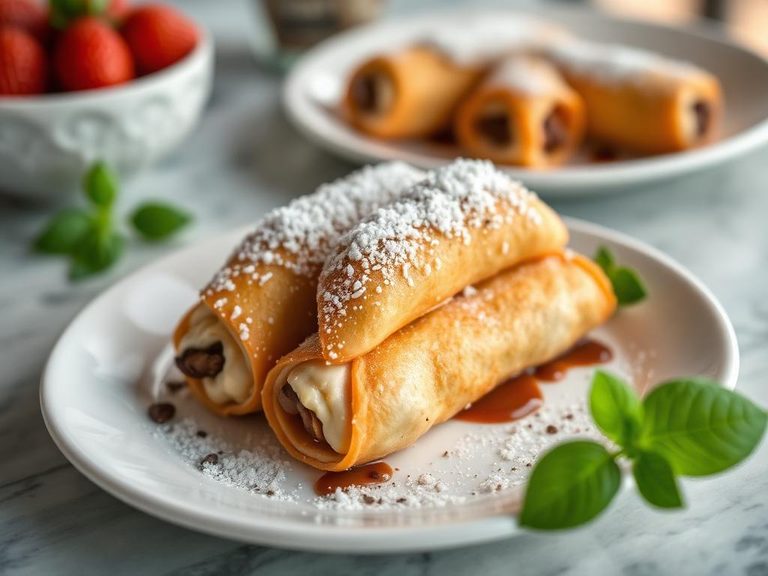
People adore ricotta for its sublime, cloud-like texture that melts into a creamy dream in both lasagna and cannoli. Its mild, sweet flavor acts as a perfect canvas, absorbing herbs in savory dishes or vanilla in desserts, making it one of the most versatile cheeses in the kitchen.
⚠️ Watch-outs & how to enjoy it better
As a dairy product, it's a common allergen and contains lactose, which can cause digestive issues for some. Its high fat content means it's calorie-dense, so portion control is key for those managing intake. For a lighter option, try part-skim ricotta or blend it with Greek yogurt to boost protein while reducing fat.
Key benefits
- Excellent source of high-quality whey protein for muscle maintenance.
- Rich in calcium and phosphorus for bone health.
- Contains conjugated linoleic acid (CLA), a naturally occurring fatty acid.
- Provides a good dose of B vitamins, especially riboflavin (B2).
- Naturally low in sodium compared to many aged cheeses.
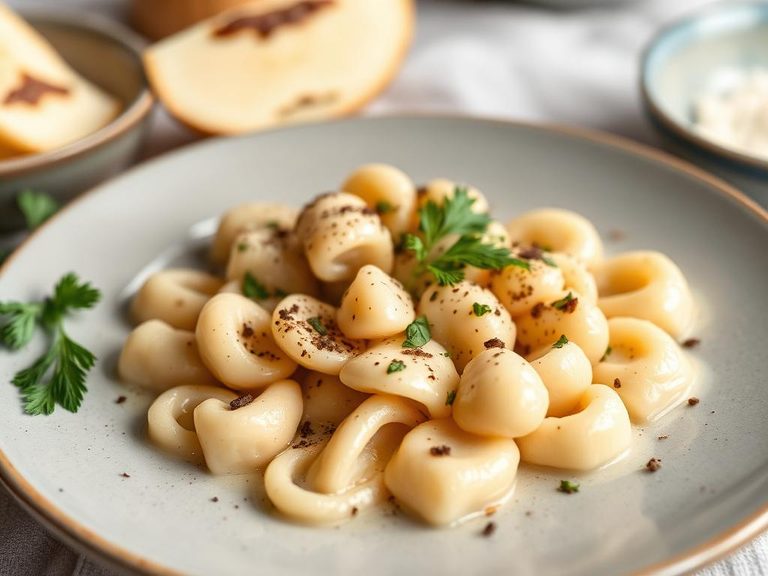
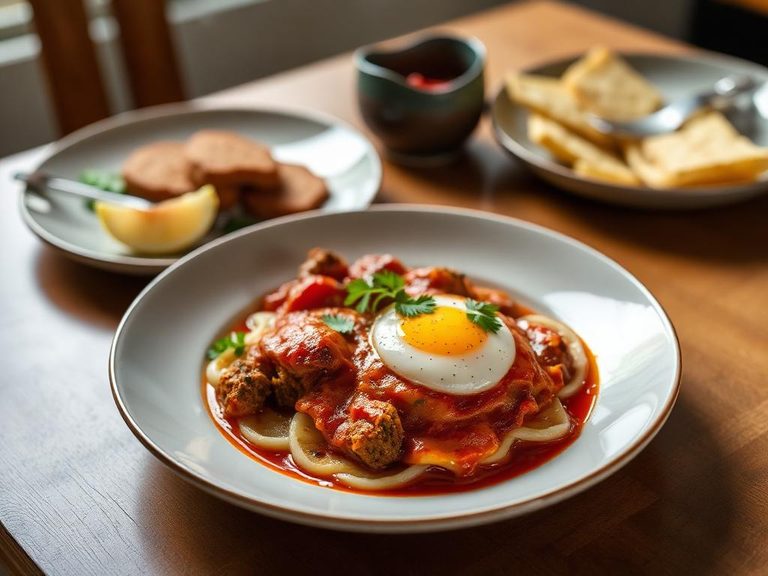
🍽️ Popular dishes
🌍 Where it's eaten
💡 Did you know?
The word 'ricotta' literally means 'recooked' in Italian, as it's made by reheating the whey leftover from making other cheeses like mozzarella or provolone.
Full nutrition (scales with serving)
| Water | 73.7 g |
| Energy | 150 kcal |
| Energy | 627 kj |
| Protein | 7.5 g |
| Total lipid (fat) | 10.2 g |
| Ash | 1.3 g |
| Carbohydrate, by difference | 7.3 g |
| Fiber, total dietary | 0.00 g |
| Total Sugars | 0.27 g |
| Calcium, Ca | 206 mg |
| Iron, Fe | 0.13 mg |
| Magnesium, Mg | 20.0 mg |
| Phosphorus, P | 154 mg |
| Potassium, K | 219 mg |
| Sodium, Na | 110 mg |
| Zinc, Zn | 0.53 mg |
| Copper, Cu | 0.02 mg |
| Manganese, Mn | 0.01 mg |
| Selenium, Se | 5.9 ug |
| Vitamin C, total ascorbic acid | 0.00 mg |
| Thiamin | 0.01 mg |
| Riboflavin | 0.30 mg |
| Niacin | 0.14 mg |
| Pantothenic acid | 0.46 mg |
| Vitamin B-6 | 0.10 mg |
| Folate, total | 4.0 ug |
| Folic acid | 0.00 ug |
| Folate, food | 4.0 ug |
| Folate, DFE | 4.0 ug |
| Choline, total | 17.5 mg |
| Vitamin B-12 | 0.85 ug |
| Vitamin B-12, added | 0.00 ug |
| Vitamin A, RAE | 120 ug |
| Retinol | 117 ug |
| Carotene, beta | 33.0 ug |
| Carotene, alpha | 0.00 ug |
| Cryptoxanthin, beta | 0.00 ug |
| Vitamin A, IU | 445 iu |
| Lycopene | 0.00 ug |
| Lutein + zeaxanthin | 0.00 ug |
| Vitamin E (alpha-tocopherol) | 0.11 mg |
| Vitamin E, added | 0.00 mg |
| Vitamin D (D2 + D3), International Units | 10.0 iu |
| Vitamin D (D2 + D3) | 0.20 ug |
| Vitamin D3 (cholecalciferol) | 0.20 ug |
| Vitamin K (phylloquinone) | 1.1 ug |
| Fatty acids, total saturated | 6.4 g |
| SFA 4:0 | 0.23 g |
| SFA 6:0 | 0.18 g |
| SFA 8:0 | 0.12 g |
| SFA 10:0 | 0.28 g |
| SFA 12:0 | 0.34 g |
| SFA 14:0 | 1.1 g |
| SFA 15:0 | 0.11 g |
| SFA 16:0 | 3.1 g |
| SFA 17:0 | 0.06 g |
| SFA 18:0 | 0.96 g |
| SFA 20:0 | 0.01 g |
| SFA 22:0 | 0.01 g |
| SFA 24:0 | 0.00 g |
| Fatty acids, total monounsaturated | 2.7 g |
| MUFA 14:1 | 0.11 g |
| MUFA 15:1 | 0.00 g |
| MUFA 16:1 | 0.20 g |
| MUFA 16:1 c | 0.17 g |
| MUFA 17:1 | 0.02 g |
| MUFA 18:1 | 2.3 g |
| MUFA 18:1 c | 2.1 g |
| MUFA 20:1 | 0.02 g |
| MUFA 22:1 | 0.00 g |
| MUFA 22:1 c | 0.00 g |
| MUFA 24:1 c | 0.00 g |
| Fatty acids, total polyunsaturated | 0.45 g |
| PUFA 18:2 | 0.36 g |
| PUFA 18:2 n-6 c,c | 0.25 g |
| PUFA 18:2 CLAs | 0.05 g |
| PUFA 18:3 | 0.04 g |
| PUFA 18:3 n-3 c,c,c (ALA) | 0.04 g |
| PUFA 18:3 n-6 c,c,c | 0.00 g |
| PUFA 18:3i | 0.00 g |
| PUFA 18:4 | 0.00 g |
| PUFA 20:2 n-6 c,c | 0.00 g |
| PUFA 20:3 | 0.01 g |
| PUFA 20:3 n-3 | 0.00 g |
| PUFA 20:3 n-6 | 0.01 g |
| PUFA 20:4 | 0.01 g |
| PUFA 20:5 n-3 (EPA) | 0.00 g |
| PUFA 22:4 | 0.00 g |
| PUFA 22:5 n-3 (DPA) | 0.01 g |
| PUFA 22:6 n-3 (DHA) | 0.00 g |
| Fatty acids, total trans | 0.33 g |
| Fatty acids, total trans-monoenoic | 0.27 g |
| TFA 16:1 t | 0.03 g |
| TFA 18:1 t | 0.24 g |
| TFA 22:1 t | 0.00 g |
| TFA 18:2 t not further defined | 0.06 g |
| Fatty acids, total trans-polyenoic | 0.07 g |
| Cholesterol | 49.0 mg |
| Hydroxyproline | 0.00 g |
| Alcohol, ethyl | 0.00 g |
| Caffeine | 0.00 mg |
| Theobromine | 0.00 mg |
FAQ
Is ricotta cheese healthy?
Yes, whole milk ricotta is a nutritious food. It's an excellent source of protein and calcium, and contains beneficial nutrients like B vitamins and CLA. Its healthiness in a diet depends on portion size and overall dietary context, as it is also high in fat and calories.
What's the difference between ricotta and cottage cheese?
While both are fresh cheeses, ricotta is made from whey (the byproduct of cheese-making) and has a finer, grainier texture and sweeter flavor. Cottage cheese is made from curds, has a lumpier texture, and is typically higher in protein and lower in fat per serving.
Can I freeze ricotta cheese?
You can freeze ricotta, but it will significantly alter the texture, making it grainy and watery upon thawing. It's best used in cooked dishes like lasagna or baked ziti after freezing, rather than in fresh applications like spreading on toast or in desserts.