

Bologna, beef and pork
Whole food · Sausages and Luncheon Meats

Photo: Wikipedia
Bologna is a finely ground, emulsified sausage made from a blend of beef and pork, typically seasoned with spices like garlic, nutmeg, and coriander. It has a smooth, uniform texture and a mild, savory flavor with a slightly salty, smoky profile. Nutritionally, it is a dense source of protein and fat, providing over 24 grams of fat per 100 grams, which contributes to its rich mouthfeel.
Calorie split: 20% protein · 7% carbs · 73% fat
↓ Full nutrition💚 Why it's loved
People love bologna for its nostalgic, comforting flavor and its incredible versatility—it's equally at home in a classic sandwich, fried for breakfast, or chopped into a casserole. Its mild, savory taste and soft texture make it a crowd-pleaser, especially in American and European deli culture.
⚠️ Watch-outs & how to enjoy it better
Its high sodium and saturated fat content can be a concern for heart health and blood pressure management. To counteract this, pair it with high-fiber vegetables like lettuce, tomato, or cucumber in a sandwich, and practice portion control by limiting servings to a few thin slices. For those watching blood sugar, the 4.42g of sugar per 100g is minimal, but the lack of fiber means it can be part of a meal that spikes blood sugar if not balanced with other foods.
Key benefits
- Provides a concentrated source of complete protein (15.2g per 100g).
- Offers a quick and convenient source of calories and energy.
- Contains B vitamins, particularly B12, from the meat content.
- Its long shelf life and pre-cooked nature make it a practical pantry staple.
- Can be a palatable way to increase protein intake for those with low appetite.
🍽️ Popular dishes
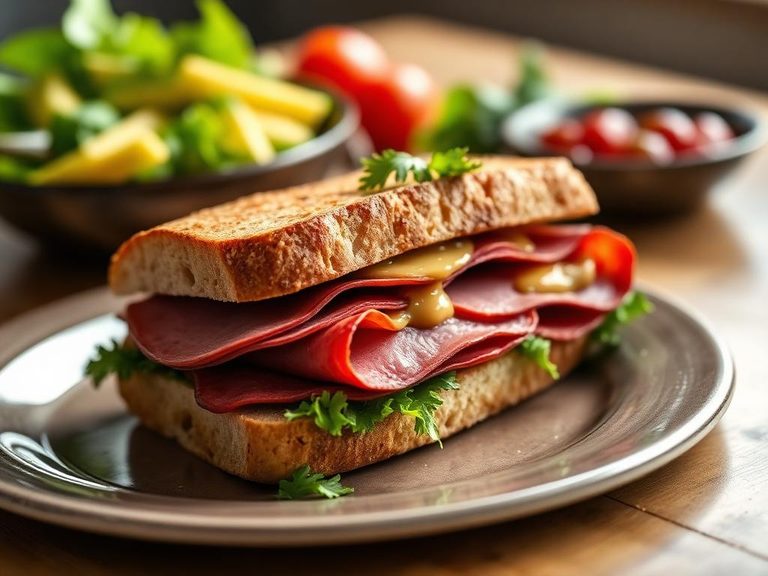


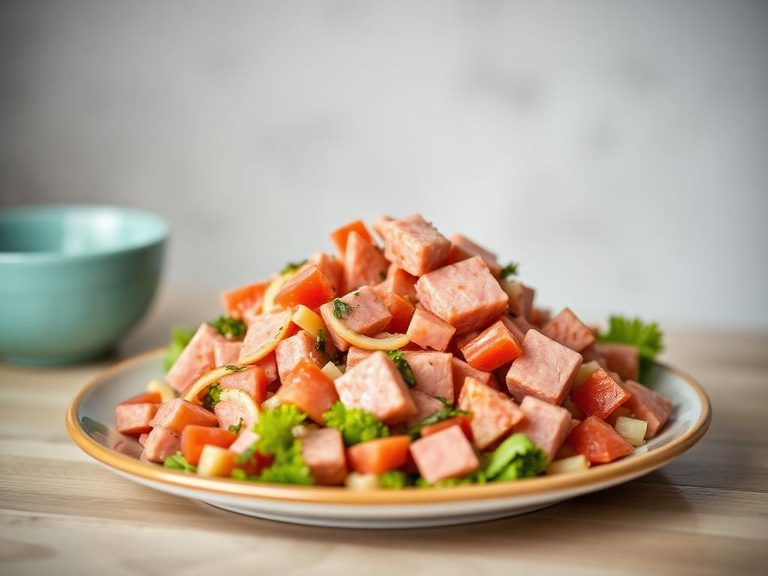
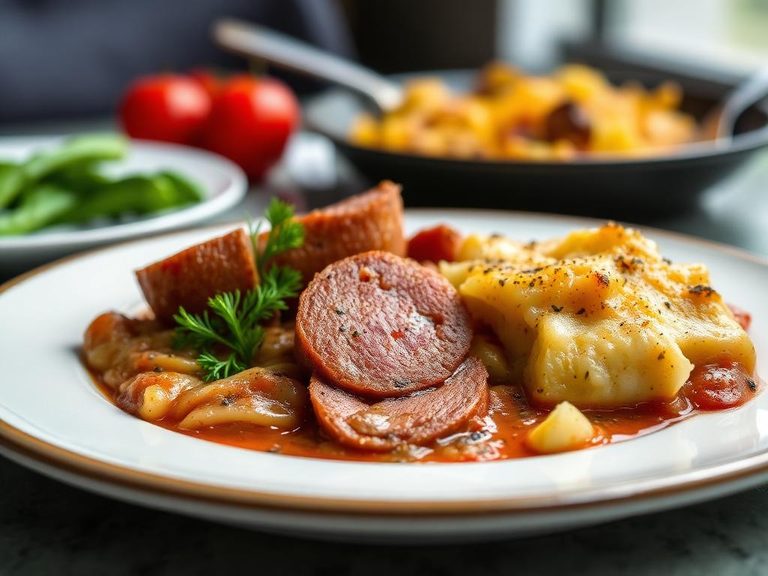
🌍 Where it's eaten
💡 Did you know?
The name 'Bologna' comes from the Italian city of Bologna, where a similar sausage called 'mortadella' originated, but the American version is a distinct, emulsified product.
Full nutrition (USDA data · scales with serving)
| Water | 51.9 g |
| Energy | 308 kcal |
| Energy | 1288 kj |
| Protein | 15.2 g |
| Total lipid (fat) | 24.6 g |
| Ash | 2.9 g |
| Carbohydrate, by difference | 5.5 g |
| Fiber, total dietary | 0.00 g |
| Total Sugars | 4.4 g |
| Calcium, Ca | 85.0 mg |
| Iron, Fe | 1.2 mg |
| Magnesium, Mg | 17.0 mg |
| Phosphorus, P | 163 mg |
| Potassium, K | 315 mg |
| Sodium, Na | 960 mg |
| Zinc, Zn | 2.3 mg |
| Copper, Cu | 0.05 mg |
| Manganese, Mn | 0.02 mg |
| Selenium, Se | 24.6 ug |
| Fluoride, F | 36.0 ug |
| Vitamin C, total ascorbic acid | 0.80 mg |
| Thiamin | 0.22 mg |
| Riboflavin | 0.18 mg |
| Niacin | 2.5 mg |
| Pantothenic acid | 0.41 mg |
| Vitamin B-6 | 0.30 mg |
| Folate, total | 6.0 ug |
| Folic acid | 0.00 ug |
| Folate, food | 6.0 ug |
| Folate, DFE | 6.0 ug |
| Choline, total | 65.6 mg |
| Betaine | 5.8 mg |
| Vitamin B-12 | 1.8 ug |
| Vitamin B-12, added | 0.00 ug |
| Vitamin A, RAE | 25.0 ug |
| Retinol | 25.0 ug |
| Carotene, beta | 0.00 ug |
| Carotene, alpha | 0.00 ug |
| Cryptoxanthin, beta | 0.00 ug |
| Vitamin A, IU | 84.0 iu |
| Lycopene | 0.00 ug |
| Lutein + zeaxanthin | 0.00 ug |
| Vitamin E (alpha-tocopherol) | 0.00 mg |
| Vitamin E, added | 0.00 mg |
| Tocopherol, beta | 0.00 mg |
| Tocopherol, gamma | 0.00 mg |
| Tocopherol, delta | 0.00 mg |
| Vitamin D (D2 + D3), International Units | 32.0 iu |
| Vitamin D (D2 + D3) | 0.80 ug |
| Vitamin K (phylloquinone) | 0.30 ug |
| Alcohol, ethyl | 0.00 g |
| Caffeine | 0.00 mg |
| Theobromine | 0.00 mg |
Fat & fatty acid profile (per 100g)
| Fatty acids, total saturated | 9.3 g |
| SFA 4:0 | 0.00 g |
| SFA 6:0 | 0.00 g |
| SFA 8:0 | 0.00 g |
| SFA 10:0 | 0.01 g |
| SFA 12:0 | 0.01 g |
| SFA 14:0 | 0.32 g |
| SFA 16:0 | 6.0 g |
| SFA 18:0 | 3.0 g |
| Fatty acids, total monounsaturated | 10.5 g |
| MUFA 16:1 | 0.60 g |
| MUFA 18:1 | 9.7 g |
| MUFA 20:1 | 0.19 g |
| MUFA 22:1 | 0.03 g |
| Fatty acids, total polyunsaturated | 1.1 g |
| PUFA 18:2 | 1.0 g |
| PUFA 18:3 | 0.06 g |
| PUFA 18:4 | 0.00 g |
| PUFA 20:4 | 0.05 g |
| PUFA 20:5 n-3 (EPA) | 0.00 g |
| PUFA 22:5 n-3 (DPA) | 0.00 g |
| PUFA 22:6 n-3 (DHA) | 0.00 g |
| Fatty acids, total trans | 0.00 g |
| Cholesterol | 60.0 mg |
| Phytosterols | 0.00 mg |
Amino acid profile (per 100g)
| Tryptophan | 0.21 g |
| Threonine | 0.77 g |
| Isoleucine | 0.81 g |
| Leucine | 1.4 g |
| Lysine | 1.5 g |
| Methionine | 0.45 g |
| Cystine | 0.21 g |
| Phenylalanine | 0.69 g |
| Tyrosine | 0.61 g |
| Valine | 0.93 g |
| Arginine | 1.0 g |
| Histidine | 0.65 g |
| Alanine | 0.97 g |
| Aspartic acid | 1.6 g |
| Glutamic acid | 2.7 g |
| Glycine | 0.81 g |
| Proline | 0.78 g |
| Serine | 0.71 g |
FAQ
Is bologna the same as mortadella?
While related, they are different. Mortadella is a traditional Italian sausage with visible chunks of fat and often pistachios, while American bologna is a finely emulsified, pre-cooked product with a smoother texture.
Can I eat bologna on a low-carb diet?
Yes, bologna is very low in carbohydrates (5.49g per 100g, with only 4.42g of sugar), making it a suitable choice for low-carb and ketogenic diets when consumed in moderation.
What is the best way to store bologna?
Keep unopened packages in the refrigerator. Once opened, wrap tightly in plastic wrap or place in an airtight container and consume within 3-5 days. It can also be frozen for up to 1-2 months.
Nutrient density (calculated · NRF9.3)
Nutrient Rich Foods index: beneficial nutrients (protein, fiber, vitamins, minerals) minus saturated fat, added sugar & sodium, per 100 kcal.
NRF9.3 index — Fulgoni, Keast & Drewnowski, 2009. Computed from USDA nutrients.
Weight-loss friendliness (composite index)
Energy density 3.08 kcal/g · 20% calories from protein · 0.0 g fiber · 4.4 g sugar per 100 g.
Composite of energy density (Rolls et al., 1999), protein & fiber satiety, minus sugar. A calculated heuristic — ranks satiety-per-calorie, not a clinical measure.
Dietary load (calculated from USDA values)
Potential renal acid load. Positive = acid-forming, negative = alkaline-forming.
Sodium-to-potassium ratio: 3.05 (lower is better — aim for ≤ 1)
Sodium:potassium per WHO potassium guidance. Computed from USDA nutrients.