

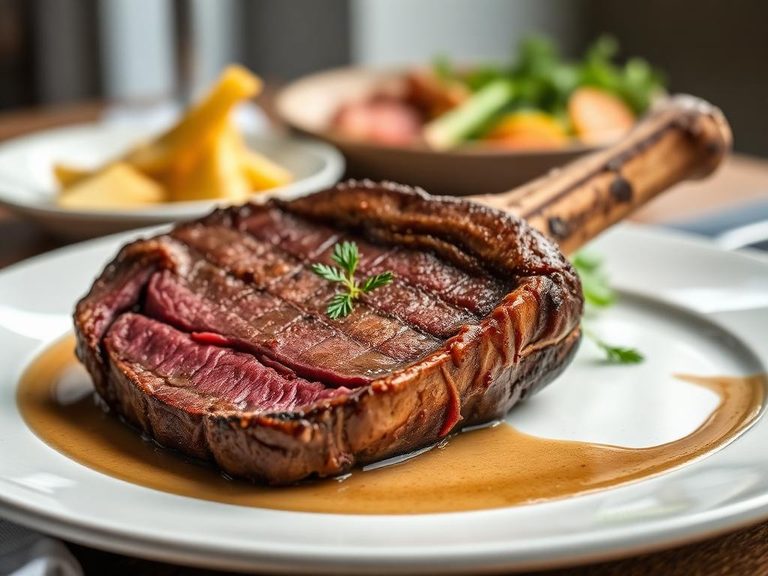
Beef, ribeye cap steak, boneless, separable lean only, trimmed to 0" fat, all grades, cooked, grilled
Whole food · Beef Products

Photo: Wikipedia
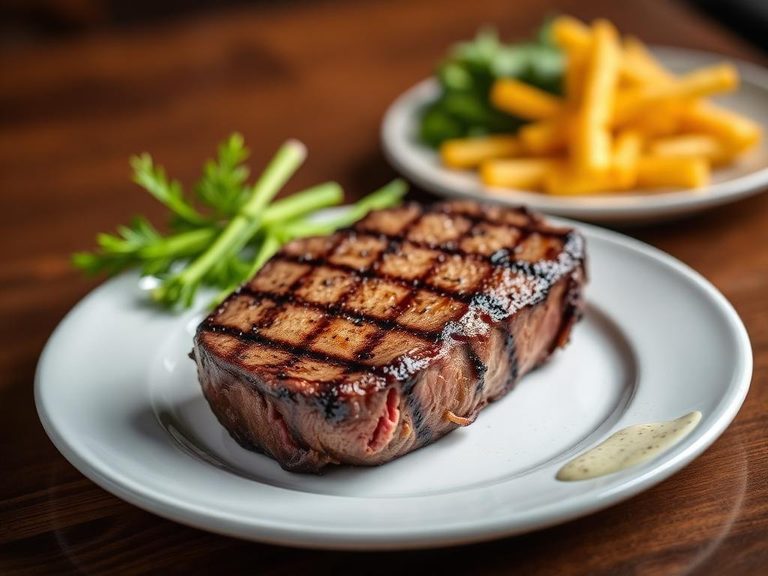
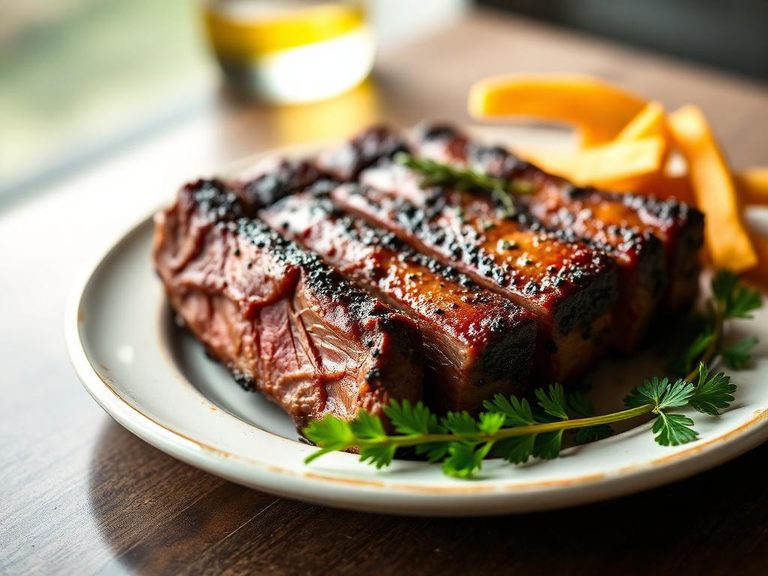
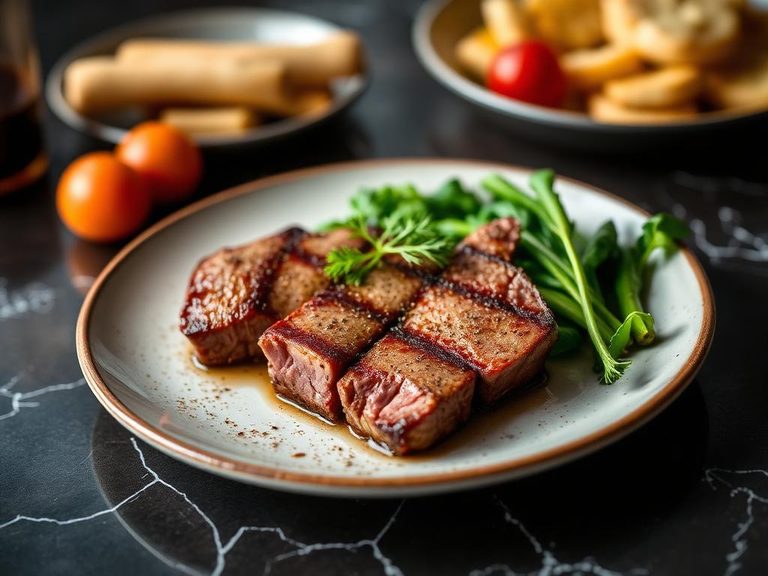
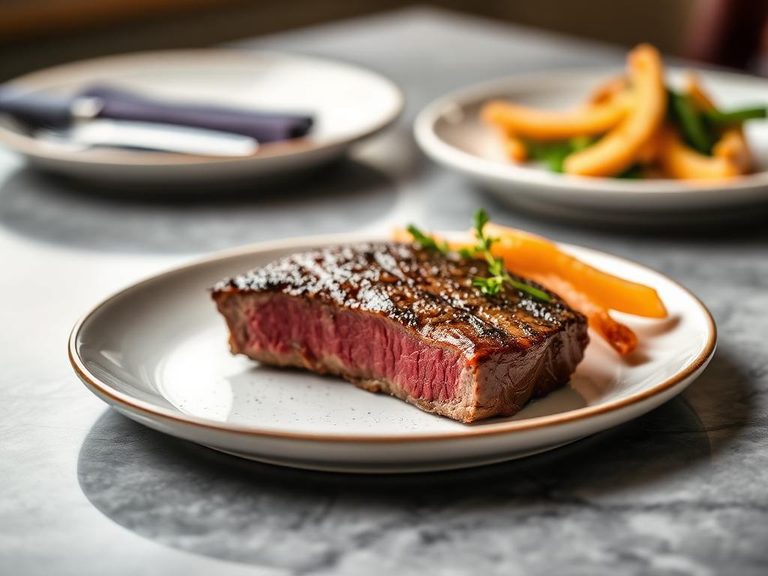
The ribeye cap, or spinalis dorsi, is the prized, crescent-shaped muscle wrapping the outer edge of a ribeye roast, celebrated for its intense marbling and buttery tenderness. When grilled to a perfect medium-rare, it offers a rich, beefy flavor with a succulent, almost silky texture that many consider the pinnacle of steak. Nutritionally, it delivers a potent punch of high-quality protein and healthy fats with virtually no carbohydrates.
Calorie split: 40% protein · 2% carbs · 57% fat
↓ Full nutrition💚 Why it's loved
Chefs and steak aficionados prize the ribeye cap for its unparalleled combination of robust beef flavor and melt-in-your-mouth tenderness, often calling it the 'butcher's secret.' Its loose grain and heavy marbling make it incredibly forgiving on the grill, staying juicy even with a hard sear.
⚠️ Watch-outs & how to enjoy it better
As a fatty cut, it is calorie-dense and high in saturated fat, which may be a concern for those monitoring heart health or caloric intake. To counteract this, practice strict portion control (see portions below) and balance the meal with large servings of non-starchy vegetables like grilled asparagus or a leafy green salad to add fiber and volume. Avoid pairing with heavy, starchy sides to keep the overall meal balanced.
Key benefits
- Exceptionally high in complete protein for muscle maintenance and growth.
- Rich in bioavailable heme iron, crucial for oxygen transport and energy.
- Good source of zinc, supporting immune function and wound healing.
- Contains conjugated linoleic acid (CLA), a fatty acid studied for potential health benefits.
- Provides essential B vitamins, particularly B12 and niacin, for metabolism.
🍽️ Popular dishes
🌍 Where it's eaten
💡 Did you know?
The ribeye cap is anatomically the *spinalis dorsi* muscle, which is why it's sometimes called the 'butcher's cut'—skilled butchers would often remove it from the rib primal to cook and eat themselves before it became widely popular.
Full nutrition (USDA data · scales with serving)
| Water | 57.2 g |
| Energy | 246 kcal |
| Energy | 1029 kj |
| Protein | 24.7 g |
| Total lipid (fat) | 15.7 g |
| Ash | 0.94 g |
| Carbohydrate, by difference | 1.5 g |
| Fiber, total dietary | 0.00 g |
| Total Sugars | 0.00 g |
| Calcium, Ca | 7.0 mg |
| Iron, Fe | 3.1 mg |
| Magnesium, Mg | 25.0 mg |
| Phosphorus, P | 220 mg |
| Potassium, K | 351 mg |
| Sodium, Na | 86.0 mg |
| Zinc, Zn | 9.7 mg |
| Copper, Cu | 0.15 mg |
| Selenium, Se | 32.0 ug |
| Vitamin C, total ascorbic acid | 0.00 mg |
| Thiamin | 0.07 mg |
| Riboflavin | 0.25 mg |
| Niacin | 3.7 mg |
| Vitamin B-6 | 0.38 mg |
| Folate, total | 6.0 ug |
| Folic acid | 0.00 ug |
| Folate, food | 6.0 ug |
| Folate, DFE | 6.0 ug |
| Vitamin B-12 | 3.1 ug |
| Vitamin B-12, added | 0.00 ug |
| Vitamin A, RAE | 2.0 ug |
| Retinol | 2.0 ug |
| Carotene, beta | 0.00 ug |
| Carotene, alpha | 0.00 ug |
| Cryptoxanthin, beta | 0.00 ug |
| Vitamin A, IU | 6.0 iu |
| Lycopene | 0.00 ug |
| Lutein + zeaxanthin | 0.00 ug |
| Vitamin D (D2 + D3), International Units | 4.0 iu |
| Vitamin D (D2 + D3) | 0.10 ug |
| Vitamin D3 (cholecalciferol) | 0.10 ug |
| Vitamin K (phylloquinone) | 1.6 ug |
| Alcohol, ethyl | 0.00 g |
| Caffeine | 0.00 mg |
| Theobromine | 0.00 mg |
Fat & fatty acid profile (per 100g)
| Fatty acids, total saturated | 5.6 g |
| SFA 4:0 | 0.00 g |
| SFA 6:0 | 0.00 g |
| SFA 8:0 | 0.00 g |
| SFA 10:0 | 0.01 g |
| SFA 12:0 | 0.01 g |
| SFA 14:0 | 0.37 g |
| SFA 16:0 | 3.1 g |
| SFA 17:0 | 0.17 g |
| SFA 18:0 | 1.9 g |
| SFA 20:0 | 0.01 g |
| SFA 24:0 | 0.02 g |
| Fatty acids, total monounsaturated | 6.8 g |
| MUFA 14:1 | 0.09 g |
| MUFA 16:1 | 0.45 g |
| MUFA 17:1 | 0.10 g |
| MUFA 18:1 | 6.2 g |
| MUFA 18:1 c | 5.6 g |
| MUFA 20:1 | 0.03 g |
| MUFA 22:1 | 0.00 g |
| Fatty acids, total polyunsaturated | 0.59 g |
| PUFA 18:2 | 0.46 g |
| PUFA 18:2 n-6 c,c | 0.41 g |
| PUFA 18:2 CLAs | 0.05 g |
| PUFA 18:3 | 0.02 g |
| PUFA 18:3 n-6 c,c,c | 0.02 g |
| PUFA 18:4 | 0.00 g |
| PUFA 20:2 n-6 c,c | 0.00 g |
| PUFA 20:4 | 0.10 g |
| PUFA 20:5 n-3 (EPA) | 0.00 g |
| PUFA 22:5 n-3 (DPA) | 0.02 g |
| PUFA 22:6 n-3 (DHA) | 0.00 g |
| Fatty acids, total trans | 0.58 g |
| Fatty acids, total trans-monoenoic | 0.58 g |
| TFA 18:1 t | 0.58 g |
| Cholesterol | 76.0 mg |
Amino acid profile (per 100g)
| Tryptophan | 0.30 g |
| Threonine | 1.3 g |
| Isoleucine | 1.3 g |
| Leucine | 2.3 g |
| Lysine | 2.6 g |
| Methionine | 0.72 g |
| Cystine | 0.27 g |
| Phenylalanine | 1.1 g |
| Tyrosine | 1.0 g |
| Valine | 1.3 g |
| Arginine | 1.8 g |
| Histidine | 1.0 g |
| Alanine | 1.6 g |
| Aspartic acid | 2.6 g |
| Glutamic acid | 4.4 g |
| Glycine | 1.2 g |
| Proline | 1.1 g |
| Serine | 1.1 g |
| Hydroxyproline | 0.13 g |
FAQ
What's the difference between a ribeye cap and a regular ribeye?
The ribeye cap is a specific muscle (spinalis dorsi) that wraps around the outer edge of a full ribeye steak or roast. It has a looser grain and more intense marbling than the central *longissimus dorsi* muscle of the ribeye, making it generally more tender and flavorful.
How should I cook a ribeye cap steak?
High-heat methods are ideal. A screaming-hot grill, cast-iron skillet, or broiler works perfectly. Sear for 2-3 minutes per side for a 1-inch steak to achieve a deep brown crust while keeping the interior medium-rare (130-135°F). Let it rest for 5-10 minutes before slicing against the grain.
Is the nutrition information for raw or cooked beef?
The provided data (246 kcal per 100g) is for cooked, grilled beef. Cooking concentrates nutrients and calories by removing water, so 100g of cooked steak comes from a larger portion of raw meat (roughly 130-140g raw).
Nutrient density (calculated · NRF9.3)
Nutrient Rich Foods index: beneficial nutrients (protein, fiber, vitamins, minerals) minus saturated fat, added sugar & sodium, per 100 kcal.
NRF9.3 index — Fulgoni, Keast & Drewnowski, 2009. Computed from USDA nutrients.
Weight-loss friendliness (composite index)
Energy density 2.46 kcal/g · 40% calories from protein · 0.0 g fiber · 0.0 g sugar per 100 g.
Composite of energy density (Rolls et al., 1999), protein & fiber satiety, minus sugar. A calculated heuristic — ranks satiety-per-calorie, not a clinical measure.
Dietary load (calculated from USDA values)
Potential renal acid load. Positive = acid-forming, negative = alkaline-forming.
Sodium-to-potassium ratio: 0.25 (lower is better — aim for ≤ 1)
Sodium:potassium per WHO potassium guidance. Computed from USDA nutrients.