

Babyfood, fruit, prunes with tapioca, without ascorbic acid, strained
Whole food · Baby Foods

Photo: Wikipedia
This is a smooth, deep-purple baby food purée made from cooked prunes and tapioca starch, offering a naturally sweet, earthy flavor with a velvety, lump-free texture. It's a convenient, fiber-rich option for infants transitioning to solids, providing a gentle source of energy without added sugars or acids.
Calorie split: 3% protein · 96% carbs · 1% fat
↓ Full nutrition💚 Why it's loved
Parents appreciate its straightforward, wholesome ingredient list and the familiar, comforting sweetness of prunes, which many babies accept readily. It's a trusted staple in many cultures for supporting infant digestion.
⚠️ Watch-outs & how to enjoy it better
The high natural sugar content (10.97g per 100g) can be a consideration for blood sugar management if consumed in large quantities. The strong prune flavor may not appeal to all palates. To counteract, serve small portions (e.g., 1-2 tablespoons) as part of a balanced meal alongside a protein or fat source like yogurt or avocado.
Key benefits
- Excellent source of dietary fiber (2.7g per 100g) for digestive health.
- Provides quick, natural energy from carbohydrates (18.5g per 100g).
- Contains no added sugars, salt, or ascorbic acid.
- Naturally rich in potassium and vitamin K from prunes.
- Tapioca adds a smooth, easily digestible starch base.
🍽️ Popular dishes
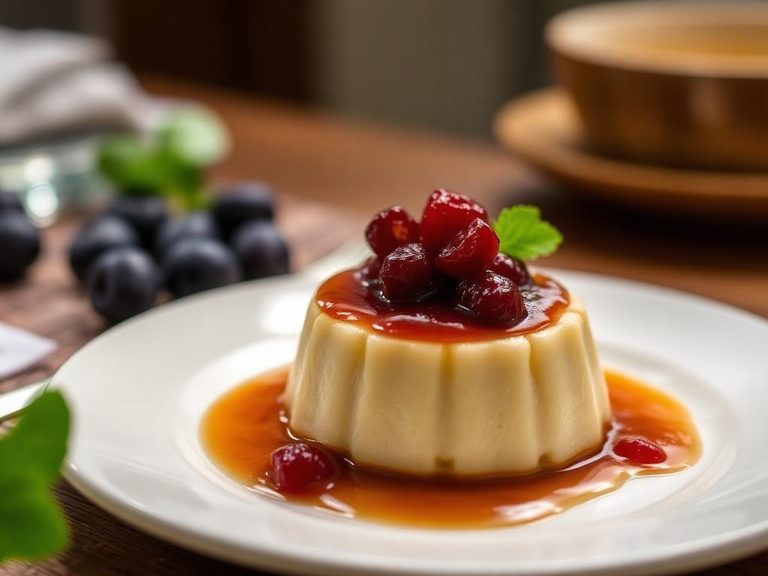

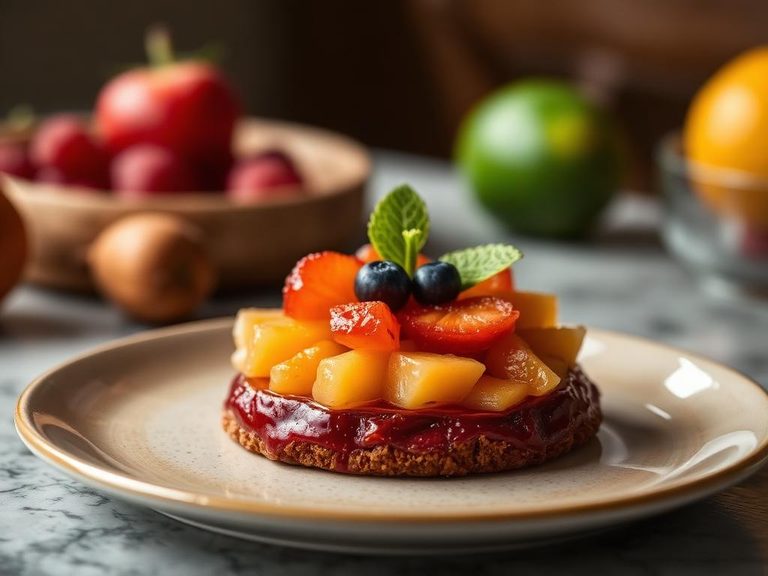
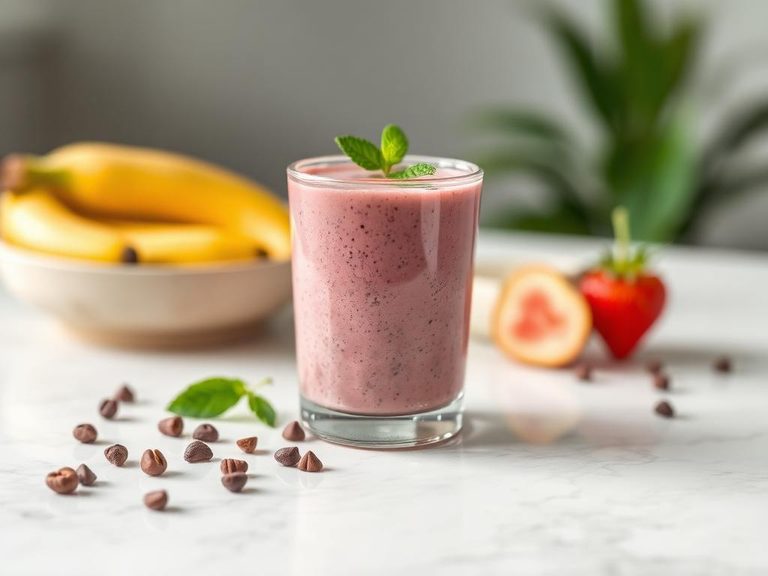
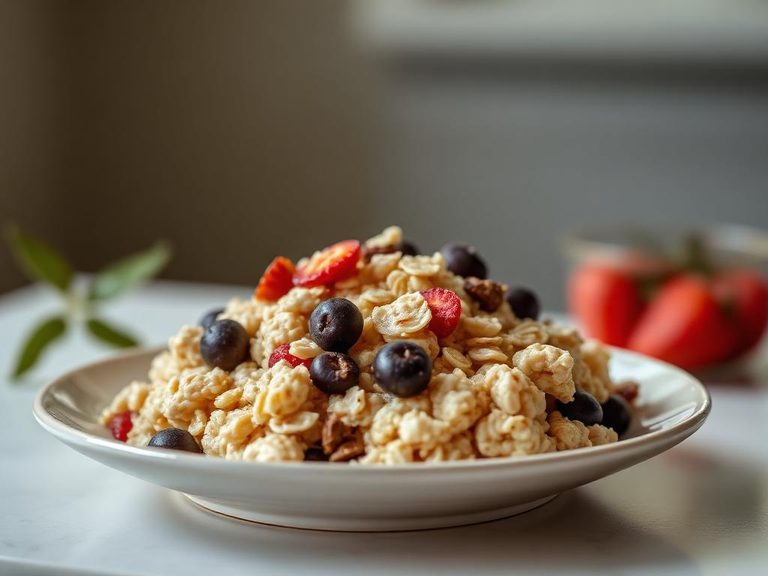
🌍 Where it's eaten
💡 Did you know?
Prunes are one of the few fruits that are commercially sold pre-cooked and puréed in their raw state, as they are dried plums that rehydrate and break down easily when stewed.
Full nutrition (USDA data · scales with serving)
| Water | 80.3 g |
| Energy | 69.0 kcal |
| Energy | 291 kj |
| Protein | 0.60 g |
| Total lipid (fat) | 0.10 g |
| Ash | 0.50 g |
| Carbohydrate, by difference | 18.5 g |
| Fiber, total dietary | 2.7 g |
| Total Sugars | 11.0 g |
| Sucrose | 0.04 g |
| Glucose | 6.8 g |
| Fructose | 3.3 g |
| Lactose | 0.00 g |
| Maltose | 0.02 g |
| Galactose | 0.00 g |
| Calcium, Ca | 15.0 mg |
| Iron, Fe | 0.35 mg |
| Magnesium, Mg | 10.0 mg |
| Phosphorus, P | 15.0 mg |
| Potassium, K | 177 mg |
| Sodium, Na | 5.0 mg |
| Zinc, Zn | 0.09 mg |
| Copper, Cu | 0.06 mg |
| Selenium, Se | 0.50 ug |
| Vitamin C, total ascorbic acid | 0.80 mg |
| Thiamin | 0.02 mg |
| Riboflavin | 0.07 mg |
| Niacin | 0.53 mg |
| Pantothenic acid | 0.14 mg |
| Vitamin B-6 | 0.08 mg |
| Folate, total | 0.00 ug |
| Folic acid | 0.00 ug |
| Folate, food | 1.0 ug |
| Folate, DFE | 1.0 ug |
| Choline, total | 1.1 mg |
| Vitamin B-12 | 0.00 ug |
| Vitamin B-12, added | 0.00 ug |
| Vitamin A, RAE | 23.0 ug |
| Retinol | 0.00 ug |
| Carotene, beta | 228 ug |
| Carotene, alpha | 33.0 ug |
| Cryptoxanthin, beta | 54.0 ug |
| Vitamin A, IU | 453 iu |
| Lycopene | 0.00 ug |
| Lutein + zeaxanthin | 39.0 ug |
| Vitamin E (alpha-tocopherol) | 0.60 mg |
| Vitamin E, added | 0.00 mg |
| Tocopherol, beta | 0.00 mg |
| Tocopherol, gamma | 0.01 mg |
| Tocopherol, delta | 0.00 mg |
| Tocotrienol, alpha | 0.00 mg |
| Tocotrienol, beta | 0.00 mg |
| Tocotrienol, gamma | 0.00 mg |
| Tocotrienol, delta | 0.00 mg |
| Vitamin D (D2 + D3), International Units | 0.00 iu |
| Vitamin D (D2 + D3) | 0.00 ug |
| Vitamin K (phylloquinone) | 15.6 ug |
| Alcohol, ethyl | 0.00 g |
| Caffeine | 0.00 mg |
| Theobromine | 0.00 mg |
Fat & fatty acid profile (per 100g)
| Fatty acids, total saturated | 0.01 g |
| SFA 4:0 | 0.00 g |
| SFA 6:0 | 0.00 g |
| SFA 8:0 | 0.00 g |
| SFA 10:0 | 0.00 g |
| SFA 12:0 | 0.00 g |
| SFA 14:0 | 0.00 g |
| SFA 16:0 | 0.01 g |
| SFA 18:0 | 0.00 g |
| Fatty acids, total monounsaturated | 0.07 g |
| MUFA 16:1 | 0.00 g |
| MUFA 18:1 | 0.07 g |
| MUFA 20:1 | 0.00 g |
| MUFA 22:1 | 0.00 g |
| Fatty acids, total polyunsaturated | 0.02 g |
| PUFA 18:2 | 0.02 g |
| PUFA 18:3 | 0.00 g |
| PUFA 18:4 | 0.00 g |
| PUFA 20:4 | 0.00 g |
| PUFA 20:5 n-3 (EPA) | 0.00 g |
| PUFA 22:5 n-3 (DPA) | 0.00 g |
| PUFA 22:6 n-3 (DHA) | 0.00 g |
| Cholesterol | 0.00 mg |
Amino acid profile (per 100g)
Estimated from Babyfood, grape juice, no sugar, canned — USDA does not publish this profile for Babyfood.
| Threonine | 0.02 g |
| Isoleucine | 0.01 g |
| Leucine | 0.02 g |
| Lysine | 0.02 g |
| Methionine | 0.03 g |
| Cystine | 0.01 g |
| Phenylalanine | 0.02 g |
| Tyrosine | 0.02 g |
| Valine | 0.02 g |
| Arginine | 0.06 g |
| Histidine | 0.03 g |
| Alanine | 0.04 g |
| Aspartic acid | 0.10 g |
| Glutamic acid | 0.18 g |
| Glycine | 0.03 g |
| Proline | 0.03 g |
| Serine | 0.04 g |
FAQ
Is this baby food suitable for adults?
Yes, it can be eaten by anyone. It's sometimes used as a gentle digestive aid or a natural sweetener in baking, though it's formulated for an infant's palate and texture needs.
Why is tapioca added?
Tapioca starch acts as a natural thickener, giving the purée a smoother, more consistent texture that is easy for babies to swallow and digest.
Does it contain any allergens?
The listed ingredients (prunes, tapioca) are not common allergens. However, always check the specific product label for potential cross-contamination warnings if severe allergies are a concern.
Nutrient density (calculated · NRF9.3)
Nutrient Rich Foods index: beneficial nutrients (protein, fiber, vitamins, minerals) minus saturated fat, added sugar & sodium, per 100 kcal.
NRF9.3 index — Fulgoni, Keast & Drewnowski, 2009. Computed from USDA nutrients.
Weight-loss friendliness (composite index)
Energy density 0.69 kcal/g · 3% calories from protein · 2.7 g fiber · 11.0 g sugar per 100 g.
Composite of energy density (Rolls et al., 1999), protein & fiber satiety, minus sugar. A calculated heuristic — ranks satiety-per-calorie, not a clinical measure.
Dietary load (calculated from USDA values)
Potential renal acid load. Positive = acid-forming, negative = alkaline-forming.
Sodium-to-potassium ratio: 0.03 (lower is better — aim for ≤ 1)
Sodium:potassium per WHO potassium guidance. Computed from USDA nutrients.