

Babyfood, cereal, brown rice, dry, instant
Whole food · Baby Foods
This is a shelf-stable, finely milled powder made from pre-cooked and dehydrated brown rice, designed for instant preparation with hot water or milk. It cooks into a smooth, mildly nutty, and slightly sweet porridge with a soft, comforting texture. Nutritionally, it's a concentrated source of complex carbohydrates, providing quick energy with a notable amount of fiber.
Calorie split: 9% protein · 85% carbs · 7% fat
↓ Full nutrition💚 Why it's loved
People love it for its gentle, neutral flavor that acts as a blank canvas for both sweet and savory toppings, and its incredibly fast preparation time makes it a staple for busy mornings or quick snacks. It's a familiar, comforting food in many cultures, often one of the first solid foods introduced to infants.
⚠️ Watch-outs & how to enjoy it better
Due to its high glycemic index, it can cause a rapid spike in blood sugar, which may be a concern for individuals managing diabetes. The instant processing can strip away some of the bran's nutrients compared to whole brown rice. To counteract this, pair it with a source of protein (like yogurt or nuts) or healthy fat (like nut butter or seeds) to slow digestion and create a more balanced meal.
Key benefits
- Quick-digesting energy source from complex carbs
- Good source of dietary fiber for digestive health
- Naturally low in fat and sugar
- Gluten-free, suitable for gluten-sensitive diets
- Fortified with iron and B vitamins in many brands
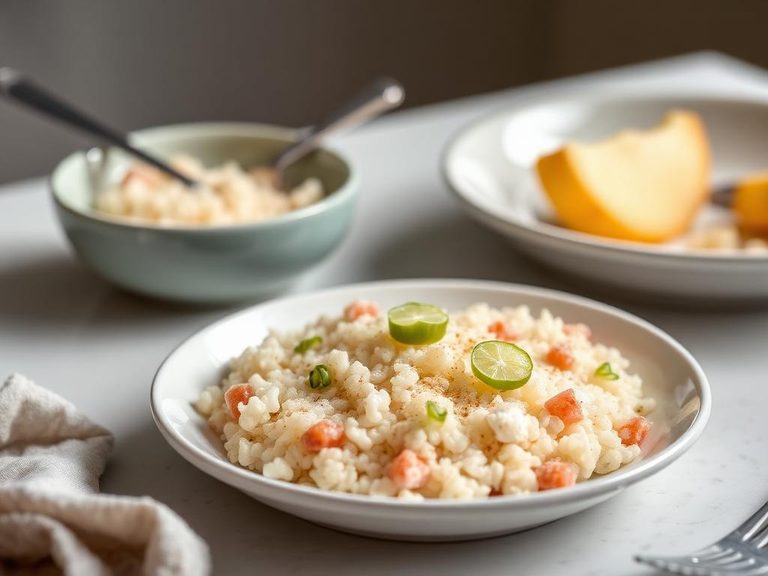
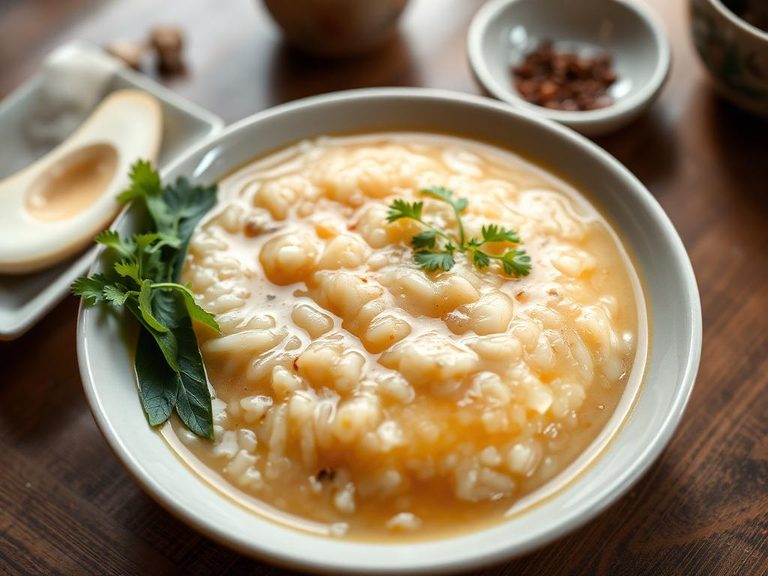
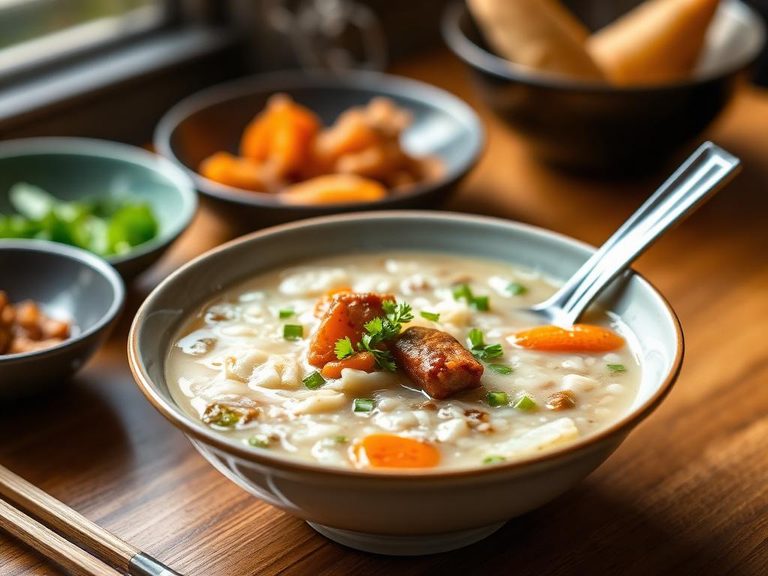
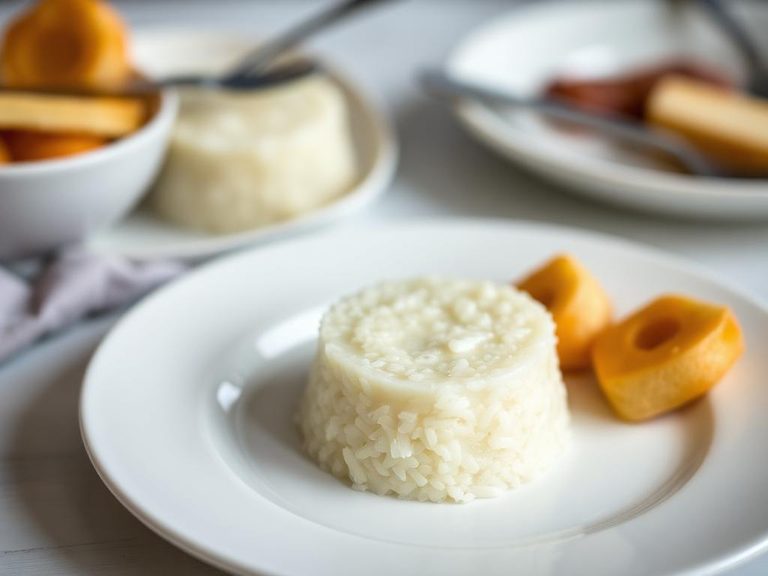
🍽️ Popular dishes
🌍 Where it's eaten
💡 Did you know?
The 'instant' process involves cooking the rice into a slurry, then often extruding or spray-drying it into a powder that can rehydrate in seconds, a technology that revolutionized convenience foods in the mid-20th century.
Full nutrition (USDA data · scales with serving)
| Water | 1.0 g |
| Energy | 406 kcal |
| Energy | 1698 kj |
| Protein | 8.7 g |
| Total lipid (fat) | 3.0 g |
| Ash | 1.3 g |
| Carbohydrate, by difference | 86.0 g |
| Fiber, total dietary | 6.5 g |
| Total Sugars | 0.72 g |
| Calcium, Ca | 55.0 mg |
| Iron, Fe | 47.6 mg |
| Magnesium, Mg | 28.0 mg |
| Phosphorus, P | 272 mg |
| Potassium, K | 386 mg |
| Sodium, Na | 12.0 mg |
| Zinc, Zn | 0.00 mg |
| Copper, Cu | 0.37 mg |
| Selenium, Se | 23.4 ug |
| Vitamin C, total ascorbic acid | 0.00 mg |
| Thiamin | 0.93 mg |
| Riboflavin | 0.17 mg |
| Niacin | 16.0 mg |
| Vitamin B-6 | 0.98 mg |
| Folate, total | 15.0 ug |
| Folic acid | 0.00 ug |
| Folate, food | 15.0 ug |
| Folate, DFE | 15.0 ug |
| Choline, total | 33.4 mg |
| Vitamin B-12 | 0.00 ug |
| Vitamin B-12, added | 0.00 ug |
| Vitamin A, RAE | 0.00 ug |
| Retinol | 0.00 ug |
| Carotene, beta | 0.00 ug |
| Carotene, alpha | 0.00 ug |
| Cryptoxanthin, beta | 0.00 ug |
| Vitamin A, IU | 0.00 iu |
| Lycopene | 0.00 ug |
| Lutein + zeaxanthin | 0.00 ug |
| Vitamin E (alpha-tocopherol) | 0.65 mg |
| Vitamin E, added | 0.54 mg |
| Vitamin D (D2 + D3), International Units | 0.00 iu |
| Vitamin D (D2 + D3) | 0.00 ug |
| Vitamin K (phylloquinone) | 0.70 ug |
| Vitamin K (Dihydrophylloquinone) | 0.00 ug |
| Vitamin K (Menaquinone-4) | 0.00 ug |
| Alcohol, ethyl | 0.00 g |
| Caffeine | 0.00 mg |
| Theobromine | 0.00 mg |
Fat & fatty acid profile (per 100g)
| Fatty acids, total saturated | 0.61 g |
| SFA 4:0 | 0.00 g |
| SFA 6:0 | 0.00 g |
| SFA 8:0 | 0.00 g |
| SFA 10:0 | 0.00 g |
| SFA 12:0 | 0.00 g |
| SFA 14:0 | 0.01 g |
| SFA 15:0 | 0.00 g |
| SFA 16:0 | 0.51 g |
| SFA 17:0 | 0.00 g |
| SFA 18:0 | 0.05 g |
| SFA 20:0 | 0.01 g |
| SFA 22:0 | 0.00 g |
| SFA 24:0 | 0.02 g |
| Fatty acids, total monounsaturated | 1.1 g |
| MUFA 14:1 | 0.00 g |
| MUFA 15:1 | 0.00 g |
| MUFA 16:1 | 0.01 g |
| MUFA 17:1 | 0.00 g |
| MUFA 18:1 | 1.1 g |
| MUFA 20:1 | 0.00 g |
| MUFA 22:1 | 0.00 g |
| MUFA 24:1 c | 0.00 g |
| Fatty acids, total polyunsaturated | 1.1 g |
| PUFA 18:2 | 1.0 g |
| PUFA 18:3 | 0.04 g |
| PUFA 18:4 | 0.00 g |
| PUFA 20:2 n-6 c,c | 0.00 g |
| PUFA 20:3 | 0.00 g |
| PUFA 20:4 | 0.00 g |
| PUFA 20:5 n-3 (EPA) | 0.00 g |
| PUFA 22:4 | 0.00 g |
| PUFA 22:5 n-3 (DPA) | 0.00 g |
| PUFA 22:6 n-3 (DHA) | 0.00 g |
| Fatty acids, total trans | 0.00 g |
| Cholesterol | 0.00 mg |
Amino acid profile (per 100g)
Estimated from Babyfood, grape juice, no sugar, canned — USDA does not publish this profile for Babyfood.
| Threonine | 0.02 g |
| Isoleucine | 0.01 g |
| Leucine | 0.02 g |
| Lysine | 0.02 g |
| Methionine | 0.03 g |
| Cystine | 0.01 g |
| Phenylalanine | 0.02 g |
| Tyrosine | 0.02 g |
| Valine | 0.02 g |
| Arginine | 0.06 g |
| Histidine | 0.03 g |
| Alanine | 0.04 g |
| Aspartic acid | 0.10 g |
| Glutamic acid | 0.18 g |
| Glycine | 0.03 g |
| Proline | 0.03 g |
| Serine | 0.04 g |
FAQ
Is baby rice cereal the same as regular brown rice cereal?
Not exactly. Baby rice cereal is typically more finely milled for easier digestion, often fortified with extra iron and vitamins, and may have a more controlled, consistent texture than general-purpose instant brown rice cereal.
Can adults eat baby rice cereal?
Yes, it's perfectly safe and is sometimes used as a quick, bland food during illness recovery or as a convenient thickener. However, it's nutritionally formulated for infants and may not be as cost-effective or nutrient-dense for adults as other whole grains.
How does it differ from cream of rice?
Cream of rice is typically made from white rice, while this specifies brown rice. Brown rice versions retain the bran layer, offering more fiber and a slightly nuttier flavor, whereas white rice versions are more neutral and refined.
Nutrient density (calculated · NRF9.3)
Nutrient Rich Foods index: beneficial nutrients (protein, fiber, vitamins, minerals) minus saturated fat, added sugar & sodium, per 100 kcal.
NRF9.3 index — Fulgoni, Keast & Drewnowski, 2009. Computed from USDA nutrients.
Weight-loss friendliness (composite index)
Energy density 4.06 kcal/g · 9% calories from protein · 6.5 g fiber · 0.7 g sugar per 100 g.
Composite of energy density (Rolls et al., 1999), protein & fiber satiety, minus sugar. A calculated heuristic — ranks satiety-per-calorie, not a clinical measure.
Dietary load (calculated from USDA values)
Potential renal acid load. Positive = acid-forming, negative = alkaline-forming.
Sodium-to-potassium ratio: 0.03 (lower is better — aim for ≤ 1)
Sodium:potassium per WHO potassium guidance. Computed from USDA nutrients.