Kale, cooked, boiled, drained, without salt
Whole food · Vegetables and Vegetable Products

Photo: Wikipedia
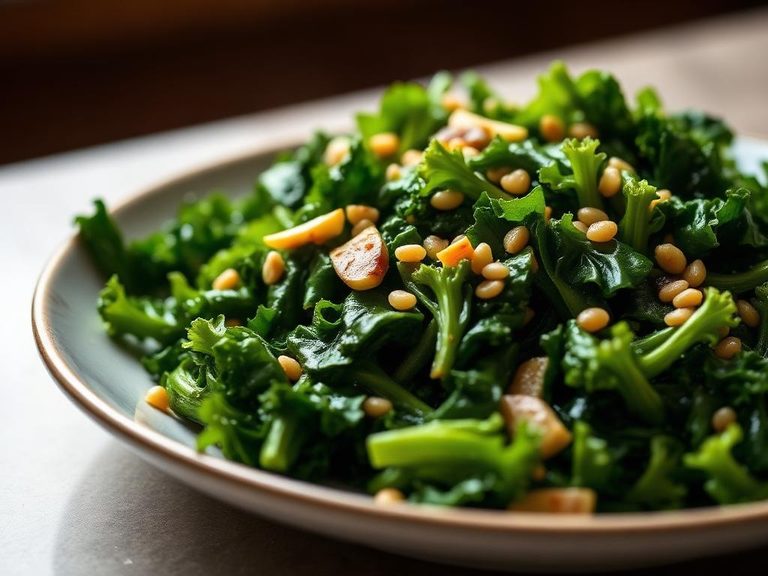
Boiled kale is a tender, dark-green leafy vegetable with a mildly earthy, slightly sweet flavor and a soft, wilted texture. It is a nutritional powerhouse, offering substantial fiber (4g) and protein (2.94g) for a very low calorie count (36 kcal per 100g).
💚 Why it's loved
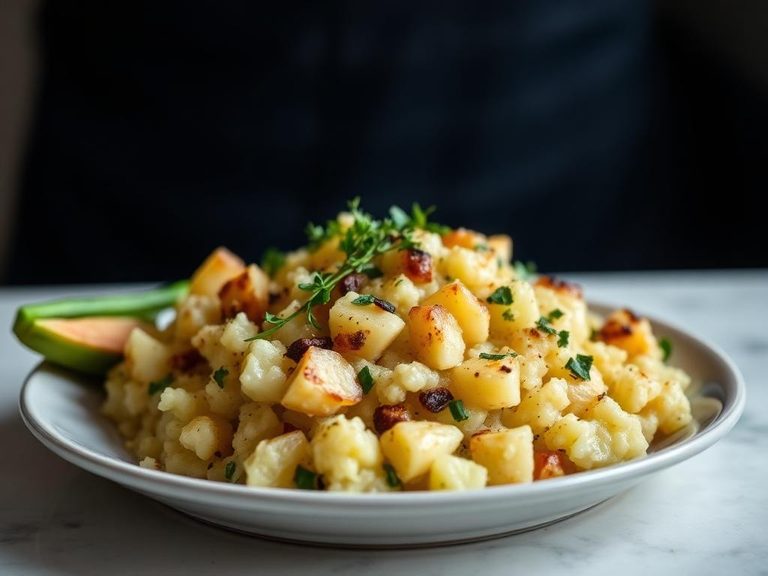
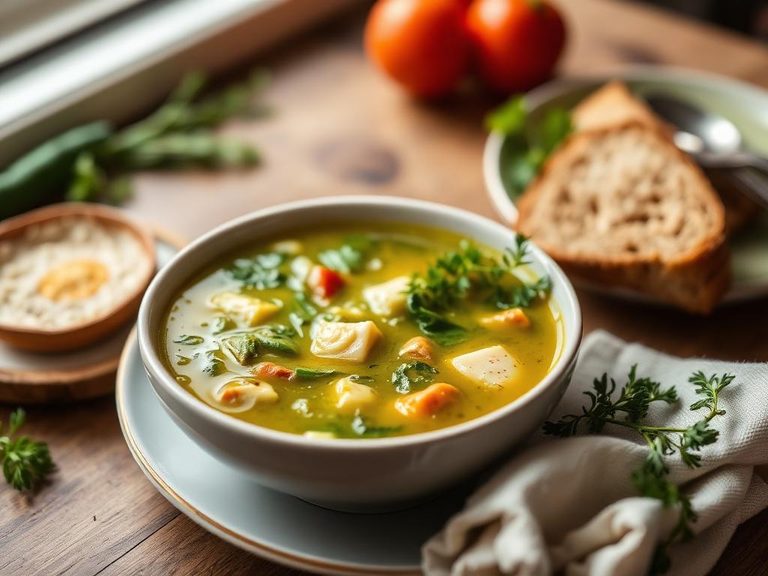
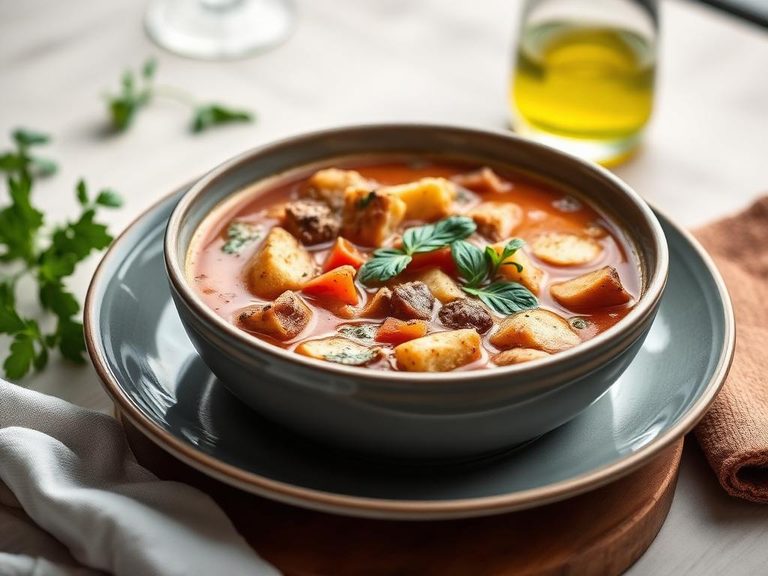
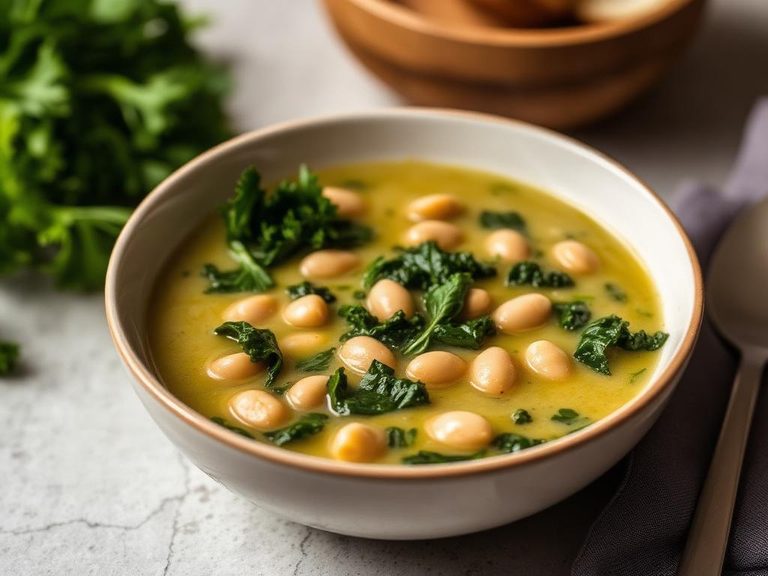
People love boiled kale for its versatility as a mild, nutrient-dense base that readily absorbs flavors from garlic, lemon, or broth. It is a staple in comforting soups and stews across many cultures, from Irish colcannon to West African peanut stews.
⚠️ Watch-outs & how to enjoy it better
Some find boiled kale's texture mushy or its flavor slightly bitter, especially if overcooked. It is high in oxalates, which can interfere with mineral absorption and may be a concern for those prone to kidney stones. To counteract this, cook it in plenty of water (which leaches oxalates) and pair it with a source of vitamin C (like lemon juice) to enhance iron absorption.
Key benefits
- High in fiber for digestive health
- Good source of plant-based protein
- Very low calorie density
- Rich in vitamins A, C, and K
- Contains antioxidants like lutein and zeaxanthin
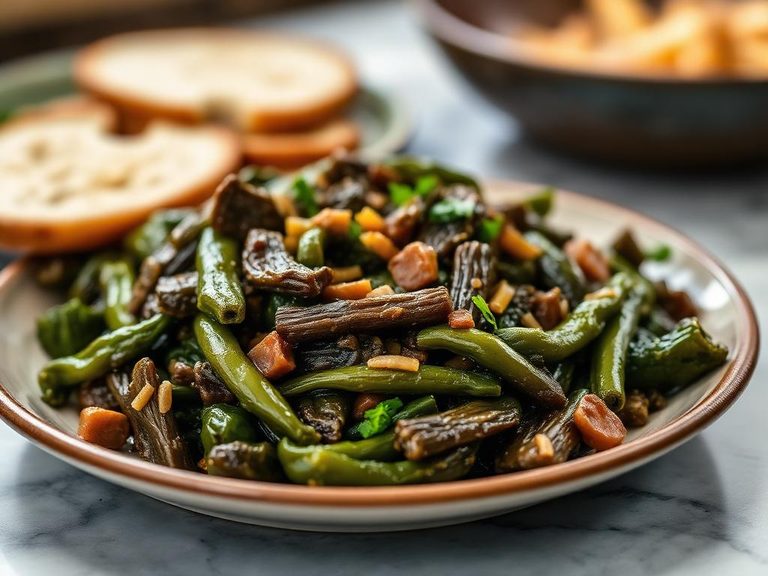
🍽️ Popular dishes
🌍 Where it's eaten
💡 Did you know?
Kale is a member of the same species as cabbage, broccoli, and cauliflower (Brassica oleracea), but has been cultivated for its leaves rather than its flowers or buds.
Full nutrition (scales with serving)
| Water | 89.8 g |
| Energy | 36.0 kcal |
| Energy | 151 kj |
| Protein | 2.9 g |
| Total lipid (fat) | 1.2 g |
| Ash | 0.73 g |
| Carbohydrate, by difference | 5.3 g |
| Fiber, total dietary | 4.0 g |
| Total Sugars | 1.2 g |
| Sucrose | 0.25 g |
| Glucose | 0.54 g |
| Fructose | 0.42 g |
| Lactose | 0.00 g |
| Maltose | 0.00 g |
| Galactose | 0.00 g |
| Calcium, Ca | 150 mg |
| Iron, Fe | 0.84 mg |
| Magnesium, Mg | 25.0 mg |
| Phosphorus, P | 42.0 mg |
| Potassium, K | 144 mg |
| Sodium, Na | 16.0 mg |
| Zinc, Zn | 0.27 mg |
| Copper, Cu | 0.07 mg |
| Manganese, Mn | 0.54 mg |
| Selenium, Se | 0.90 ug |
| Vitamin C, total ascorbic acid | 17.8 mg |
| Thiamin | 0.06 mg |
| Riboflavin | 0.14 mg |
| Niacin | 0.46 mg |
| Pantothenic acid | 0.17 mg |
| Vitamin B-6 | 0.06 mg |
| Folate, total | 65.0 ug |
| Folic acid | 0.00 ug |
| Folate, food | 65.0 ug |
| Folate, DFE | 65.0 ug |
| Choline, total | 0.40 mg |
| Betaine | 0.30 mg |
| Vitamin B-12 | 0.00 ug |
| Vitamin B-12, added | 0.00 ug |
| Vitamin A, RAE | 146 ug |
| Retinol | 0.00 ug |
| Carotene, beta | 1731 ug |
| Carotene, alpha | 10.0 ug |
| Cryptoxanthin, beta | 26.0 ug |
| Vitamin A, IU | 2915 iu |
| Lycopene | 0.00 ug |
| Lutein + zeaxanthin | 4983 ug |
| Vitamin E (alpha-tocopherol) | 1.6 mg |
| Vitamin E, added | 0.00 mg |
| Tocopherol, beta | 0.00 mg |
| Tocopherol, gamma | 0.12 mg |
| Tocopherol, delta | 0.00 mg |
| Tocotrienol, alpha | 0.00 mg |
| Tocotrienol, beta | 0.00 mg |
| Tocotrienol, gamma | 0.00 mg |
| Tocotrienol, delta | 0.00 mg |
| Vitamin D (D2 + D3), International Units | 0.00 iu |
| Vitamin D (D2 + D3) | 0.00 ug |
| Vitamin K (phylloquinone) | 419 ug |
| Vitamin K (Dihydrophylloquinone) | 0.00 ug |
| Vitamin K (Menaquinone-4) | 0.00 ug |
| Alcohol, ethyl | 0.00 g |
| Caffeine | 0.00 mg |
| Theobromine | 0.00 mg |
Fat & fatty acid profile (per 100g)
| Fatty acids, total saturated | 0.17 g |
| SFA 4:0 | 0.00 g |
| SFA 6:0 | 0.00 g |
| SFA 8:0 | 0.00 g |
| SFA 10:0 | 0.00 g |
| SFA 12:0 | 0.01 g |
| SFA 14:0 | 0.01 g |
| SFA 16:0 | 0.16 g |
| SFA 18:0 | 0.01 g |
| Fatty acids, total monounsaturated | 0.10 g |
| MUFA 16:1 | 0.00 g |
| MUFA 18:1 | 0.10 g |
| MUFA 20:1 | 0.00 g |
| MUFA 22:1 | 0.00 g |
| Fatty acids, total polyunsaturated | 0.66 g |
| PUFA 18:2 | 0.29 g |
| PUFA 18:3 | 0.37 g |
| PUFA 18:4 | 0.00 g |
| PUFA 20:4 | 0.00 g |
| PUFA 20:5 n-3 (EPA) | 0.00 g |
| PUFA 22:5 n-3 (DPA) | 0.00 g |
| PUFA 22:6 n-3 (DHA) | 0.00 g |
| Fatty acids, total trans | 0.00 g |
| Cholesterol | 0.00 mg |
Amino acid profile (per 100g)
| Tryptophan | 0.04 g |
| Threonine | 0.13 g |
| Isoleucine | 0.18 g |
| Leucine | 0.20 g |
| Lysine | 0.18 g |
| Methionine | 0.03 g |
| Cystine | 0.04 g |
| Phenylalanine | 0.15 g |
| Tyrosine | 0.10 g |
| Valine | 0.16 g |
| Arginine | 0.16 g |
| Histidine | 0.17 g |
| Alanine | 0.15 g |
| Aspartic acid | 0.26 g |
| Glutamic acid | 0.33 g |
| Glycine | 0.14 g |
| Proline | 0.17 g |
| Serine | 0.12 g |
FAQ
Does boiling kale make it less nutritious?
Boiling can cause some water-soluble vitamins (like vitamin C) to leach into the cooking water. However, it also reduces oxalate content and makes other nutrients more bioavailable. Using the cooking water in soups or sauces can help retain some lost nutrients.
How long should I boil kale to get a good texture?
For tender, not mushy kale, boil it for 5-7 minutes. For a softer texture suitable for soups or purees, cook for 10-15 minutes. Always use a large pot of salted water.
Is boiled kale suitable for a low-carb diet?
Yes, with only 5.3g of carbs per 100g (and 4g of fiber), boiled kale is very low in net carbs and fits well into ketogenic or low-carb dietary plans.