

Tofu, extra firm, prepared with nigari
Whole food · Legumes and Legume Products

Photo: Wikipedia
This is extra-firm tofu set with nigari, a traditional magnesium chloride coagulant derived from seawater. It has a dense, slightly springy texture that holds its shape beautifully when pressed, sliced, and cooked. Nutritionally, it's a lean protein powerhouse with minimal carbs and a modest amount of healthy fats.
Calorie split: 43% protein · 5% carbs · 51% fat
↓ Full nutrition💚 Why it's loved
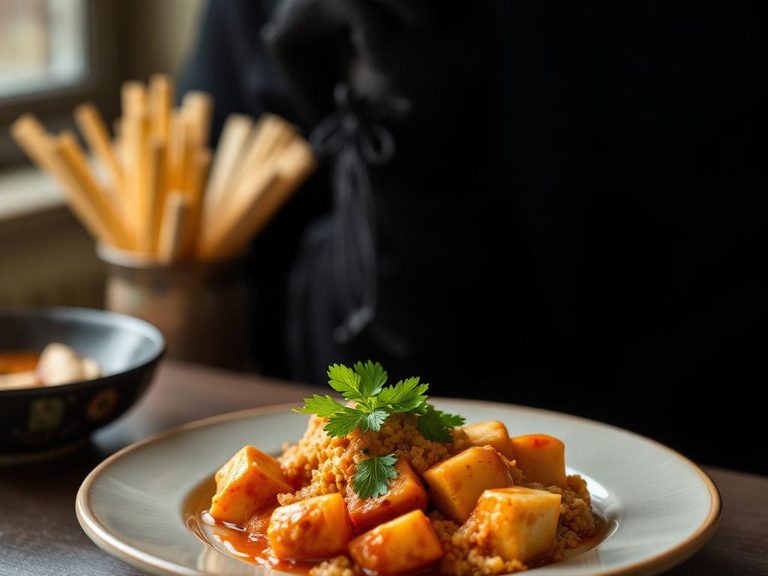
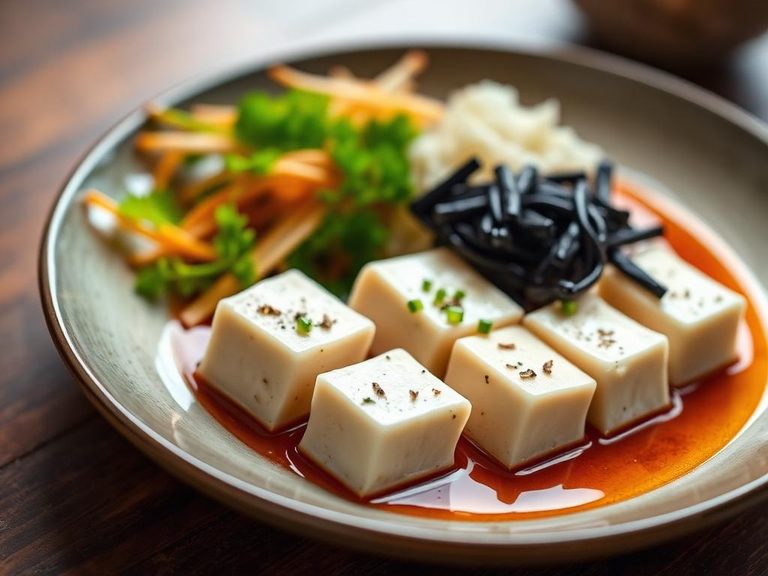
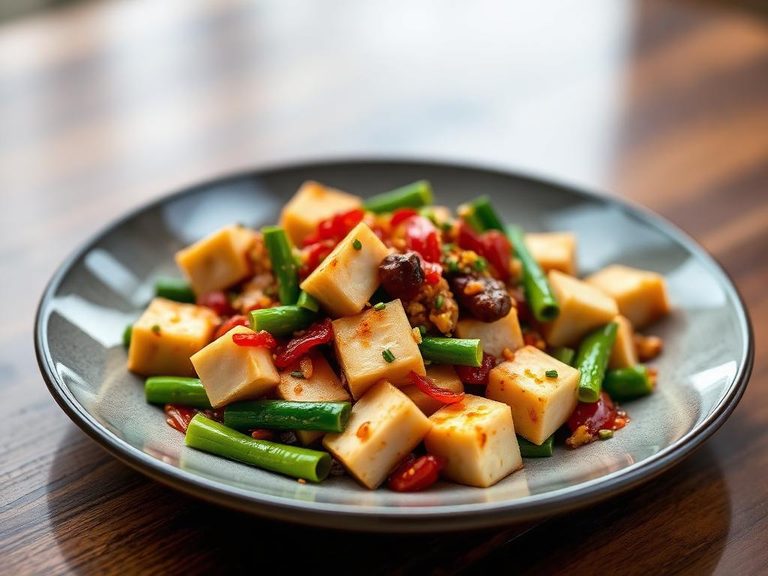
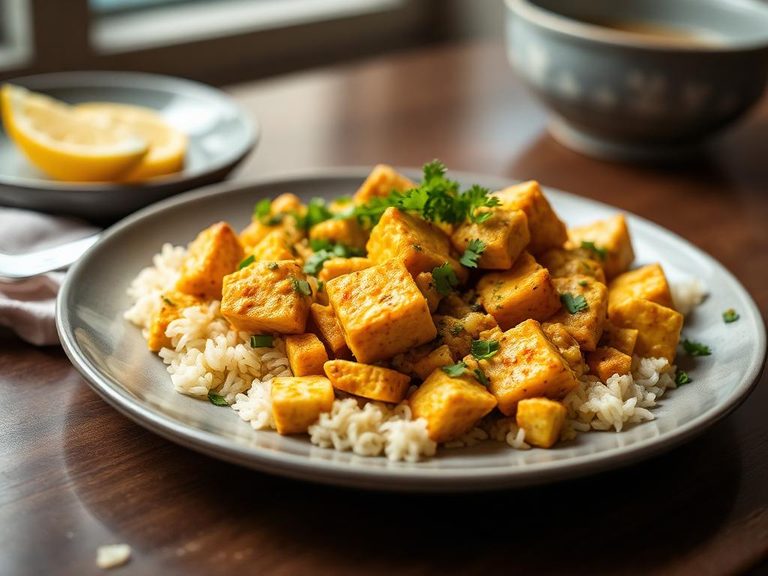
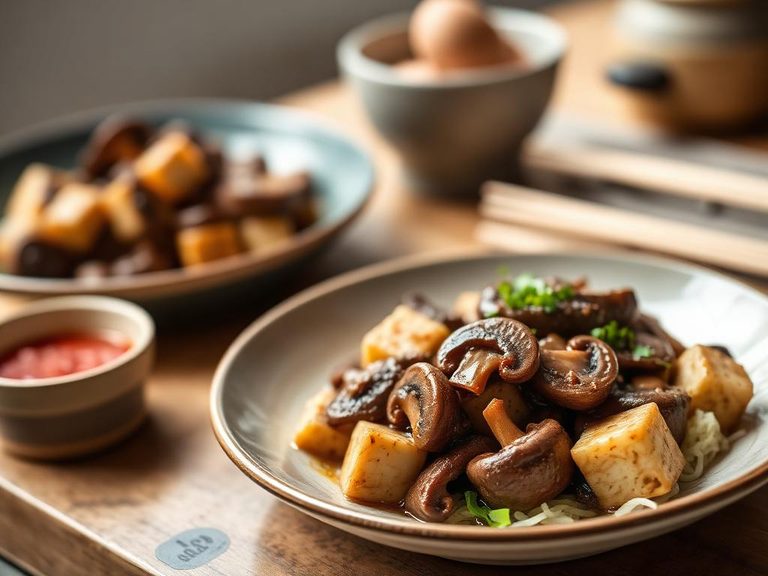
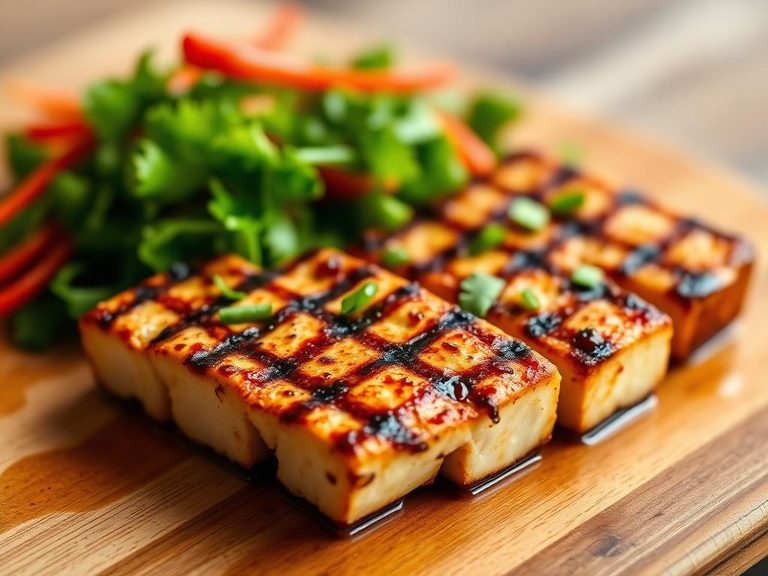
People love it for its remarkable ability to absorb flavors like a sponge while maintaining a satisfying, meaty bite. It's a culinary chameleon, forming the backbone of countless dishes from crispy stir-fries to hearty braises across many cuisines.
⚠️ Watch-outs & how to enjoy it better
Some may find its plain, beany flavor unappealing if not seasoned properly. For those with soy allergies, it is a strict no-go. To counteract any potential digestive discomfort from soy compounds, ensure it's thoroughly cooked and consider pairing it with digestive spices like ginger or cumin.
Key benefits
- Excellent source of complete plant-based protein
- Very low in carbohydrates and naturally low in sugar
- Contains all essential amino acids
- Good source of minerals like calcium and manganese
- Nigari-set tofu is often preferred for its clean, subtle flavor
🍽️ Popular dishes
🌍 Where it's eaten
💡 Did you know?
The word 'nigari' comes from the Japanese 'nigari' (苦汁), meaning 'bitter juice,' referring to the bitter taste of the magnesium chloride left over after salt production from seawater.
Full nutrition (USDA data · scales with serving)
| Water | 82.3 g |
| Energy | 83.0 kcal |
| Energy | 349 kj |
| Protein | 10.0 g |
| Total lipid (fat) | 5.3 g |
| Ash | 1.3 g |
| Carbohydrate, by difference | 1.2 g |
| Fiber, total dietary | 1.0 g |
| Total Sugars | 0.71 g |
| Calcium, Ca | 282 mg |
| Iron, Fe | 2.0 mg |
| Magnesium, Mg | 35.0 mg |
| Phosphorus, P | 111 mg |
| Potassium, K | 130 mg |
| Sodium, Na | 4.0 mg |
| Zinc, Zn | 1.1 mg |
| Copper, Cu | 0.20 mg |
| Manganese, Mn | 0.67 mg |
| Selenium, Se | 13.0 ug |
| Vitamin C, total ascorbic acid | 0.00 mg |
| Thiamin | 0.05 mg |
| Riboflavin | 0.05 mg |
| Niacin | 0.24 mg |
| Pantothenic acid | 0.84 mg |
| Vitamin B-6 | 0.08 mg |
| Folate, total | 9.0 ug |
| Folic acid | 0.00 ug |
| Folate, food | 9.0 ug |
| Folate, DFE | 9.0 ug |
| Choline, total | 33.0 mg |
| Vitamin B-12 | 0.00 ug |
| Vitamin B-12, added | 0.00 ug |
| Vitamin A, RAE | 0.00 ug |
| Retinol | 0.00 ug |
| Carotene, beta | 0.00 ug |
| Carotene, alpha | 0.00 ug |
| Cryptoxanthin, beta | 0.00 ug |
| Vitamin A, IU | 0.00 iu |
| Lycopene | 0.00 ug |
| Lutein + zeaxanthin | 0.00 ug |
| Vitamin E (alpha-tocopherol) | 0.01 mg |
| Vitamin E, added | 0.00 mg |
| Vitamin D (D2 + D3), International Units | 0.00 iu |
| Vitamin D (D2 + D3) | 0.00 ug |
| Vitamin K (phylloquinone) | 2.8 ug |
| Alcohol, ethyl | 0.00 g |
| Caffeine | 0.00 mg |
| Theobromine | 0.00 mg |
Fat & fatty acid profile (per 100g)
| Fatty acids, total saturated | 0.92 g |
| SFA 4:0 | 0.00 g |
| SFA 6:0 | 0.00 g |
| SFA 8:0 | 0.00 g |
| SFA 10:0 | 0.00 g |
| SFA 12:0 | 0.00 g |
| SFA 13:0 | 0.00 g |
| SFA 14:0 | 0.01 g |
| SFA 15:0 | 0.00 g |
| SFA 16:0 | 0.63 g |
| SFA 17:0 | 0.01 g |
| SFA 18:0 | 0.27 g |
| SFA 20:0 | 0.00 g |
| SFA 22:0 | 0.00 g |
| SFA 24:0 | 0.00 g |
| Fatty acids, total monounsaturated | 1.3 g |
| MUFA 14:1 | 0.00 g |
| MUFA 15:1 | 0.04 g |
| MUFA 16:1 | 0.00 g |
| MUFA 17:1 | 0.02 g |
| MUFA 18:1 | 1.2 g |
| MUFA 20:1 | 0.02 g |
| MUFA 22:1 | 0.00 g |
| Fatty acids, total polyunsaturated | 2.7 g |
| PUFA 18:2 | 2.4 g |
| PUFA 18:3 | 0.26 g |
| PUFA 18:4 | 0.00 g |
| PUFA 20:2 n-6 c,c | 0.00 g |
| PUFA 20:3 | 0.00 g |
| PUFA 20:4 | 0.00 g |
| PUFA 20:5 n-3 (EPA) | 0.00 g |
| PUFA 22:5 n-3 (DPA) | 0.00 g |
| PUFA 22:6 n-3 (DHA) | 0.00 g |
| Fatty acids, total trans | 0.00 g |
| Cholesterol | 0.00 mg |
Amino acid profile (per 100g)
| Tryptophan | 0.14 g |
| Threonine | 0.45 g |
| Isoleucine | 0.49 g |
| Leucine | 0.80 g |
| Lysine | 0.51 g |
| Methionine | 0.12 g |
| Cystine | 0.03 g |
| Phenylalanine | 0.48 g |
| Tyrosine | 0.41 g |
| Valine | 0.50 g |
| Arginine | 0.79 g |
| Histidine | 0.25 g |
| Alanine | 0.45 g |
| Aspartic acid | 1.2 g |
| Glutamic acid | 1.9 g |
| Glycine | 0.42 g |
| Proline | 0.63 g |
| Serine | 0.59 g |
FAQ
What's the difference between nigari tofu and regular tofu?
Nigari is a specific, traditional coagulant (magnesium chloride) used to make tofu. 'Regular' tofu might use calcium sulfate or other coagulants. Nigari tofu is often prized for its smoother texture and more delicate, clean flavor.
Do I need to press extra-firm tofu?
Yes, pressing is highly recommended. It removes excess water, allowing the tofu to absorb marinades better and achieve a crispier texture when fried, baked, or grilled.
Is this tofu a complete protein?
Yes, soy-based tofu is a complete protein, meaning it contains all nine essential amino acids your body needs but cannot produce on its own.
Nutrient density (calculated · NRF9.3)
Nutrient Rich Foods index: beneficial nutrients (protein, fiber, vitamins, minerals) minus saturated fat, added sugar & sodium, per 100 kcal.
NRF9.3 index — Fulgoni, Keast & Drewnowski, 2009. Computed from USDA nutrients.
Weight-loss friendliness (composite index)
Energy density 0.83 kcal/g · 48% calories from protein · 1.0 g fiber · 0.7 g sugar per 100 g.
Composite of energy density (Rolls et al., 1999), protein & fiber satiety, minus sugar. A calculated heuristic — ranks satiety-per-calorie, not a clinical measure.
Dietary load (calculated from USDA values)
Potential renal acid load. Positive = acid-forming, negative = alkaline-forming.
Sodium-to-potassium ratio: 0.03 (lower is better — aim for ≤ 1)
Sodium:potassium per WHO potassium guidance. Computed from USDA nutrients.