

Swordfish, frozen, wild caught
Whole food · Finfish and Shellfish Products
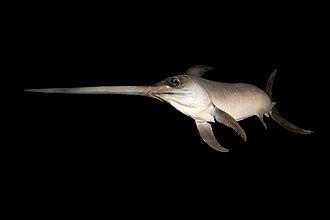
Photo: Wikipedia
Wild-caught swordfish is a firm, meaty fish with a steak-like texture and a mild, sweet flavor that becomes buttery when cooked. Its dense, white flesh holds up exceptionally well to grilling and searing, making it a favorite for those who enjoy a substantial seafood experience. Nutritionally, it is a powerhouse of lean protein with minimal carbohydrates and a moderate amount of healthy fats.
Calorie split: 51% protein · 1% carbs · 48% fat
↓ Full nutrition💚 Why it's loved
People love swordfish for its satisfying, steak-like texture that doesn't flake apart, making it a popular choice for grilling and a hearty alternative to red meat. Its mild, slightly sweet flavor is versatile, pairing beautifully with bold marinades, citrus, and herbs.
⚠️ Watch-outs & how to enjoy it better
As a large predatory fish, swordfish can contain higher levels of mercury, so pregnant women, nursing mothers, and young children should limit consumption. To mitigate this, choose smaller portions, source from reputable suppliers, and balance your diet with lower-mercury fish like salmon or sardines throughout the week.
Key benefits
- Excellent source of high-quality, complete protein
- Naturally low in carbohydrates and sugars
- Contains omega-3 fatty acids for heart and brain health
- Good source of selenium, an important antioxidant mineral
- Provides niacin (vitamin B3) for energy metabolism
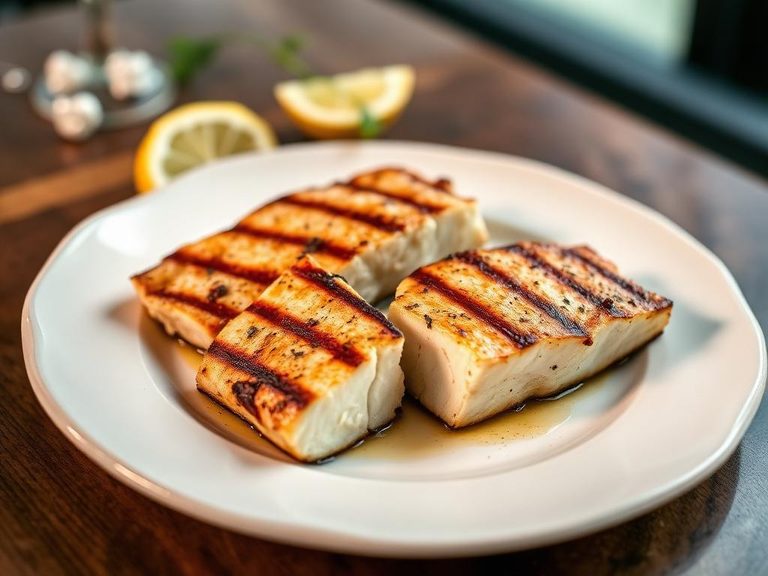
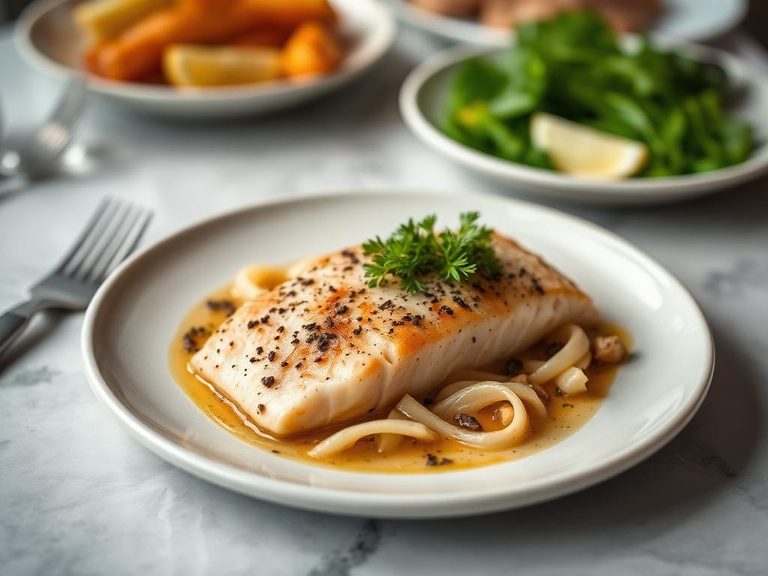
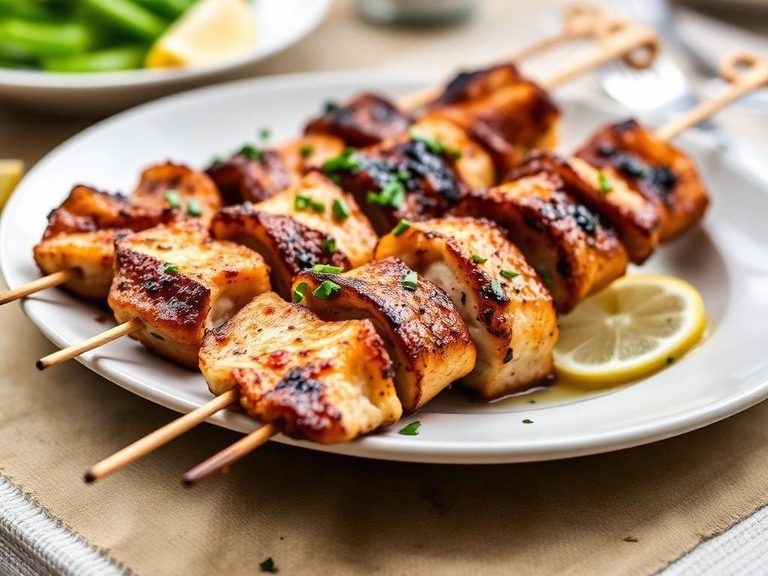
🍽️ Popular dishes
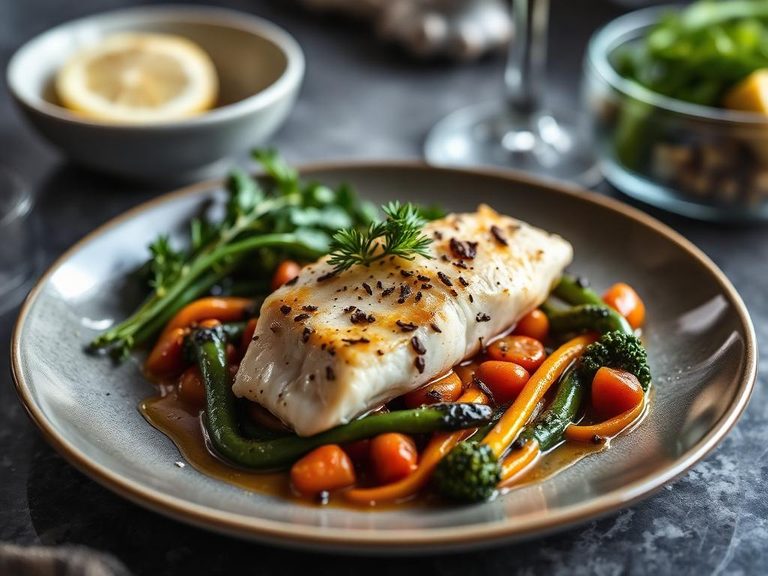
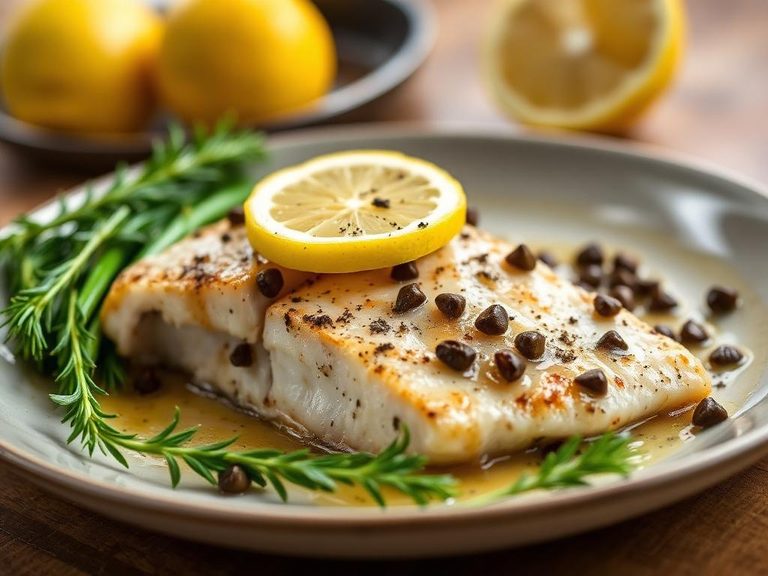
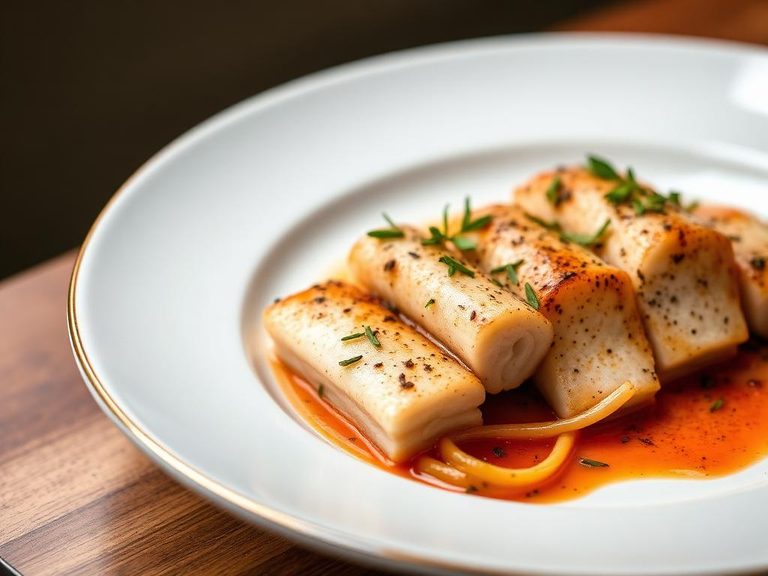
🌍 Where it's eaten
💡 Did you know?
Despite its name, swordfish have no teeth as adults; they rely on their speed and the sharp, bill-like snout to slash through schools of fish.
Full nutrition (USDA data · scales with serving)
| Water | 70.9 g |
| Energy (Atwater General Factors) | 152 kcal |
| Nitrogen | 3.1 g |
| Protein | 19.2 g |
| Total lipid (fat) | 8.1 g |
| Ash | 1.3 g |
| Carbohydrate, by difference | 0.45 g |
| Calcium, Ca | 3.6 mg |
| Iron, Fe | 0.10 mg |
| Magnesium, Mg | 26.7 mg |
| Phosphorus, P | 235 mg |
| Potassium, K | 414 mg |
| Sodium, Na | 56.9 mg |
| Zinc, Zn | 0.54 mg |
| Copper, Cu | 0.02 mg |
| Manganese, Mn | 0.00 mg |
| Selenium, Se | 60.7 ug |
| Vitamin B-12 | 0.87 ug |
Fat & fatty acid profile (per 100g)
Estimated from Fish, swordfish, raw — USDA does not publish this profile for Swordfish.
| Fatty acids, total saturated | 1.6 g |
| SFA 4:0 | 0.00 g |
| SFA 6:0 | 0.00 g |
| SFA 8:0 | 0.00 g |
| SFA 10:0 | 0.00 g |
| SFA 12:0 | 0.01 g |
| SFA 14:0 | 0.15 g |
| SFA 15:0 | 0.03 g |
| SFA 16:0 | 1.0 g |
| SFA 17:0 | 0.03 g |
| SFA 18:0 | 0.34 g |
| SFA 20:0 | 0.02 g |
| SFA 22:0 | 0.01 g |
| SFA 24:0 | 0.01 g |
| Fatty acids, total monounsaturated | 3.0 g |
| MUFA 14:1 | 0.01 g |
| MUFA 15:1 | 0.00 g |
| MUFA 16:1 | 0.24 g |
| MUFA 16:1 c | 0.23 g |
| MUFA 17:1 | 0.01 g |
| MUFA 18:1 | 2.2 g |
| MUFA 18:1 c | 2.2 g |
| MUFA 20:1 | 0.38 g |
| MUFA 22:1 | 0.13 g |
| MUFA 22:1 c | 0.13 g |
| MUFA 24:1 c | 0.08 g |
| Fatty acids, total polyunsaturated | 1.1 g |
| PUFA 18:2 | 0.07 g |
| PUFA 18:2 n-6 c,c | 0.05 g |
| PUFA 18:2 CLAs | 0.01 g |
| PUFA 18:3 | 0.03 g |
| PUFA 18:3 n-3 c,c,c (ALA) | 0.03 g |
| PUFA 18:3 n-6 c,c,c | 0.00 g |
| PUFA 18:3i | 0.00 g |
| PUFA 18:4 | 0.01 g |
| PUFA 20:2 n-6 c,c | 0.02 g |
| PUFA 20:3 | 0.02 g |
| PUFA 20:3 n-3 | 0.02 g |
| PUFA 20:3 n-6 | 0.01 g |
| PUFA 20:4 | 0.07 g |
| PUFA 20:5 n-3 (EPA) | 0.11 g |
| PUFA 22:4 | 0.03 g |
| PUFA 22:5 n-3 (DPA) | 0.14 g |
| PUFA 22:6 n-3 (DHA) | 0.65 g |
| Fatty acids, total trans | 0.05 g |
| Fatty acids, total trans-monoenoic | 0.03 g |
| TFA 16:1 t | 0.01 g |
| TFA 18:1 t | 0.02 g |
| TFA 22:1 t | 0.00 g |
| TFA 18:2 t not further defined | 0.01 g |
| Fatty acids, total trans-polyenoic | 0.01 g |
| Cholesterol | 66.0 mg |
Amino acid profile (per 100g)
Estimated from Fish, swordfish, raw — USDA does not publish this profile for Swordfish.
| Tryptophan | 0.22 g |
| Threonine | 0.87 g |
| Isoleucine | 0.91 g |
| Leucine | 1.6 g |
| Lysine | 1.8 g |
| Methionine | 0.59 g |
| Cystine | 0.21 g |
| Phenylalanine | 0.77 g |
| Tyrosine | 0.67 g |
| Valine | 1.0 g |
| Arginine | 1.2 g |
| Histidine | 0.58 g |
| Alanine | 1.2 g |
| Aspartic acid | 2.0 g |
| Glutamic acid | 3.0 g |
| Glycine | 0.95 g |
| Proline | 0.70 g |
| Serine | 0.81 g |
FAQ
How do I prevent swordfish from drying out?
Swordfish is lean and can overcook quickly. Use high-heat methods like grilling or searing for a short time, and consider a marinade or a light baste of oil or butter. Cook just until the flesh is opaque throughout but still moist.
Is frozen wild-caught swordfish as good as fresh?
Yes, high-quality flash-frozen wild swordfish is often frozen shortly after catch, locking in freshness and texture. Thaw it slowly in the refrigerator before cooking for the best results.
What does swordfish taste like?
It has a mild, slightly sweet and nutty flavor, often compared to scallops or other firm white fish. The taste is less 'fishy' than many other species, which makes it appealing to a wide range of palates.
Nutrient density (calculated · NRF9.3)
Nutrient Rich Foods index: beneficial nutrients (protein, fiber, vitamins, minerals) minus saturated fat, added sugar & sodium, per 100 kcal.
NRF9.3 index — Fulgoni, Keast & Drewnowski, 2009. Computed from USDA nutrients.
Weight-loss friendliness (composite index)
Energy density 1.52 kcal/g · 51% calories from protein · 0.0 g fiber · 0.0 g sugar per 100 g.
Composite of energy density (Rolls et al., 1999), protein & fiber satiety, minus sugar. A calculated heuristic — ranks satiety-per-calorie, not a clinical measure.
Dietary load (calculated from USDA values)
Potential renal acid load. Positive = acid-forming, negative = alkaline-forming.
Sodium-to-potassium ratio: 0.14 (lower is better — aim for ≤ 1)
Sodium:potassium per WHO potassium guidance. Computed from USDA nutrients.