Strawberries, raw
Whole food · Fruits and Fruit Juices
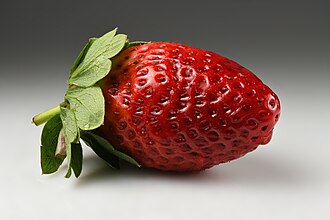
Photo: Wikipedia
A vibrant red berry with a juicy, tender flesh and a sweet-tart flavor, raw strawberries are a burst of summer in every bite. Nutritionally, they are remarkably low in calories (just 31 kcal per 100g) while being an excellent source of vitamin C and dietary fiber, providing nearly 20% of your daily needs in a single cup.
💚 Why it's loved
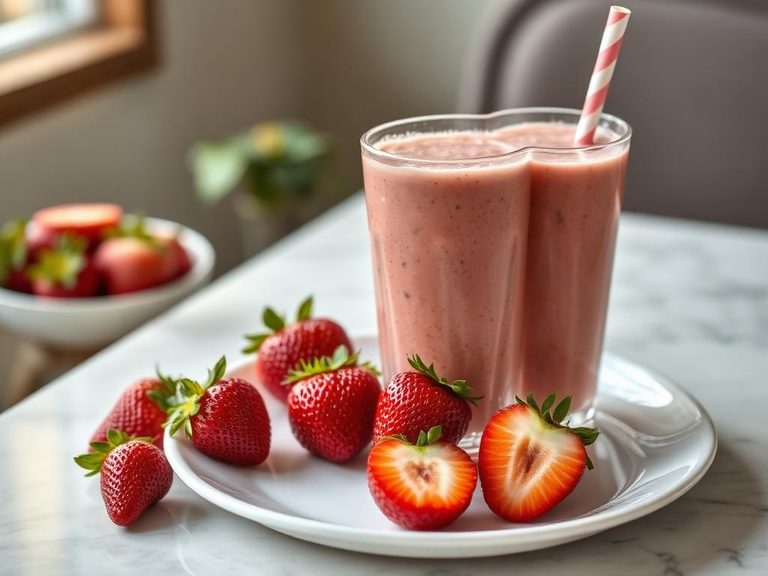
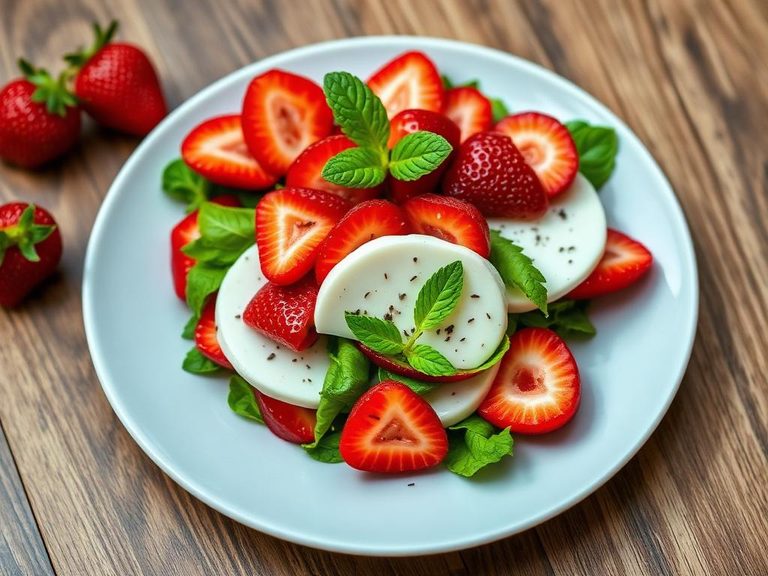
People adore strawberries for their perfect balance of sweetness and acidity, and their juicy, refreshing texture. Their versatility makes them a beloved ingredient in everything from simple bowls and smoothies to elegant pastries and savory salads.
⚠️ Watch-outs & how to enjoy it better
Strawberries are on the 'Dirty Dozen' list for pesticide residue, so buying organic or washing thoroughly is recommended. They contain natural fruit sugars, so those monitoring blood sugar should be mindful of portion size. A less common issue is oral allergy syndrome (itchy mouth) in people with birch pollen allergies; pairing them with a fat like yogurt can sometimes help mitigate this.
Key benefits
- Excellent source of vitamin C for immune function
- High in fiber for digestive health
- Rich in antioxidants like anthocyanins
- Very low calorie, aiding weight management
- Provides manganese for bone health
🍽️ Popular dishes
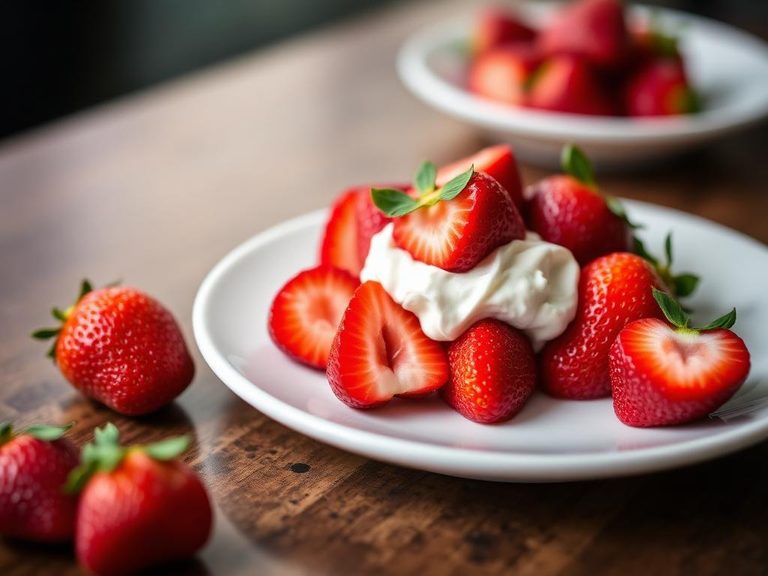
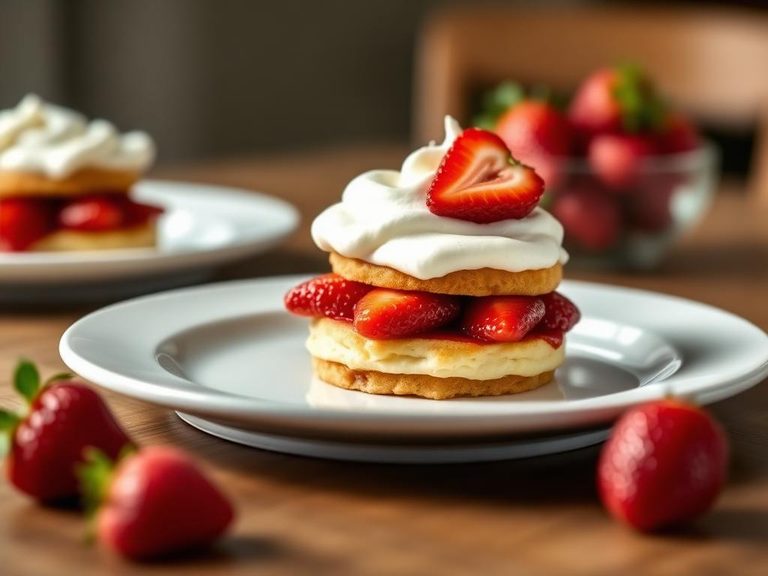

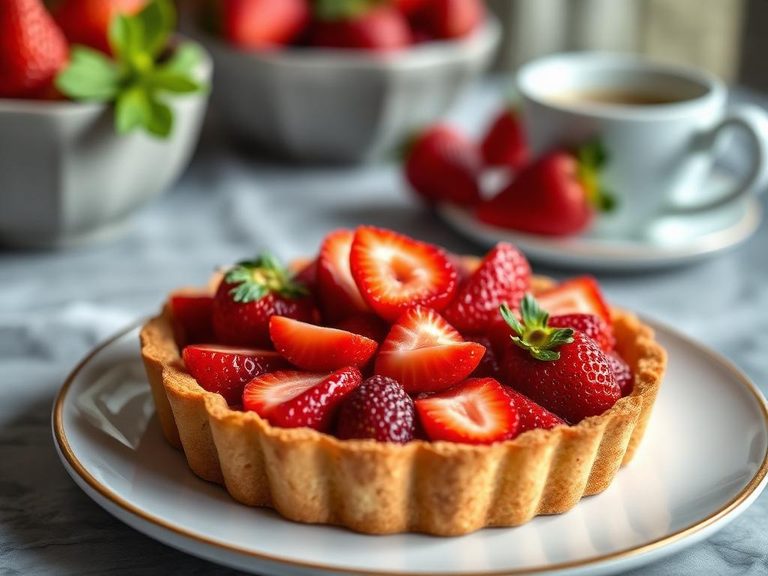
🌍 Where it's eaten
💡 Did you know?
Unlike most fruits, the seeds (achenes) of a strawberry are on the outside, with each tiny seed being an individual fruit containing a single seed.
Full nutrition (scales with serving)
| Water | 91.1 g |
| Energy | 31.0 kcal |
| Energy | 132 kj |
| Nitrogen | 0.10 g |
| Protein | 0.64 g |
| Total lipid (fat) | 0.22 g |
| Total fat (NLEA) | 0.17 g |
| Ash | 0.41 g |
| Carbohydrate, by difference | 7.6 g |
| Carbohydrate, by summation | 7.1 g |
| Fiber, total dietary | 1.8 g |
| Fiber, soluble | 0.70 g |
| Fiber, insoluble | 0.90 g |
| Sugars, Total | 5.3 g |
| Sucrose | 0.11 g |
| Glucose | 2.4 g |
| Fructose | 2.8 g |
| Lactose | 0.00 g |
| Maltose | 0.00 g |
| Galactose | 0.00 g |
| Starch | 0.04 g |
| Calcium, Ca | 12.0 mg |
| Iron, Fe | 0.28 mg |
| Magnesium, Mg | 11.8 mg |
| Phosphorus, P | 20.0 mg |
| Potassium, K | 89.0 mg |
| Sodium, Na | 10.0 mg |
| Zinc, Zn | 0.18 mg |
| Copper, Cu | 0.12 mg |
| Manganese, Mn | 0.28 mg |
| Selenium, Se | 0.40 ug |
| Vitamin C, total ascorbic acid | 36.3 mg |
| Thiamin | 0.03 mg |
| Riboflavin | 0.02 mg |
| Niacin | 0.39 mg |
| Pantothenic acid | 0.12 mg |
| Vitamin B-6 | 0.04 mg |
| Folate, total | 8.0 ug |
| Vitamin A, RAE | 1.0 ug |
| Carotene, beta | 7.0 ug |
| Carotene, alpha | 0.00 ug |
| Cryptoxanthin, beta | 0.00 ug |
| Lycopene | 0.00 ug |
| Lutein + zeaxanthin | 22.0 ug |
| Vitamin K (phylloquinone) | 2.1 ug |
| Vitamin K (Dihydrophylloquinone) | 0.00 ug |
| Fatty acids, total saturated | 0.00 g |
| SFA 4:0 | 0.00 g |
| SFA 6:0 | 0.00 g |
| SFA 8:0 | 0.00 g |
| SFA 10:0 | 0.00 g |
| SFA 12:0 | 0.00 g |
| SFA 14:0 | 0.00 g |
| SFA 15:0 | 0.00 g |
| SFA 16:0 | 0.00 g |
| SFA 17:0 | 0.00 g |
| SFA 18:0 | 0.00 g |
| SFA 20:0 | 0.00 g |
| SFA 22:0 | 0.00 g |
| SFA 24:0 | 0.00 g |
| Fatty acids, total monounsaturated | 0.00 g |
| MUFA 14:1 c | 0.00 g |
| MUFA 16:1 c | 0.00 g |
| MUFA 18:1 | 0.00 g |
| MUFA 18:1 c | 0.00 g |
| MUFA 20:1 | 0.00 g |
| MUFA 20:1 c | 0.00 g |
| MUFA 22:1 | 0.00 g |
| MUFA 22:1 c | 0.00 g |
| Fatty acids, total polyunsaturated | 0.00 g |
| PUFA 18:2 | 0.00 g |
| PUFA 18:2 c | 0.00 g |
| PUFA 18:3 | 0.00 g |
| PUFA 18:3 c | 0.00 g |
| PUFA 18:4 | 0.00 g |
| PUFA 20:4 | 0.00 g |
| PUFA 20:4c | 0.00 g |
| PUFA 20:5c | 0.00 g |
| PUFA 20:5 n-3 (EPA) | 0.00 g |
| PUFA 22:2 | 0.00 g |
| PUFA 22:6 c | 0.00 g |
| PUFA 22:6 n-3 (DHA) | 0.00 g |
| Tryptophan | 0.00 g |
| Threonine | 0.00 g |
| Isoleucine | 0.00 g |
| Leucine | 0.00 g |
| Lysine | 0.00 g |
| Methionine | 0.00 g |
| Cystine | 0.00 g |
| Phenylalanine | 0.00 g |
| Tyrosine | 0.00 g |
| Valine | 0.00 g |
| Arginine | 0.00 g |
| Histidine | 0.00 g |
| Alanine | 0.00 g |
| Aspartic acid | 0.14 g |
| Glutamic acid | 0.13 g |
| Glycine | 0.00 g |
| Proline | 0.00 g |
| Serine | 0.00 g |
FAQ
Are the seeds on a strawberry edible?
Yes, absolutely. The tiny seeds (achenes) on the outside are not only edible but also a good source of fiber and omega-3 fatty acids.
How do I keep strawberries fresh longer?
Don't wash them until ready to eat. Store them in a single layer on a paper towel in the refrigerator's crisper drawer, ideally in a container that allows airflow.
Why are some strawberries white inside?
This is called 'white heart' or 'albino core.' It's a physiological disorder, often caused by sudden temperature changes during growth, that prevents the flesh from fully developing its red color and sweetness.