

Strawberries, frozen, unsweetened (Includes foods for USDA's Food Distribution Program)
Whole food · Fruits and Fruit Juices

Photo: Wikipedia
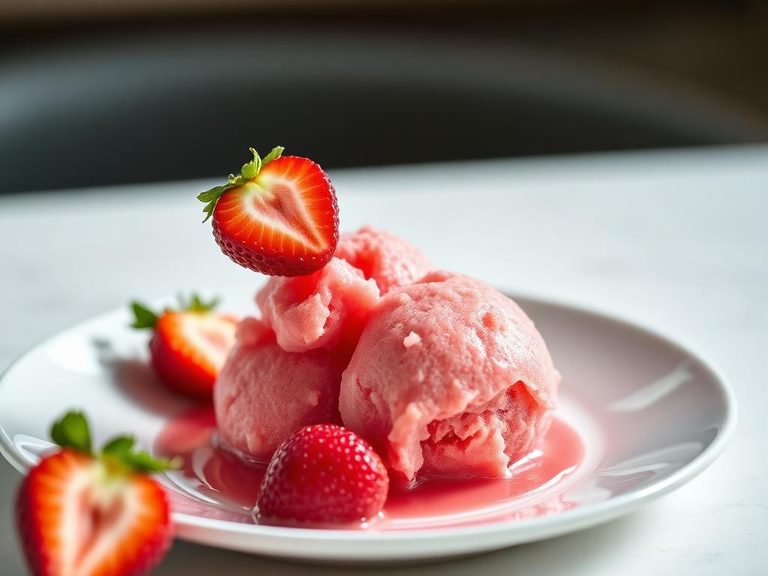
These are whole, unsweetened strawberries frozen at peak ripeness, locking in a vibrant ruby color and a sweet-tart flavor that tastes like summer in a bag. The texture is soft and juicy once thawed, making them ideal for blending into smoothies or sauces. With only 35 calories per 100g and a notable 2.1g of fiber, they are a nutrient-dense, low-calorie fruit option.
Calorie split: 4% protein · 93% carbs · 3% fat
↓ Full nutrition💚 Why it's loved
People love them for their intense, concentrated strawberry flavor that shines in everything from smoothies to homemade jam. Their convenience and long shelf life make them a staple for quick, healthy desserts and breakfasts.
⚠️ Watch-outs & how to enjoy it better
The soft, watery texture after thawing isn't ideal for eating fresh like a crisp berry. To counteract this, use them blended (smoothies, sauces) or cooked (compotes, baked goods) where texture is less critical. Those monitoring blood sugar should pair with protein or fat (e.g., yogurt, nuts) to slow sugar absorption.
Key benefits
- Excellent source of vitamin C, an antioxidant supporting immune function.
- High in dietary fiber, promoting digestive health and satiity.
- Low in calories and naturally fat-free, aiding weight management.
- Contains anthocyanins, plant compounds linked to heart health.
- Convenient year-round access to a nutrient-rich fruit.
🍽️ Popular dishes
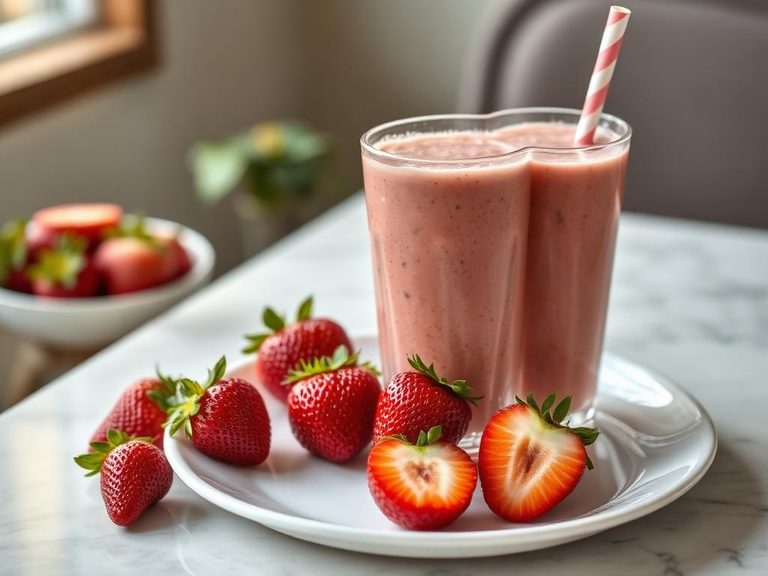
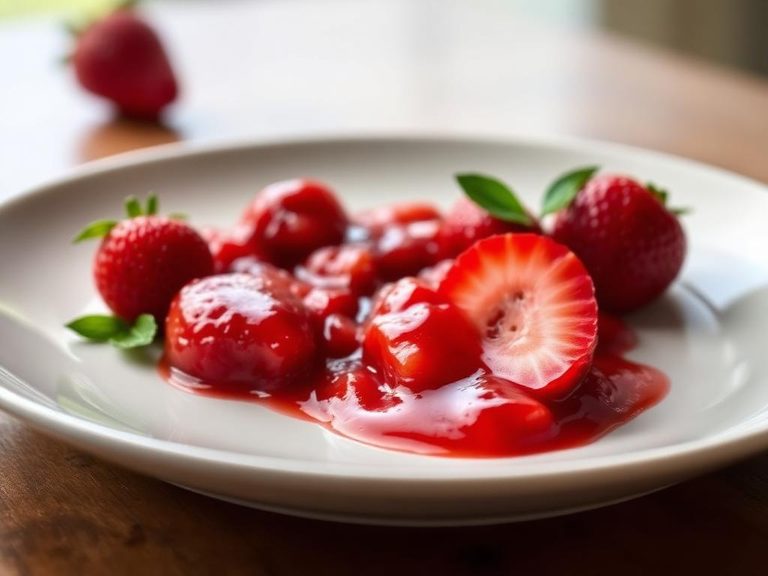
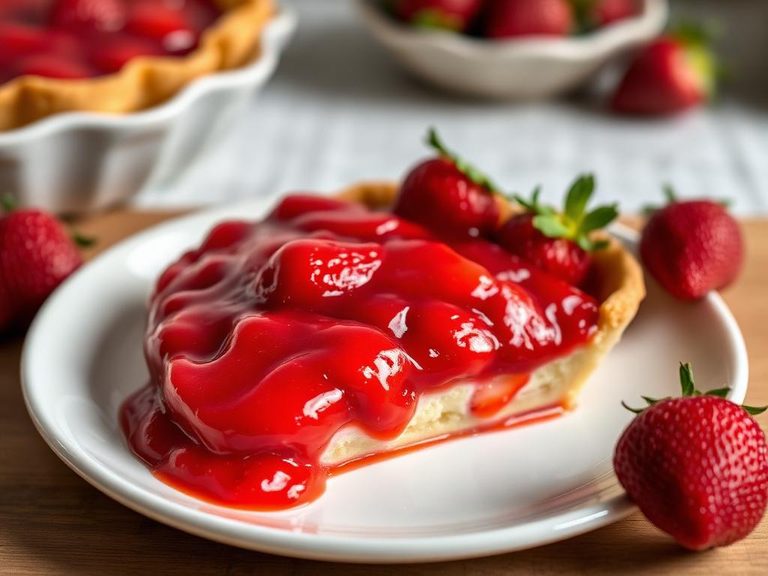
🌍 Where it's eaten
💡 Did you know?
Strawberries are the only fruit with seeds on the outside, with an average of about 200 seeds per berry.
Full nutrition (USDA data · scales with serving)
| Water | 90.0 g |
| Energy | 35.0 kcal |
| Energy | 146 kj |
| Protein | 0.43 g |
| Total lipid (fat) | 0.11 g |
| Ash | 0.37 g |
| Carbohydrate, by difference | 9.1 g |
| Fiber, total dietary | 2.1 g |
| Total Sugars | 4.6 g |
| Sucrose | 0.37 g |
| Glucose | 2.0 g |
| Fructose | 2.2 g |
| Calcium, Ca | 16.0 mg |
| Iron, Fe | 0.75 mg |
| Magnesium, Mg | 11.0 mg |
| Phosphorus, P | 13.0 mg |
| Potassium, K | 148 mg |
| Sodium, Na | 2.0 mg |
| Zinc, Zn | 0.13 mg |
| Copper, Cu | 0.05 mg |
| Manganese, Mn | 0.29 mg |
| Selenium, Se | 0.70 ug |
| Vitamin C, total ascorbic acid | 41.2 mg |
| Thiamin | 0.02 mg |
| Riboflavin | 0.04 mg |
| Niacin | 0.46 mg |
| Pantothenic acid | 0.11 mg |
| Vitamin B-6 | 0.03 mg |
| Folate, total | 17.0 ug |
| Folic acid | 0.00 ug |
| Folate, food | 17.0 ug |
| Folate, DFE | 17.0 ug |
| Choline, total | 5.7 mg |
| Vitamin B-12 | 0.00 ug |
| Vitamin B-12, added | 0.00 ug |
| Vitamin A, RAE | 2.0 ug |
| Retinol | 0.00 ug |
| Carotene, beta | 27.0 ug |
| Carotene, alpha | 0.00 ug |
| Cryptoxanthin, beta | 0.00 ug |
| Vitamin A, IU | 45.0 iu |
| Lycopene | 0.00 ug |
| Lutein + zeaxanthin | 26.0 ug |
| Vitamin E (alpha-tocopherol) | 0.29 mg |
| Vitamin E, added | 0.00 mg |
| Vitamin D (D2 + D3), International Units | 0.00 iu |
| Vitamin D (D2 + D3) | 0.00 ug |
| Vitamin K (phylloquinone) | 2.2 ug |
| Alcohol, ethyl | 0.00 g |
| Caffeine | 0.00 mg |
| Theobromine | 0.00 mg |
Fat & fatty acid profile (per 100g)
| Fatty acids, total saturated | 0.01 g |
| SFA 4:0 | 0.00 g |
| SFA 6:0 | 0.00 g |
| SFA 8:0 | 0.00 g |
| SFA 10:0 | 0.00 g |
| SFA 12:0 | 0.00 g |
| SFA 14:0 | 0.00 g |
| SFA 16:0 | 0.00 g |
| SFA 18:0 | 0.00 g |
| Fatty acids, total monounsaturated | 0.01 g |
| MUFA 16:1 | 0.00 g |
| MUFA 18:1 | 0.01 g |
| MUFA 20:1 | 0.00 g |
| MUFA 22:1 | 0.00 g |
| Fatty acids, total polyunsaturated | 0.05 g |
| PUFA 18:2 | 0.03 g |
| PUFA 18:3 | 0.02 g |
| PUFA 18:4 | 0.00 g |
| PUFA 20:4 | 0.00 g |
| PUFA 20:5 n-3 (EPA) | 0.00 g |
| PUFA 22:5 n-3 (DPA) | 0.00 g |
| PUFA 22:6 n-3 (DHA) | 0.00 g |
| Fatty acids, total trans | 0.00 g |
| Cholesterol | 0.00 mg |
Amino acid profile (per 100g)
| Tryptophan | 0.01 g |
| Threonine | 0.01 g |
| Isoleucine | 0.01 g |
| Leucine | 0.02 g |
| Lysine | 0.02 g |
| Methionine | 0.00 g |
| Cystine | 0.00 g |
| Phenylalanine | 0.01 g |
| Tyrosine | 0.01 g |
| Valine | 0.01 g |
| Arginine | 0.02 g |
| Histidine | 0.01 g |
| Alanine | 0.02 g |
| Aspartic acid | 0.10 g |
| Glutamic acid | 0.06 g |
| Glycine | 0.02 g |
| Proline | 0.01 g |
| Serine | 0.02 g |
FAQ
Do I need to thaw frozen strawberries before using them?
It depends on the use. For smoothies or baking, you can often blend or mix them in frozen. For sauces, compotes, or eating, thawing in the refrigerator or microwave is recommended.
Are frozen strawberries as nutritious as fresh?
Yes, often more so. Flash-freezing at peak ripeness preserves nutrients like vitamin C and antioxidants very effectively, sometimes better than fresh berries that have traveled long distances.
How should I store thawed strawberries?
Once thawed, they should be consumed within a few days and kept in a sealed container in the refrigerator. Do not refreeze thawed strawberries, as their texture will become excessively mushy.
Nutrient density (calculated · NRF9.3)
Nutrient Rich Foods index: beneficial nutrients (protein, fiber, vitamins, minerals) minus saturated fat, added sugar & sodium, per 100 kcal.
NRF9.3 index — Fulgoni, Keast & Drewnowski, 2009. Computed from USDA nutrients.
Weight-loss friendliness (composite index)
Energy density 0.35 kcal/g · 5% calories from protein · 2.1 g fiber · 4.6 g sugar per 100 g.
Composite of energy density (Rolls et al., 1999), protein & fiber satiety, minus sugar. A calculated heuristic — ranks satiety-per-calorie, not a clinical measure.
Dietary load (calculated from USDA values)
Potential renal acid load. Positive = acid-forming, negative = alkaline-forming.
Sodium-to-potassium ratio: 0.01 (lower is better — aim for ≤ 1)
Sodium:potassium per WHO potassium guidance. Computed from USDA nutrients.