

Soup, black bean, canned, prepared with equal volume water
Whole food · Soups, Sauces, and Gravies
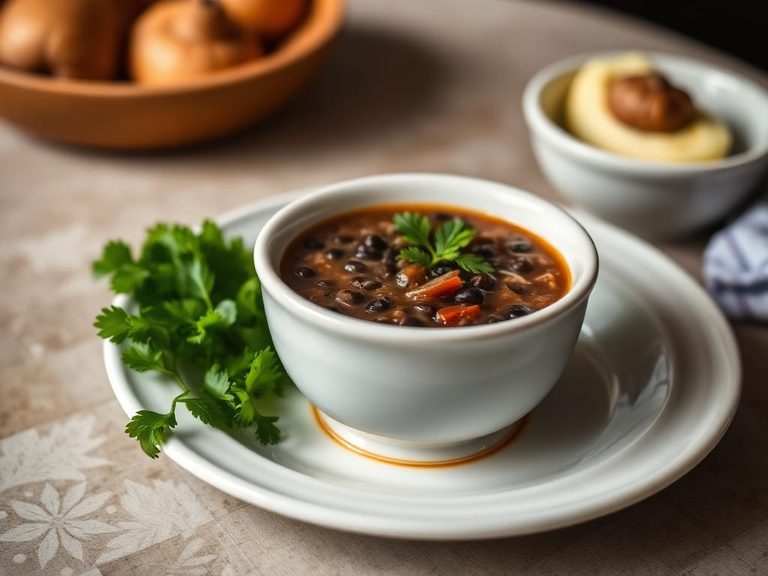
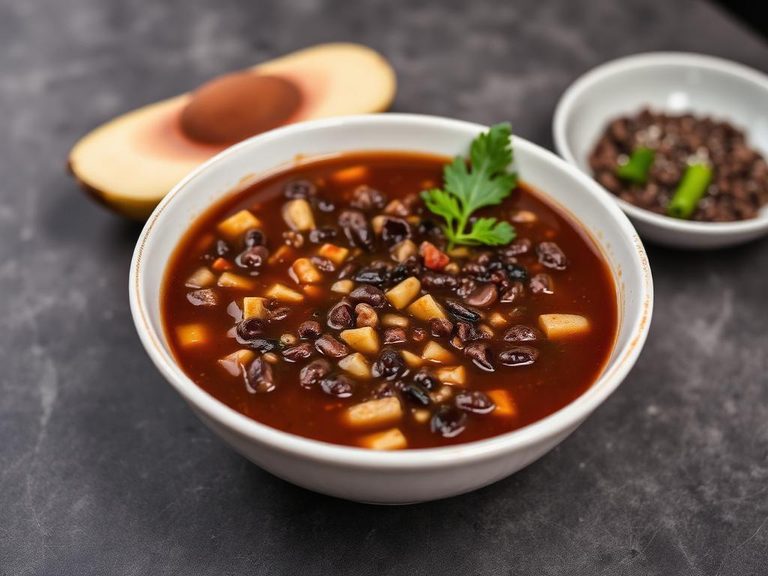
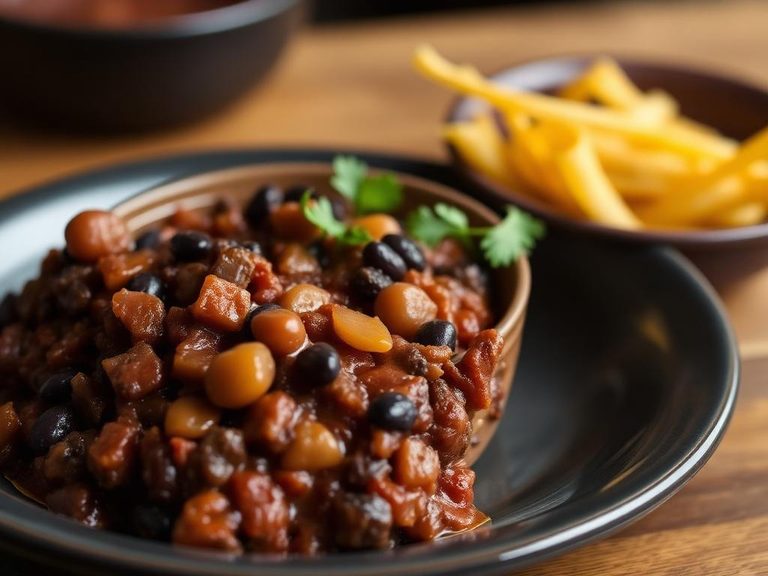
This is the humble, canned black bean soup, stretched with water to a comforting, brothy consistency. It offers a mild, earthy bean flavor with a soft, slightly starchy texture, making it a quick, low-calorie base for countless meals. Its standout feature is its impressive fiber content relative to its light calorie count.
Calorie split: 21% protein · 66% carbs · 13% fat
↓ Full nutrition💚 Why it's loved
People love it for its comforting, savory warmth and incredible versatility—it's a blank canvas for spices, toppings, and mix-ins. It's also deeply rooted in home cooking traditions across the Americas, offering a taste of simple, hearty nourishment.
⚠️ Watch-outs & how to enjoy it better
The primary concern is often its sodium content, as canned soups can be very salty, which may affect blood pressure. For those managing blood sugar, the combination of carbs and sodium can be less ideal. Counteract this by rinsing the beans first, choosing low-sodium versions, or pairing it with a source of protein (like an egg or cheese) and healthy fat (like avocado) to slow digestion.
Key benefits
- Excellent source of plant-based dietary fiber
- Very low in calories, ideal for volume eating
- Provides a modest boost of plant protein
- Quick and shelf-stable pantry staple
- Naturally low in fat
🍽️ Popular dishes
🌍 Where it's eaten
💡 Did you know?
A single cup of cooked black beans contains more antioxidants (specifically anthocyanins) than a cup of cranberries, making this simple soup a surprisingly potent source of these healthful compounds.
Full nutrition (USDA data · scales with serving)
| Water | 87.6 g |
| Energy | 46.0 kcal |
| Energy | 191 kj |
| Protein | 2.4 g |
| Total lipid (fat) | 0.66 g |
| Ash | 1.6 g |
| Carbohydrate, by difference | 7.7 g |
| Fiber, total dietary | 3.4 g |
| Total Sugars | 1.2 g |
| Calcium, Ca | 19.0 mg |
| Iron, Fe | 0.75 mg |
| Magnesium, Mg | 17.0 mg |
| Phosphorus, P | 38.0 mg |
| Potassium, K | 125 mg |
| Sodium, Na | 487 mg |
| Zinc, Zn | 0.55 mg |
| Copper, Cu | 0.15 mg |
| Manganese, Mn | 0.25 mg |
| Selenium, Se | 0.00 ug |
| Fluoride, F | 35.6 ug |
| Vitamin C, total ascorbic acid | 0.10 mg |
| Thiamin | 0.02 mg |
| Riboflavin | 0.02 mg |
| Niacin | 0.20 mg |
| Pantothenic acid | 0.08 mg |
| Vitamin B-6 | 0.04 mg |
| Folate, total | 33.0 ug |
| Folic acid | 0.00 ug |
| Folate, food | 33.0 ug |
| Folate, DFE | 33.0 ug |
| Choline, total | 7.8 mg |
| Vitamin B-12 | 0.00 ug |
| Vitamin B-12, added | 0.00 ug |
| Vitamin A, RAE | 11.0 ug |
| Retinol | 0.00 ug |
| Carotene, beta | 110 ug |
| Carotene, alpha | 40.0 ug |
| Cryptoxanthin, beta | 6.0 ug |
| Vitamin A, IU | 222 iu |
| Lycopene | 232 ug |
| Lutein + zeaxanthin | 18.0 ug |
| Vitamin E (alpha-tocopherol) | 0.18 mg |
| Vitamin E, added | 0.00 mg |
| Tocopherol, beta | 0.00 mg |
| Vitamin D (D2 + D3), International Units | 0.00 iu |
| Vitamin D (D2 + D3) | 0.00 ug |
| Vitamin K (phylloquinone) | 0.90 ug |
| Alcohol, ethyl | 0.00 g |
| Caffeine | 0.00 mg |
| Theobromine | 0.00 mg |
Fat & fatty acid profile (per 100g)
| Fatty acids, total saturated | 0.17 g |
| SFA 4:0 | 0.00 g |
| SFA 6:0 | 0.00 g |
| SFA 8:0 | 0.00 g |
| SFA 10:0 | 0.01 g |
| SFA 12:0 | 0.00 g |
| SFA 14:0 | 0.01 g |
| SFA 15:0 | 0.00 g |
| SFA 16:0 | 0.10 g |
| SFA 17:0 | 0.00 g |
| SFA 18:0 | 0.04 g |
| SFA 20:0 | 0.00 g |
| SFA 22:0 | 0.00 g |
| SFA 24:0 | 0.00 g |
| Fatty acids, total monounsaturated | 0.24 g |
| MUFA 14:1 | 0.00 g |
| MUFA 15:1 | 0.00 g |
| MUFA 16:1 | 0.01 g |
| MUFA 18:1 | 0.23 g |
| MUFA 20:1 | 0.00 g |
| MUFA 22:1 | 0.00 g |
| Fatty acids, total polyunsaturated | 0.20 g |
| PUFA 18:2 | 0.15 g |
| PUFA 18:3 | 0.05 g |
| PUFA 18:4 | 0.00 g |
| PUFA 20:2 n-6 c,c | 0.00 g |
| PUFA 20:3 | 0.00 g |
| PUFA 20:4 | 0.00 g |
| PUFA 20:5 n-3 (EPA) | 0.00 g |
| PUFA 22:5 n-3 (DPA) | 0.00 g |
| PUFA 22:6 n-3 (DHA) | 0.00 g |
| Fatty acids, total trans | 0.00 g |
| Cholesterol | 0.00 mg |
Amino acid profile (per 100g)
Estimated from Soup, bean with pork, canned, condensed — USDA does not publish this profile for Soup.
| Tryptophan | 0.06 g |
| Threonine | 0.24 g |
| Isoleucine | 0.29 g |
| Leucine | 0.48 g |
| Lysine | 0.40 g |
| Methionine | 0.07 g |
| Cystine | 0.07 g |
| Phenylalanine | 0.33 g |
| Tyrosine | 0.18 g |
| Valine | 0.32 g |
| Arginine | 0.31 g |
| Histidine | 0.15 g |
| Alanine | 0.29 g |
| Aspartic acid | 0.66 g |
| Glutamic acid | 1.1 g |
| Glycine | 0.28 g |
| Proline | 0.27 g |
| Serine | 0.29 g |
FAQ
Is canned black bean soup healthy?
Yes, it can be a very healthy choice. It's low in calories, high in fiber, and a good source of plant protein. The healthiness depends largely on the sodium content; opt for low-sodium versions or rinse the beans to reduce salt.
How can I improve the flavor of canned black bean soup?
Sauté garlic and onion in a pot first, then add the soup with spices like cumin, chili powder, and oregano. A splash of lime juice, fresh cilantro, or a dollop of sour cream at serving time can also brighten the flavor immensely.
What is the difference between black bean soup and black bean chili?
Black bean soup is typically brothier and focuses on the beans as the main ingredient. Black bean chili is thicker, heartier, and usually includes a combination of beans, tomatoes, and often meat or other vegetables, seasoned more robustly with chili spices.
Nutrient density (calculated · NRF9.3)
Nutrient Rich Foods index: beneficial nutrients (protein, fiber, vitamins, minerals) minus saturated fat, added sugar & sodium, per 100 kcal.
NRF9.3 index — Fulgoni, Keast & Drewnowski, 2009. Computed from USDA nutrients.
Weight-loss friendliness (composite index)
Energy density 0.46 kcal/g · 21% calories from protein · 3.4 g fiber · 1.2 g sugar per 100 g.
Composite of energy density (Rolls et al., 1999), protein & fiber satiety, minus sugar. A calculated heuristic — ranks satiety-per-calorie, not a clinical measure.
Dietary load (calculated from USDA values)
Potential renal acid load. Positive = acid-forming, negative = alkaline-forming.
Sodium-to-potassium ratio: 3.90 (lower is better — aim for ≤ 1)
Sodium:potassium per WHO potassium guidance. Computed from USDA nutrients.