

Salad dressing, poppyseed, creamy
Whole food · Fats and Oils
A thick, creamy emulsion with a pale, speckled appearance from tiny poppy seeds, it offers a sweet-tart, tangy flavor with a subtle nutty crunch. Nutritionally, it is a very high-fat, high-sugar condiment, with over 33g of fat and 23g of sugar per 100g.
Calorie split: 1% protein · 24% carbs · 75% fat
↓ Full nutrition💚 Why it's loved
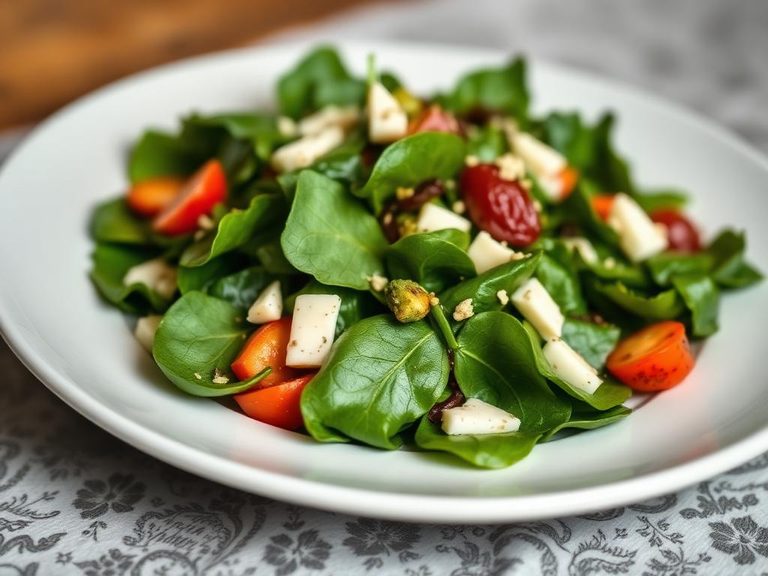
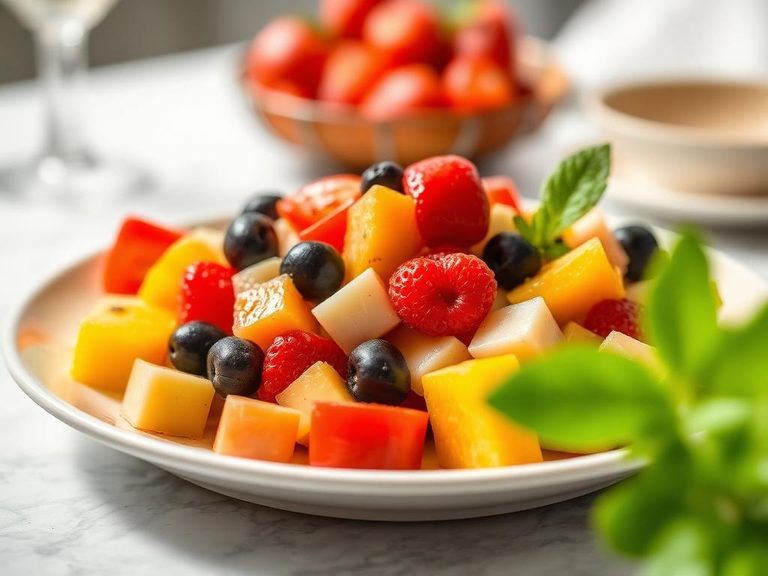
People love its unique, sweet-and-sour flavor profile and the delightful textural contrast provided by the crunchy poppy seeds. It's a nostalgic favorite for many, often associated with classic spinach or fruit salads.
⚠️ Watch-outs & how to enjoy it better
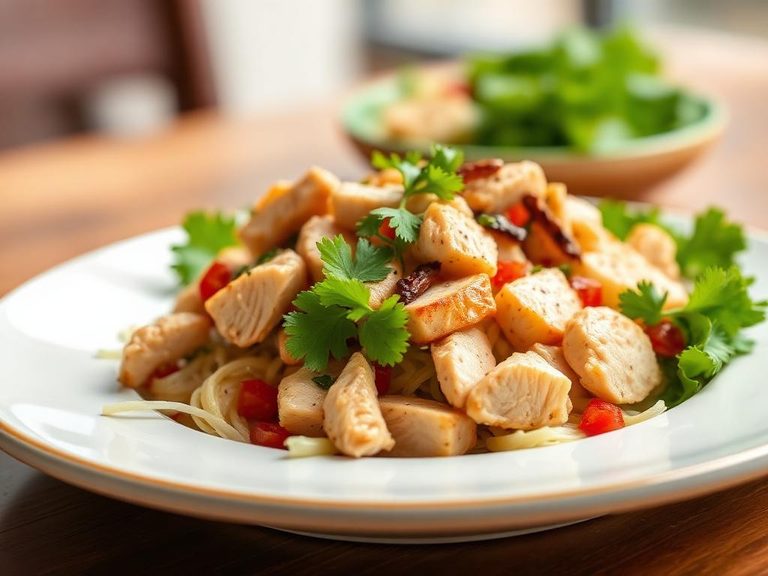
Its very high sugar and fat content can contribute to blood sugar spikes and excess calorie intake if used liberally. To counteract this, practice strict portion control (use 1-2 tablespoons max) and pair it with a protein-rich salad base like grilled chicken or chickpeas to slow sugar absorption.
Key benefits
- Provides a quick source of energy from fats and carbohydrates.
- The poppy seeds contribute trace minerals like calcium and magnesium.
- Adds significant flavor and moisture to salads and dishes.
- Can help increase the palatability and consumption of raw vegetables.
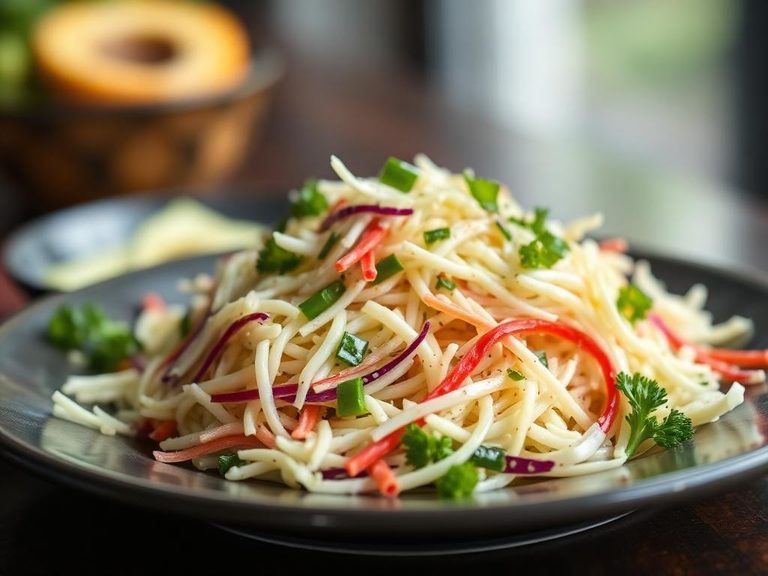
🍽️ Popular dishes
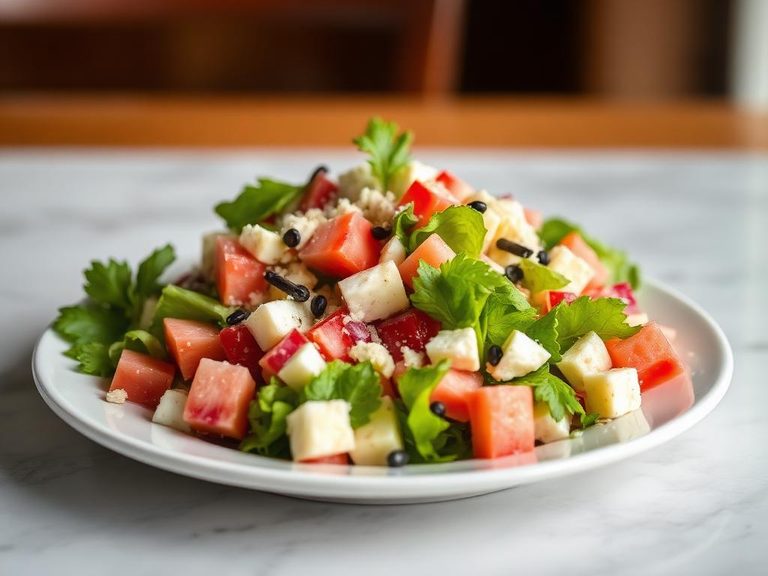
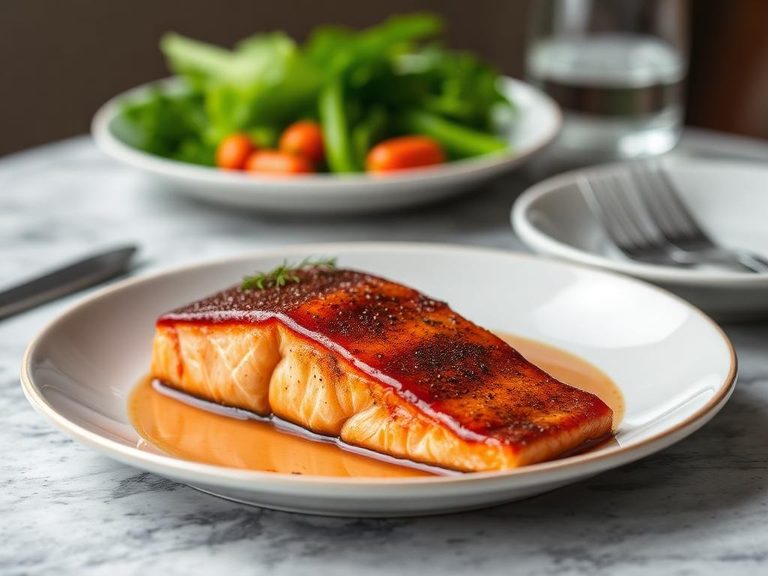
🌍 Where it's eaten
💡 Did you know?
The poppy seeds in the dressing are a botanical relative of the opium poppy but contain only trace, non-narcotic amounts of opiate compounds.
Full nutrition (USDA data · scales with serving)
| Water | 38.9 g |
| Energy | 399 kcal |
| Energy | 1668 kj |
| Protein | 0.92 g |
| Total lipid (fat) | 33.3 g |
| Ash | 2.4 g |
| Carbohydrate, by difference | 23.7 g |
| Fiber, total dietary | 0.30 g |
| Total Sugars | 23.4 g |
| Calcium, Ca | 59.0 mg |
| Iron, Fe | 0.25 mg |
| Magnesium, Mg | 9.0 mg |
| Phosphorus, P | 49.0 mg |
| Potassium, K | 61.0 mg |
| Sodium, Na | 933 mg |
| Zinc, Zn | 0.25 mg |
| Copper, Cu | 0.04 mg |
| Manganese, Mn | 0.13 mg |
| Selenium, Se | 1.2 ug |
| Vitamin C, total ascorbic acid | 0.30 mg |
| Thiamin | 0.02 mg |
| Riboflavin | 0.06 mg |
| Niacin | 0.05 mg |
| Pantothenic acid | 0.11 mg |
| Vitamin B-6 | 0.02 mg |
| Folate, total | 3.0 ug |
| Folic acid | 0.00 ug |
| Folate, food | 3.0 ug |
| Folate, DFE | 3.0 ug |
| Choline, total | 6.0 mg |
| Vitamin B-12 | 0.09 ug |
| Vitamin B-12, added | 0.00 ug |
| Vitamin A, RAE | 51.0 ug |
| Retinol | 50.0 ug |
| Carotene, beta | 8.0 ug |
| Carotene, alpha | 0.00 ug |
| Cryptoxanthin, beta | 0.00 ug |
| Vitamin A, IU | 180 iu |
| Lycopene | 0.00 ug |
| Lutein + zeaxanthin | 0.00 ug |
| Vitamin E (alpha-tocopherol) | 2.4 mg |
| Vitamin E, added | 0.00 mg |
| Vitamin D (D2 + D3), International Units | 4.0 iu |
| Vitamin D (D2 + D3) | 0.10 ug |
| Vitamin K (phylloquinone) | 50.2 ug |
| Alcohol, ethyl | 0.00 g |
| Caffeine | 0.00 mg |
| Theobromine | 0.00 mg |
Fat & fatty acid profile (per 100g)
| Fatty acids, total saturated | 6.1 g |
| SFA 4:0 | 0.16 g |
| SFA 6:0 | 0.09 g |
| SFA 8:0 | 0.05 g |
| SFA 10:0 | 0.10 g |
| SFA 12:0 | 0.12 g |
| SFA 14:0 | 0.40 g |
| SFA 16:0 | 3.4 g |
| SFA 18:0 | 1.5 g |
| SFA 20:0 | 0.08 g |
| SFA 22:0 | 0.08 g |
| SFA 24:0 | 0.00 g |
| Fatty acids, total monounsaturated | 8.2 g |
| MUFA 14:1 | 0.04 g |
| MUFA 16:1 | 0.09 g |
| MUFA 18:1 | 8.0 g |
| MUFA 20:1 | 0.08 g |
| MUFA 22:1 | 0.00 g |
| MUFA 24:1 c | 0.00 g |
| Fatty acids, total polyunsaturated | 17.3 g |
| PUFA 18:2 | 15.3 g |
| PUFA 18:3 | 2.0 g |
| PUFA 18:4 | 0.00 g |
| PUFA 20:2 n-6 c,c | 0.00 g |
| PUFA 20:3 | 0.00 g |
| PUFA 20:4 | 0.01 g |
| PUFA 20:5 n-3 (EPA) | 0.00 g |
| PUFA 22:5 n-3 (DPA) | 0.00 g |
| PUFA 22:6 n-3 (DHA) | 0.00 g |
| Fatty acids, total trans | 0.14 g |
| Cholesterol | 15.0 mg |
Amino acid profile (per 100g)
Estimated from Salad dressing, sesame seed dressing, regular — USDA does not publish this profile for Salad dressing.
| Tryptophan | 0.05 g |
| Threonine | 0.05 g |
| Isoleucine | 0.05 g |
| Leucine | 0.08 g |
| Lysine | 0.14 g |
| Methionine | 0.03 g |
| Cystine | 0.00 g |
| Phenylalanine | 0.09 g |
| Tyrosine | 0.10 g |
| Valine | 0.07 g |
| Arginine | 0.40 g |
| Histidine | 0.03 g |
| Alanine | 0.00 g |
| Aspartic acid | 0.00 g |
| Glutamic acid | 0.46 g |
| Glycine | 0.00 g |
| Proline | 0.00 g |
| Serine | 0.00 g |
FAQ
What does poppyseed dressing taste like?
It has a distinctive sweet and tangy flavor, similar to a vinaigrette but creamier and sweeter, with a subtle nutty note and a crunchy texture from the poppy seeds.
Is poppyseed dressing healthy?
It is a high-calorie, high-fat, and high-sugar condiment. While the poppy seeds offer minor nutrients, it's best used sparingly as a flavor enhancer rather than a health food.
What salads go best with poppyseed dressing?
It pairs exceptionally well with spinach salads (especially with strawberries or apples), fruit salads, and creamy chicken or turkey salads.
Nutrient density (calculated · NRF9.3)
Nutrient Rich Foods index: beneficial nutrients (protein, fiber, vitamins, minerals) minus saturated fat, added sugar & sodium, per 100 kcal.
NRF9.3 index — Fulgoni, Keast & Drewnowski, 2009. Computed from USDA nutrients.
Weight-loss friendliness (composite index)
Energy density 3.99 kcal/g · 1% calories from protein · 0.3 g fiber · 23.4 g sugar per 100 g.
Composite of energy density (Rolls et al., 1999), protein & fiber satiety, minus sugar. A calculated heuristic — ranks satiety-per-calorie, not a clinical measure.
Dietary load (calculated from USDA values)
Potential renal acid load. Positive = acid-forming, negative = alkaline-forming.
Sodium-to-potassium ratio: 15.30 (lower is better — aim for ≤ 1)
Sodium:potassium per WHO potassium guidance. Computed from USDA nutrients.