

Frostings, glaze, chocolate, prepared-from-recipe, with butter, NFSMI Recipe No. C-32
Whole food · Sweets
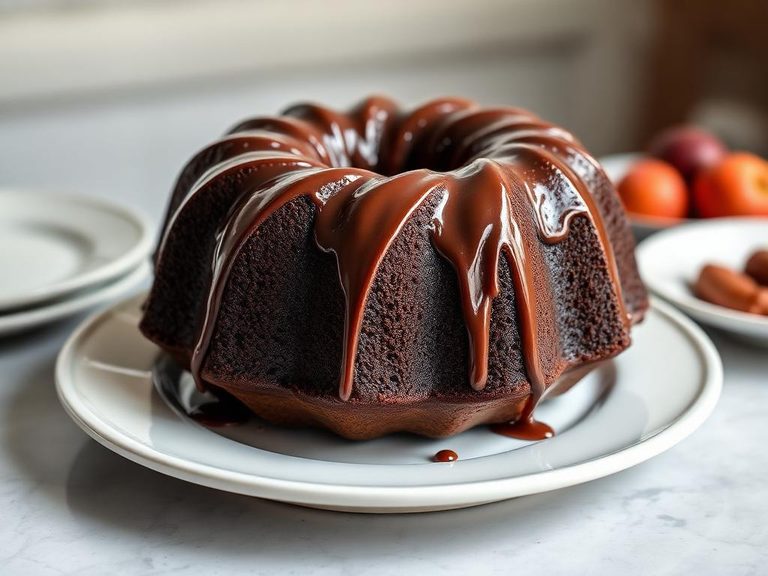
This is a rich, pourable chocolate glaze, a staple of professional bakeries and home kitchens alike. It boasts a deep, bittersweet chocolate flavor and a smooth, glossy texture that sets to a firm, snappy shell on chilled desserts. Nutritionally, it is a concentrated source of quick energy from its high carbohydrate and sugar content.
Calorie split: 2% protein · 80% carbs · 18% fat
↓ Full nutrition💚 Why it's loved
People adore it for its luxurious, intense chocolate taste and the satisfying snap it gives to cakes, donuts, and pastries. Its versatility makes it a go-to for elevating simple treats into something special.
⚠️ Watch-outs & how to enjoy it better
Its very high sugar content can lead to rapid blood-sugar spikes, making it unsuitable for those monitoring glucose levels. To mitigate this, pair a small portion with a source of protein or fat (like nuts or a glass of milk) to slow absorption, or use it as a thin accent rather than a thick coating.
Key benefits
- Provides a quick source of energy from carbohydrates.
- Adds significant flavor and visual appeal to desserts.
- Can be made with simple, pantry-stable ingredients.
- Offers a smooth, professional-looking finish for baked goods.
🍽️ Popular dishes




🌍 Where it's eaten
💡 Did you know?
The specific recipe referenced (NFSMI C-32) is a standardized formula used in food service and research to ensure consistent nutritional analysis across institutions.
Full nutrition (USDA data · scales with serving)
| Water | 18.3 g |
| Energy | 359 kcal |
| Energy | 1502 kj |
| Protein | 1.4 g |
| Total lipid (fat) | 7.2 g |
| Ash | 0.82 g |
| Carbohydrate, by difference | 72.2 g |
| Fiber, total dietary | 1.1 g |
| Total Sugars | 64.3 g |
| Calcium, Ca | 32.0 mg |
| Iron, Fe | 0.60 mg |
| Magnesium, Mg | 20.0 mg |
| Phosphorus, P | 48.0 mg |
| Potassium, K | 130 mg |
| Sodium, Na | 132 mg |
| Zinc, Zn | 0.37 mg |
| Copper, Cu | 0.14 mg |
| Manganese, Mn | 0.14 mg |
| Selenium, Se | 1.6 ug |
| Vitamin C, total ascorbic acid | 0.10 mg |
| Thiamin | 0.02 mg |
| Riboflavin | 0.07 mg |
| Niacin | 0.11 mg |
| Pantothenic acid | 0.08 mg |
| Vitamin B-6 | 0.01 mg |
| Folate, total | 2.0 ug |
| Folic acid | 0.00 ug |
| Folate, food | 2.0 ug |
| Folate, DFE | 2.0 ug |
| Vitamin B-12 | 0.09 ug |
| Vitamin B-12, added | 0.00 ug |
| Vitamin A, RAE | 69.0 ug |
| Retinol | 68.0 ug |
| Carotene, beta | 13.0 ug |
| Carotene, alpha | 0.00 ug |
| Cryptoxanthin, beta | 0.00 ug |
| Vitamin A, IU | 249 iu |
| Lycopene | 0.00 ug |
| Lutein + zeaxanthin | 1.0 ug |
| Vitamin E (alpha-tocopherol) | 0.19 mg |
| Vitamin E, added | 0.00 mg |
| Vitamin K (phylloquinone) | 0.70 ug |
| Alcohol, ethyl | 0.00 g |
| Caffeine | 3.0 mg |
| Theobromine | 98.0 mg |
Fat & fatty acid profile (per 100g)
| Fatty acids, total saturated | 4.5 g |
| SFA 4:0 | 0.26 g |
| SFA 6:0 | 0.16 g |
| SFA 8:0 | 0.10 g |
| SFA 10:0 | 0.21 g |
| SFA 12:0 | 0.21 g |
| SFA 14:0 | 0.61 g |
| SFA 16:0 | 1.9 g |
| SFA 17:0 | 0.04 g |
| SFA 18:0 | 0.97 g |
| SFA 20:0 | 0.01 g |
| Fatty acids, total monounsaturated | 1.9 g |
| MUFA 16:1 | 0.08 g |
| MUFA 16:1 c | 0.08 g |
| MUFA 18:1 | 1.8 g |
| MUFA 18:1 c | 1.4 g |
| MUFA 20:1 | 0.01 g |
| MUFA 22:1 | 0.00 g |
| Fatty acids, total polyunsaturated | 0.29 g |
| PUFA 18:2 | 0.27 g |
| PUFA 18:2 n-6 c,c | 0.18 g |
| PUFA 18:2 CLAs | 0.02 g |
| PUFA 18:2 i | 0.02 g |
| PUFA 18:3 | 0.03 g |
| PUFA 18:3 n-3 c,c,c (ALA) | 0.03 g |
| PUFA 18:4 | 0.00 g |
| PUFA 20:4 | 0.00 g |
| PUFA 20:5 n-3 (EPA) | 0.00 g |
| PUFA 22:5 n-3 (DPA) | 0.00 g |
| PUFA 22:6 n-3 (DHA) | 0.00 g |
| Fatty acids, total trans | 0.27 g |
| Fatty acids, total trans-monoenoic | 0.24 g |
| TFA 18:1 t | 0.24 g |
| Fatty acids, total trans-polyenoic | 0.02 g |
| Cholesterol | 18.0 mg |
Amino acid profile (per 100g)
Estimated from Frostings, chocolate, creamy, ready-to-eat — USDA does not publish this profile for Frostings.
| Tryptophan | 0.02 g |
| Threonine | 0.04 g |
| Isoleucine | 0.04 g |
| Leucine | 0.07 g |
| Lysine | 0.05 g |
| Methionine | 0.01 g |
| Cystine | 0.01 g |
| Phenylalanine | 0.05 g |
| Tyrosine | 0.04 g |
| Valine | 0.07 g |
| Arginine | 0.06 g |
| Histidine | 0.02 g |
| Alanine | 0.05 g |
| Aspartic acid | 0.11 g |
| Glutamic acid | 0.16 g |
| Glycine | 0.05 g |
| Proline | 0.05 g |
| Serine | 0.05 g |
FAQ
How is this different from chocolate frosting?
A glaze is typically thinner and pourable when warm, setting to a smooth, firm shell. Frosting is thicker, spreadable, and remains soft at room temperature.
Can I use it on warm cakes?
It's best applied to cooled cakes or pastries. On warm items, the glaze may melt and slide off rather than setting properly.
How do I get a shiny finish?
The butter and proper temperature are key. Applying the glaze while it's still warm and fluid, and allowing it to set undisturbed, promotes a glossy sheen.
Nutrient density (calculated · NRF9.3)
Nutrient Rich Foods index: beneficial nutrients (protein, fiber, vitamins, minerals) minus saturated fat, added sugar & sodium, per 100 kcal.
NRF9.3 index — Fulgoni, Keast & Drewnowski, 2009. Computed from USDA nutrients.
Weight-loss friendliness (composite index)
Energy density 3.59 kcal/g · 2% calories from protein · 1.1 g fiber · 64.3 g sugar per 100 g.
Composite of energy density (Rolls et al., 1999), protein & fiber satiety, minus sugar. A calculated heuristic — ranks satiety-per-calorie, not a clinical measure.
Dietary load (calculated from USDA values)
Potential renal acid load. Positive = acid-forming, negative = alkaline-forming.
Sodium-to-potassium ratio: 1.02 (lower is better — aim for ≤ 1)
Sodium:potassium per WHO potassium guidance. Computed from USDA nutrients.