Petit Fours
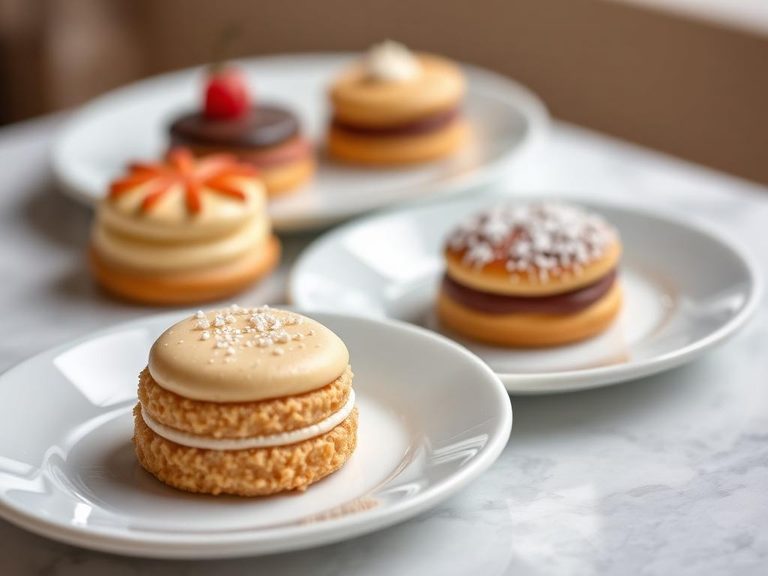
Petit fours are small, bite-sized confectionery or savory appetizers, typically served with tea or as part of a dessert spread. Originating from 18th-century France, they are often categorized into 'sec' (dry, like small cakes or biscuits) and 'glacé' (iced, like mini cakes or pastries). Common ingredients include flour, sugar, butter, eggs, and various flavorings like chocolate, fruit, or nuts.
🍽️ Nutrition at a glance
Petit fours are generally high in carbohydrates and fats due to their sugar and butter content, with minimal protein. A single piece can range from 50 to 150 calories, depending on its size and ingredients, offering quick energy but limited essential nutrients.
Nutrition breakdown
| Calories | 370 kcal |
| Protein | 4.5 g |
| Carbs | 48 g |
| Fat | 19 g |
| Fiber | 0.5 g |
| Sugar | 35 g |
| Sodium | 120 mg |
| Calcium | 40 mg |
| Iron | 1.2 mg |
| Potassium | 80 mg |
| Vitamin A | 150 IU |
| Vitamin B1 (Thiamin) | 0.05 mg |
| Vitamin B2 (Riboflavin) | 0.04 mg |
| Niacin (B3) | 0.3 mg |
| Phosphorus | 50 mg |
Per 3 pieces (approx. 90 g) · estimated, varies by recipe
💡 What's interesting
Culturally, the name 'petit four' (French for 'small oven') refers to the practice of baking these treats in the residual heat of a cooling oven after the main bread baking was done. Nutritionally, their small size makes them a classic example of portion-controlled indulgence, often used in formal settings to offer variety without overconsumption.