

Beets, canned, regular pack, solids and liquids
Whole food · Vegetables and Vegetable Products

Photo: Wikipedia
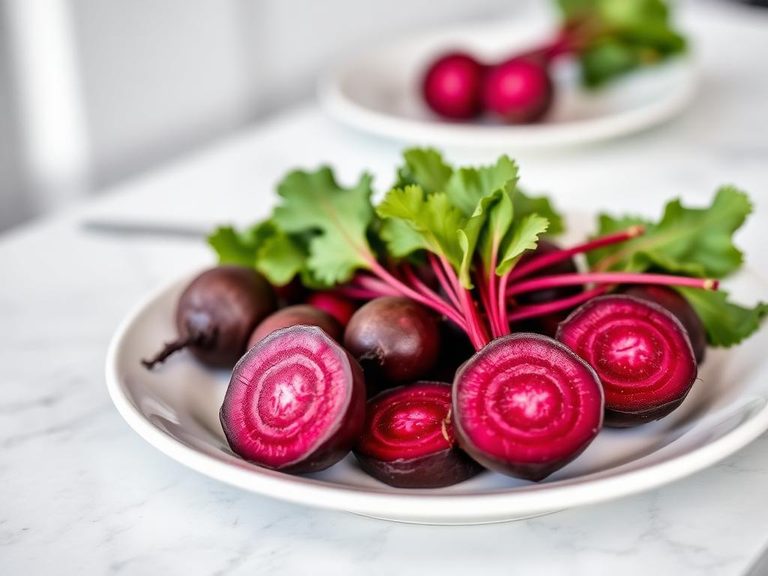
Canned beets are tender, ruby-red root vegetables preserved in their own tangy-sweet brine, offering a convenient shortcut to their earthy, subtly sweet flavor. The texture is uniformly soft and yielding, perfect for quick meal prep. Nutritionally, they are a low-calorie, fiber-rich source of natural sugars and provide a modest boost of manganese and folate.
Calorie split: 9% protein · 88% carbs · 3% fat
↓ Full nutrition💚 Why it's loved
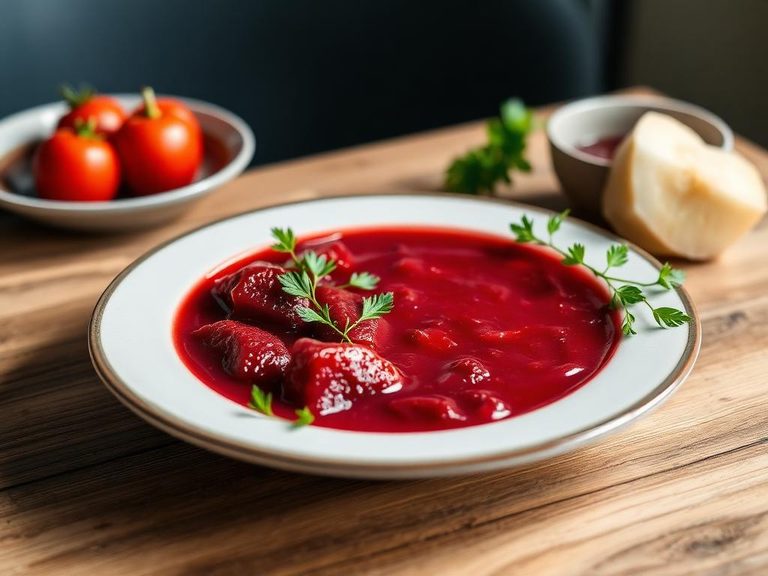
People love canned beets for their deep, earthy sweetness and vibrant color that can instantly elevate a dish. Their versatility allows them to be used in everything from quick salads to hearty borscht, making them a pantry staple for adding nutrition and flavor with minimal effort.
⚠️ Watch-outs & how to enjoy it better
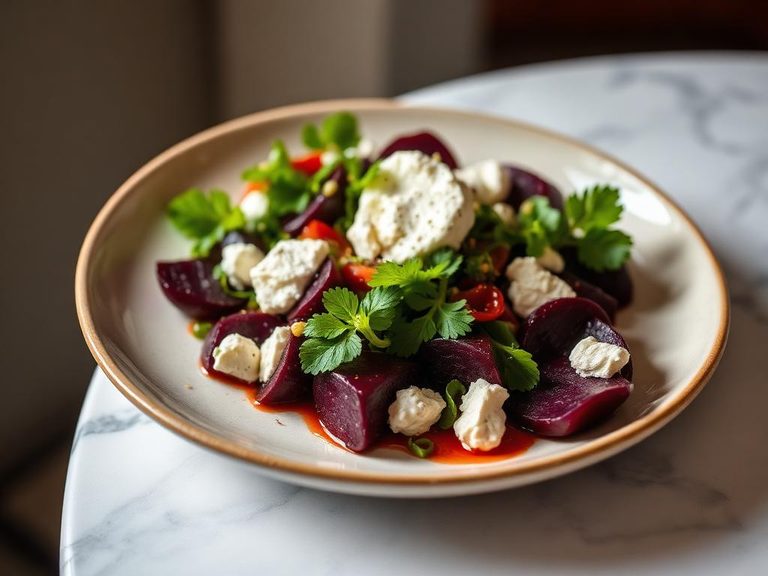
The canning process can lead to a softer texture and a slightly metallic taste for some, and the brine often contains added sodium. Those monitoring blood sugar should be mindful of the natural sugars, especially when consumed alone. To counteract, rinse beets well to reduce sodium, and pair them with protein (like goat cheese) or healthy fats (like walnuts) to blunt any glycemic response.
Key benefits
- Low in calories and fat-free
- Good source of dietary fiber
- Contains nitrates, which may support healthy blood pressure
- Provides folate and manganese
- Convenient and ready-to-eat with a long shelf life
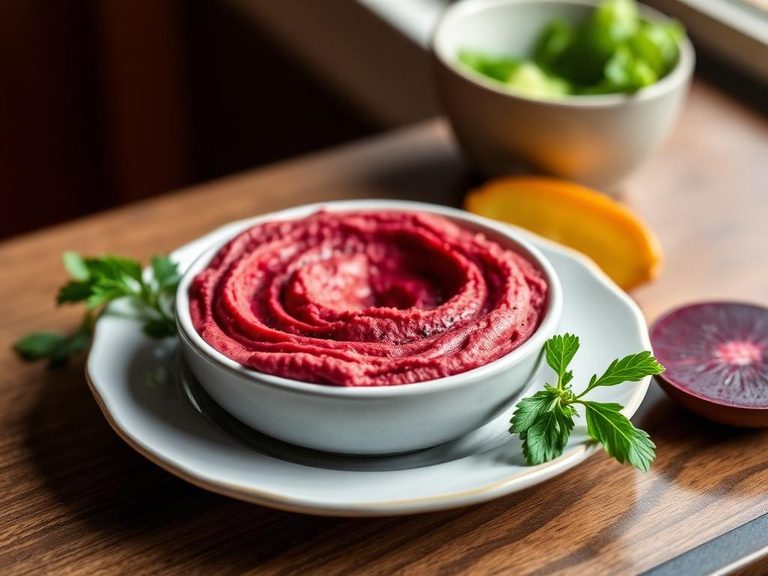
🍽️ Popular dishes
🌍 Where it's eaten
💡 Did you know?
The vibrant pigments in beets, called betalains, are so potent they were historically used as a natural dye for fabrics and even to color hair.
Full nutrition (USDA data · scales with serving)
| Water | 91.3 g |
| Energy | 30.0 kcal |
| Energy | 126 kj |
| Protein | 0.73 g |
| Total lipid (fat) | 0.09 g |
| Ash | 0.74 g |
| Carbohydrate, by difference | 7.1 g |
| Fiber, total dietary | 1.2 g |
| Total Sugars | 6.5 g |
| Sucrose | 5.3 g |
| Glucose | 0.28 g |
| Fructose | 0.20 g |
| Lactose | 0.00 g |
| Maltose | 0.00 g |
| Galactose | 0.80 g |
| Calcium, Ca | 18.0 mg |
| Iron, Fe | 0.73 mg |
| Magnesium, Mg | 18.0 mg |
| Phosphorus, P | 15.0 mg |
| Potassium, K | 159 mg |
| Sodium, Na | 143 mg |
| Zinc, Zn | 0.34 mg |
| Copper, Cu | 0.04 mg |
| Manganese, Mn | 0.41 mg |
| Selenium, Se | 0.10 ug |
| Fluoride, F | 26.3 ug |
| Vitamin C, total ascorbic acid | 2.8 mg |
| Thiamin | 0.01 mg |
| Riboflavin | 0.04 mg |
| Niacin | 0.15 mg |
| Pantothenic acid | 0.15 mg |
| Vitamin B-6 | 0.06 mg |
| Folate, total | 29.0 ug |
| Folic acid | 0.00 ug |
| Folate, food | 29.0 ug |
| Folate, DFE | 29.0 ug |
| Choline, total | 7.2 mg |
| Betaine | 228 mg |
| Vitamin B-12 | 0.00 ug |
| Vitamin A, RAE | 1.0 ug |
| Retinol | 0.00 ug |
| Carotene, beta | 14.0 ug |
| Carotene, alpha | 0.00 ug |
| Cryptoxanthin, beta | 0.00 ug |
| Vitamin A, IU | 23.0 iu |
| Lycopene | 0.00 ug |
| Lutein + zeaxanthin | 0.00 ug |
| Vitamin E (alpha-tocopherol) | 0.03 mg |
| Vitamin D (D2 + D3), International Units | 0.00 iu |
| Vitamin D (D2 + D3) | 0.00 ug |
| Vitamin K (phylloquinone) | 0.20 ug |
| Alcohol, ethyl | 0.00 g |
Fat & fatty acid profile (per 100g)
| Fatty acids, total saturated | 0.01 g |
| SFA 4:0 | 0.00 g |
| SFA 6:0 | 0.00 g |
| SFA 8:0 | 0.00 g |
| SFA 10:0 | 0.00 g |
| SFA 12:0 | 0.00 g |
| SFA 14:0 | 0.00 g |
| SFA 16:0 | 0.01 g |
| SFA 18:0 | 0.00 g |
| Fatty acids, total monounsaturated | 0.01 g |
| MUFA 16:1 | 0.00 g |
| MUFA 18:1 | 0.01 g |
| MUFA 20:1 | 0.00 g |
| MUFA 22:1 | 0.00 g |
| Fatty acids, total polyunsaturated | 0.03 g |
| PUFA 18:2 | 0.02 g |
| PUFA 18:3 | 0.00 g |
| PUFA 18:4 | 0.00 g |
| PUFA 20:4 | 0.00 g |
| PUFA 20:5 n-3 (EPA) | 0.00 g |
| PUFA 22:5 n-3 (DPA) | 0.00 g |
| PUFA 22:6 n-3 (DHA) | 0.00 g |
| Fatty acids, total trans | 0.00 g |
| Cholesterol | 0.00 mg |
Amino acid profile (per 100g)
| Tryptophan | 0.01 g |
| Threonine | 0.02 g |
| Isoleucine | 0.02 g |
| Leucine | 0.03 g |
| Lysine | 0.03 g |
| Methionine | 0.01 g |
| Cystine | 0.01 g |
| Phenylalanine | 0.02 g |
| Tyrosine | 0.02 g |
| Valine | 0.03 g |
| Arginine | 0.02 g |
| Histidine | 0.01 g |
| Alanine | 0.03 g |
| Aspartic acid | 0.06 g |
| Glutamic acid | 0.21 g |
| Glycine | 0.01 g |
| Proline | 0.02 g |
| Serine | 0.03 g |
FAQ
Are canned beets as nutritious as fresh?
Canning can reduce some heat-sensitive nutrients like vitamin C, but beets retain most of their fiber, minerals (like manganese), and beneficial plant compounds. They are a perfectly nutritious choice, especially for convenience.
Why are my canned beets bleeding so much color?
This is normal. The red pigment (betalain) is water-soluble and leaches out during processing. Rinsing them can reduce color bleeding in mixed dishes, but the color is harmless and nutritious.
How can I reduce the 'canned' taste?
Give the beets a thorough rinse under cold water. For a fresher flavor, you can briefly sauté them with a little vinegar or roast them in the oven to caramelize and intensify their natural sweetness.
Nutrient density (calculated · NRF9.3)
Nutrient Rich Foods index: beneficial nutrients (protein, fiber, vitamins, minerals) minus saturated fat, added sugar & sodium, per 100 kcal.
NRF9.3 index — Fulgoni, Keast & Drewnowski, 2009. Computed from USDA nutrients.
Weight-loss friendliness (composite index)
Energy density 0.30 kcal/g · 10% calories from protein · 1.2 g fiber · 6.5 g sugar per 100 g.
Composite of energy density (Rolls et al., 1999), protein & fiber satiety, minus sugar. A calculated heuristic — ranks satiety-per-calorie, not a clinical measure.
Dietary load (calculated from USDA values)
Potential renal acid load. Positive = acid-forming, negative = alkaline-forming.
Sodium-to-potassium ratio: 0.90 (lower is better — aim for ≤ 1)
Sodium:potassium per WHO potassium guidance. Computed from USDA nutrients.