

Beef, tenderloin, steak, separable lean only, trimmed to 1/8" fat, all grades, cooked, broiled
Whole food · Beef Products

Photo: Wikipedia
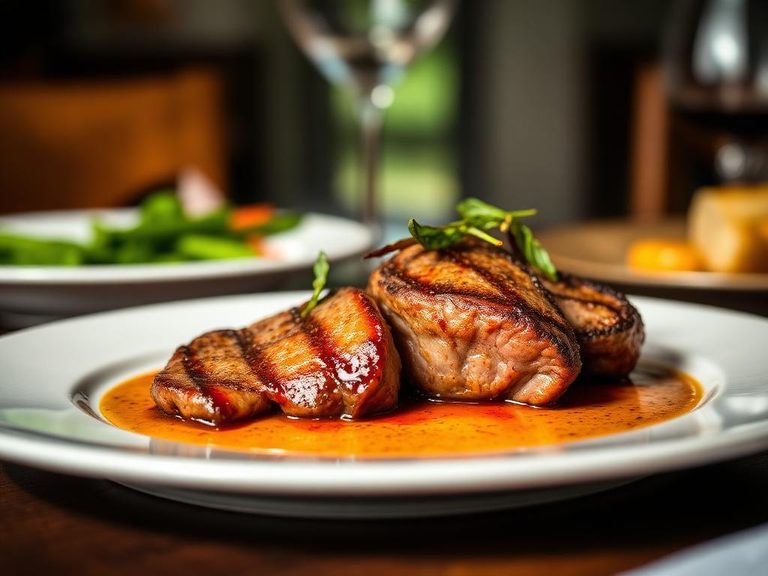
This is the lean, premium center-cut of the beef loin, prized for its buttery tenderness and subtle, clean beef flavor. When broiled, it develops a savory, caramelized crust while the interior remains remarkably juicy and soft, almost melting on the tongue. Nutritionally, it's a powerhouse of high-quality protein with minimal fat, making it a top choice for lean muscle building.
Calorie split: 61% protein · 0% carbs · 39% fat
↓ Full nutrition💚 Why it's loved
People adore it for its unparalleled tenderness and mild, luxurious flavor that serves as a perfect canvas for seasonings or a rich sauce. It's the centerpiece of celebratory meals, from classic steakhouse dinners to elegant holiday roasts, symbolizing a special occasion.
⚠️ Watch-outs & how to enjoy it better
Its extreme leanness can lead to dryness if overcooked, which is a common pitfall. For those watching saturated fat intake, it should be consumed in moderation. To counteract dryness, use a meat thermometer to pull it at 130-135°F (54-57°C) for medium-rare, and let it rest thoroughly. Pairing with a flavorful compound butter or sauce can add moisture and balance.
Key benefits
- Excellent source of complete protein (29g per 100g)
- Very low in carbohydrates and sugars
- Rich in bioavailable iron and zinc
- Contains B vitamins, especially B12 for energy
- Naturally low in sodium
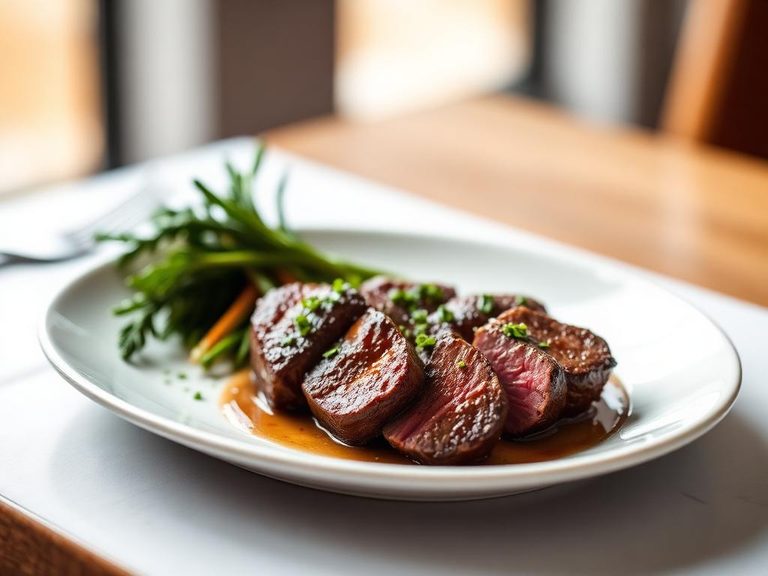
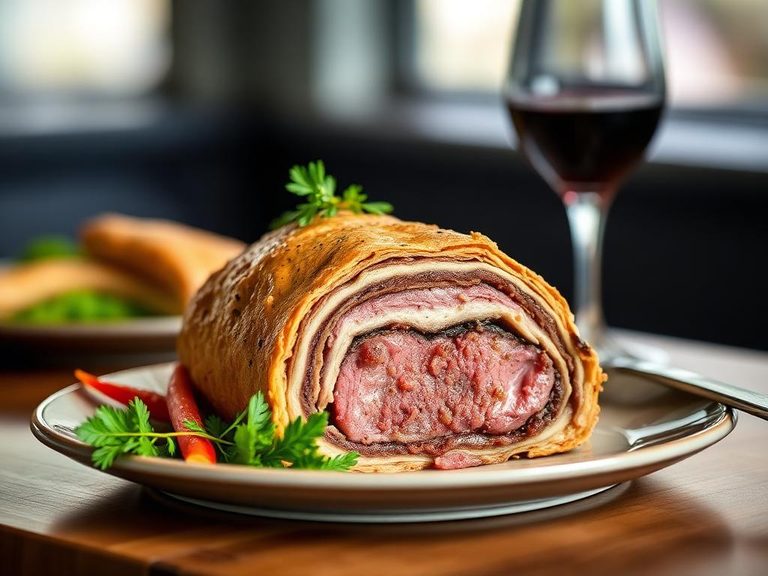
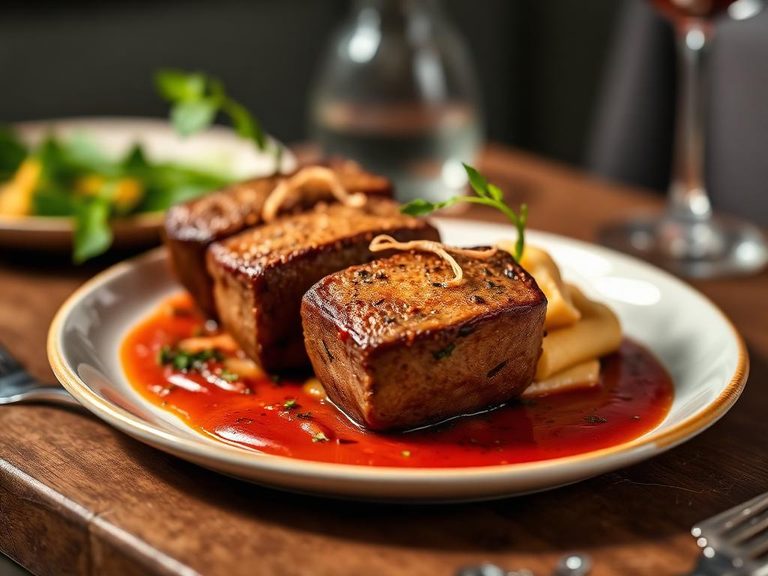
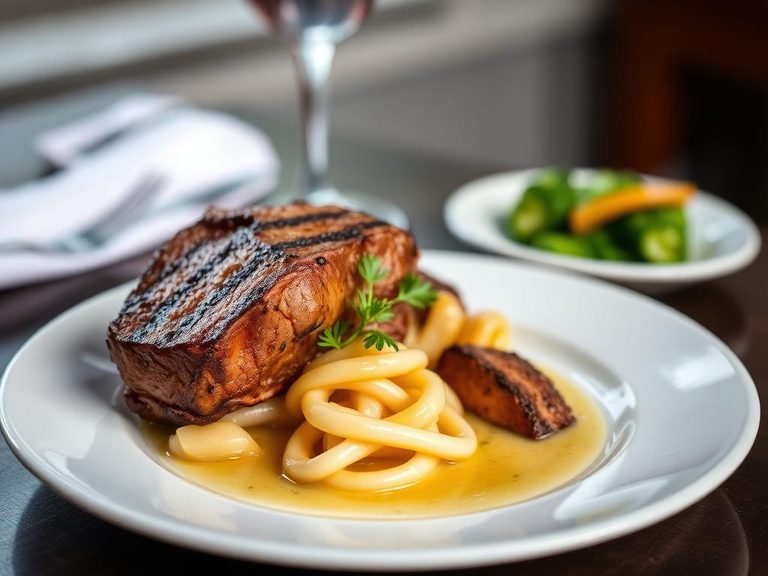
🍽️ Popular dishes
🌍 Where it's eaten
💡 Did you know?
The term 'filet mignon' is often used interchangeably with tenderloin steak in the U.S., but in classic French butchery, 'mignon' specifically refers to the narrow, tapered tail end of the tenderloin.
Full nutrition (USDA data · scales with serving)
| Water | 62.9 g |
| Energy | 200 kcal |
| Energy | 835 kj |
| Protein | 29.0 g |
| Total lipid (fat) | 8.4 g |
| Ash | 1.1 g |
| Carbohydrate, by difference | 0.00 g |
| Fiber, total dietary | 0.00 g |
| Total Sugars | 0.00 g |
| Calcium, Ca | 19.0 mg |
| Iron, Fe | 1.8 mg |
| Magnesium, Mg | 25.0 mg |
| Phosphorus, P | 230 mg |
| Potassium, K | 370 mg |
| Sodium, Na | 60.0 mg |
| Zinc, Zn | 5.4 mg |
| Copper, Cu | 0.09 mg |
| Manganese, Mn | 0.01 mg |
| Selenium, Se | 33.7 ug |
| Vitamin C, total ascorbic acid | 0.00 mg |
| Thiamin | 0.08 mg |
| Riboflavin | 0.15 mg |
| Niacin | 8.3 mg |
| Pantothenic acid | 0.58 mg |
| Vitamin B-6 | 0.62 mg |
| Folate, total | 10.0 ug |
| Folic acid | 0.00 ug |
| Folate, food | 10.0 ug |
| Folate, DFE | 10.0 ug |
| Choline, total | 111 mg |
| Betaine | 14.5 mg |
| Vitamin B-12 | 1.7 ug |
| Vitamin B-12, added | 0.00 ug |
| Vitamin A, RAE | 0.00 ug |
| Retinol | 0.00 ug |
| Carotene, beta | 0.00 ug |
| Carotene, alpha | 0.00 ug |
| Cryptoxanthin, beta | 0.00 ug |
| Vitamin A, IU | 0.00 iu |
| Lycopene | 0.00 ug |
| Lutein + zeaxanthin | 0.00 ug |
| Vitamin E (alpha-tocopherol) | 0.40 mg |
| Vitamin E, added | 0.00 mg |
| Tocopherol, beta | 0.00 mg |
| Tocopherol, gamma | 0.00 mg |
| Tocopherol, delta | 0.00 mg |
| Vitamin D (D2 + D3), International Units | 5.0 iu |
| Vitamin D (D2 + D3) | 0.10 ug |
| Vitamin D3 (cholecalciferol) | 0.10 ug |
| Vitamin K (phylloquinone) | 1.4 ug |
| Alcohol, ethyl | 0.00 g |
| Caffeine | 0.00 mg |
| Theobromine | 0.00 mg |
Fat & fatty acid profile (per 100g)
| Fatty acids, total saturated | 3.2 g |
| SFA 4:0 | 0.00 g |
| SFA 6:0 | 0.00 g |
| SFA 8:0 | 0.00 g |
| SFA 10:0 | 0.00 g |
| SFA 12:0 | 0.01 g |
| SFA 14:0 | 0.23 g |
| SFA 16:0 | 1.9 g |
| SFA 18:0 | 1.1 g |
| Fatty acids, total monounsaturated | 3.4 g |
| MUFA 16:1 | 0.25 g |
| MUFA 18:1 | 3.1 g |
| MUFA 20:1 | 0.00 g |
| MUFA 22:1 | 0.00 g |
| Fatty acids, total polyunsaturated | 0.32 g |
| PUFA 18:2 | 0.24 g |
| PUFA 18:3 | 0.02 g |
| PUFA 18:4 | 0.00 g |
| PUFA 20:4 | 0.04 g |
| PUFA 20:5 n-3 (EPA) | 0.00 g |
| PUFA 22:5 n-3 (DPA) | 0.01 g |
| PUFA 22:6 n-3 (DHA) | 0.00 g |
| Cholesterol | 82.0 mg |
Amino acid profile (per 100g)
| Tryptophan | 0.19 g |
| Threonine | 1.2 g |
| Isoleucine | 1.3 g |
| Leucine | 2.3 g |
| Lysine | 2.5 g |
| Methionine | 0.76 g |
| Cystine | 0.38 g |
| Phenylalanine | 1.1 g |
| Tyrosine | 0.93 g |
| Valine | 1.4 g |
| Arginine | 1.9 g |
| Histidine | 0.93 g |
| Alanine | 1.8 g |
| Aspartic acid | 2.6 g |
| Glutamic acid | 4.4 g |
| Glycine | 1.8 g |
| Proline | 1.4 g |
| Serine | 1.1 g |
| Hydroxyproline | 0.30 g |
FAQ
What's the difference between beef tenderloin and filet mignon?
Beef tenderloin is the entire long, narrow muscle. Filet mignon refers to the individual steaks cut from the thicker, center portion of that muscle, which are the most uniform and tender.
Why is it so expensive?
It's expensive due to its limited yield from each animal (the whole tenderloin is only about 2-3% of the carcass weight) and its high demand for its tenderness and premium status.
What's the best way to cook it to avoid dryness?
High-heat, quick-cooking methods like broiling, grilling, or pan-searing are ideal. Cook to an internal temperature of 130-135°F (54-57°C) for medium-rare, then rest it for 5-10 minutes before slicing to allow juices to redistribute.
Nutrient density (calculated · NRF9.3)
Nutrient Rich Foods index: beneficial nutrients (protein, fiber, vitamins, minerals) minus saturated fat, added sugar & sodium, per 100 kcal.
NRF9.3 index — Fulgoni, Keast & Drewnowski, 2009. Computed from USDA nutrients.
Weight-loss friendliness (composite index)
Energy density 2.00 kcal/g · 58% calories from protein · 0.0 g fiber · 0.0 g sugar per 100 g.
Composite of energy density (Rolls et al., 1999), protein & fiber satiety, minus sugar. A calculated heuristic — ranks satiety-per-calorie, not a clinical measure.
Dietary load (calculated from USDA values)
Potential renal acid load. Positive = acid-forming, negative = alkaline-forming.
Sodium-to-potassium ratio: 0.16 (lower is better — aim for ≤ 1)
Sodium:potassium per WHO potassium guidance. Computed from USDA nutrients.