

Beef, rib, shortribs, separable lean and fat, choice, cooked, braised
Whole food · Beef Products

Photo: Wikipedia
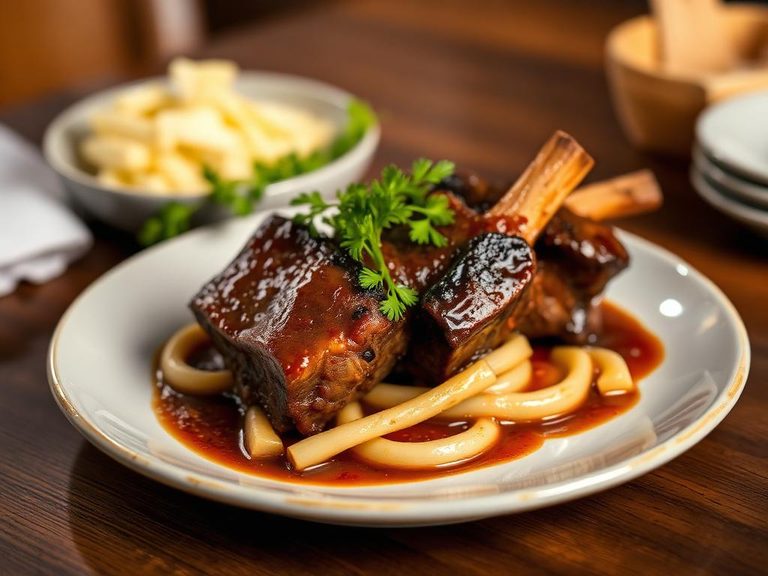
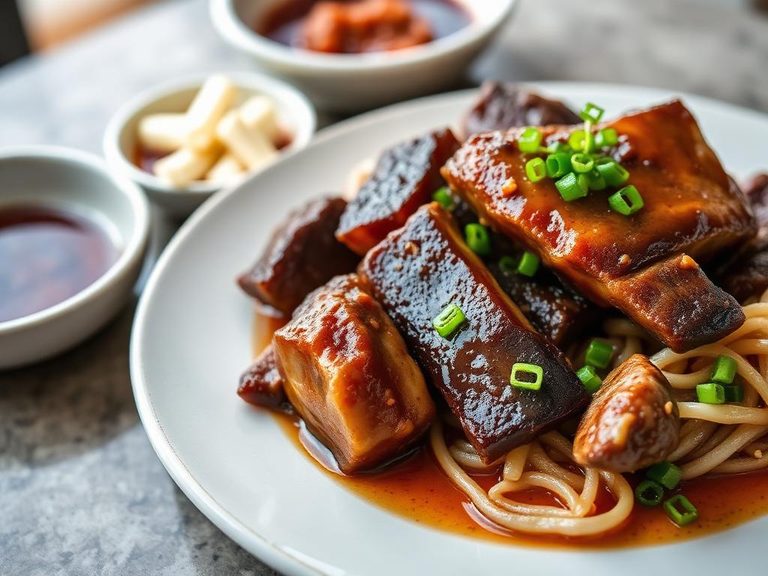
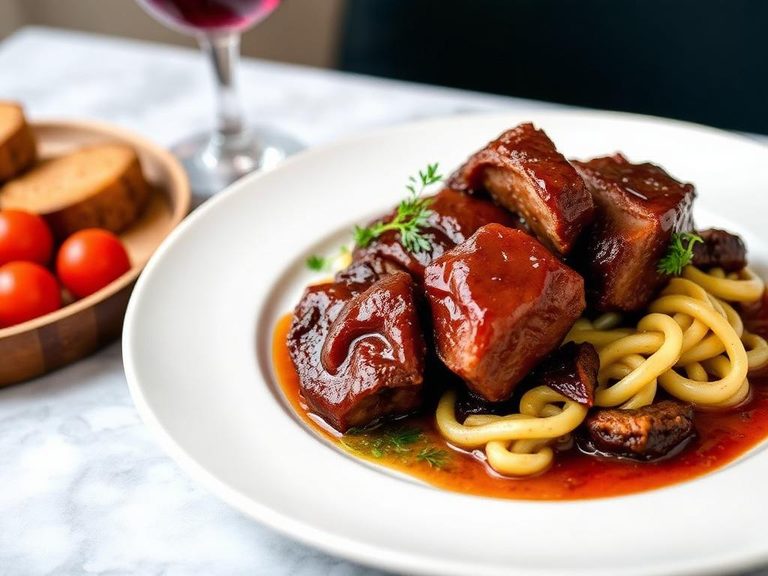
This is the quintessential comfort cut: beef short ribs, braised until the rich marbling melts into the meat, creating a succulent, fall-off-the-bone texture with a deep, beefy flavor. Nutritionally, it's a powerhouse of protein and fat, delivering substantial energy and essential nutrients like zinc and B12, but with virtually no carbohydrates.
Calorie split: 19% protein · 0% carbs · 81% fat
↓ Full nutrition💚 Why it's loved
People adore it for the unparalleled richness and depth of flavor that develops during slow cooking, where the fat renders to baste the meat, creating a luxurious, velvety mouthfeel. It's a centerpiece of celebratory and comfort-food traditions across many cultures.
⚠️ Watch-outs & how to enjoy it better
The high fat content (over 40g per 100g) makes it very calorie-dense and a poor choice for low-fat diets or those managing cholesterol. To enjoy it mindfully, practice strict portion control and pair it with large servings of non-starchy vegetables (like roasted broccoli or a vinegar-based slaw) to add fiber and balance the meal.
Key benefits
- Excellent source of high-quality protein for muscle maintenance
- Rich in heme iron, which is highly absorbable
- Provides essential B vitamins, especially B12 and niacin
- Contains important minerals like zinc and selenium
- The high fat content provides a dense source of energy
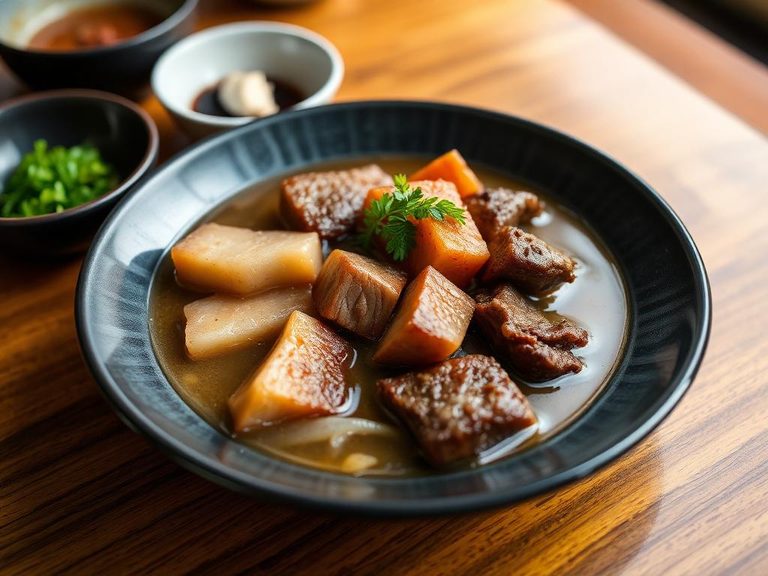
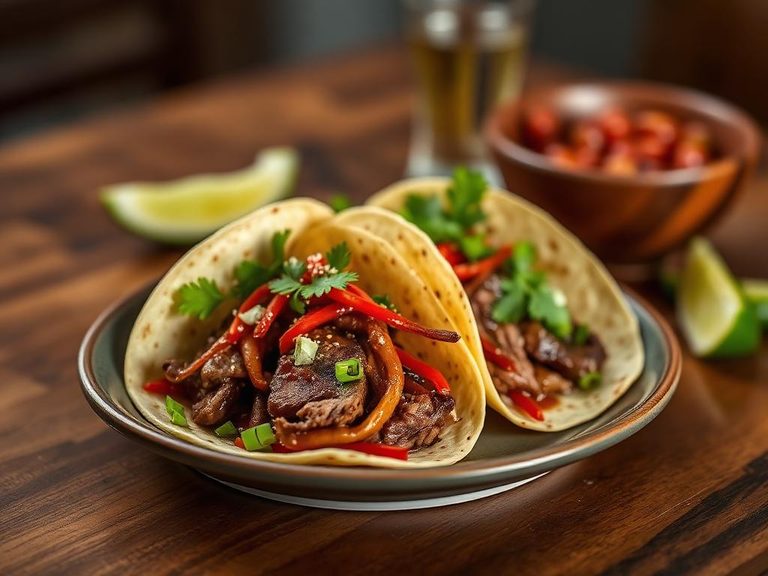
🍽️ Popular dishes
🌍 Where it's eaten
💡 Did you know?
The term 'short' in short ribs doesn't refer to their size, but to the fact they come from the 'short plate' section of the cow, which is located under the rib primal cut.
Full nutrition (USDA data · scales with serving)
| Water | 35.7 g |
| Energy | 471 kcal |
| Energy | 1971 kj |
| Protein | 21.6 g |
| Total lipid (fat) | 42.0 g |
| Ash | 0.74 g |
| Carbohydrate, by difference | 0.00 g |
| Fiber, total dietary | 0.00 g |
| Total Sugars | 0.00 g |
| Calcium, Ca | 12.0 mg |
| Iron, Fe | 2.3 mg |
| Magnesium, Mg | 15.0 mg |
| Phosphorus, P | 162 mg |
| Potassium, K | 224 mg |
| Sodium, Na | 50.0 mg |
| Zinc, Zn | 4.9 mg |
| Copper, Cu | 0.10 mg |
| Manganese, Mn | 0.01 mg |
| Selenium, Se | 20.8 ug |
| Fluoride, F | 22.4 ug |
| Vitamin C, total ascorbic acid | 0.00 mg |
| Thiamin | 0.05 mg |
| Riboflavin | 0.15 mg |
| Niacin | 2.5 mg |
| Pantothenic acid | 0.25 mg |
| Vitamin B-6 | 0.22 mg |
| Folate, total | 5.0 ug |
| Folic acid | 0.00 ug |
| Folate, food | 5.0 ug |
| Folate, DFE | 5.0 ug |
| Choline, total | 82.2 mg |
| Betaine | 10.8 mg |
| Vitamin B-12 | 2.6 ug |
| Vitamin B-12, added | 0.00 ug |
| Vitamin A, RAE | 0.00 ug |
| Retinol | 0.00 ug |
| Carotene, beta | 0.00 ug |
| Carotene, alpha | 0.00 ug |
| Cryptoxanthin, beta | 0.00 ug |
| Vitamin A, IU | 0.00 iu |
| Lycopene | 0.00 ug |
| Lutein + zeaxanthin | 0.00 ug |
| Vitamin E (alpha-tocopherol) | 0.29 mg |
| Vitamin E, added | 0.00 mg |
| Vitamin D (D2 + D3), International Units | 27.0 iu |
| Vitamin D (D2 + D3) | 0.70 ug |
| Vitamin D3 (cholecalciferol) | 0.70 ug |
| Vitamin K (phylloquinone) | 2.4 ug |
| Vitamin K (Dihydrophylloquinone) | 0.00 ug |
| Alcohol, ethyl | 0.00 g |
| Caffeine | 0.00 mg |
| Theobromine | 0.00 mg |
Fat & fatty acid profile (per 100g)
| Fatty acids, total saturated | 17.8 g |
| SFA 4:0 | 0.00 g |
| SFA 6:0 | 0.00 g |
| SFA 8:0 | 0.00 g |
| SFA 10:0 | 0.13 g |
| SFA 12:0 | 0.12 g |
| SFA 14:0 | 1.4 g |
| SFA 16:0 | 10.5 g |
| SFA 18:0 | 4.9 g |
| Fatty acids, total monounsaturated | 18.9 g |
| MUFA 16:1 | 1.8 g |
| MUFA 18:1 | 16.2 g |
| MUFA 20:1 | 0.08 g |
| MUFA 22:1 | 0.00 g |
| Fatty acids, total polyunsaturated | 1.5 g |
| PUFA 18:2 | 0.98 g |
| PUFA 18:3 | 0.50 g |
| PUFA 18:4 | 0.00 g |
| PUFA 20:4 | 0.03 g |
| PUFA 20:5 n-3 (EPA) | 0.00 g |
| PUFA 22:5 n-3 (DPA) | 0.02 g |
| PUFA 22:6 n-3 (DHA) | 0.00 g |
| Cholesterol | 94.0 mg |
| Phytosterols | 0.00 mg |
Amino acid profile (per 100g)
| Tryptophan | 0.14 g |
| Threonine | 0.86 g |
| Isoleucine | 0.98 g |
| Leucine | 1.7 g |
| Lysine | 1.8 g |
| Methionine | 0.56 g |
| Cystine | 0.28 g |
| Phenylalanine | 0.85 g |
| Tyrosine | 0.69 g |
| Valine | 1.1 g |
| Arginine | 1.4 g |
| Histidine | 0.69 g |
| Alanine | 1.3 g |
| Aspartic acid | 2.0 g |
| Glutamic acid | 3.2 g |
| Glycine | 1.3 g |
| Proline | 1.0 g |
| Serine | 0.85 g |
| Hydroxyproline | 0.23 g |
FAQ
What's the best way to cook short ribs?
Braising is the classic method: sear the ribs, then cook them slowly in liquid (like broth, wine, or tomatoes) at a low temperature until the collagen breaks down into gelatin, making the meat tender and the sauce rich.
Are short ribs the same as flanken-cut ribs?
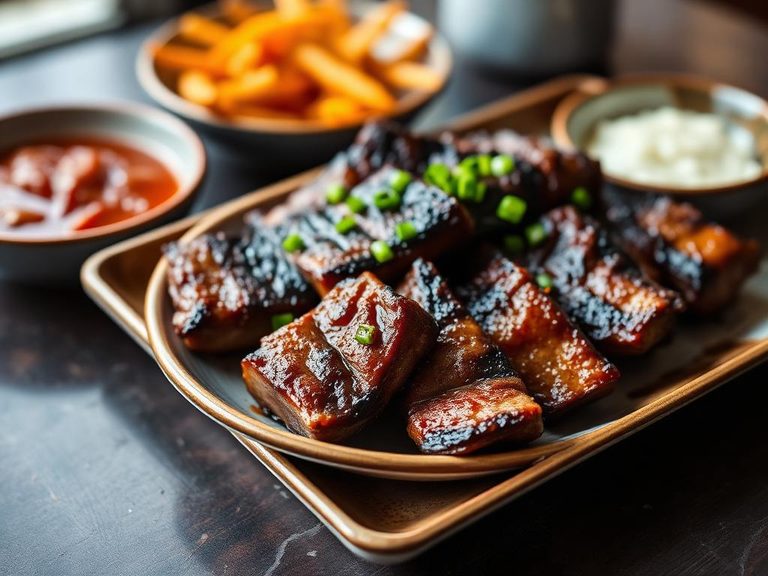
They are the same cut, but prepared differently. Flanken-cut ribs are sliced across the bones into thin strips (about 1/2 inch), a style popular in Korean BBQ. Traditional Western braising uses thicker, 2-3 inch pieces cut parallel to the bones.
How do I reduce the fat when cooking?
After braising, let the dish cool completely. The fat will solidify on top and can be easily skimmed off and discarded before reheating and serving.
Nutrient density (calculated · NRF9.3)
Nutrient Rich Foods index: beneficial nutrients (protein, fiber, vitamins, minerals) minus saturated fat, added sugar & sodium, per 100 kcal.
NRF9.3 index — Fulgoni, Keast & Drewnowski, 2009. Computed from USDA nutrients.
Weight-loss friendliness (composite index)
Energy density 4.71 kcal/g · 18% calories from protein · 0.0 g fiber · 0.0 g sugar per 100 g.
Composite of energy density (Rolls et al., 1999), protein & fiber satiety, minus sugar. A calculated heuristic — ranks satiety-per-calorie, not a clinical measure.
Dietary load (calculated from USDA values)
Potential renal acid load. Positive = acid-forming, negative = alkaline-forming.
Sodium-to-potassium ratio: 0.22 (lower is better — aim for ≤ 1)
Sodium:potassium per WHO potassium guidance. Computed from USDA nutrients.