

Wheat flour, white, all-purpose, enriched, unbleached
Whole food · Cereal Grains and Pasta
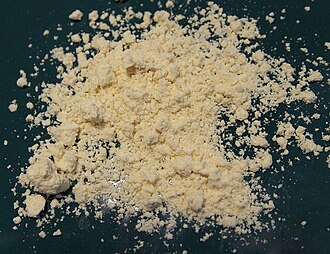
Photo: Wikipedia
This is the workhorse of the home kitchen: a finely milled, creamy-white powder with a neutral, slightly sweet wheat flavor and a soft, silky texture. Nutritionally, it's a dense source of energy, packing over 76 grams of carbohydrates and more than 10 grams of protein per 100g. It's the enriched, unbleached foundation for countless baked goods.
Calorie split: 12% protein · 86% carbs · 2% fat
↓ Full nutrition💚 Why it's loved
People love it for its incredible versatility and reliability—it's the blank canvas that can become a fluffy cake, a chewy pizza crust, or a tender biscuit. Its mild, wheaty flavor complements other ingredients without overpowering them, making it a cultural staple in kitchens worldwide.
⚠️ Watch-outs & how to enjoy it better
As a refined carbohydrate with a high glycemic index, it can cause rapid blood-sugar spikes, making it less ideal for those managing diabetes. It also contains gluten, a common allergen, and is low in fiber. To counteract blood-sugar impact, pair it with protein (like eggs or legumes) and healthy fats (like nuts or avocado), or choose recipes that incorporate whole grains or added fiber.
Key benefits
- Excellent source of complex carbohydrates for sustained energy.
- Good plant-based protein source (10.33g per 100g).
- Enriched with B vitamins (like thiamine, niacin) and iron.
- Unbleached processing retains more natural wheat nutrients.
- Highly versatile base for both sweet and savory cooking.
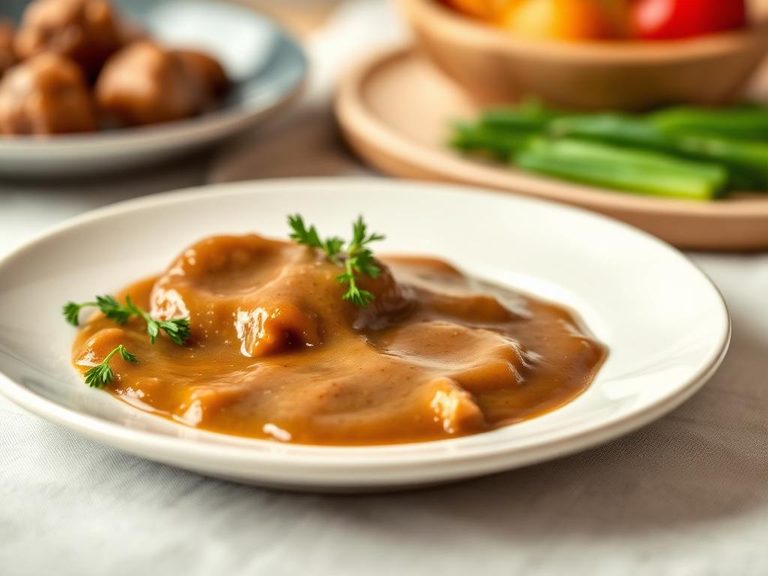
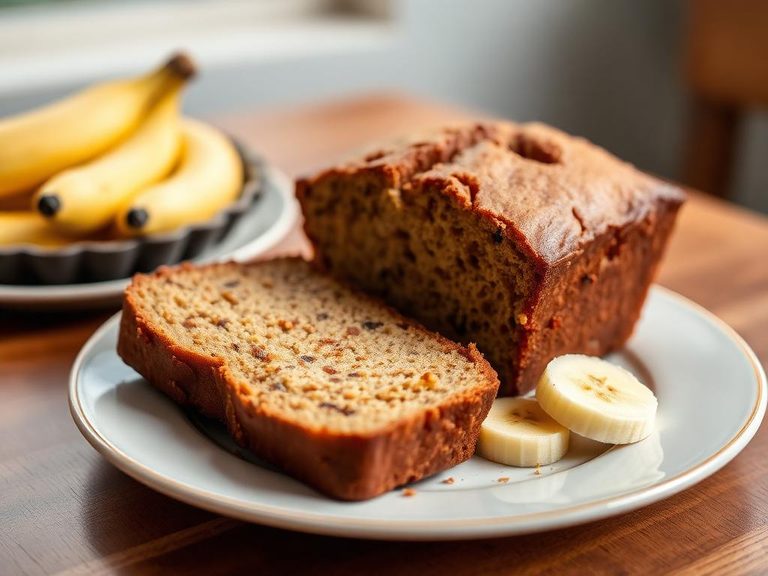
🍽️ Popular dishes




🌍 Where it's eaten
💡 Did you know?
The 'enriched' label means that after milling, manufacturers add back specific nutrients (like iron and B vitamins) that were lost during processing, a practice mandated in the US since the 1940s to combat widespread nutritional deficiencies.
Full nutrition (USDA data · scales with serving)
| Water | 11.9 g |
| Energy | 364 kcal |
| Energy | 1523 kj |
| Protein | 10.3 g |
| Total lipid (fat) | 0.98 g |
| Ash | 0.47 g |
| Carbohydrate, by difference | 76.3 g |
| Fiber, total dietary | 2.7 g |
| Total Sugars | 0.27 g |
| Calcium, Ca | 15.0 mg |
| Iron, Fe | 4.6 mg |
| Magnesium, Mg | 22.0 mg |
| Phosphorus, P | 108 mg |
| Potassium, K | 107 mg |
| Sodium, Na | 2.0 mg |
| Zinc, Zn | 0.70 mg |
| Copper, Cu | 0.14 mg |
| Manganese, Mn | 0.68 mg |
| Selenium, Se | 33.9 ug |
| Vitamin C, total ascorbic acid | 0.00 mg |
| Thiamin | 0.79 mg |
| Riboflavin | 0.49 mg |
| Niacin | 5.9 mg |
| Pantothenic acid | 0.44 mg |
| Vitamin B-6 | 0.04 mg |
| Folate, total | 183 ug |
| Folic acid | 154 ug |
| Folate, food | 29.0 ug |
| Folate, DFE | 291 ug |
| Vitamin B-12 | 0.00 ug |
| Vitamin B-12, added | 0.00 ug |
| Vitamin A, RAE | 0.00 ug |
| Retinol | 0.00 ug |
| Carotene, beta | 1.0 ug |
| Carotene, alpha | 0.00 ug |
| Cryptoxanthin, beta | 0.00 ug |
| Vitamin A, IU | 2.0 iu |
| Lycopene | 0.00 ug |
| Lutein + zeaxanthin | 79.0 ug |
| Vitamin E (alpha-tocopherol) | 0.23 mg |
| Vitamin E, added | 0.00 mg |
| Tocopherol, beta | 0.14 mg |
| Tocopherol, gamma | 1.3 mg |
| Tocopherol, delta | 0.00 mg |
| Tocotrienol, alpha | 0.19 mg |
| Tocotrienol, beta | 0.00 mg |
| Tocotrienol, gamma | 0.00 mg |
| Tocotrienol, delta | 0.00 mg |
| Vitamin D (D2 + D3), International Units | 0.00 iu |
| Vitamin D (D2 + D3) | 0.00 ug |
| Vitamin K (phylloquinone) | 0.30 ug |
| Alcohol, ethyl | 0.00 g |
| Caffeine | 0.00 mg |
| Theobromine | 0.00 mg |
Fat & fatty acid profile (per 100g)
| Fatty acids, total saturated | 0.15 g |
| SFA 4:0 | 0.00 g |
| SFA 6:0 | 0.00 g |
| SFA 8:0 | 0.00 g |
| SFA 10:0 | 0.00 g |
| SFA 12:0 | 0.00 g |
| SFA 14:0 | 0.00 g |
| SFA 16:0 | 0.15 g |
| SFA 18:0 | 0.01 g |
| Fatty acids, total monounsaturated | 0.09 g |
| MUFA 16:1 | 0.00 g |
| MUFA 18:1 | 0.09 g |
| MUFA 20:1 | 0.00 g |
| MUFA 22:1 | 0.00 g |
| Fatty acids, total polyunsaturated | 0.41 g |
| PUFA 18:2 | 0.39 g |
| PUFA 18:3 | 0.02 g |
| PUFA 18:4 | 0.00 g |
| PUFA 20:4 | 0.00 g |
| PUFA 20:5 n-3 (EPA) | 0.00 g |
| PUFA 22:5 n-3 (DPA) | 0.00 g |
| PUFA 22:6 n-3 (DHA) | 0.00 g |
| Cholesterol | 0.00 mg |
Amino acid profile (per 100g)
| Tryptophan | 0.13 g |
| Threonine | 0.28 g |
| Isoleucine | 0.36 g |
| Leucine | 0.71 g |
| Lysine | 0.23 g |
| Methionine | 0.18 g |
| Cystine | 0.22 g |
| Phenylalanine | 0.52 g |
| Tyrosine | 0.31 g |
| Valine | 0.41 g |
| Arginine | 0.42 g |
| Histidine | 0.23 g |
| Alanine | 0.33 g |
| Aspartic acid | 0.43 g |
| Glutamic acid | 3.5 g |
| Glycine | 0.37 g |
| Proline | 1.2 g |
| Serine | 0.52 g |
FAQ
What's the difference between bleached and unbleached all-purpose flour?
Bleached flour is treated with chemicals to whiten it and create a softer texture, while unbleached flour is naturally aged by exposure to air, resulting in a slightly off-white color and denser texture, often preferred for breads and pastries.
Can I substitute this for bread flour or cake flour?
In a pinch, yes. For bread, using all-purpose flour will yield a less chewy loaf. For cake, it will produce a slightly denser crumb. For best results, use the flour specified in the recipe.
Why is it called 'all-purpose'?
It refers to the flour's moderate protein content (around 10-12%), making it suitable for a wide range of applications, from cakes and cookies to breads and thickening sauces, though it's not optimized for any single one.
Nutrient density (calculated · NRF9.3)
Nutrient Rich Foods index: beneficial nutrients (protein, fiber, vitamins, minerals) minus saturated fat, added sugar & sodium, per 100 kcal.
NRF9.3 index — Fulgoni, Keast & Drewnowski, 2009. Computed from USDA nutrients.
Weight-loss friendliness (composite index)
Energy density 3.64 kcal/g · 11% calories from protein · 2.7 g fiber · 0.3 g sugar per 100 g.
Composite of energy density (Rolls et al., 1999), protein & fiber satiety, minus sugar. A calculated heuristic — ranks satiety-per-calorie, not a clinical measure.
Dietary load (calculated from USDA values)
Potential renal acid load. Positive = acid-forming, negative = alkaline-forming.
Sodium-to-potassium ratio: 0.02 (lower is better — aim for ≤ 1)
Sodium:potassium per WHO potassium guidance. Computed from USDA nutrients.