

Thickening for Gravy
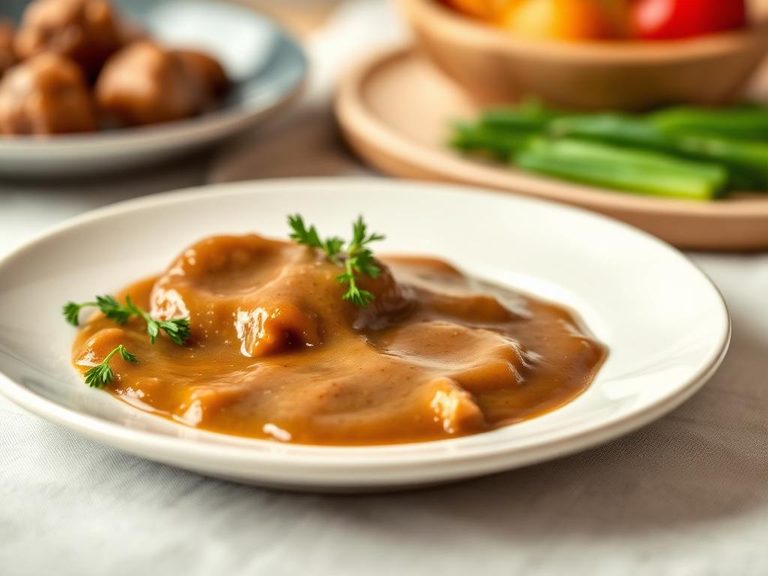
Thickening for gravy is a foundational cooking technique rather than a standalone dish, used to create a rich, viscous sauce typically served with roasted meats and vegetables. It usually involves combining a fat like butter or pan drippings with an equal part of flour to form a roux, which is then gradually whisked into a liquid such as stock or broth. This method is a cornerstone of Western, especially British and American, culinary traditions.
🍳 View the full Thickening for Gravy recipe →
🍽️ Nutrition at a glance
As a component, its nutritional profile varies, but it is generally high in carbohydrates from the flour and can be high in fat depending on the fat used. It primarily provides energy and can add small amounts of iron and B vitamins from enriched flour, with a typical serving containing roughly 50-100 calories.
Nutrition breakdown
| Calories | 110 kcal |
| Protein | 2.5 g |
| Carbs | 22 g |
| Fat | 1.5 g |
| Fiber | 0.8 g |
| Sugar | 0.2 g |
| Sodium | 450 mg |
| Iron | 1.5 mg |
| Calcium | 10 mg |
| Potassium | 30 mg |
| Niacin (B3) | 1.2 mg |
| Thiamin (B1) | 0.15 mg |
| Folic Acid | 40 mcg |
| Phosphorus | 25 mg |
| Magnesium | 5 mg |
Per 1/4 cup (30 g) · estimated, varies by recipe
💡 What's interesting
The technique is culturally significant as it transforms simple cooking liquids into a luxurious sauce, embodying the principle of 'waste not, want not' by utilizing flavorful pan drippings. Nutritionally, it's a classic example of how a simple starch can alter a food's texture and mouthfeel without significantly changing its core nutritional composition.
🍽️ Related dishes
AI estimate may be inaccurate · Terms