

Wheat flour, white, all-purpose, enriched, bleached
Whole food · Cereal Grains and Pasta
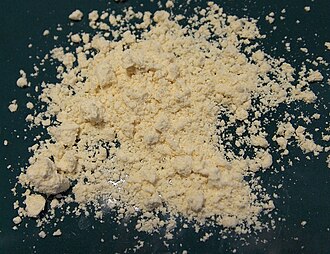
Photo: Wikipedia
Wheat flour, white, all-purpose, enriched, and bleached is the ubiquitous, fine-milled powder that forms the backbone of countless baked goods. Its soft, silky texture and mild, neutral flavor make it a blank canvas for both sweet and savory creations. Nutritionally, it's a dense source of carbohydrates and a moderate source of protein, often fortified with essential B vitamins and iron.
Calorie split: 12% protein · 86% carbs · 2% fat
↓ Full nutrition💚 Why it's loved
People love it for its incredible versatility and reliable results, making it the go-to for everything from fluffy pancakes and tender cakes to sturdy breads and crispy pastries. Its neutral taste allows other ingredients to shine, and its fine texture creates a desirable, soft crumb in baked goods.
⚠️ Watch-outs & how to enjoy it better
As a refined carbohydrate, it can cause rapid blood sugar spikes and lacks the fiber and nutrients of whole wheat flour. It is also a common allergen (wheat/gluten). To counteract this, pair it with protein (like eggs or nuts) and healthy fats (like butter or oil) to slow digestion, or use it in a 50/50 blend with whole wheat flour for added fiber.
Key benefits
- Provides a quick source of energy from complex carbohydrates.
- Enriched with B vitamins like thiamin, riboflavin, and niacin.
- A good source of iron, which helps prevent anemia.
- Versatile base for a wide range of recipes.
- Offers a moderate amount of plant-based protein.
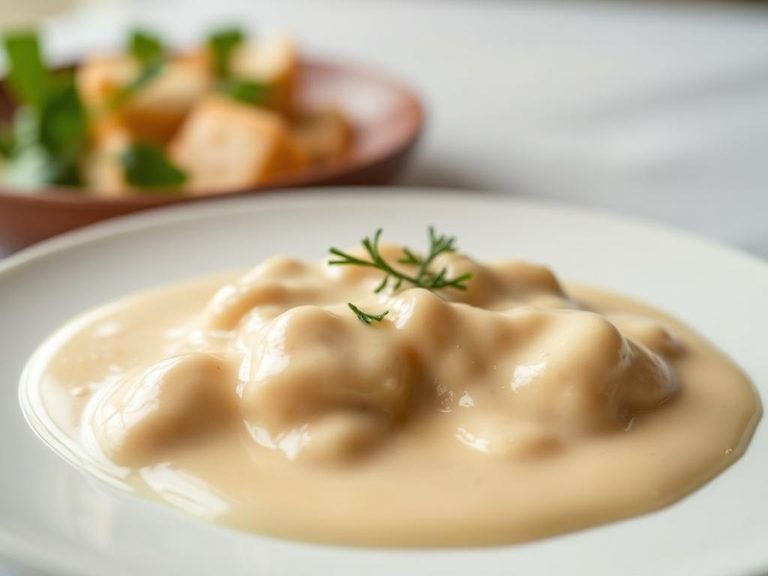
🍽️ Popular dishes





🌍 Where it's eaten
💡 Did you know?
The 'bleaching' process for white flour isn't about removing color but about oxidizing the flour's proteins to make the dough more elastic and the baked goods lighter and whiter.
Full nutrition (USDA data · scales with serving)
| Water | 11.9 g |
| Energy | 364 kcal |
| Energy | 1523 kj |
| Protein | 10.3 g |
| Total lipid (fat) | 0.98 g |
| Ash | 0.47 g |
| Carbohydrate, by difference | 76.3 g |
| Fiber, total dietary | 2.7 g |
| Total Sugars | 0.27 g |
| Calcium, Ca | 15.0 mg |
| Iron, Fe | 4.6 mg |
| Magnesium, Mg | 22.0 mg |
| Phosphorus, P | 108 mg |
| Potassium, K | 107 mg |
| Sodium, Na | 2.0 mg |
| Zinc, Zn | 0.70 mg |
| Copper, Cu | 0.14 mg |
| Manganese, Mn | 0.68 mg |
| Selenium, Se | 33.9 ug |
| Vitamin C, total ascorbic acid | 0.00 mg |
| Thiamin | 0.79 mg |
| Riboflavin | 0.49 mg |
| Niacin | 5.9 mg |
| Pantothenic acid | 0.44 mg |
| Vitamin B-6 | 0.04 mg |
| Folate, total | 183 ug |
| Folic acid | 154 ug |
| Folate, food | 29.0 ug |
| Folate, DFE | 291 ug |
| Choline, total | 10.4 mg |
| Betaine | 70.3 mg |
| Vitamin B-12 | 0.00 ug |
| Vitamin B-12, added | 0.00 ug |
| Vitamin A, RAE | 0.00 ug |
| Retinol | 0.00 ug |
| Carotene, beta | 0.00 ug |
| Carotene, alpha | 0.00 ug |
| Cryptoxanthin, beta | 0.00 ug |
| Vitamin A, IU | 0.00 iu |
| Lycopene | 0.00 ug |
| Lutein + zeaxanthin | 18.0 ug |
| Vitamin E (alpha-tocopherol) | 0.06 mg |
| Vitamin E, added | 0.00 mg |
| Tocopherol, beta | 0.07 mg |
| Tocopherol, gamma | 0.38 mg |
| Tocopherol, delta | 0.02 mg |
| Tocotrienol, alpha | 0.02 mg |
| Tocotrienol, beta | 0.09 mg |
| Tocotrienol, gamma | 0.00 mg |
| Tocotrienol, delta | 0.00 mg |
| Vitamin D (D2 + D3), International Units | 0.00 iu |
| Vitamin D (D2 + D3) | 0.00 ug |
| Vitamin K (phylloquinone) | 0.30 ug |
| Alcohol, ethyl | 0.00 g |
| Caffeine | 0.00 mg |
| Theobromine | 0.00 mg |
Fat & fatty acid profile (per 100g)
| Fatty acids, total saturated | 0.15 g |
| SFA 4:0 | 0.00 g |
| SFA 6:0 | 0.00 g |
| SFA 8:0 | 0.00 g |
| SFA 10:0 | 0.00 g |
| SFA 12:0 | 0.00 g |
| SFA 14:0 | 0.00 g |
| SFA 16:0 | 0.15 g |
| SFA 18:0 | 0.01 g |
| Fatty acids, total monounsaturated | 0.09 g |
| MUFA 16:1 | 0.00 g |
| MUFA 18:1 | 0.09 g |
| MUFA 20:1 | 0.00 g |
| MUFA 22:1 | 0.00 g |
| Fatty acids, total polyunsaturated | 0.41 g |
| PUFA 18:2 | 0.39 g |
| PUFA 18:3 | 0.02 g |
| PUFA 18:4 | 0.00 g |
| PUFA 20:4 | 0.00 g |
| PUFA 20:5 n-3 (EPA) | 0.00 g |
| PUFA 22:5 n-3 (DPA) | 0.00 g |
| PUFA 22:6 n-3 (DHA) | 0.00 g |
| Cholesterol | 0.00 mg |
Amino acid profile (per 100g)
| Tryptophan | 0.13 g |
| Threonine | 0.28 g |
| Isoleucine | 0.36 g |
| Leucine | 0.71 g |
| Lysine | 0.23 g |
| Methionine | 0.18 g |
| Cystine | 0.22 g |
| Phenylalanine | 0.52 g |
| Tyrosine | 0.31 g |
| Valine | 0.41 g |
| Arginine | 0.42 g |
| Histidine | 0.23 g |
| Alanine | 0.33 g |
| Aspartic acid | 0.43 g |
| Glutamic acid | 3.5 g |
| Glycine | 0.37 g |
| Proline | 1.2 g |
| Serine | 0.52 g |
FAQ
What is the difference between all-purpose and bread flour?
All-purpose flour has a moderate protein content (around 10-12%), making it suitable for most baking. Bread flour has a higher protein content (12-14%), which creates more gluten and results in a chewier texture ideal for breads.
Why is it called 'enriched'?
The milling process removes many natural nutrients. 'Enriched' means that specific vitamins and minerals, like iron and B vitamins (thiamin, riboflavin, niacin, folic acid), have been added back in.
Can I use this flour for thickening sauces?
Yes, it's excellent for making a roux (a mixture of flour and fat) to thicken gravies, soups, and sauces like béchamel. Whisk it into the fat first to prevent lumps.
Nutrient density (calculated · NRF9.3)
Nutrient Rich Foods index: beneficial nutrients (protein, fiber, vitamins, minerals) minus saturated fat, added sugar & sodium, per 100 kcal.
NRF9.3 index — Fulgoni, Keast & Drewnowski, 2009. Computed from USDA nutrients.
Weight-loss friendliness (composite index)
Energy density 3.64 kcal/g · 11% calories from protein · 2.7 g fiber · 0.3 g sugar per 100 g.
Composite of energy density (Rolls et al., 1999), protein & fiber satiety, minus sugar. A calculated heuristic — ranks satiety-per-calorie, not a clinical measure.
Dietary load (calculated from USDA values)
Potential renal acid load. Positive = acid-forming, negative = alkaline-forming.
Sodium-to-potassium ratio: 0.02 (lower is better — aim for ≤ 1)
Sodium:potassium per WHO potassium guidance. Computed from USDA nutrients.