

WENDY'S, Jr. Hamburger, without cheese
Whole food · Fast Foods

Photo: Wikipedia
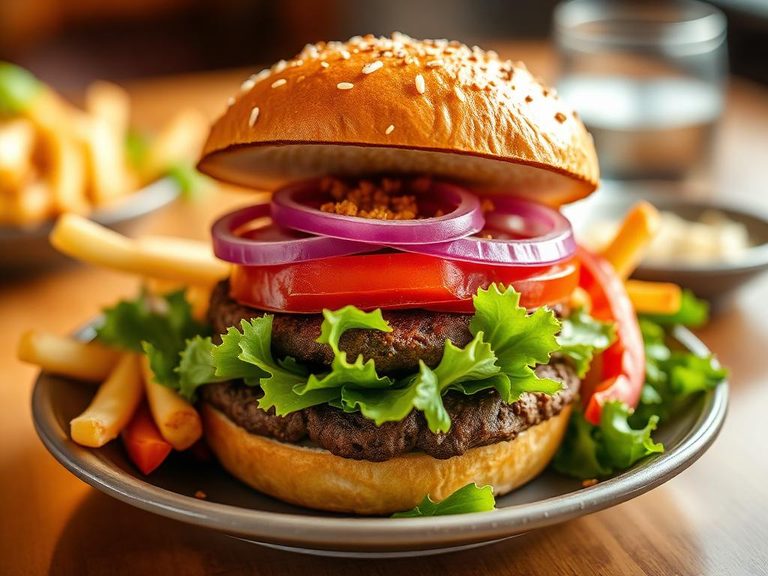
A Wendy's Jr. Hamburger without cheese is a compact, satisfying sandwich featuring a small, square beef patty on a soft, toasted bun. Its taste is a straightforward blend of savory beef, tangy pickles, ketchup, and mustard, with a soft, slightly steamed bun texture. Nutritionally, it offers a decent protein punch (12.6g) for its size, with most calories coming from carbohydrates in the bun.
Calorie split: 21% protein · 47% carbs · 32% fat
↓ Full nutrition💚 Why it's loved
People love its no-frills, classic hamburger taste—the pure beef flavor shines without cheese, and the soft bun makes it an easy, comforting bite. It's a staple of American fast-food culture, representing a quick, affordable, and familiar meal.
⚠️ Watch-outs & how to enjoy it better
The refined white bun can cause a rapid blood-sugar spike, and the sodium content in the patty and condiments is notable. To counteract, pair it with a side salad or apple slices for fiber, and be mindful of sodium intake for the rest of the day if sensitive.
Key benefits
- Provides a quick, convenient source of protein (12.6g).
- Contains no added sugar in the patty or condiments.
- Offers a familiar, comforting flavor profile.
- A lower-calorie option (243 kcal) within the fast-food burger category.
🍽️ Popular dishes
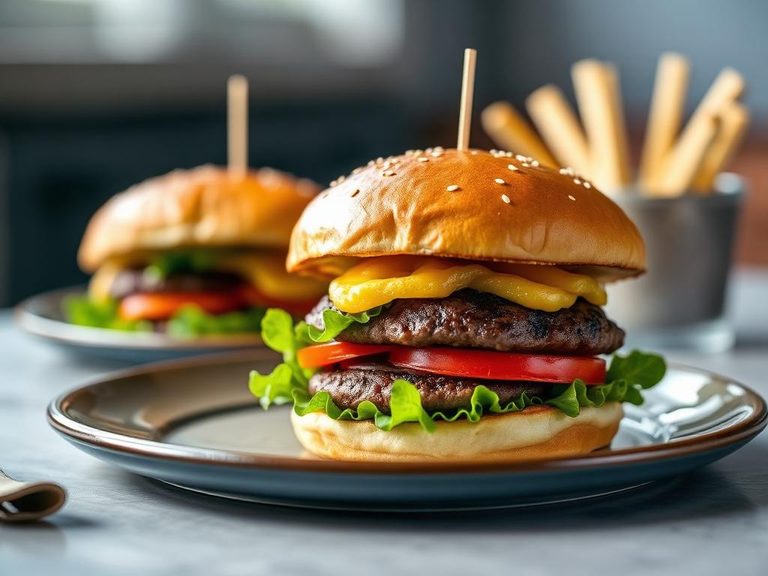
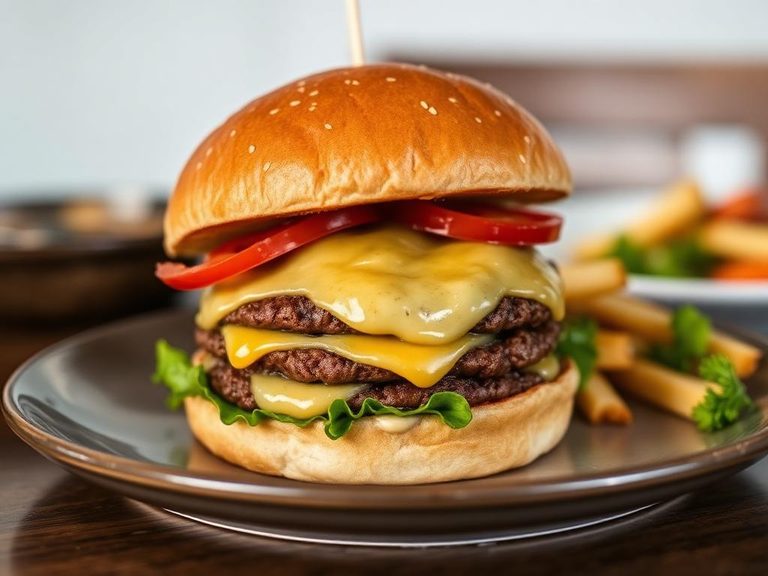
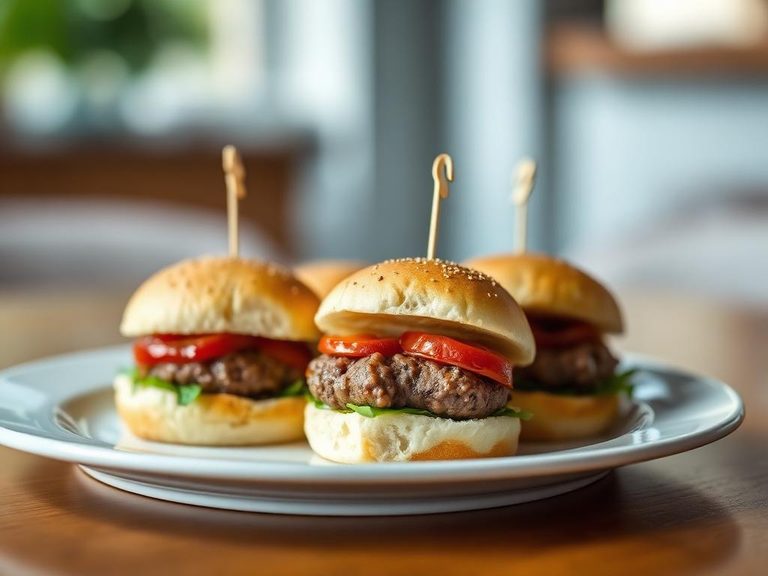
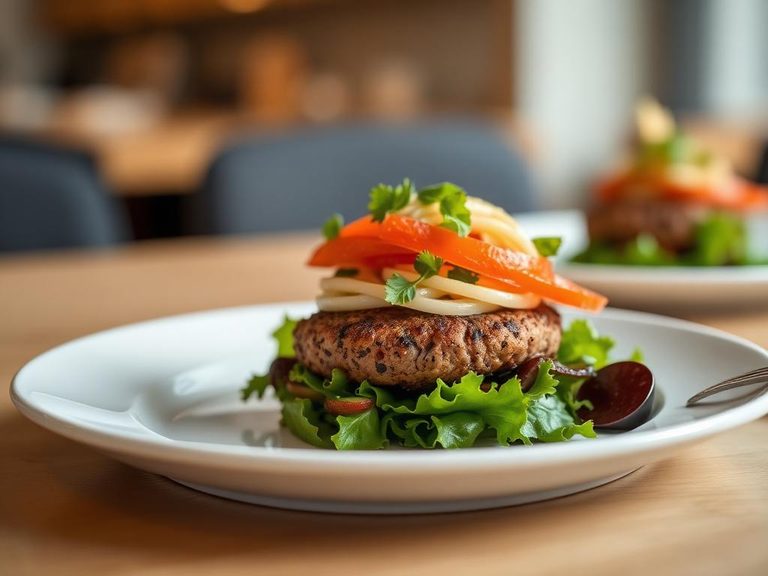
🌍 Where it's eaten
💡 Did you know?
Wendy's uses fresh, never-frozen beef for its hamburger patties, which is flash-cooked and served immediately.
Full nutrition (USDA data · scales with serving)
| Water | 48.3 g |
| Energy | 243 kcal |
| Energy | 1017 kj |
| Protein | 12.6 g |
| Total lipid (fat) | 8.8 g |
| Ash | 1.9 g |
| Carbohydrate, by difference | 28.4 g |
| Fiber, total dietary | 1.7 g |
| Sucrose | 0.00 g |
| Glucose | 2.4 g |
| Fructose | 2.7 g |
| Lactose | 0.00 g |
| Maltose | 0.51 g |
| Starch | 19.3 g |
| Calcium, Ca | 45.0 mg |
| Iron, Fe | 3.4 mg |
| Magnesium, Mg | 21.0 mg |
| Phosphorus, P | 107 mg |
| Potassium, K | 175 mg |
| Sodium, Na | 539 mg |
| Zinc, Zn | 2.1 mg |
| Copper, Cu | 0.12 mg |
| Manganese, Mn | 0.28 mg |
| Selenium, Se | 23.1 ug |
| Vitamin C, total ascorbic acid | 0.50 mg |
| Thiamin | 0.42 mg |
| Riboflavin | 0.23 mg |
| Niacin | 3.9 mg |
| Pantothenic acid | 0.35 mg |
| Vitamin B-6 | 0.12 mg |
| Vitamin B-12 | 1.3 ug |
| Vitamin K (phylloquinone) | 4.5 ug |
| Vitamin K (Dihydrophylloquinone) | 0.00 ug |
Fat & fatty acid profile (per 100g)
| Fatty acids, total saturated | 3.5 g |
| SFA 4:0 | 0.01 g |
| SFA 6:0 | 0.01 g |
| SFA 8:0 | 0.00 g |
| SFA 10:0 | 0.01 g |
| SFA 12:0 | 0.03 g |
| SFA 14:0 | 0.23 g |
| SFA 15:0 | 0.04 g |
| SFA 16:0 | 1.9 g |
| SFA 17:0 | 0.09 g |
| SFA 18:0 | 1.1 g |
| SFA 20:0 | 0.01 g |
| SFA 22:0 | 0.00 g |
| SFA 24:0 | 0.00 g |
| Fatty acids, total monounsaturated | 3.5 g |
| MUFA 14:1 | 0.07 g |
| MUFA 15:1 | 0.00 g |
| MUFA 16:1 | 0.33 g |
| MUFA 16:1 c | 0.31 g |
| MUFA 17:1 | 0.03 g |
| MUFA 18:1 | 3.1 g |
| MUFA 18:1 c | 2.9 g |
| MUFA 20:1 | 0.03 g |
| MUFA 22:1 | 0.01 g |
| Fatty acids, total polyunsaturated | 1.1 g |
| PUFA 18:2 | 0.98 g |
| PUFA 18:2 n-6 c,c | 0.94 g |
| PUFA 18:2 i | 0.04 g |
| PUFA 18:3 | 0.10 g |
| PUFA 18:3 n-3 c,c,c (ALA) | 0.10 g |
| PUFA 18:4 | 0.02 g |
| PUFA 20:2 n-6 c,c | 0.00 g |
| PUFA 20:3 | 0.00 g |
| PUFA 20:3 n-6 | 0.00 g |
| PUFA 20:4 | 0.01 g |
| PUFA 20:4 n-6 | 0.01 g |
| PUFA 20:5 n-3 (EPA) | 0.00 g |
| PUFA 22:5 n-3 (DPA) | 0.00 g |
| PUFA 22:6 n-3 (DHA) | 0.00 g |
| Fatty acids, total trans | 0.27 g |
| Fatty acids, total trans-monoenoic | 0.23 g |
| TFA 16:1 t | 0.03 g |
| TFA 18:1 t | 0.20 g |
| Fatty acids, total trans-polyenoic | 0.04 g |
| Cholesterol | 27.0 mg |
Amino acid profile (per 100g)
| Tryptophan | 0.12 g |
| Threonine | 0.41 g |
| Isoleucine | 0.42 g |
| Leucine | 0.78 g |
| Lysine | 0.62 g |
| Methionine | 0.22 g |
| Cystine | 0.16 g |
| Phenylalanine | 0.46 g |
| Tyrosine | 0.21 g |
| Valine | 0.48 g |
| Arginine | 0.56 g |
| Histidine | 0.28 g |
| Alanine | 0.60 g |
| Aspartic acid | 0.85 g |
| Glutamic acid | 2.4 g |
| Glycine | 0.68 g |
| Proline | 0.84 g |
| Serine | 0.49 g |
FAQ
Is this a good source of protein?
Yes, for its size, it provides a solid 12.6g of protein, which is about 25% of the daily value for an average adult.
Why is there 0g of sugar listed?
The beef patty, bun, and standard condiments (mustard, pickles) contain negligible sugar. The small amount in the ketchup is rounded down to zero in the nutritional reporting.
How does it compare nutritionally to a cheeseburger?
Removing the cheese saves about 50-70 calories and 4-5g of fat, making it a slightly lighter option while retaining the core protein and carbohydrate content.
Nutrient density (calculated · NRF9.3)
Nutrient Rich Foods index: beneficial nutrients (protein, fiber, vitamins, minerals) minus saturated fat, added sugar & sodium, per 100 kcal.
NRF9.3 index — Fulgoni, Keast & Drewnowski, 2009. Computed from USDA nutrients.
Weight-loss friendliness (composite index)
Energy density 2.43 kcal/g · 21% calories from protein · 1.7 g fiber · 0.0 g sugar per 100 g.
Composite of energy density (Rolls et al., 1999), protein & fiber satiety, minus sugar. A calculated heuristic — ranks satiety-per-calorie, not a clinical measure.
Dietary load (calculated from USDA values)
Potential renal acid load. Positive = acid-forming, negative = alkaline-forming.
Sodium-to-potassium ratio: 3.08 (lower is better — aim for ≤ 1)
Sodium:potassium per WHO potassium guidance. Computed from USDA nutrients.