

Veal, leg (top round), separable lean and fat, cooked, braised
Whole food · Lamb, Veal, and Game Products

Photo: Wikipedia
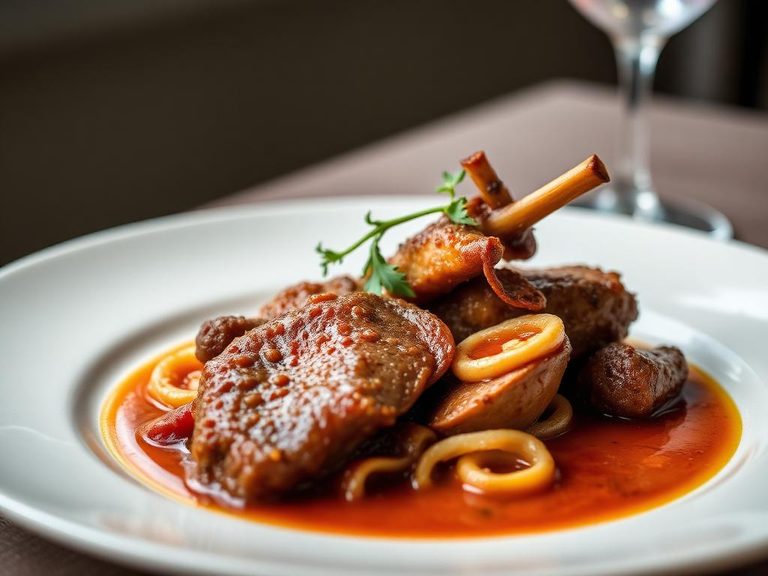
Braised veal leg (top round) is a lean, tender cut where slow cooking in liquid transforms its firm texture into succulent, fork-tender meat with a mild, refined beefy flavor. Nutritionally, it's a powerhouse, delivering over 36 grams of high-quality protein per 100 grams with virtually no carbohydrates or sugar, making it an excellent choice for high-protein, low-carb diets.
Calorie split: 72% protein · 0% carbs · 28% fat
↓ Full nutrition💚 Why it's loved
People love braised veal for its delicate, non-gamey flavor and melt-in-your-mouth texture when cooked properly, which makes it feel both elegant and comforting. Its versatility allows it to shine in sophisticated dishes like osso buco or simple, hearty stews.
⚠️ Watch-outs & how to enjoy it better
The cut can be lean and potentially tough if not braised long enough, leading to a chewy experience. It is also a red meat, so those monitoring saturated fat intake or with specific health conditions should consume it in moderation. To counteract toughness, ensure a long, slow braise in flavorful liquid; for fat concerns, pair it with fiber-rich vegetables and practice portion control.
Key benefits
- Exceptionally high in complete protein for muscle maintenance and satiety.
- Very low in carbohydrates and sugars, suitable for ketogenic and diabetic-friendly diets.
- Good source of essential minerals like zinc and selenium.
- The braising method can help break down connective tissue, improving digestibility.
🍽️ Popular dishes
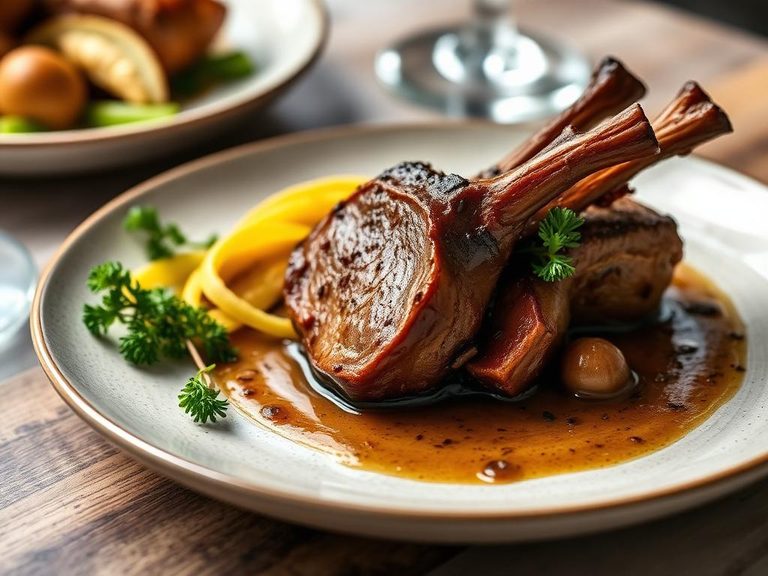
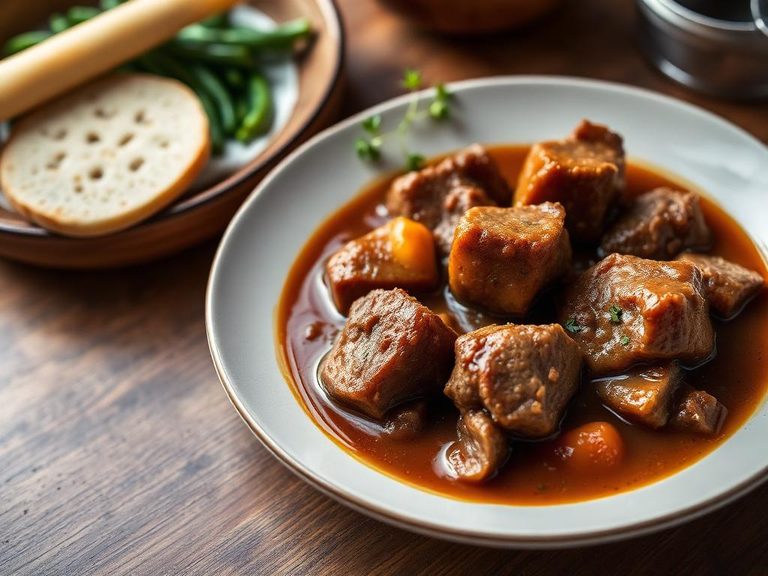
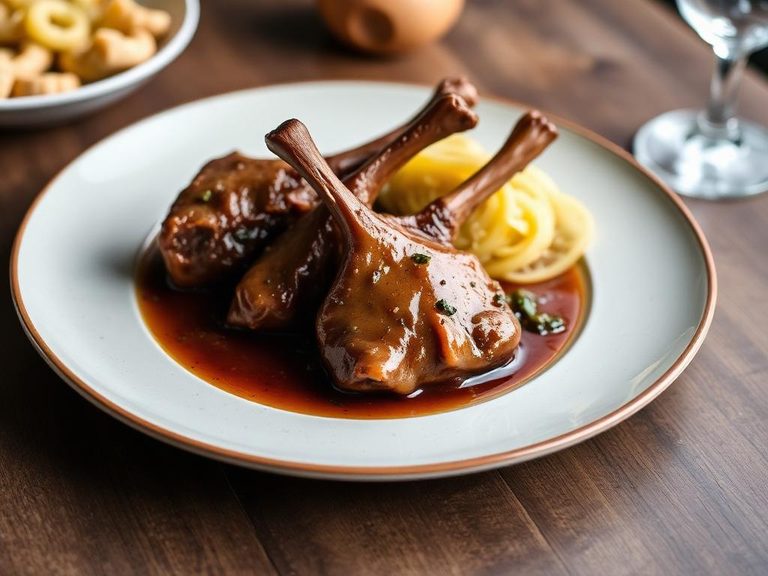
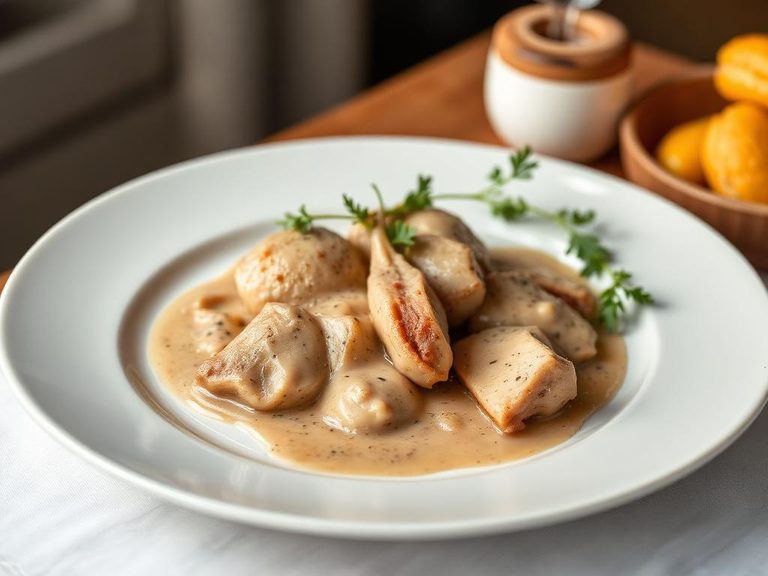

🌍 Where it's eaten
💡 Did you know?
The top round comes from the heavily exercised leg muscle, but braising is the perfect counter-intuitive solution: the moist, slow heat converts the abundant collagen in the muscle into gelatin, which is what gives the finished dish its characteristic silky, rich mouthfeel.
Full nutrition (USDA data · scales with serving)
| Water | 55.5 g |
| Energy | 211 kcal |
| Energy | 883 kj |
| Protein | 36.2 g |
| Total lipid (fat) | 6.3 g |
| Ash | 1.9 g |
| Carbohydrate, by difference | 0.00 g |
| Fiber, total dietary | 0.00 g |
| Total Sugars | 0.00 g |
| Calcium, Ca | 8.0 mg |
| Iron, Fe | 1.3 mg |
| Magnesium, Mg | 29.0 mg |
| Phosphorus, P | 249 mg |
| Potassium, K | 383 mg |
| Sodium, Na | 67.0 mg |
| Zinc, Zn | 4.0 mg |
| Copper, Cu | 0.14 mg |
| Manganese, Mn | 0.04 mg |
| Selenium, Se | 15.4 ug |
| Vitamin C, total ascorbic acid | 0.00 mg |
| Thiamin | 0.06 mg |
| Riboflavin | 0.35 mg |
| Niacin | 10.6 mg |
| Pantothenic acid | 1.0 mg |
| Vitamin B-6 | 0.36 mg |
| Folate, total | 18.0 ug |
| Folic acid | 0.00 ug |
| Folate, food | 18.0 ug |
| Folate, DFE | 18.0 ug |
| Choline, total | 141 mg |
| Betaine | 18.6 mg |
| Vitamin B-12 | 1.2 ug |
| Vitamin B-12, added | 0.00 ug |
| Vitamin A, RAE | 0.00 ug |
| Retinol | 0.00 ug |
| Carotene, beta | 0.00 ug |
| Carotene, alpha | 0.00 ug |
| Cryptoxanthin, beta | 0.00 ug |
| Vitamin A, IU | 0.00 iu |
| Lycopene | 0.00 ug |
| Lutein + zeaxanthin | 0.00 ug |
| Vitamin E (alpha-tocopherol) | 0.49 mg |
| Vitamin E, added | 0.00 mg |
| Vitamin D (D2 + D3), International Units | 0.00 iu |
| Vitamin D (D2 + D3) | 0.00 ug |
| Vitamin D3 (cholecalciferol) | 0.00 ug |
| Vitamin K (phylloquinone) | 7.0 ug |
| Vitamin K (Dihydrophylloquinone) | 0.00 ug |
| Alcohol, ethyl | 0.00 g |
| Caffeine | 0.00 mg |
| Theobromine | 0.00 mg |
Fat & fatty acid profile (per 100g)
| Fatty acids, total saturated | 2.5 g |
| SFA 4:0 | 0.00 g |
| SFA 6:0 | 0.00 g |
| SFA 8:0 | 0.00 g |
| SFA 10:0 | 0.01 g |
| SFA 12:0 | 0.02 g |
| SFA 14:0 | 0.23 g |
| SFA 16:0 | 1.4 g |
| SFA 18:0 | 0.84 g |
| Fatty acids, total monounsaturated | 2.4 g |
| MUFA 16:1 | 0.27 g |
| MUFA 18:1 | 2.0 g |
| MUFA 20:1 | 0.00 g |
| MUFA 22:1 | 0.00 g |
| Fatty acids, total polyunsaturated | 0.47 g |
| PUFA 18:2 | 0.35 g |
| PUFA 18:3 | 0.04 g |
| PUFA 18:4 | 0.00 g |
| PUFA 20:4 | 0.08 g |
| PUFA 20:5 n-3 (EPA) | 0.00 g |
| PUFA 22:5 n-3 (DPA) | 0.00 g |
| PUFA 22:6 n-3 (DHA) | 0.00 g |
| Cholesterol | 134 mg |
Amino acid profile (per 100g)
| Tryptophan | 0.37 g |
| Threonine | 1.6 g |
| Isoleucine | 1.8 g |
| Leucine | 2.9 g |
| Lysine | 3.0 g |
| Methionine | 0.84 g |
| Cystine | 0.41 g |
| Phenylalanine | 1.5 g |
| Tyrosine | 1.2 g |
| Valine | 2.0 g |
| Arginine | 2.1 g |
| Histidine | 1.3 g |
| Alanine | 2.2 g |
| Aspartic acid | 3.1 g |
| Glutamic acid | 5.7 g |
| Glycine | 1.9 g |
| Proline | 1.5 g |
| Serine | 1.4 g |
FAQ
What's the difference between braising and roasting this cut?
Braising involves searing the meat then simmering it slowly in a covered pot with liquid (like broth or wine), which tenderizes the lean top round. Roasting uses dry heat in an oven and is better for fattier cuts; this lean cut would likely dry out if roasted.
How do I prevent braised veal from being tough?
The key is low and slow cooking. Ensure the liquid barely simmers, not boils, and cook until the meat is easily pierced with a fork. This can take 1.5 to 2.5 hours depending on the piece size.
Is braised veal a good choice for meal prep?
Yes, it's excellent for meal prep. The flavors often deepen when refrigerated, and it reheats well in its braising liquid. Store portions in airtight containers for up to 3-4 days.
Nutrient density (calculated · NRF9.3)
Nutrient Rich Foods index: beneficial nutrients (protein, fiber, vitamins, minerals) minus saturated fat, added sugar & sodium, per 100 kcal.
NRF9.3 index — Fulgoni, Keast & Drewnowski, 2009. Computed from USDA nutrients.
Weight-loss friendliness (composite index)
Energy density 2.11 kcal/g · 69% calories from protein · 0.0 g fiber · 0.0 g sugar per 100 g.
Composite of energy density (Rolls et al., 1999), protein & fiber satiety, minus sugar. A calculated heuristic — ranks satiety-per-calorie, not a clinical measure.
Dietary load (calculated from USDA values)
Potential renal acid load. Positive = acid-forming, negative = alkaline-forming.
Sodium-to-potassium ratio: 0.17 (lower is better — aim for ≤ 1)
Sodium:potassium per WHO potassium guidance. Computed from USDA nutrients.