

Syrup, NESTLE, chocolate
Whole food · Sweets

Photo: Wikipedia
NESTLÉ chocolate syrup is a thick, glossy, dark brown condiment with a smooth, pourable texture. It delivers a sweet, cocoa-forward flavor with a hint of vanilla, designed for instant indulgence. Nutritionally, it is almost entirely carbohydrates, providing 67 grams of carbs and 60 grams of sugar per 100g, with no protein, fat, or fiber.
Calorie split: 0% protein · 100% carbs · 0% fat
↓ Full nutrition💚 Why it's loved
People love it for its nostalgic, comforting chocolate taste and the effortless way it transforms plain milk, ice cream, or coffee into a treat. Its iconic squeeze bottle and consistent flavor make it a reliable pantry staple for quick desserts.
⚠️ Watch-outs & how to enjoy it better
Its extremely high sugar content (60g per 100g) can cause rapid blood-sugar spikes, making it unsuitable for diabetics or those monitoring sugar intake. To mitigate this, pair it with protein (like milk or yogurt) or healthy fats (like nuts or whipped cream) to slow sugar absorption, and practice strict portion control. It also contains common additives like high-fructose corn syrup and artificial flavors.
Key benefits
- Instant flavor boost for beverages and desserts
- Shelf-stable and requires no refrigeration
- Provides quick energy from simple carbohydrates
- Versatile for both sweet and savory applications
🍽️ Popular dishes
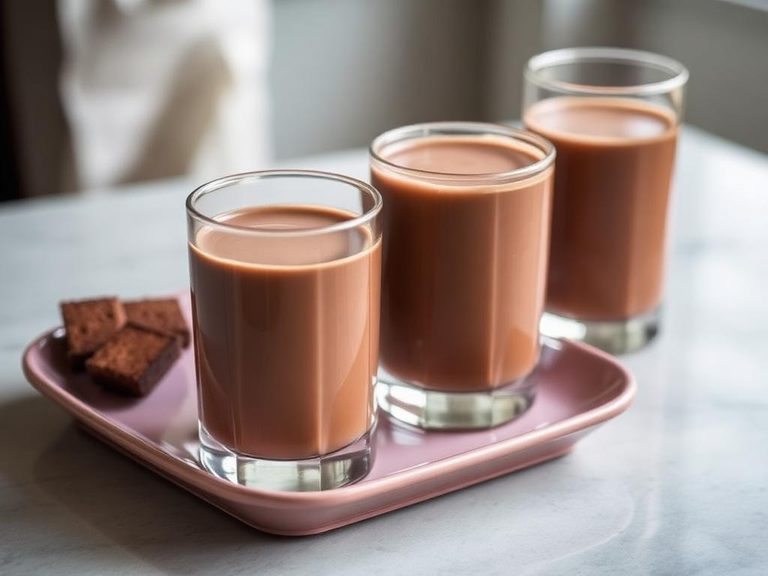

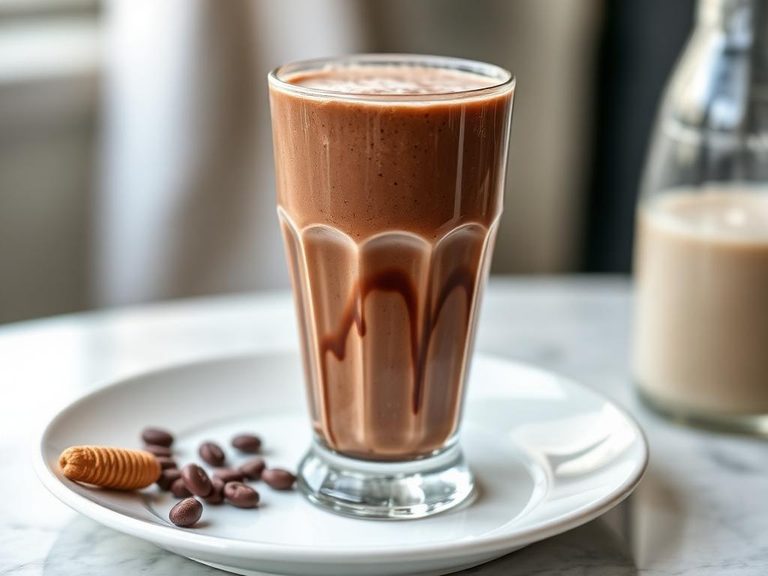
🌍 Where it's eaten
💡 Did you know?
The iconic Nestlé chocolate syrup can was originally designed in 1958 to be stored upside-down, with a special cap that allowed for easy, mess-free pouring.
Full nutrition (USDA data · scales with serving)
| Water | 31.9 g |
| Energy | 269 kcal |
| Energy | 1125 kj |
| Protein | 0.00 g |
| Total lipid (fat) | 0.00 g |
| Ash | 0.87 g |
| Carbohydrate, by difference | 67.2 g |
| Fiber, total dietary | 0.00 g |
| Total Sugars | 60.0 g |
| Sucrose | 59.9 g |
| Glucose | 0.00 g |
| Fructose | 0.00 g |
| Lactose | 0.00 g |
| Maltose | 0.00 g |
| Galactose | 0.00 g |
| Calcium, Ca | 0.00 mg |
| Iron, Fe | 0.00 mg |
| Magnesium, Mg | 40.0 mg |
| Phosphorus, P | 58.0 mg |
| Potassium, K | 122 mg |
| Sodium, Na | 150 mg |
| Zinc, Zn | 0.55 mg |
| Copper, Cu | 0.31 mg |
| Manganese, Mn | 0.31 mg |
| Selenium, Se | 1.5 ug |
| Fluoride, F | 25.7 ug |
| Vitamin C, total ascorbic acid | 0.00 mg |
| Thiamin | 0.01 mg |
| Riboflavin | 0.03 mg |
| Niacin | 0.17 mg |
| Pantothenic acid | 0.02 mg |
| Vitamin B-6 | 0.01 mg |
| Folate, total | 3.0 ug |
| Folic acid | 0.00 ug |
| Folate, food | 3.0 ug |
| Folate, DFE | 3.0 ug |
| Choline, total | 0.90 mg |
| Betaine | 0.00 mg |
| Vitamin B-12 | 0.00 ug |
| Vitamin B-12, added | 0.00 ug |
| Vitamin A, RAE | 0.00 ug |
| Retinol | 0.00 ug |
| Carotene, beta | 0.00 ug |
| Carotene, alpha | 0.00 ug |
| Cryptoxanthin, beta | 0.00 ug |
| Vitamin A, IU | 0.00 iu |
| Lycopene | 0.00 ug |
| Lutein + zeaxanthin | 3.0 ug |
| Vitamin E (alpha-tocopherol) | 0.01 mg |
| Vitamin E, added | 0.00 mg |
| Vitamin D (D2 + D3), International Units | 0.00 iu |
| Vitamin D (D2 + D3) | 0.00 ug |
| Vitamin K (phylloquinone) | 0.20 ug |
| Alcohol, ethyl | 0.00 g |
| Caffeine | 18.0 mg |
| Theobromine | 163 mg |
Fat & fatty acid profile (per 100g)
| Fatty acids, total saturated | 0.00 g |
| SFA 4:0 | 0.00 g |
| SFA 6:0 | 0.00 g |
| SFA 8:0 | 0.00 g |
| SFA 10:0 | 0.00 g |
| SFA 12:0 | 0.00 g |
| SFA 14:0 | 0.00 g |
| SFA 16:0 | 0.00 g |
| SFA 18:0 | 0.00 g |
| Fatty acids, total monounsaturated | 0.00 g |
| MUFA 16:1 | 0.00 g |
| MUFA 18:1 | 0.00 g |
| MUFA 20:1 | 0.00 g |
| MUFA 22:1 | 0.00 g |
| Fatty acids, total polyunsaturated | 0.00 g |
| PUFA 18:2 | 0.00 g |
| PUFA 18:3 | 0.00 g |
| PUFA 18:4 | 0.00 g |
| PUFA 20:4 | 0.00 g |
| PUFA 20:5 n-3 (EPA) | 0.00 g |
| PUFA 22:5 n-3 (DPA) | 0.00 g |
| PUFA 22:6 n-3 (DHA) | 0.00 g |
| Cholesterol | 0.00 mg |
| Phytosterols | 0.00 mg |
Amino acid profile (per 100g)
| Tryptophan | 0.02 g |
| Threonine | 0.06 g |
| Isoleucine | 0.06 g |
| Leucine | 0.09 g |
| Lysine | 0.08 g |
| Methionine | 0.02 g |
| Cystine | 0.02 g |
| Phenylalanine | 0.07 g |
| Tyrosine | 0.06 g |
| Valine | 0.09 g |
| Arginine | 0.09 g |
| Histidine | 0.03 g |
| Alanine | 0.07 g |
| Aspartic acid | 0.15 g |
| Glutamic acid | 0.23 g |
| Glycine | 0.07 g |
| Proline | 0.07 g |
| Serine | 0.07 g |
FAQ
Is Nestlé chocolate syrup the same as chocolate sauce?
Not exactly. Syrup is thinner, pourable, and primarily sugar-based, while sauce is often thicker, may contain dairy or cream, and has a richer, more complex texture.
Can I use it in baking?
Yes, it can be used to add moisture and chocolate flavor to cakes, brownies, or cookies, but be aware it will significantly increase the sugar content of your recipe.
How should I store it after opening?
While it's shelf-stable, storing it in the refrigerator after opening can help maintain its flavor and consistency for longer, though it may thicken slightly when cold.
Nutrient density (calculated · NRF9.3)
Nutrient Rich Foods index: beneficial nutrients (protein, fiber, vitamins, minerals) minus saturated fat, added sugar & sodium, per 100 kcal.
NRF9.3 index — Fulgoni, Keast & Drewnowski, 2009. Computed from USDA nutrients.
Weight-loss friendliness (composite index)
Energy density 2.69 kcal/g · 0% calories from protein · 0.0 g fiber · 60.0 g sugar per 100 g.
Composite of energy density (Rolls et al., 1999), protein & fiber satiety, minus sugar. A calculated heuristic — ranks satiety-per-calorie, not a clinical measure.
Dietary load (calculated from USDA values)
Potential renal acid load. Positive = acid-forming, negative = alkaline-forming.
Sodium-to-potassium ratio: 1.23 (lower is better — aim for ≤ 1)
Sodium:potassium per WHO potassium guidance. Computed from USDA nutrients.