

Soy sauce made from hydrolyzed vegetable protein
Whole food · Legumes and Legume Products

Photo: Wikipedia
This is a fast-fermented, chemically processed soy sauce made by breaking down vegetable proteins with acid, creating a dark, thin liquid with a sharp, salty, umami punch. It's the workhorse condiment of many takeout containers, offering a potent flavor boost for a modest calorie count. Nutritionally, it's a source of plant-based protein but is best known for its intense sodium content.
Calorie split: 44% protein · 49% carbs · 7% fat
↓ Full nutrition💚 Why it's loved
People love it for its instant ability to add deep, savory complexity to dishes, acting as a flavor foundation in countless recipes. Its affordability and consistent taste make it a kitchen staple for everyday cooking.
⚠️ Watch-outs & how to enjoy it better
It is very high in sodium, which can contribute to high blood pressure if overused, and its rapid production process can sometimes yield a slightly harsher taste than traditionally brewed varieties. To counteract this, use it sparingly as a finishing sauce, pair it with low-sodium ingredients, and balance flavors with a touch of sugar or acid like rice vinegar.
Key benefits
- Provides a quick umami flavor base
- Contains plant-based protein (7g per 100g)
- Extremely versatile for marinades, stir-fries, and dipping
- Low in fat and calories
- Shelf-stable with a long shelf life
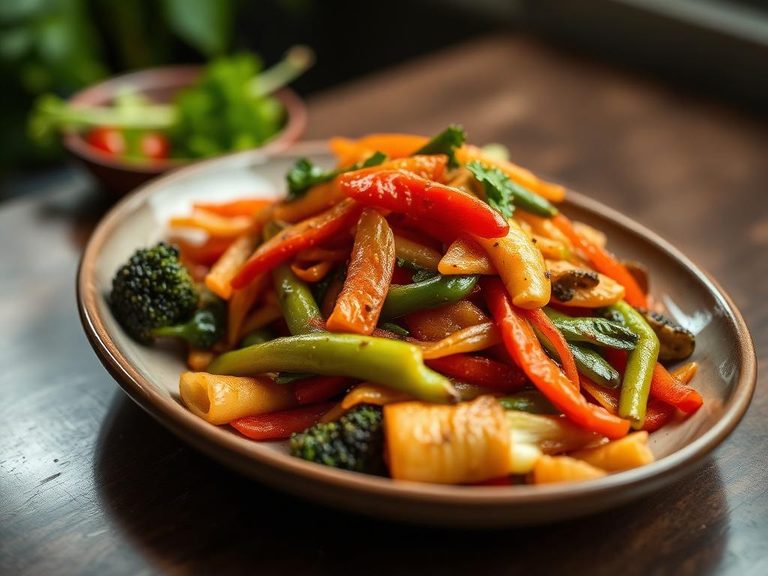
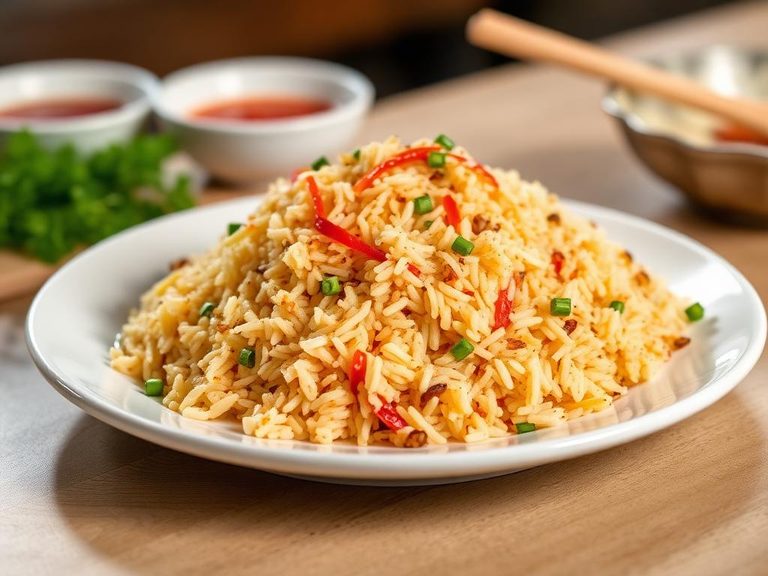
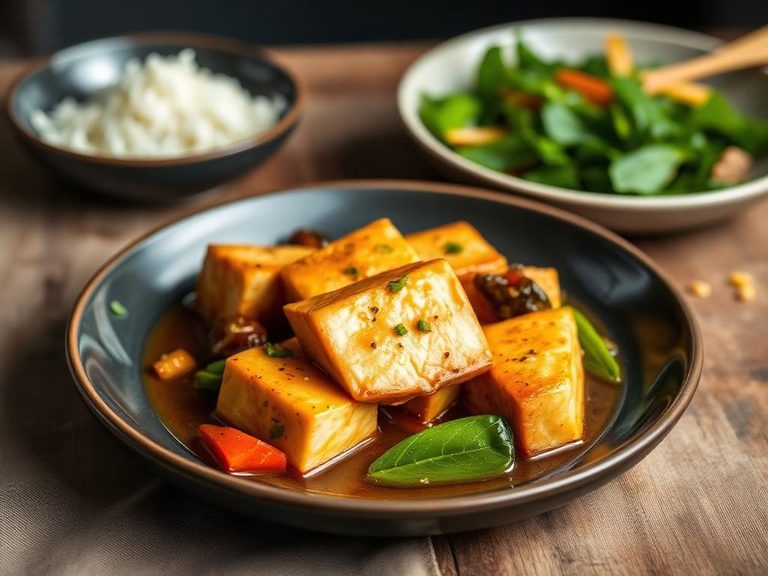
🍽️ Popular dishes
🌍 Where it's eaten
💡 Did you know?
Unlike traditional brewed soy sauce which can take months, hydrolyzed vegetable protein (HVP) soy sauce is made in a matter of days by using hydrochloric acid to break down soybean or wheat protein.
Full nutrition (USDA data · scales with serving)
| Water | 68.0 g |
| Energy | 60.0 kcal |
| Energy | 253 kj |
| Protein | 7.0 g |
| Total lipid (fat) | 0.51 g |
| Ash | 16.6 g |
| Carbohydrate, by difference | 7.8 g |
| Fiber, total dietary | 0.50 g |
| Total Sugars | 1.3 g |
| Sucrose | 0.00 g |
| Glucose | 0.70 g |
| Fructose | 0.00 g |
| Lactose | 0.00 g |
| Maltose | 0.60 g |
| Galactose | 0.00 g |
| Calcium, Ca | 17.0 mg |
| Iron, Fe | 0.33 mg |
| Magnesium, Mg | 29.0 mg |
| Phosphorus, P | 94.0 mg |
| Potassium, K | 447 mg |
| Sodium, Na | 6820 mg |
| Zinc, Zn | 0.23 mg |
| Copper, Cu | 0.04 mg |
| Manganese, Mn | 0.10 mg |
| Selenium, Se | 0.80 ug |
| Vitamin C, total ascorbic acid | 0.00 mg |
| Thiamin | 0.04 mg |
| Riboflavin | 0.11 mg |
| Niacin | 2.8 mg |
| Pantothenic acid | 0.27 mg |
| Vitamin B-6 | 0.14 mg |
| Folate, total | 13.0 ug |
| Folic acid | 0.00 ug |
| Folate, food | 13.0 ug |
| Folate, DFE | 13.0 ug |
| Choline, total | 27.5 mg |
| Vitamin B-12 | 0.00 ug |
| Vitamin B-12, added | 0.00 ug |
| Vitamin A, RAE | 0.00 ug |
| Retinol | 0.00 ug |
| Carotene, beta | 0.00 ug |
| Carotene, alpha | 0.00 ug |
| Cryptoxanthin, beta | 0.00 ug |
| Vitamin A, IU | 0.00 iu |
| Lycopene | 0.00 ug |
| Lutein + zeaxanthin | 0.00 ug |
| Vitamin E (alpha-tocopherol) | 0.00 mg |
| Vitamin E, added | 0.00 mg |
| Vitamin D (D2 + D3), International Units | 0.00 iu |
| Vitamin D (D2 + D3) | 0.00 ug |
| Vitamin K (phylloquinone) | 0.00 ug |
| Alcohol, ethyl | 0.00 g |
| Caffeine | 0.00 mg |
| Theobromine | 0.00 mg |
Fat & fatty acid profile (per 100g)
| Fatty acids, total saturated | 0.04 g |
| SFA 4:0 | 0.00 g |
| SFA 6:0 | 0.00 g |
| SFA 8:0 | 0.00 g |
| SFA 10:0 | 0.00 g |
| SFA 12:0 | 0.00 g |
| SFA 14:0 | 0.00 g |
| SFA 16:0 | 0.03 g |
| SFA 18:0 | 0.01 g |
| Fatty acids, total monounsaturated | 0.06 g |
| MUFA 16:1 | 0.00 g |
| MUFA 18:1 | 0.05 g |
| MUFA 20:1 | 0.00 g |
| MUFA 22:1 | 0.00 g |
| Fatty acids, total polyunsaturated | 0.15 g |
| PUFA 18:2 | 0.13 g |
| PUFA 18:3 | 0.02 g |
| PUFA 18:4 | 0.00 g |
| PUFA 20:4 | 0.00 g |
| PUFA 20:5 n-3 (EPA) | 0.00 g |
| PUFA 22:5 n-3 (DPA) | 0.00 g |
| PUFA 22:6 n-3 (DHA) | 0.00 g |
| Fatty acids, total trans | 0.00 g |
| Cholesterol | 0.00 mg |
Amino acid profile (per 100g)
Estimated from Soy sauce made from soy and wheat (shoyu), low sodium — USDA does not publish this profile for Soy sauce made from hydrolyzed vegetable protein.
| Tryptophan | 0.00 g |
| Threonine | 0.38 g |
| Isoleucine | 0.41 g |
| Leucine | 0.59 g |
| Lysine | 0.34 g |
| Methionine | 0.09 g |
| Cystine | 0.00 g |
| Phenylalanine | 0.34 g |
| Tyrosine | 0.09 g |
| Valine | 0.43 g |
| Arginine | 0.49 g |
| Histidine | 0.17 g |
| Alanine | 0.65 g |
| Aspartic acid | 0.46 g |
| Glutamic acid | 1.7 g |
| Glycine | 0.33 g |
| Proline | 0.60 g |
| Serine | 0.48 g |
| Hydroxyproline | 0.00 g |
FAQ
How is this different from naturally brewed soy sauce?
Naturally brewed soy sauce ferments over months or years, developing complex flavors. HVP soy sauce is made in days via acid hydrolysis, resulting in a stronger, sometimes sharper flavor and a different nutritional profile.
Is it gluten-free?
Not necessarily. While the protein source might be soy, many HVP sauces include wheat. Always check the ingredient list for wheat if you have celiac disease or gluten sensitivity.
Can I use it as a 1:1 substitute for brewed soy sauce?
Yes, but be aware its flavor is more intense and less nuanced. You may want to use slightly less and taste as you go. It works best in cooked dishes rather than as a delicate finishing sauce.
Nutrient density (calculated · NRF9.3)
Nutrient Rich Foods index: beneficial nutrients (protein, fiber, vitamins, minerals) minus saturated fat, added sugar & sodium, per 100 kcal.
NRF9.3 index — Fulgoni, Keast & Drewnowski, 2009. Computed from USDA nutrients.
Weight-loss friendliness (composite index)
Energy density 0.60 kcal/g · 47% calories from protein · 0.5 g fiber · 1.3 g sugar per 100 g.
Composite of energy density (Rolls et al., 1999), protein & fiber satiety, minus sugar. A calculated heuristic — ranks satiety-per-calorie, not a clinical measure.
Dietary load (calculated from USDA values)
Potential renal acid load. Positive = acid-forming, negative = alkaline-forming.
Sodium-to-potassium ratio: 15.26 (lower is better — aim for ≤ 1)
Sodium:potassium per WHO potassium guidance. Computed from USDA nutrients.