

Soup, clam chowder, new england, canned, condensed
Whole food · Soups, Sauces, and Gravies

Photo: Wikipedia
This is the classic, creamy, off-white soup base made from clams, milk, and potatoes, sold in a can for convenience. When reconstituted with milk or water, it yields a thick, velvety broth with tender potato chunks and subtle clam flavor. Nutritionally, it's a moderate source of protein (3.17g) and carbohydrates (10.32g) per 100g, with a relatively low fat content (2.06g).
Calorie split: 17% protein · 57% carbs · 26% fat
↓ Full nutrition💚 Why it's loved
People love it for its comforting, nostalgic New England flavor—a rich, savory, slightly briny taste that's perfect for cold weather. It's incredibly versatile as a base for quick meals, from classic bread bowls to chowder fries.
⚠️ Watch-outs & how to enjoy it better
Canned condensed versions are often very high in sodium, which can contribute to high blood pressure. They also contain dairy (milk) and sometimes wheat flour as a thickener, making them unsuitable for those with lactose intolerance or celiac disease. Tip: Choose a low-sodium version, rinse the contents lightly if concerned, and pair with a fresh, potassium-rich side like steamed broccoli to help balance sodium intake.
Key benefits
- Good source of protein for muscle maintenance.
- Provides carbohydrates for quick energy.
- Contains calcium from dairy ingredients.
- Low in fat compared to many creamy soups.
- Convenient shelf-stable meal starter.
🍽️ Popular dishes

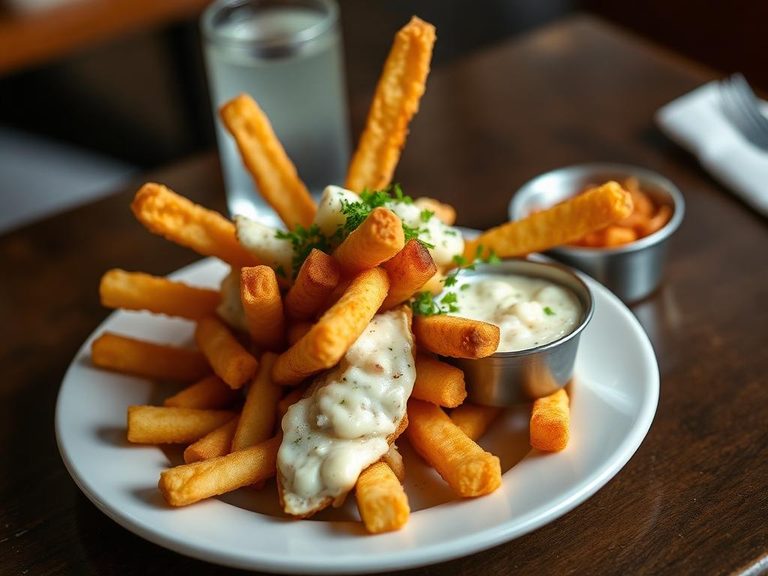
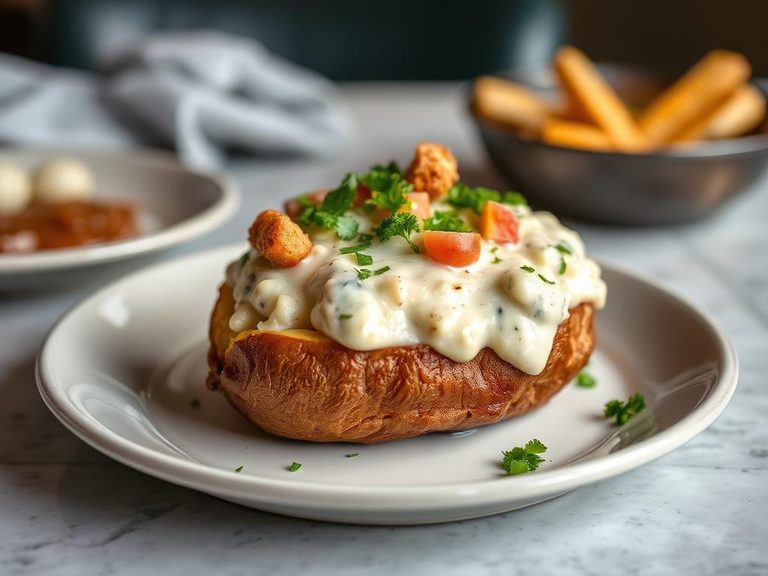
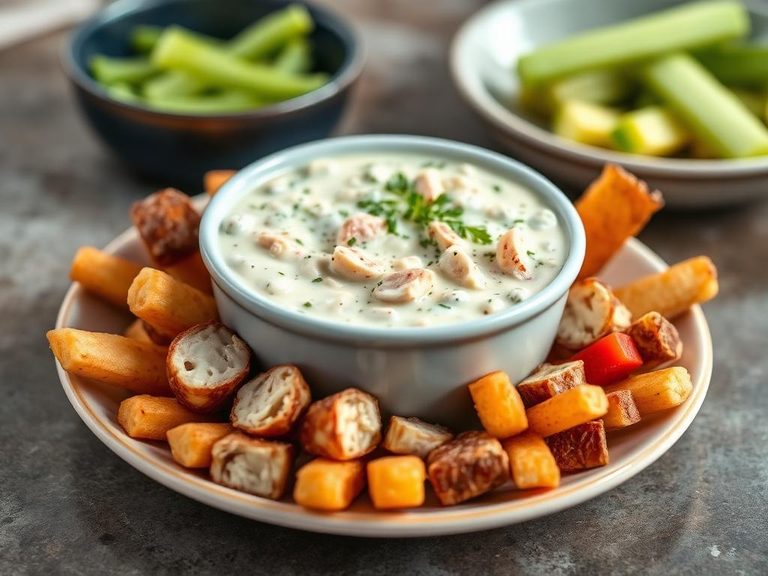
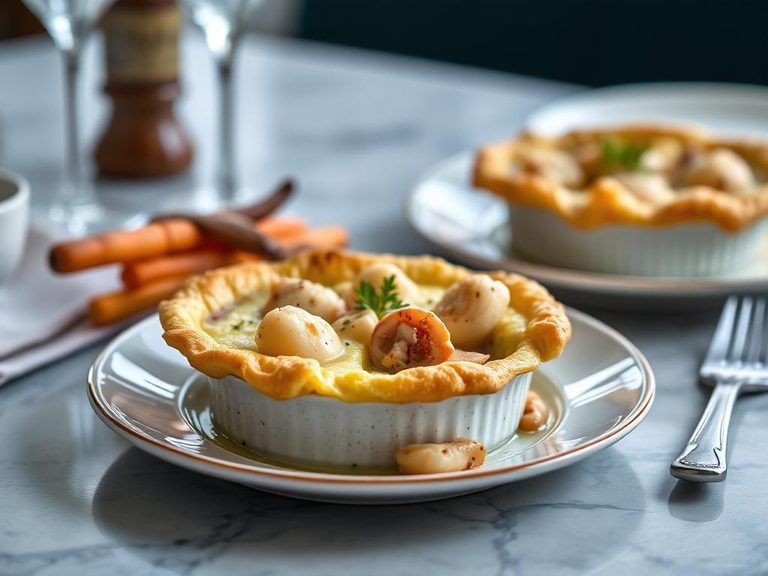
🌍 Where it's eaten
💡 Did you know?
The 'condensed' format was popularized by Campbell's in the early 20th century, requiring consumers to add water or milk—a marketing strategy that reduced shipping weight and storage space, revolutionizing the canned soup industry.
Full nutrition (USDA data · scales with serving)
| Water | 81.5 g |
| Energy | 72.0 kcal |
| Energy | 303 kj |
| Protein | 3.2 g |
| Total lipid (fat) | 2.1 g |
| Ash | 3.0 g |
| Carbohydrate, by difference | 10.3 g |
| Fiber, total dietary | 0.70 g |
| Total Sugars | 0.38 g |
| Calcium, Ca | 16.0 mg |
| Iron, Fe | 2.5 mg |
| Magnesium, Mg | 13.0 mg |
| Phosphorus, P | 260 mg |
| Potassium, K | 221 mg |
| Sodium, Na | 516 mg |
| Zinc, Zn | 0.37 mg |
| Copper, Cu | 0.24 mg |
| Manganese, Mn | 0.17 mg |
| Selenium, Se | 6.3 ug |
| Vitamin C, total ascorbic acid | 4.1 mg |
| Thiamin | 0.13 mg |
| Riboflavin | 0.17 mg |
| Niacin | 1.6 mg |
| Pantothenic acid | 0.23 mg |
| Vitamin B-6 | 0.10 mg |
| Folate, total | 14.0 ug |
| Folic acid | 0.00 ug |
| Folate, food | 14.0 ug |
| Folate, DFE | 14.0 ug |
| Choline, total | 6.9 mg |
| Vitamin B-12 | 9.5 ug |
| Vitamin B-12, added | 0.00 ug |
| Vitamin A, RAE | 17.0 ug |
| Retinol | 17.0 ug |
| Carotene, beta | 0.00 ug |
| Carotene, alpha | 0.00 ug |
| Cryptoxanthin, beta | 0.00 ug |
| Vitamin A, IU | 58.0 iu |
| Lycopene | 0.00 ug |
| Lutein + zeaxanthin | 3.0 ug |
| Vitamin E (alpha-tocopherol) | 0.42 mg |
| Vitamin E, added | 0.00 mg |
| Tocopherol, beta | 0.00 mg |
| Tocopherol, gamma | 0.00 mg |
| Tocopherol, delta | 0.00 mg |
| Vitamin D (D2 + D3), International Units | 0.00 iu |
| Vitamin D (D2 + D3) | 0.00 ug |
| Vitamin K (phylloquinone) | 0.80 ug |
| Alcohol, ethyl | 0.00 g |
| Caffeine | 0.00 mg |
| Theobromine | 0.00 mg |
Fat & fatty acid profile (per 100g)
| Fatty acids, total saturated | 0.96 g |
| SFA 4:0 | 0.00 g |
| SFA 6:0 | 0.00 g |
| SFA 8:0 | 0.00 g |
| SFA 10:0 | 0.00 g |
| SFA 12:0 | 0.00 g |
| SFA 14:0 | 0.01 g |
| SFA 15:0 | 0.00 g |
| SFA 16:0 | 0.77 g |
| SFA 17:0 | 0.00 g |
| SFA 18:0 | 0.14 g |
| SFA 20:0 | 0.03 g |
| SFA 22:0 | 0.00 g |
| Fatty acids, total monounsaturated | 0.00 g |
| MUFA 16:1 | 0.00 g |
| MUFA 18:1 | 0.00 g |
| MUFA 20:1 | 0.00 g |
| MUFA 22:1 | 0.00 g |
| Fatty acids, total polyunsaturated | 0.96 g |
| PUFA 18:2 | 0.90 g |
| PUFA 18:3 | 0.02 g |
| PUFA 18:4 | 0.00 g |
| PUFA 20:4 | 0.01 g |
| PUFA 20:5 n-3 (EPA) | 0.01 g |
| PUFA 22:5 n-3 (DPA) | 0.01 g |
| PUFA 22:6 n-3 (DHA) | 0.01 g |
| Fatty acids, total trans | 0.01 g |
| Cholesterol | 6.0 mg |
Amino acid profile (per 100g)
Estimated from Soup, bean with pork, canned, condensed — USDA does not publish this profile for Soup.
| Tryptophan | 0.06 g |
| Threonine | 0.24 g |
| Isoleucine | 0.29 g |
| Leucine | 0.48 g |
| Lysine | 0.40 g |
| Methionine | 0.07 g |
| Cystine | 0.07 g |
| Phenylalanine | 0.33 g |
| Tyrosine | 0.18 g |
| Valine | 0.32 g |
| Arginine | 0.31 g |
| Histidine | 0.15 g |
| Alanine | 0.29 g |
| Aspartic acid | 0.66 g |
| Glutamic acid | 1.1 g |
| Glycine | 0.28 g |
| Proline | 0.27 g |
| Serine | 0.29 g |
FAQ
How do I prepare it from the can?
Empty the condensed soup into a saucepan. Fill the empty can with milk or water (or a mix for creaminess) and add it to the pot. Heat gently over medium heat, stirring occasionally, until hot and steaming. Do not boil.
Can I use it as a cooking ingredient?
Yes, it's excellent as a creamy base. Use it in casseroles, to make seafood pies, as a sauce for fish, or to enrich pasta dishes. Its concentrated flavor and thick texture are perfect for adding depth.
Is it gluten-free?
Not typically. Most commercial canned clam chowder contains wheat flour as a thickening agent. Always check the ingredient list for 'wheat' or look for a specifically labeled gluten-free version.
Nutrient density (calculated · NRF9.3)
Nutrient Rich Foods index: beneficial nutrients (protein, fiber, vitamins, minerals) minus saturated fat, added sugar & sodium, per 100 kcal.
NRF9.3 index — Fulgoni, Keast & Drewnowski, 2009. Computed from USDA nutrients.
Weight-loss friendliness (composite index)
Energy density 0.72 kcal/g · 18% calories from protein · 0.7 g fiber · 0.4 g sugar per 100 g.
Composite of energy density (Rolls et al., 1999), protein & fiber satiety, minus sugar. A calculated heuristic — ranks satiety-per-calorie, not a clinical measure.
Dietary load (calculated from USDA values)
Potential renal acid load. Positive = acid-forming, negative = alkaline-forming.
Sodium-to-potassium ratio: 2.33 (lower is better — aim for ≤ 1)
Sodium:potassium per WHO potassium guidance. Computed from USDA nutrients.