Sausage, pork, chorizo, link or ground, cooked, pan-fried
Whole food · Sausages and Luncheon Meats
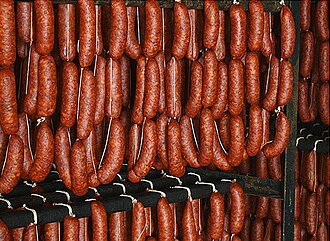
Photo: Wikipedia
Chorizo is a robust, deeply seasoned pork sausage, defined by its vibrant red hue from smoked paprika and its complex, garlicky flavor. Whether in a firm link or crumbled ground form, it develops a satisfyingly crisp, slightly chewy texture when pan-fried, releasing a rich, aromatic fat that infuses the entire dish. Nutritionally, it is a high-energy, protein-dense food, with most of its calories coming from fat, making it a potent source of satiety and flavor.
💚 Why it's loved
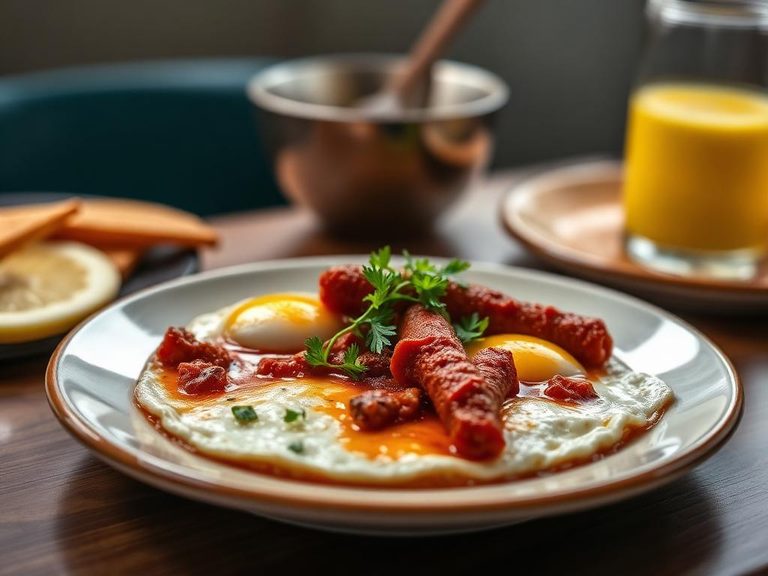
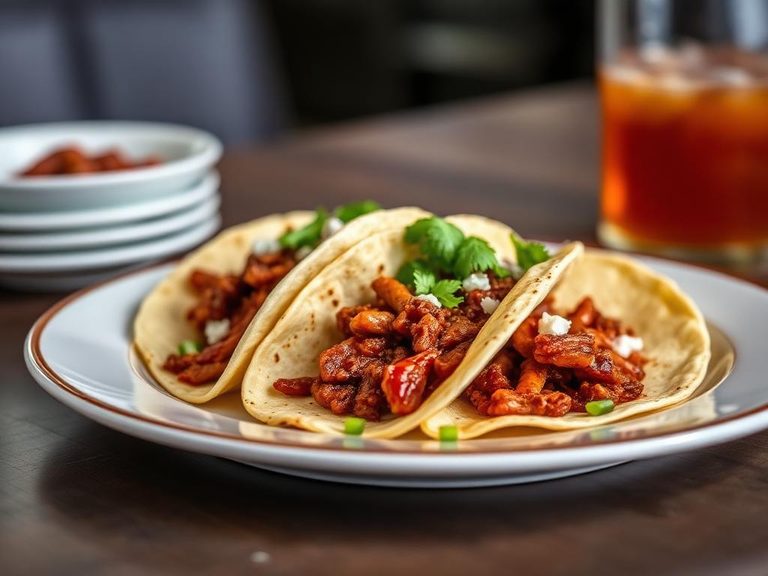
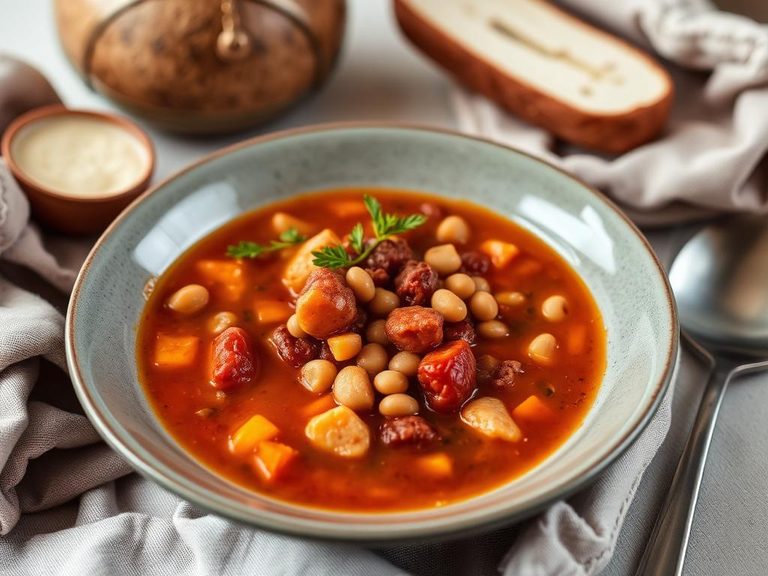
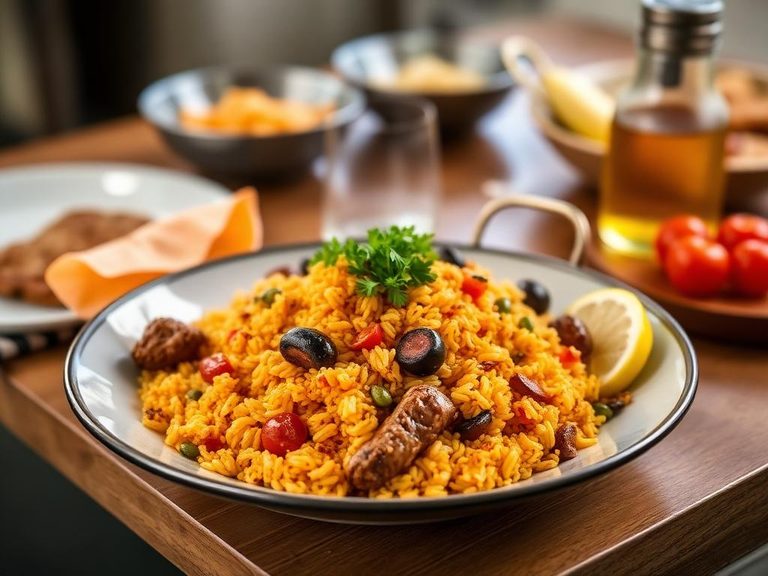
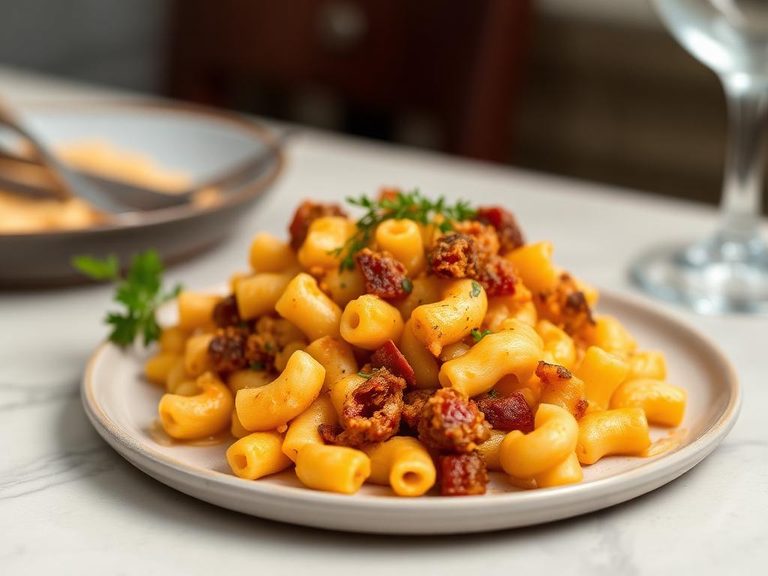
People adore chorizo for its bold, smoky, and garlicky flavor profile that can transform a simple dish into something extraordinary. Its versatility is legendary, seamlessly moving from breakfast tacos to pasta sauces, soups, and tapas, making it a beloved staple in many cultures.
⚠️ Watch-outs & how to enjoy it better
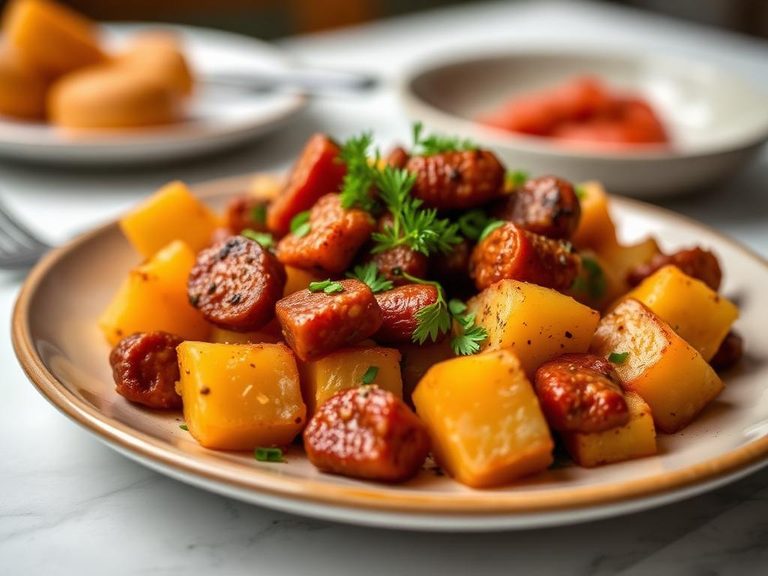
Due to its high fat and sodium content, chorizo should be consumed in moderation by those monitoring heart health or blood pressure. To counteract this, pair it with fiber-rich vegetables (like bell peppers or onions) to slow fat absorption and balance the meal, and opt for smaller, flavorful portions rather than large servings.
Key benefits
- Excellent source of high-quality protein for muscle maintenance and satiety.
- Rich in B vitamins, particularly B12, which supports nerve function and energy metabolism.
- The spice blend, especially paprika, provides antioxidants like capsanthin.
- High fat content aids in the absorption of fat-soluble vitamins (A, D, E, K) from other foods.
- A small amount provides intense flavor, reducing the need for additional seasonings.
🍽️ Popular dishes
🌍 Where it's eaten
💡 Did you know?
The vibrant red color of chorizo comes from pimentón (smoked paprika), which was introduced to Spain from the Americas in the 16th century, fundamentally transforming European cuisine.
Full nutrition (scales with serving)
| Water | 46.3 g |
| Energy | 346 kcal |
| Energy | 1450 kj |
| Nitrogen | 3.1 g |
| Protein | 19.3 g |
| Total lipid (fat) | 28.1 g |
| Total fat (NLEA) | 26.0 g |
| Ash | 3.7 g |
| Carbohydrate, by difference | 2.6 g |
| Calcium, Ca | 37.0 mg |
| Iron, Fe | 2.3 mg |
| Magnesium, Mg | 30.1 mg |
| Phosphorus, P | 207 mg |
| Potassium, K | 435 mg |
| Sodium, Na | 983 mg |
| Zinc, Zn | 2.2 mg |
| Copper, Cu | 0.13 mg |
| Manganese, Mn | 0.19 mg |
| Selenium, Se | 25.9 ug |
| Thiamin | 0.36 mg |
| Riboflavin | 0.42 mg |
| Niacin | 7.1 mg |
| Pantothenic acid | 1.2 mg |
| Vitamin B-6 | 0.55 mg |
| Folate, total | 10.0 ug |
| Choline, total | 97.1 mg |
| Choline, free | 42.7 mg |
| Choline, from phosphocholine | 40.3 mg |
| Choline, from phosphotidyl choline | 0.40 mg |
| Choline, from glycerophosphocholine | 2.8 mg |
| Choline, from sphingomyelin | 10.9 mg |
| Betaine | 6.1 mg |
| Vitamin B-12 | 1.2 ug |
| Vitamin A, RAE | 0.00 ug |
| Retinol | 0.00 ug |
| Vitamin E (alpha-tocopherol) | 1.5 mg |
| Tocopherol, beta | 0.00 mg |
| Tocopherol, gamma | 0.00 mg |
| Tocopherol, delta | 2.4 mg |
| Tocotrienol, alpha | 0.00 mg |
| Tocotrienol, beta | 0.00 mg |
| Tocotrienol, gamma | 0.00 mg |
| Tocotrienol, delta | 0.00 mg |
| Vitamin K (phylloquinone) | 6.0 ug |
| Vitamin K (Dihydrophylloquinone) | 0.00 ug |
| Vitamin K (Menaquinone-4) | 16.8 ug |
| Fatty acids, total saturated | 9.4 g |
| SFA 4:0 | 0.01 g |
| SFA 6:0 | 0.00 g |
| SFA 8:0 | 0.00 g |
| SFA 10:0 | 0.02 g |
| SFA 11:0 | 0.00 g |
| SFA 12:0 | 0.02 g |
| SFA 14:0 | 0.35 g |
| SFA 15:0 | 0.01 g |
| SFA 16:0 | 5.9 g |
| SFA 17:0 | 0.07 g |
| SFA 18:0 | 3.0 g |
| SFA 20:0 | 0.06 g |
| SFA 22:0 | 0.01 g |
| SFA 24:0 | 0.00 g |
| Fatty acids, total monounsaturated | 11.7 g |
| MUFA 14:1 c | 0.01 g |
| MUFA 15:1 | 0.00 g |
| MUFA 16:1 c | 0.57 g |
| MUFA 17:1 | 0.06 g |
| MUFA 17:1 c | 0.06 g |
| MUFA 18:1 c | 10.8 g |
| MUFA 20:1 c | 0.25 g |
| MUFA 22:1 c | 0.01 g |
| MUFA 22:1 n-9 | 0.01 g |
| MUFA 24:1 c | 0.00 g |
| Fatty acids, total polyunsaturated | 4.7 g |
| PUFA 18:2 c | 4.2 g |
| PUFA 18:2 n-6 c,c | 4.1 g |
| PUFA 18:2 CLAs | 0.03 g |
| PUFA 18:3 c | 0.19 g |
| PUFA 18:3 n-3 c,c,c (ALA) | 0.18 g |
| PUFA 18:3 n-6 c,c,c | 0.01 g |
| PUFA 18:4 | 0.00 g |
| PUFA 20:2 c | 0.18 g |
| PUFA 20:2 n-6 c,c | 0.18 g |
| PUFA 20:3 c | 0.06 g |
| PUFA 20:3 n-3 | 0.03 g |
| PUFA 20:3 n-6 | 0.03 g |
| PUFA 20:3 n-9 | 0.00 g |
| PUFA 20:4 | 0.13 g |
| PUFA 20:4c | 0.13 g |
| PUFA 20:5c | 0.00 g |
| PUFA 20:5 n-3 (EPA) | 0.00 g |
| PUFA 22:2 | 0.00 g |
| PUFA 22:5 c | 0.02 g |
| PUFA 22:4 | 0.03 g |
| PUFA 22:5 n-3 (DPA) | 0.02 g |
| PUFA 22:6 c | 0.01 g |
| PUFA 22:6 n-3 (DHA) | 0.01 g |
| Fatty acids, total trans | 0.12 g |
| Fatty acids, total trans-monoenoic | 0.09 g |
| TFA 16:1 t | 0.00 g |
| TFA 18:1 t | 0.09 g |
| TFA 22:1 t | 0.00 g |
| Fatty acids, total trans-dienoic | 0.02 g |
| TFA 18:2 t not further defined | 0.02 g |
| Fatty acids, total trans-polyenoic | 0.00 g |
| TFA 18:3 t | 0.00 g |
| Cholesterol | 107 mg |
FAQ
What is the difference between Mexican and Spanish chorizo?
Spanish chorizo is typically cured, firm, and can be eaten as-is, while Mexican chorizo is raw, ground, and must be cooked before eating. Spanish chorizo is often smoked, whereas Mexican chorizo relies on fresh chilies and spices.
Is chorizo gluten-free?
Traditional chorizo is naturally gluten-free, but some commercial brands may add fillers or binders containing wheat. Always check the ingredient list for gluten-based additives.
How should I store leftover cooked chorizo?
Store cooked chorizo in an airtight container in the refrigerator for up to 3-4 days. For longer storage, freeze it for up to 2-3 months. Reheat thoroughly before consuming.
Can I use chorizo in a healthy diet?
Yes, in moderation. Use it as a flavor enhancer rather than the main protein source, and pair it with plenty of vegetables, whole grains, and lean proteins to balance the meal.