

Sauce, white, thin, prepared-from-recipe, with butter
Whole food · Soups, Sauces, and Gravies

Photo: Wikipedia
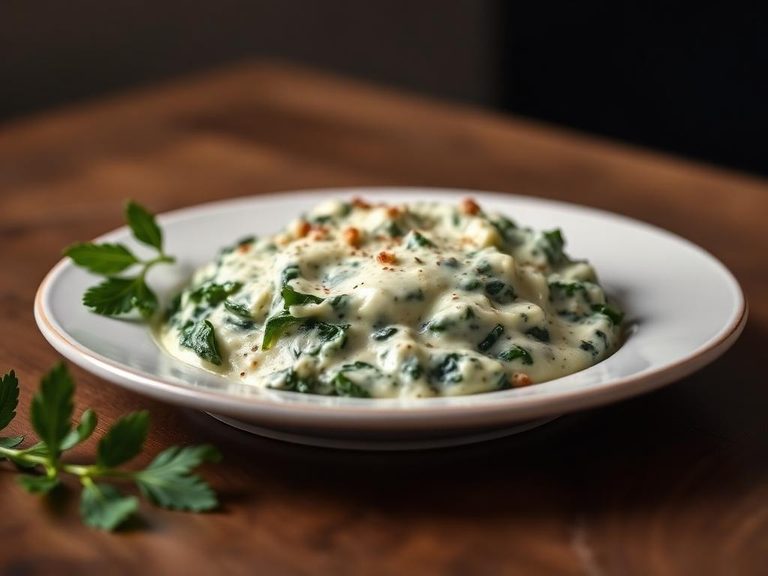
This is a classic, velvety white sauce (béchamel) enriched with butter, creating a smooth, pourable consistency with a mild, creamy, and subtly savory flavor. Nutritionally, it's a moderate source of protein and carbs, with a relatively low fat content for a sauce, thanks to its thin, broth-based preparation. It serves as a foundational 'mother sauce' in cooking, prized for its ability to carry and meld other flavors.
Calorie split: 22% protein · 46% carbs · 32% fat
↓ Full nutrition💚 Why it's loved
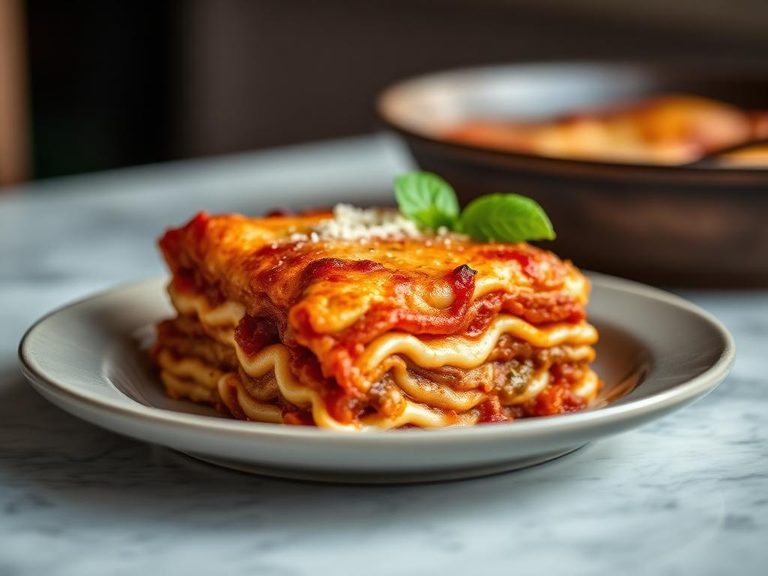
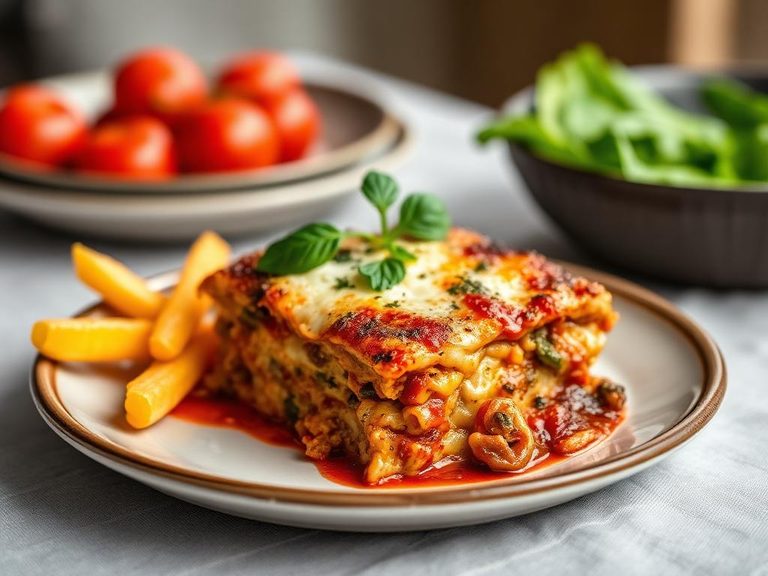
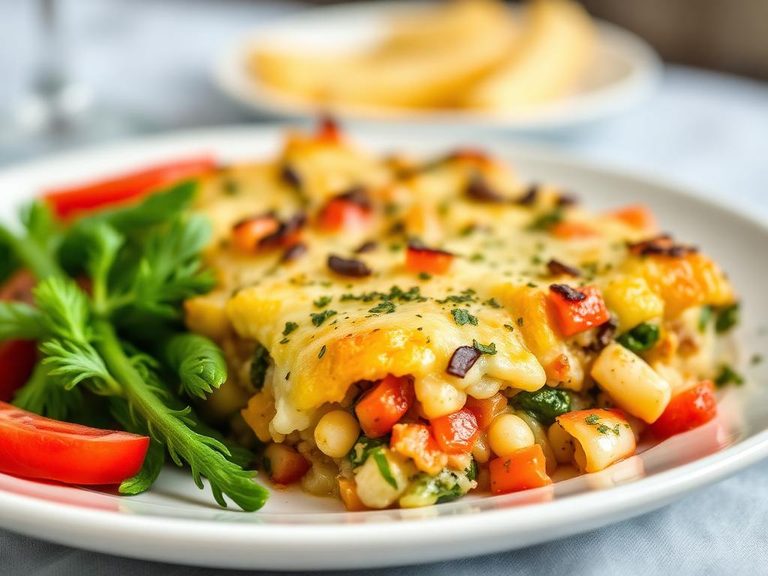
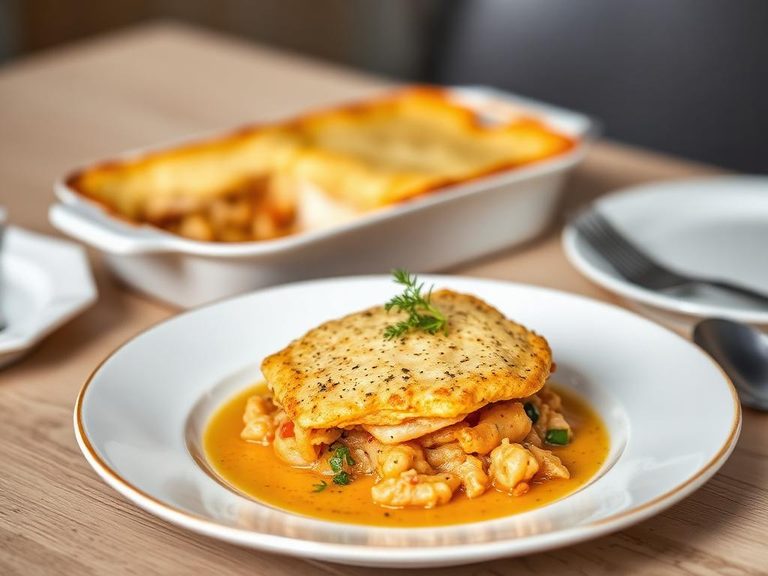
People adore it for its comforting, creamy texture and its incredible versatility as a blank canvas—it can be subtly seasoned or become the star with additions like cheese, herbs, or spices. It's the comforting backbone of dishes from lasagna to gratins, evoking a sense of home cooking.
⚠️ Watch-outs & how to enjoy it better
Its primary carbohydrate content, including sugars, can lead to blood-sugar spikes if consumed in large amounts without balancing nutrients. To counteract this, pair it with high-fiber vegetables or a lean protein source like chicken or fish. Those monitoring sodium should be mindful, as prepared recipes often include salt; using low-sodium broth and seasoning with herbs can help.
Key benefits
- Provides a quick source of energy from carbohydrates
- Contains protein for muscle maintenance
- Low in fat compared to many cream-based sauces
- Versatile base for countless dishes and flavor variations
- Adds moisture and richness to lean proteins and vegetables
🍽️ Popular dishes

🌍 Where it's eaten
💡 Did you know?
Béchamel, the 'mother sauce' this is based on, is named after Louis de Béchameil, a 17th-century French court steward, though he likely never cooked it himself.
Full nutrition (USDA data · scales with serving)
| Water | 84.0 g |
| Energy | 72.0 kcal |
| Energy | 301 kj |
| Protein | 4.0 g |
| Total lipid (fat) | 2.6 g |
| Ash | 1.2 g |
| Carbohydrate, by difference | 8.3 g |
| Fiber, total dietary | 0.10 g |
| Total Sugars | 5.3 g |
| Calcium, Ca | 131 mg |
| Iron, Fe | 0.22 mg |
| Magnesium, Mg | 12.0 mg |
| Phosphorus, P | 110 mg |
| Potassium, K | 167 mg |
| Sodium, Na | 184 mg |
| Zinc, Zn | 0.47 mg |
| Copper, Cu | 0.02 mg |
| Manganese, Mn | 0.03 mg |
| Selenium, Se | 4.7 ug |
| Vitamin C, total ascorbic acid | 0.00 mg |
| Thiamin | 0.07 mg |
| Riboflavin | 0.21 mg |
| Niacin | 0.32 mg |
| Pantothenic acid | 0.39 mg |
| Vitamin B-6 | 0.04 mg |
| Folate, total | 10.0 ug |
| Folic acid | 4.0 ug |
| Folate, food | 5.0 ug |
| Folate, DFE | 13.0 ug |
| Vitamin B-12 | 0.55 ug |
| Vitamin B-12, added | 0.00 ug |
| Vitamin A, RAE | 84.0 ug |
| Retinol | 83.0 ug |
| Carotene, beta | 5.0 ug |
| Carotene, alpha | 0.00 ug |
| Cryptoxanthin, beta | 0.00 ug |
| Vitamin A, IU | 286 iu |
| Lycopene | 0.00 ug |
| Lutein + zeaxanthin | 1.0 ug |
| Vitamin E (alpha-tocopherol) | 0.08 mg |
| Vitamin E, added | 0.00 mg |
| Vitamin K (phylloquinone) | 0.20 ug |
| Alcohol, ethyl | 0.00 g |
| Caffeine | 0.00 mg |
| Theobromine | 0.00 mg |
Fat & fatty acid profile (per 100g)
| Fatty acids, total saturated | 1.6 g |
| SFA 4:0 | 0.10 g |
| SFA 6:0 | 0.06 g |
| SFA 8:0 | 0.04 g |
| SFA 10:0 | 0.08 g |
| SFA 12:0 | 0.08 g |
| SFA 14:0 | 0.23 g |
| SFA 16:0 | 0.68 g |
| SFA 17:0 | 0.02 g |
| SFA 18:0 | 0.31 g |
| SFA 20:0 | 0.00 g |
| Fatty acids, total monounsaturated | 0.66 g |
| MUFA 16:1 | 0.03 g |
| MUFA 16:1 c | 0.03 g |
| MUFA 18:1 | 0.62 g |
| MUFA 18:1 c | 0.51 g |
| MUFA 20:1 | 0.00 g |
| MUFA 22:1 | 0.00 g |
| Fatty acids, total polyunsaturated | 0.11 g |
| PUFA 18:2 | 0.10 g |
| PUFA 18:2 n-6 c,c | 0.07 g |
| PUFA 18:2 CLAs | 0.01 g |
| PUFA 18:2 i | 0.01 g |
| PUFA 18:3 | 0.01 g |
| PUFA 18:3 n-3 c,c,c (ALA) | 0.01 g |
| PUFA 18:4 | 0.00 g |
| PUFA 20:4 | 0.00 g |
| PUFA 20:5 n-3 (EPA) | 0.00 g |
| PUFA 22:5 n-3 (DPA) | 0.00 g |
| PUFA 22:6 n-3 (DHA) | 0.00 g |
| Fatty acids, total trans | 0.10 g |
| Fatty acids, total trans-monoenoic | 0.09 g |
| TFA 18:1 t | 0.09 g |
| Fatty acids, total trans-polyenoic | 0.01 g |
| Cholesterol | 8.0 mg |
Amino acid profile (per 100g)
Estimated from Sauce, homemade, white, medium — USDA does not publish this profile for Sauce.
| Tryptophan | 0.04 g |
| Threonine | 0.14 g |
| Isoleucine | 0.19 g |
| Leucine | 0.30 g |
| Lysine | 0.24 g |
| Methionine | 0.08 g |
| Cystine | 0.03 g |
| Phenylalanine | 0.15 g |
| Tyrosine | 0.15 g |
| Valine | 0.20 g |
| Arginine | 0.11 g |
| Histidine | 0.08 g |
| Alanine | 0.10 g |
| Aspartic acid | 0.23 g |
| Glutamic acid | 0.64 g |
| Glycine | 0.07 g |
| Proline | 0.30 g |
| Serine | 0.17 g |
FAQ
How is this different from a heavy cream sauce?
This is a 'thin' prepared sauce, meaning it's likely thickened with a light roux (flour and butter) or a cornstarch slurry and thinned with broth or milk, making it lighter and less calorie-dense than a sauce thickened primarily with heavy cream.
Can I use this sauce if I'm lactose intolerant?
Traditional recipes contain butter and often milk, which have lactose. However, you can make a version using lactose-free dairy or plant-based butter and milk alternatives, ensuring the thickening agent (flour or starch) is gluten-free if needed.
Why does my homemade version turn out lumpy?
Lumps form when the flour isn't fully incorporated into the melted butter before adding liquid. To prevent this, whisk the flour into the butter to form a smooth paste (roux) and cook it for a minute before slowly whisking in warm liquid.
Nutrient density (calculated · NRF9.3)
Nutrient Rich Foods index: beneficial nutrients (protein, fiber, vitamins, minerals) minus saturated fat, added sugar & sodium, per 100 kcal.
NRF9.3 index — Fulgoni, Keast & Drewnowski, 2009. Computed from USDA nutrients.
Weight-loss friendliness (composite index)
Energy density 0.72 kcal/g · 22% calories from protein · 0.1 g fiber · 5.3 g sugar per 100 g.
Composite of energy density (Rolls et al., 1999), protein & fiber satiety, minus sugar. A calculated heuristic — ranks satiety-per-calorie, not a clinical measure.
Dietary load (calculated from USDA values)
Potential renal acid load. Positive = acid-forming, negative = alkaline-forming.
Sodium-to-potassium ratio: 1.10 (lower is better — aim for ≤ 1)
Sodium:potassium per WHO potassium guidance. Computed from USDA nutrients.