

Puddings, vanilla, dry mix, regular, prepared with whole milk
Whole food · Sweets

Photo: Wikipedia
This is the classic, creamy, and comforting vanilla pudding made from a simple dry mix and whole milk. It has a smooth, thick, spoonable texture with a sweet, nostalgic vanilla flavor. Nutritionally, it's a moderate-energy treat primarily composed of carbohydrates from sugar and starch.
Calorie split: 10% protein · 67% carbs · 23% fat
↓ Full nutrition💚 Why it's loved
People love it for its simple, sweet vanilla flavor and smooth, creamy texture that evokes childhood comfort and nostalgia. It's a versatile base that can be enjoyed plain or easily dressed up with toppings like fruit, whipped cream, or cookies.
⚠️ Watch-outs & how to enjoy it better
The high sugar content (over 17g per 100g) can lead to blood sugar spikes, making it less suitable for those managing diabetes or watching sugar intake. To counteract this, practice portion control or pair it with a source of protein or healthy fat, like a handful of nuts, to help slow sugar absorption.
Key benefits
- Quick and easy to prepare at home
- Provides a source of calcium from whole milk
- Offers a quick source of energy from carbohydrates
- A familiar, comforting dessert for many cultures
🍽️ Popular dishes

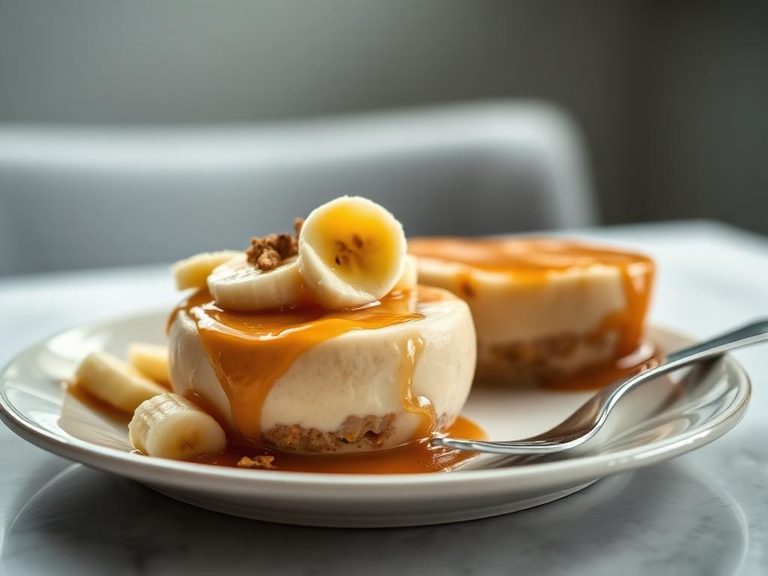
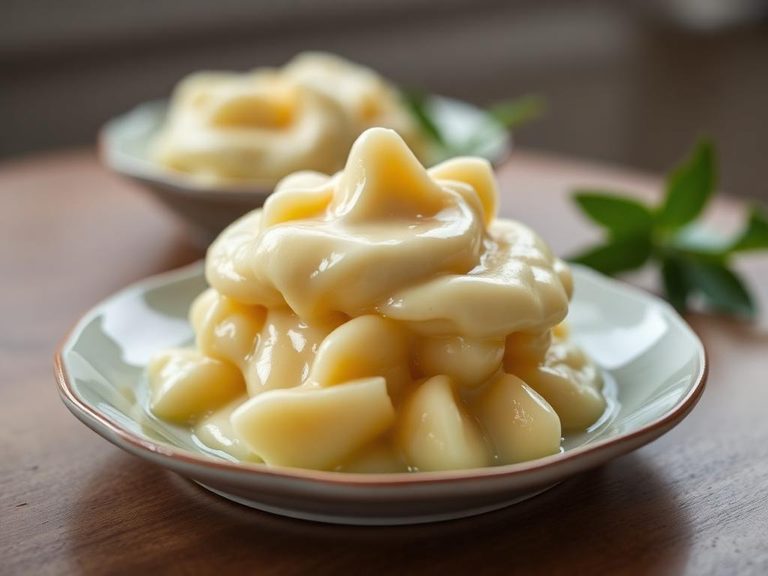
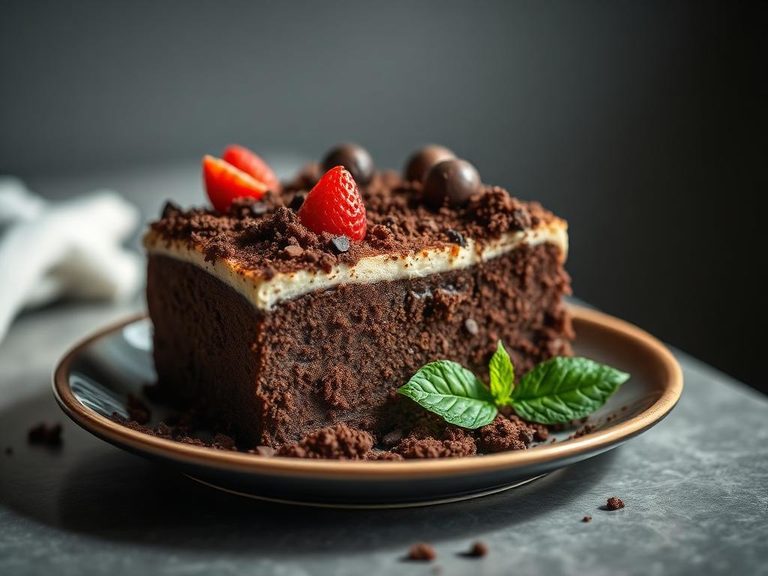
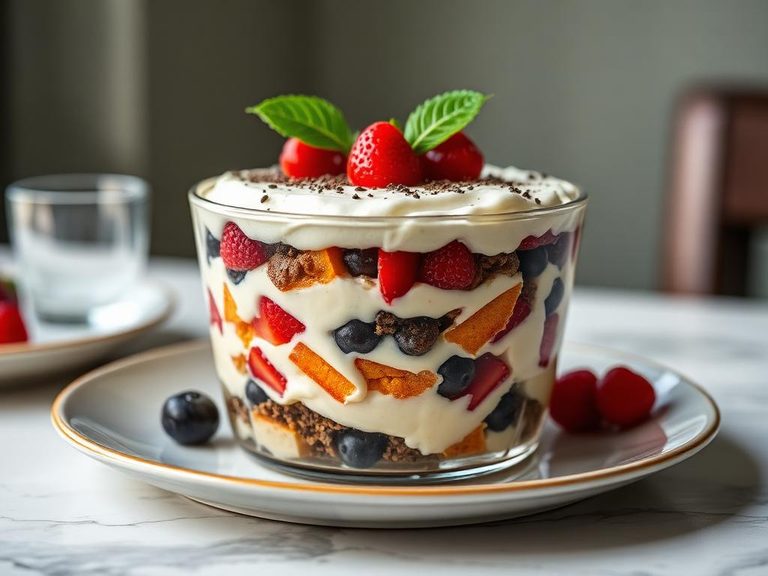
🌍 Where it's eaten
💡 Did you know?
The thickening agent in most dry pudding mixes is modified cornstarch, which is pre-cooked and dried, allowing it to thicken with cold milk without the lumps associated with raw starch.
Full nutrition (USDA data · scales with serving)
| Water | 74.5 g |
| Energy | 113 kcal |
| Energy | 473 kj |
| Protein | 2.8 g |
| Total lipid (fat) | 2.9 g |
| Ash | 0.90 g |
| Carbohydrate, by difference | 18.9 g |
| Fiber, total dietary | 0.10 g |
| Total Sugars | 17.1 g |
| Calcium, Ca | 99.0 mg |
| Iron, Fe | 0.04 mg |
| Magnesium, Mg | 9.0 mg |
| Phosphorus, P | 74.0 mg |
| Potassium, K | 119 mg |
| Sodium, Na | 156 mg |
| Zinc, Zn | 0.33 mg |
| Copper, Cu | 0.03 mg |
| Manganese, Mn | 0.01 mg |
| Selenium, Se | 3.3 ug |
| Vitamin C, total ascorbic acid | 0.00 mg |
| Thiamin | 0.04 mg |
| Riboflavin | 0.15 mg |
| Niacin | 0.08 mg |
| Pantothenic acid | 0.33 mg |
| Vitamin B-6 | 0.03 mg |
| Folate, total | 4.0 ug |
| Folic acid | 0.00 ug |
| Folate, food | 4.0 ug |
| Folate, DFE | 4.0 ug |
| Choline, total | 11.2 mg |
| Vitamin B-12 | 0.31 ug |
| Vitamin B-12, added | 0.00 ug |
| Vitamin A, RAE | 40.0 ug |
| Retinol | 40.0 ug |
| Carotene, beta | 6.0 ug |
| Carotene, alpha | 0.00 ug |
| Cryptoxanthin, beta | 0.00 ug |
| Vitamin A, IU | 141 iu |
| Lycopene | 0.00 ug |
| Lutein + zeaxanthin | 0.00 ug |
| Vitamin E (alpha-tocopherol) | 0.06 mg |
| Vitamin E, added | 0.00 mg |
| Vitamin D (D2 + D3), International Units | 45.0 iu |
| Vitamin D (D2 + D3) | 1.1 ug |
| Vitamin D3 (cholecalciferol) | 1.1 ug |
| Vitamin K (phylloquinone) | 0.20 ug |
| Vitamin K (Menaquinone-4) | 0.80 ug |
| Alcohol, ethyl | 0.00 g |
| Caffeine | 0.00 mg |
| Theobromine | 0.00 mg |
Fat & fatty acid profile (per 100g)
| Fatty acids, total saturated | 1.6 g |
| SFA 4:0 | 0.07 g |
| SFA 6:0 | 0.07 g |
| SFA 8:0 | 0.07 g |
| SFA 10:0 | 0.07 g |
| SFA 12:0 | 0.07 g |
| SFA 13:0 | 0.00 g |
| SFA 14:0 | 0.26 g |
| SFA 15:0 | 0.00 g |
| SFA 16:0 | 0.74 g |
| SFA 17:0 | 0.00 g |
| SFA 18:0 | 0.32 g |
| SFA 20:0 | 0.00 g |
| SFA 22:0 | 0.00 g |
| SFA 24:0 | 0.00 g |
| Fatty acids, total monounsaturated | 0.71 g |
| MUFA 14:1 | 0.00 g |
| MUFA 16:1 | 0.00 g |
| MUFA 18:1 | 0.71 g |
| MUFA 20:1 | 0.00 g |
| MUFA 22:1 | 0.00 g |
| Fatty acids, total polyunsaturated | 0.20 g |
| PUFA 18:2 | 0.13 g |
| PUFA 18:3 | 0.07 g |
| PUFA 18:4 | 0.00 g |
| PUFA 20:4 | 0.00 g |
| PUFA 20:5 n-3 (EPA) | 0.00 g |
| PUFA 22:5 n-3 (DPA) | 0.00 g |
| PUFA 22:6 n-3 (DHA) | 0.00 g |
| Cholesterol | 9.0 mg |
Amino acid profile (per 100g)
Estimated from Puddings, rice, dry mix, prepared with 2% milk — USDA does not publish this profile for Puddings.
| Tryptophan | 0.04 g |
| Threonine | 0.13 g |
| Isoleucine | 0.17 g |
| Leucine | 0.27 g |
| Lysine | 0.22 g |
| Methionine | 0.07 g |
| Cystine | 0.03 g |
| Phenylalanine | 0.14 g |
| Tyrosine | 0.14 g |
| Valine | 0.19 g |
| Arginine | 0.10 g |
| Histidine | 0.07 g |
| Alanine | 0.10 g |
| Aspartic acid | 0.21 g |
| Glutamic acid | 0.58 g |
| Glycine | 0.06 g |
| Proline | 0.27 g |
| Serine | 0.15 g |
FAQ
Can I make this pudding with a milk alternative?
Yes, but the texture and setting may vary. Plant-based milks like almond or soy can be used, but they often result in a thinner pudding. Using a milk with higher protein or fat content, or adding a teaspoon of cornstarch, can help improve thickness.
Why is my pudding lumpy?
Lumps often form if the dry mix isn't fully whisked into the cold milk before heating, or if the mixture isn't stirred constantly while cooking. Ensure a smooth slurry first and use a whisk over medium heat for the best results.
How long does prepared pudding last in the fridge?
When stored in an airtight container, prepared vanilla pudding will typically last for 3-4 days in the refrigerator. A skin may form on top; pressing plastic wrap directly onto the surface before chilling can prevent this.
Nutrient density (calculated · NRF9.3)
Nutrient Rich Foods index: beneficial nutrients (protein, fiber, vitamins, minerals) minus saturated fat, added sugar & sodium, per 100 kcal.
NRF9.3 index — Fulgoni, Keast & Drewnowski, 2009. Computed from USDA nutrients.
Weight-loss friendliness (composite index)
Energy density 1.13 kcal/g · 10% calories from protein · 0.1 g fiber · 17.1 g sugar per 100 g.
Composite of energy density (Rolls et al., 1999), protein & fiber satiety, minus sugar. A calculated heuristic — ranks satiety-per-calorie, not a clinical measure.
Dietary load (calculated from USDA values)
Potential renal acid load. Positive = acid-forming, negative = alkaline-forming.
Sodium-to-potassium ratio: 1.31 (lower is better — aim for ≤ 1)
Sodium:potassium per WHO potassium guidance. Computed from USDA nutrients.