

Persimmons, japanese, raw
Whole food · Fruits and Fruit Juices

Photo: Wikipedia
The Japanese persimmon, or Hachiya, is a glossy, acorn-shaped fruit that ripens to a deep, jewel-like orange. When fully ripe, its flesh becomes incredibly soft and jelly-like, offering a sweet, honeyed flavor with subtle notes of cinnamon and apricot. Nutritionally, it's a standout for providing a significant 3.6g of dietary fiber per 100g, supporting digestive health with very little fat.
Calorie split: 3% protein · 95% carbs · 2% fat
↓ Full nutrition💚 Why it's loved
People love it for its unique, custard-like texture and intensely sweet, complex flavor that tastes like autumn. It's a cherished seasonal treat in Japan, often enjoyed fresh, dried (hoshigaki), or as a symbol of good luck and longevity.
⚠️ Watch-outs & how to enjoy it better
The high sugar content (12.53g per 100g) can cause blood-sugar spikes if eaten in large quantities, especially on an empty stomach. Unripe persimmons are very astringent due to high tannin levels, which can cause a dry, puckering sensation in the mouth. To counteract this, always ensure the fruit is fully ripe and soft, and pair it with a source of protein or healthy fat (like nuts or cheese) to slow sugar absorption.
Key benefits
- Excellent source of dietary fiber (3.6g per 100g).
- Low in fat (0.19g per 100g) and calories (70 kcal per 100g).
- Provides natural sugars for quick energy.
- Rich in antioxidants like beta-carotene and vitamin A.
- Contains tannins that may have anti-inflammatory properties.
🍽️ Popular dishes
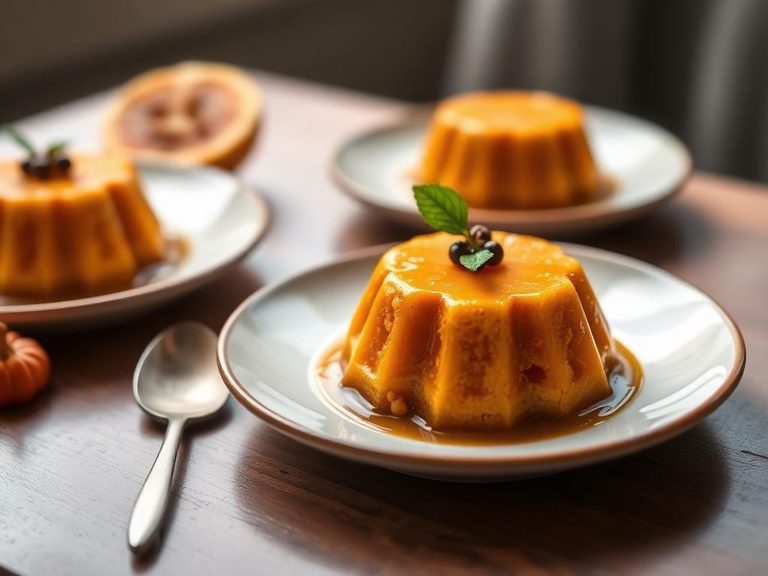
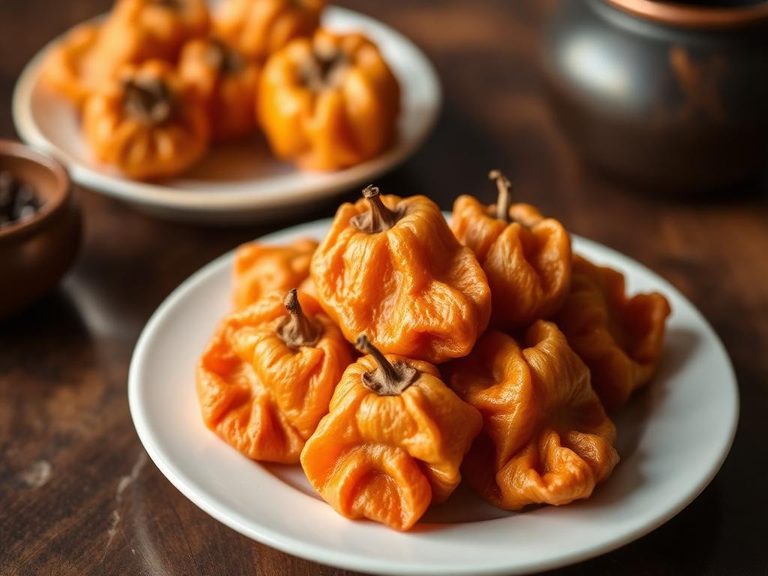
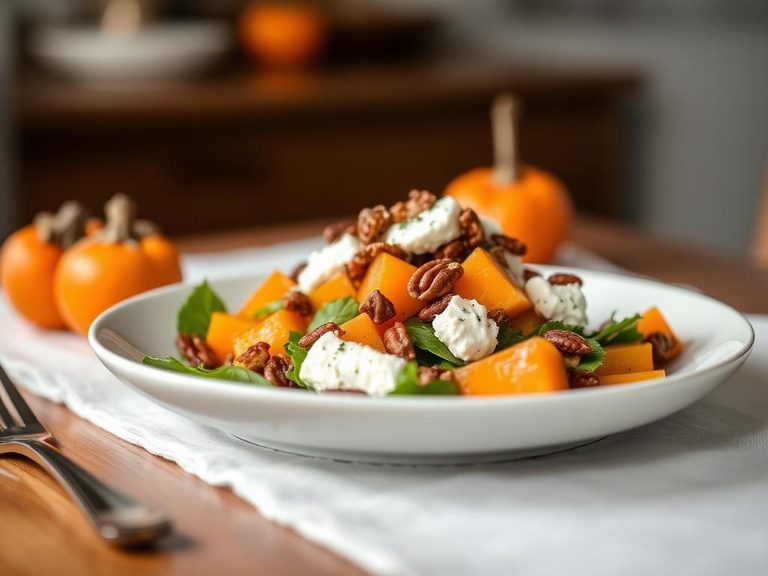
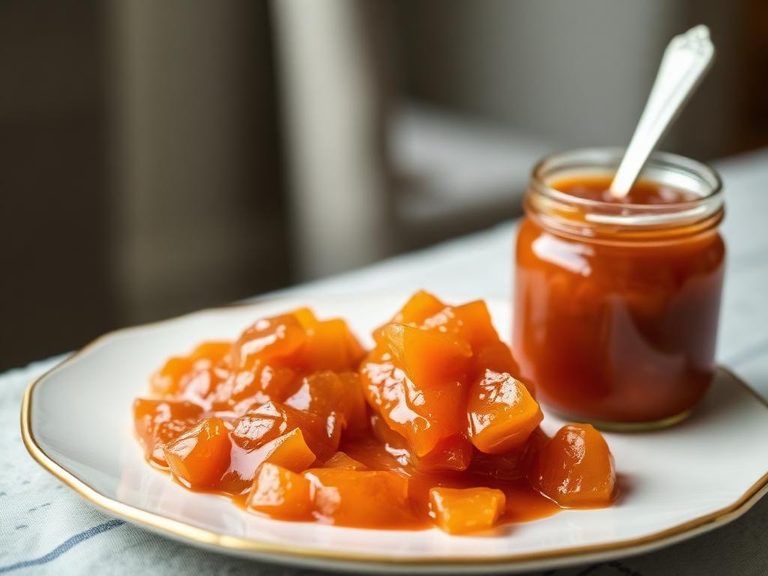
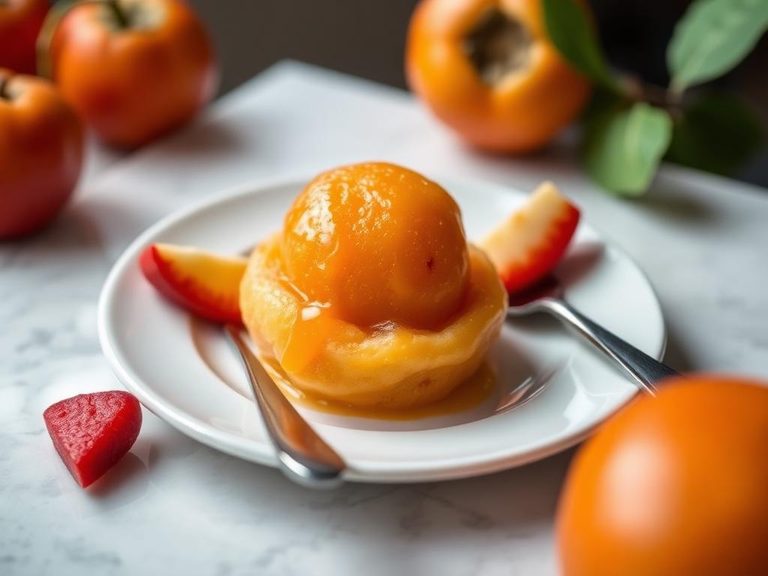
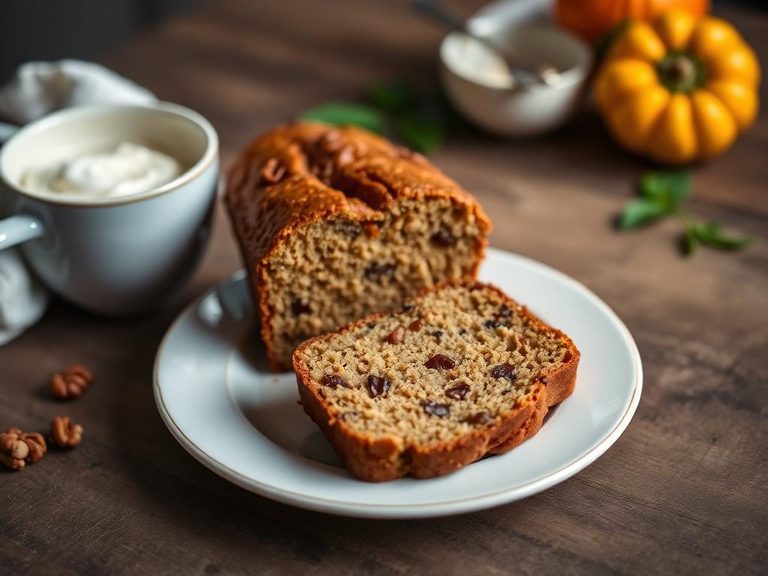
🌍 Where it's eaten
💡 Did you know?
The astringent tannins in unripe persimmons are so potent that they can cause 'persimmon bezoar'—a rare, hard mass that forms in the stomach if too many unripe ones are eaten, sometimes requiring surgical removal.
Full nutrition (USDA data · scales with serving)
| Water | 80.3 g |
| Energy | 70.0 kcal |
| Energy | 293 kj |
| Protein | 0.58 g |
| Total lipid (fat) | 0.19 g |
| Ash | 0.33 g |
| Carbohydrate, by difference | 18.6 g |
| Fiber, total dietary | 3.6 g |
| Total Sugars | 12.5 g |
| Sucrose | 1.5 g |
| Glucose | 5.4 g |
| Fructose | 5.6 g |
| Calcium, Ca | 8.0 mg |
| Iron, Fe | 0.15 mg |
| Magnesium, Mg | 9.0 mg |
| Phosphorus, P | 17.0 mg |
| Potassium, K | 161 mg |
| Sodium, Na | 1.0 mg |
| Zinc, Zn | 0.11 mg |
| Copper, Cu | 0.11 mg |
| Manganese, Mn | 0.35 mg |
| Selenium, Se | 0.60 ug |
| Vitamin C, total ascorbic acid | 7.5 mg |
| Thiamin | 0.03 mg |
| Riboflavin | 0.02 mg |
| Niacin | 0.10 mg |
| Vitamin B-6 | 0.10 mg |
| Folate, total | 8.0 ug |
| Folic acid | 0.00 ug |
| Folate, food | 8.0 ug |
| Folate, DFE | 8.0 ug |
| Choline, total | 7.6 mg |
| Vitamin B-12 | 0.00 ug |
| Vitamin B-12, added | 0.00 ug |
| Vitamin A, RAE | 81.0 ug |
| Retinol | 0.00 ug |
| Carotene, beta | 253 ug |
| Carotene, alpha | 0.00 ug |
| Cryptoxanthin, beta | 1447 ug |
| Vitamin A, IU | 1627 iu |
| Lycopene | 159 ug |
| Lutein + zeaxanthin | 834 ug |
| Vitamin E (alpha-tocopherol) | 0.73 mg |
| Vitamin E, added | 0.00 mg |
| Vitamin D (D2 + D3), International Units | 0.00 iu |
| Vitamin D (D2 + D3) | 0.00 ug |
| Vitamin K (phylloquinone) | 2.6 ug |
| Alcohol, ethyl | 0.00 g |
| Caffeine | 0.00 mg |
| Theobromine | 0.00 mg |
Fat & fatty acid profile (per 100g)
| Fatty acids, total saturated | 0.02 g |
| SFA 4:0 | 0.00 g |
| SFA 6:0 | 0.00 g |
| SFA 8:0 | 0.00 g |
| SFA 10:0 | 0.00 g |
| SFA 12:0 | 0.00 g |
| SFA 14:0 | 0.00 g |
| SFA 16:0 | 0.02 g |
| SFA 18:0 | 0.00 g |
| Fatty acids, total monounsaturated | 0.04 g |
| MUFA 16:1 | 0.00 g |
| MUFA 18:1 | 0.04 g |
| MUFA 20:1 | 0.00 g |
| MUFA 22:1 | 0.00 g |
| Fatty acids, total polyunsaturated | 0.04 g |
| PUFA 18:2 | 0.04 g |
| PUFA 18:3 | 0.00 g |
| PUFA 18:4 | 0.00 g |
| PUFA 20:4 | 0.00 g |
| PUFA 20:5 n-3 (EPA) | 0.00 g |
| PUFA 22:5 n-3 (DPA) | 0.00 g |
| PUFA 22:6 n-3 (DHA) | 0.00 g |
| Fatty acids, total trans | 0.00 g |
| Cholesterol | 0.00 mg |
| Phytosterols | 4.0 mg |
Amino acid profile (per 100g)
| Tryptophan | 0.01 g |
| Threonine | 0.03 g |
| Isoleucine | 0.03 g |
| Leucine | 0.04 g |
| Lysine | 0.03 g |
| Methionine | 0.01 g |
| Cystine | 0.01 g |
| Phenylalanine | 0.03 g |
| Tyrosine | 0.02 g |
| Valine | 0.03 g |
| Arginine | 0.03 g |
| Histidine | 0.01 g |
| Alanine | 0.03 g |
| Aspartic acid | 0.06 g |
| Glutamic acid | 0.08 g |
| Glycine | 0.03 g |
| Proline | 0.02 g |
| Serine | 0.02 g |
FAQ
How do I tell if a Japanese persimmon is ripe?
A ripe Japanese (Hachiya) persimmon will be very soft to the touch, almost like a water balloon, and will have a deep, uniform orange color. The skin may appear slightly wrinkled. It should yield easily to gentle pressure.
Can I eat the skin of a persimmon?
Yes, the skin of a ripe persimmon is edible and contains fiber. However, some people prefer to peel it, especially if the skin is thick or tough. The skin of the Fuyu variety is typically thinner and more palatable.
What's the difference between Hachiya and Fuyu persimmons?
Hachiya persimmons are acorn-shaped and must be eaten when very soft and ripe, as they are highly astringent when firm. Fuyu persimmons are squat and tomato-shaped, and can be eaten firm like an apple, with a crisp, sweet flesh.
Nutrient density (calculated · NRF9.3)
Nutrient Rich Foods index: beneficial nutrients (protein, fiber, vitamins, minerals) minus saturated fat, added sugar & sodium, per 100 kcal.
NRF9.3 index — Fulgoni, Keast & Drewnowski, 2009. Computed from USDA nutrients.
Weight-loss friendliness (composite index)
Energy density 0.70 kcal/g · 3% calories from protein · 3.6 g fiber · 12.5 g sugar per 100 g.
Composite of energy density (Rolls et al., 1999), protein & fiber satiety, minus sugar. A calculated heuristic — ranks satiety-per-calorie, not a clinical measure.
Dietary load (calculated from USDA values)
Potential renal acid load. Positive = acid-forming, negative = alkaline-forming.
Sodium-to-potassium ratio: 0.01 (lower is better — aim for ≤ 1)
Sodium:potassium per WHO potassium guidance. Computed from USDA nutrients.