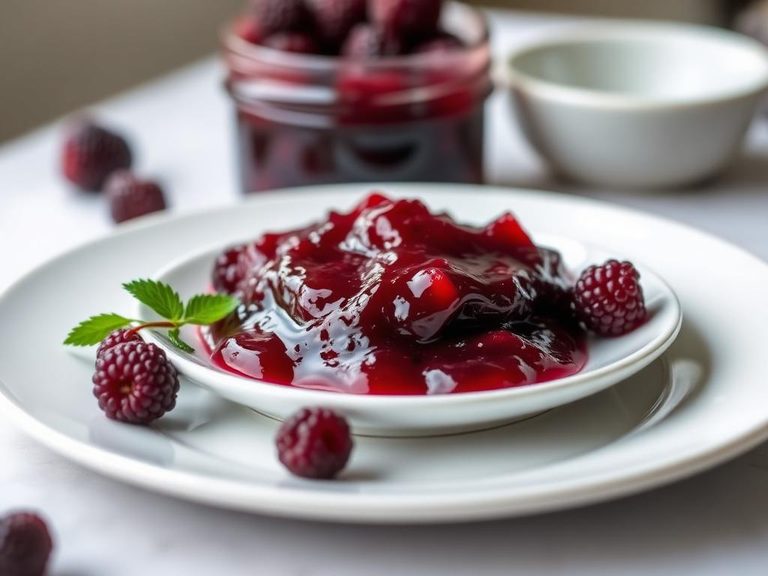
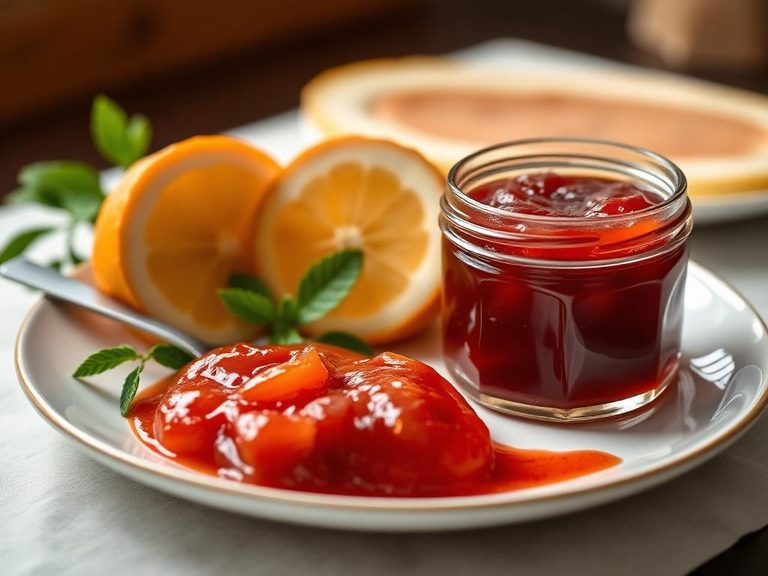
Persimmon Jam or Preserves
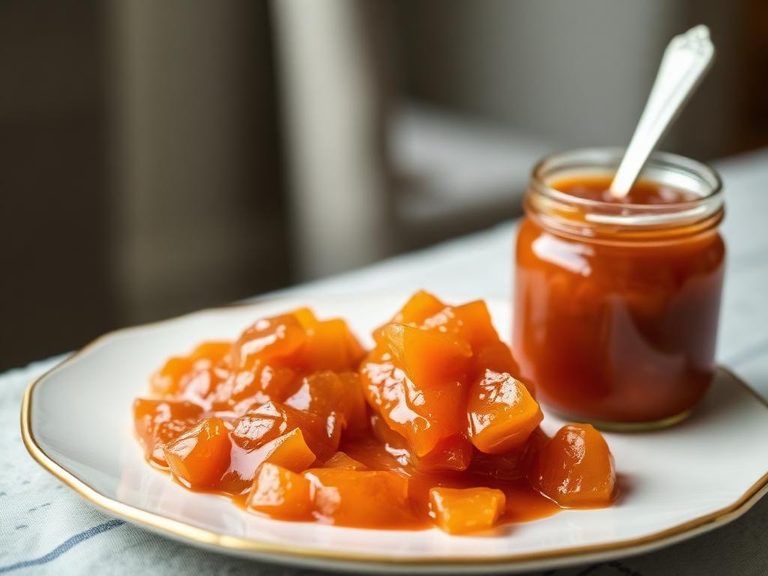
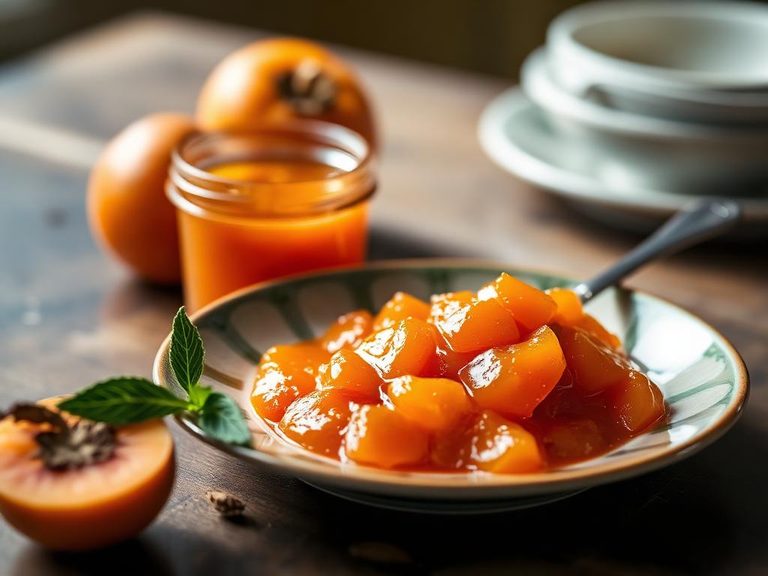
Persimmon jam is a sweet, spreadable preserve made by cooking ripe persimmons with sugar, often enhanced with lemon juice or warm spices like cinnamon. It's a popular way to use the abundant autumn fruit, with variations found in many temperate regions where persimmons grow, including East Asia, the Mediterranean, and the Americas.
🍽️ Nutrition at a glance
This is a carbohydrate-rich food, primarily from the fruit's natural sugars and any added sweeteners. It provides a good source of dietary fiber, vitamin A (from beta-carotene), and some vitamin C, with a typical 1-tablespoon serving containing roughly 50-60 calories.
Nutrition breakdown
| Calories | 50 kcal |
| Protein | 0.1 g |
| Carbs | 13 g |
| Fat | 0 g |
| Fiber | 0.2 g |
| Sugar | 11 g |
| Sodium | 5 mg |
| Vitamin A | 150 mcg RAE |
| Vitamin C | 2 mg |
| Potassium | 50 mg |
| Manganese | 0.1 mg |
| Vitamin B6 | 0.02 mg |
| Copper | 0.01 mg |
Per 1 tablespoon (20 g) · estimated, varies by recipe
💡 What's interesting
Unlike many jams that rely on pectin for setting, the natural pectin in persimmons is often sufficient, making it a fruit-forward preserve. Culturally, it's a way to preserve the short-lived autumn harvest of this 'food of the gods' (the meaning of its Greek name) for year-round enjoyment.