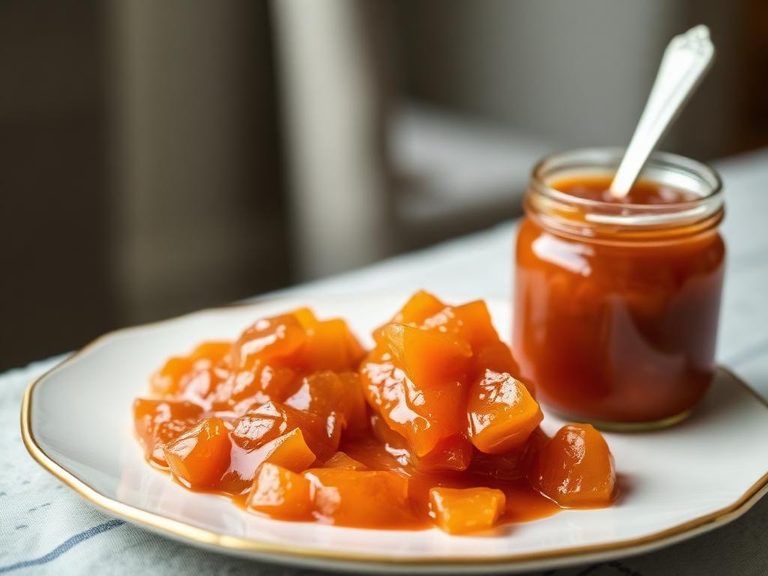
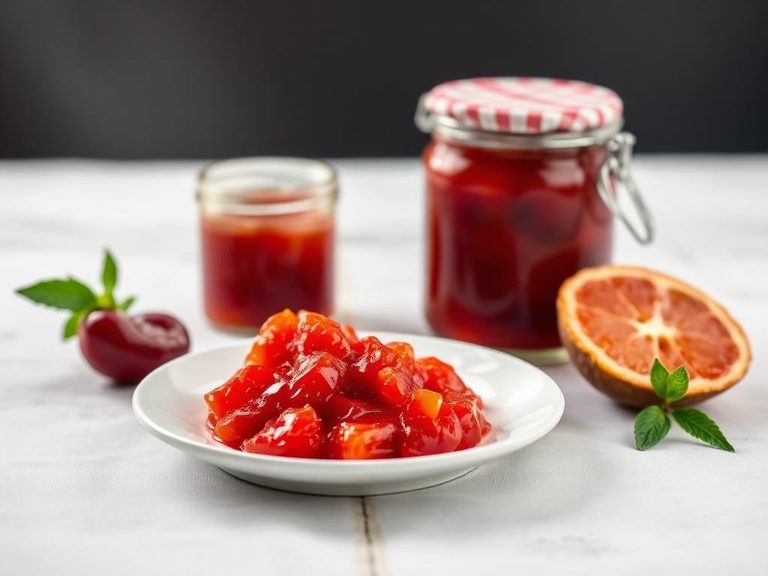
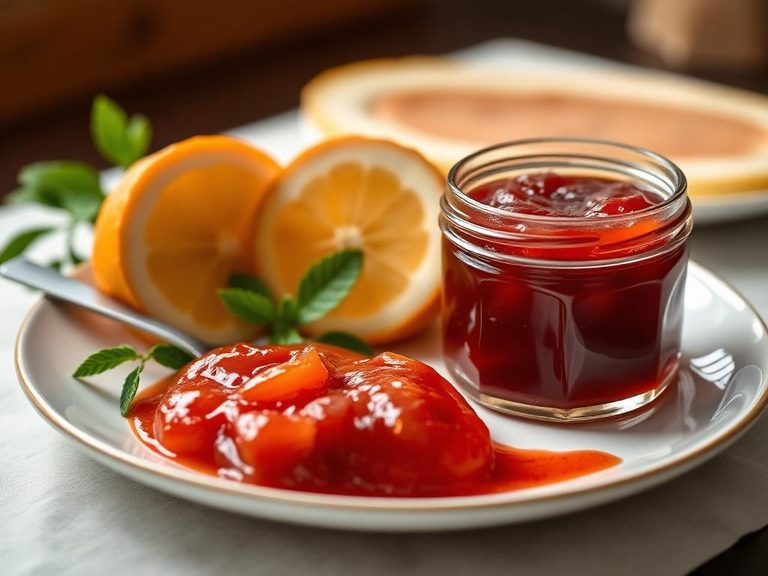
Berry jam or preserves
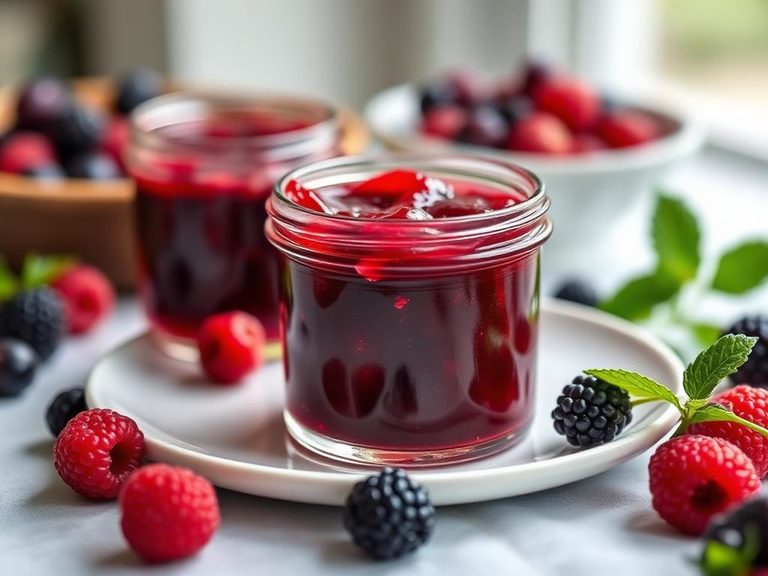
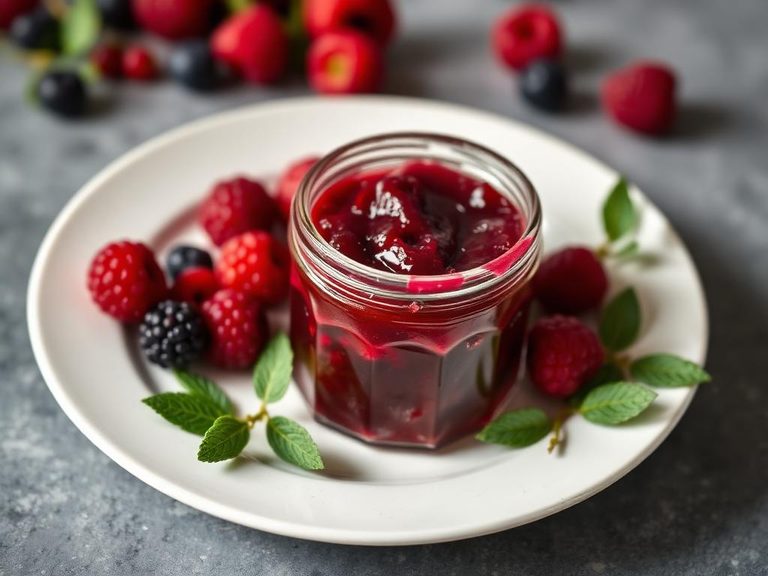
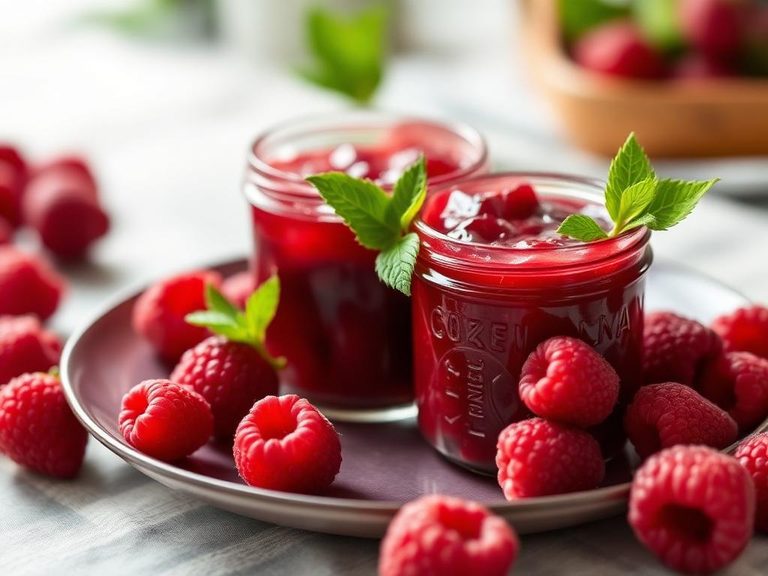
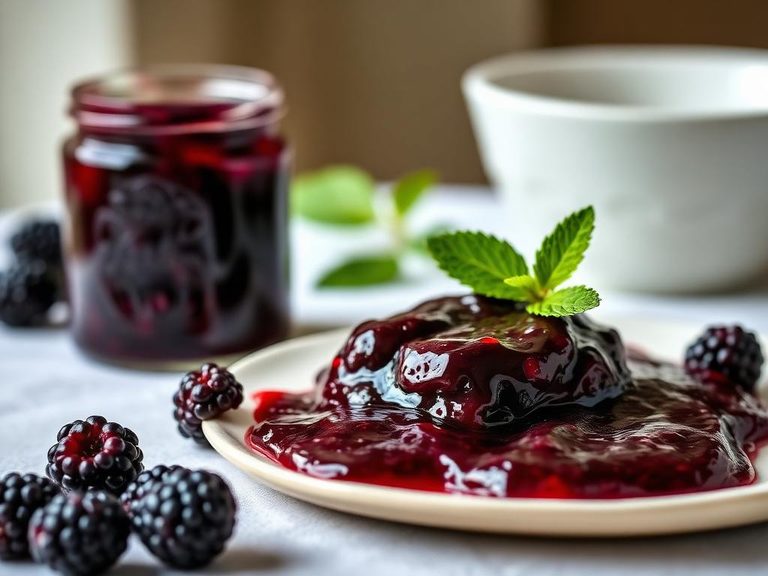
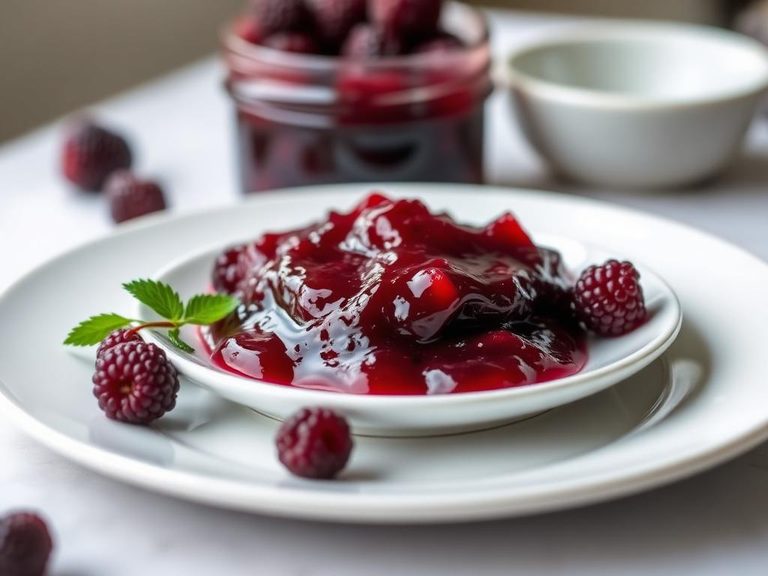
Berry jam or preserves are a sweet, spreadable condiment made by cooking crushed or whole berries with sugar and often a gelling agent like pectin until thickened. This classic preparation is enjoyed worldwide, with regional variations in berry types and sweetness levels. It's a staple for breakfast, baking, and as a glaze or filling in countless desserts.
🍽️ Nutrition at a glance
Berry jam is very high in carbohydrates, primarily from natural fruit sugars and added sugars, with negligible fat and protein. It provides small amounts of vitamins like vitamin C and antioxidants from the berries, but a typical serving (about 1 tablespoon) contains roughly 50-60 calories.
Nutrition breakdown
| Calories | 50 kcal |
| Protein | 0.1 g |
| Carbs | 13 g |
| Fat | 0 g |
| Fiber | 0.3 g |
| Sugar | 12 g |
| Sodium | 5 mg |
| Potassium | 30 mg |
| Vitamin C | 1.5 mg |
| Iron | 0.1 mg |
| Magnesium | 2 mg |
| Phosphorus | 3 mg |
| Calcium | 3 mg |
| Manganese | 0.05 mg |
| Copper | 0.02 mg |
Per 1 tablespoon (20 g) · estimated, varies by recipe
💡 What's interesting
Culturally, jam-making is a traditional method of preserving seasonal fruit harvests for year-round enjoyment, a practice deeply rooted in many cuisines. Nutritionally, while high in sugar, the berries contribute polyphenols and other antioxidants that are retained even after cooking, offering some functional benefits alongside the sweetness.