

Berries, frozen
Common food
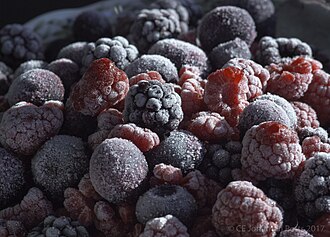
Photo: Wikipedia
Frozen berries are a vibrant, convenient snapshot of summer's harvest, flash-frozen at peak ripeness to lock in a burst of sweet-tart flavor and a juicy, slightly softened texture. Nutritionally, they are a standout source of dietary fiber and natural sugars, offering a low-calorie, nutrient-dense option for any meal or snack.
Calorie split: 5% protein · 89% carbs · 5% fat
↓ Full nutrition💚 Why it's loved
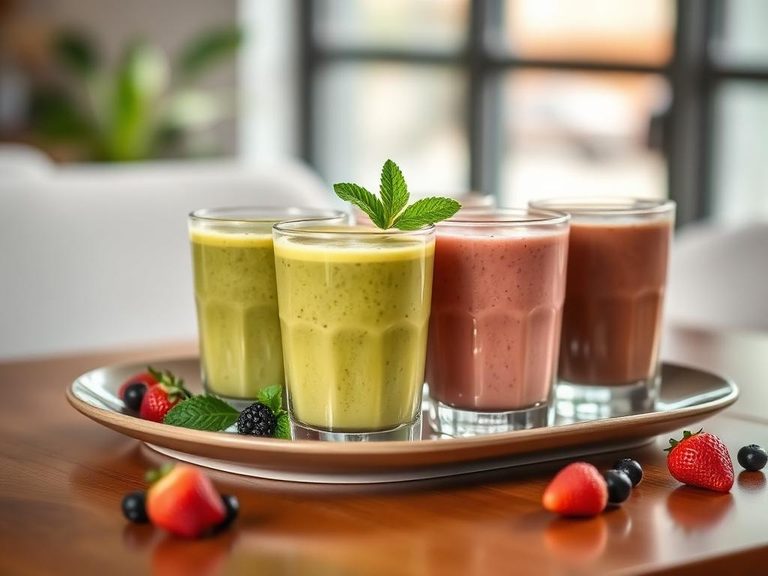
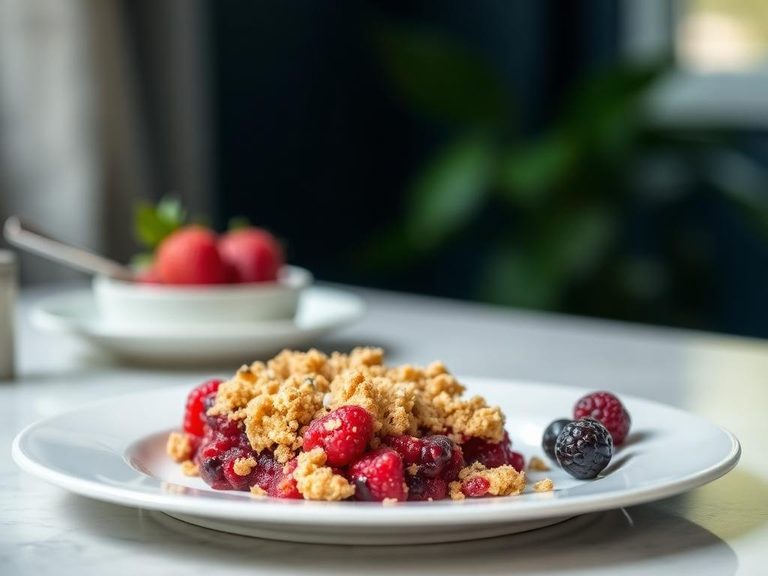
People love frozen berries for their perfect balance of bright acidity and natural sweetness, which intensifies in smoothies, sauces, and baked goods. They are a kitchen staple for their incredible versatility, allowing for instant use in everything from morning oats to elegant desserts.
⚠️ Watch-outs & how to enjoy it better
The high natural sugar content (6.59g per 100g) can cause blood-sugar spikes if consumed in large quantities alone. To counteract this, pair them with a source of protein or fat, like yogurt, nuts, or chia seeds, to slow sugar absorption. The icy texture can also be a drawback for fresh-eating preferences.
Key benefits
- Excellent source of dietary fiber (4.1g per 100g)
- Naturally low in fat (0.34g per 100g)
- Provides quick, natural energy from carbohydrates
- Retains antioxidants and vitamins through flash-freezing
- Convenient year-round access to seasonal fruit
🍽️ Popular dishes
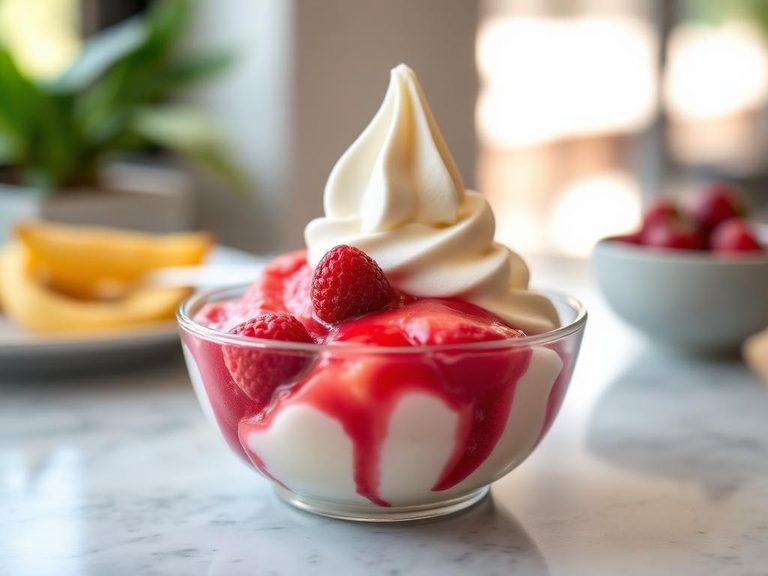
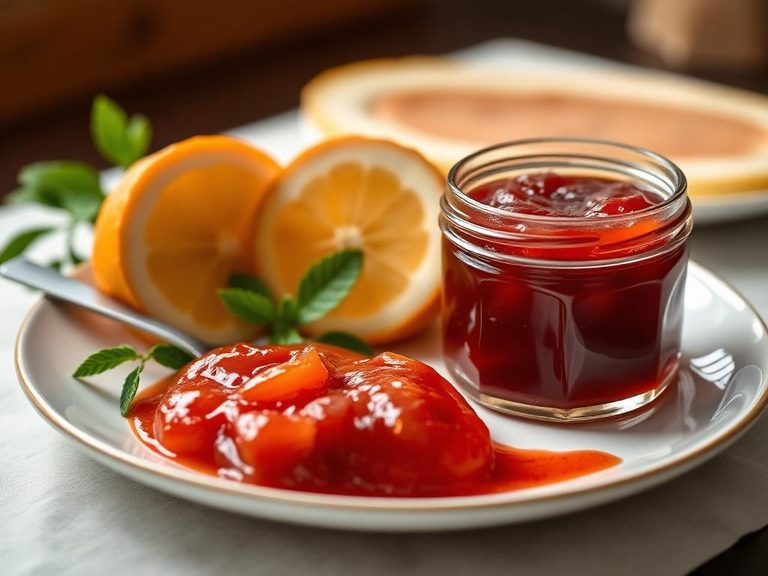

🌍 Where it's eaten
💡 Did you know?
The process of flash-freezing berries was commercially pioneered by Clarence Birdseye in the 1920s, who observed that Inuit fishermen caught in the Arctic found their fish froze solid instantly and tasted fresh upon thawing.
Full nutrition (USDA data · scales with serving)
| Water | 86.1 g |
| Energy | 52.0 kcal |
| Protein | 0.76 g |
| Total lipid (fat) | 0.34 g |
| Carbohydrate, by difference | 12.5 g |
| Fiber, total dietary | 4.1 g |
| Total Sugars | 6.6 g |
| Calcium, Ca | 17.0 mg |
| Iron, Fe | 0.55 mg |
| Magnesium, Mg | 14.0 mg |
| Phosphorus, P | 20.0 mg |
| Potassium, K | 124 mg |
| Sodium, Na | 1.0 mg |
| Zinc, Zn | 0.17 mg |
| Copper, Cu | 0.06 mg |
| Selenium, Se | 0.40 ug |
| Vitamin C, total ascorbic acid | 17.4 mg |
| Thiamin | 0.03 mg |
| Riboflavin | 0.04 mg |
| Niacin | 0.70 mg |
| Vitamin B-6 | 0.05 mg |
| Folate, total | 20.0 ug |
| Folic acid | 0.00 ug |
| Folate, food | 20.0 ug |
| Folate, DFE | 20.0 ug |
| Choline, total | 7.9 mg |
| Vitamin B-12 | 0.00 ug |
| Vitamin B-12, added | 0.00 ug |
| Vitamin A, RAE | 3.0 ug |
| Retinol | 0.00 ug |
| Carotene, beta | 34.0 ug |
| Carotene, alpha | 4.0 ug |
| Cryptoxanthin, beta | 0.00 ug |
| Lycopene | 0.00 ug |
| Lutein + zeaxanthin | 87.0 ug |
| Vitamin E (alpha-tocopherol) | 0.70 mg |
| Vitamin E, added | 0.00 mg |
| Vitamin D (D2 + D3) | 0.00 ug |
| Vitamin K (phylloquinone) | 11.6 ug |
| Alcohol, ethyl | 0.00 g |
| Caffeine | 0.00 mg |
| Theobromine | 0.00 mg |
Fat & fatty acid profile (per 100g)
| Fatty acids, total saturated | 0.02 g |
| SFA 4:0 | 0.00 g |
| SFA 6:0 | 0.00 g |
| SFA 8:0 | 0.00 g |
| SFA 10:0 | 0.00 g |
| SFA 12:0 | 0.00 g |
| SFA 14:0 | 0.00 g |
| SFA 16:0 | 0.01 g |
| SFA 18:0 | 0.01 g |
| Fatty acids, total monounsaturated | 0.05 g |
| MUFA 16:1 | 0.00 g |
| MUFA 18:1 | 0.05 g |
| MUFA 20:1 | 0.00 g |
| MUFA 22:1 | 0.00 g |
| Fatty acids, total polyunsaturated | 0.24 g |
| PUFA 18:2 | 0.15 g |
| PUFA 18:3 | 0.09 g |
| PUFA 18:4 | 0.00 g |
| PUFA 20:4 | 0.00 g |
| PUFA 20:5 n-3 (EPA) | 0.00 g |
| PUFA 22:5 n-3 (DPA) | 0.00 g |
| PUFA 22:6 n-3 (DHA) | 0.00 g |
| Cholesterol | 0.00 mg |
Amino acid profile (per 100g)
Estimated from Babyfood, banana with mixed berries, strained — USDA does not publish this profile for Berries.
| Tryptophan | 0.01 g |
| Threonine | 0.02 g |
| Isoleucine | 0.02 g |
| Leucine | 0.05 g |
| Lysine | 0.03 g |
| Methionine | 0.01 g |
| Cystine | 0.01 g |
| Phenylalanine | 0.04 g |
| Tyrosine | 0.01 g |
| Valine | 0.03 g |
| Arginine | 0.04 g |
| Histidine | 0.05 g |
| Alanine | 0.03 g |
| Aspartic acid | 0.09 g |
| Glutamic acid | 0.11 g |
| Glycine | 0.03 g |
| Proline | 0.02 g |
| Serine | 0.03 g |
FAQ
Are frozen berries as nutritious as fresh?
Yes, often more so. They are typically frozen at peak ripeness, which can lock in more nutrients than fresh berries that may travel long distances and sit on shelves.
Why do my berries get mushy when thawed?
Freezing causes water inside the berry cells to form ice crystals, which can rupture cell walls. This is normal and makes them ideal for cooking, blending, or using in sauces.
Can I bake with frozen berries directly?
Yes, but for items like muffins or cakes, toss them in a little flour first to prevent them from sinking. For pies, you may want to partially thaw and drain excess juice to avoid a soggy filling.
Nutrient density (calculated · NRF9.3)
Nutrient Rich Foods index: beneficial nutrients (protein, fiber, vitamins, minerals) minus saturated fat, added sugar & sodium, per 100 kcal.
NRF9.3 index — Fulgoni, Keast & Drewnowski, 2009. Computed from USDA nutrients.
Weight-loss friendliness (composite index)
Energy density 0.52 kcal/g · 6% calories from protein · 4.1 g fiber · 6.6 g sugar per 100 g.
Composite of energy density (Rolls et al., 1999), protein & fiber satiety, minus sugar. A calculated heuristic — ranks satiety-per-calorie, not a clinical measure.
Dietary load (calculated from USDA values)
Potential renal acid load. Positive = acid-forming, negative = alkaline-forming.
Sodium-to-potassium ratio: 0.01 (lower is better — aim for ≤ 1)
Sodium:potassium per WHO potassium guidance. Computed from USDA nutrients.