

Berries, NFS
Common food
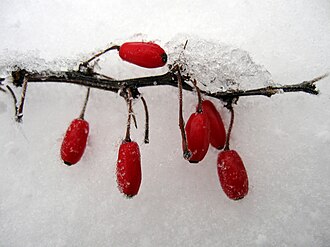
Photo: Wikipedia
A vibrant, jewel-toned mix of nature's candy, berries offer a burst of sweet-tart flavor with a satisfying, juicy texture. This generic category encompasses everything from the bold, earthy notes of blackberries to the bright, floral sweetness of strawberries. Nutritionally, they are a low-calorie powerhouse, delivering a significant dose of fiber and natural sugars for quick energy without the fat.
Calorie split: 6% protein · 89% carbs · 5% fat
↓ Full nutrition💚 Why it's loved
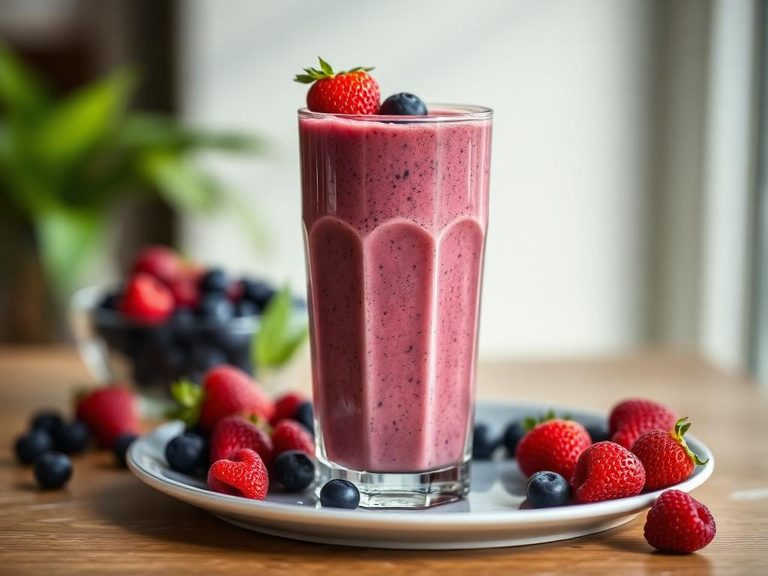
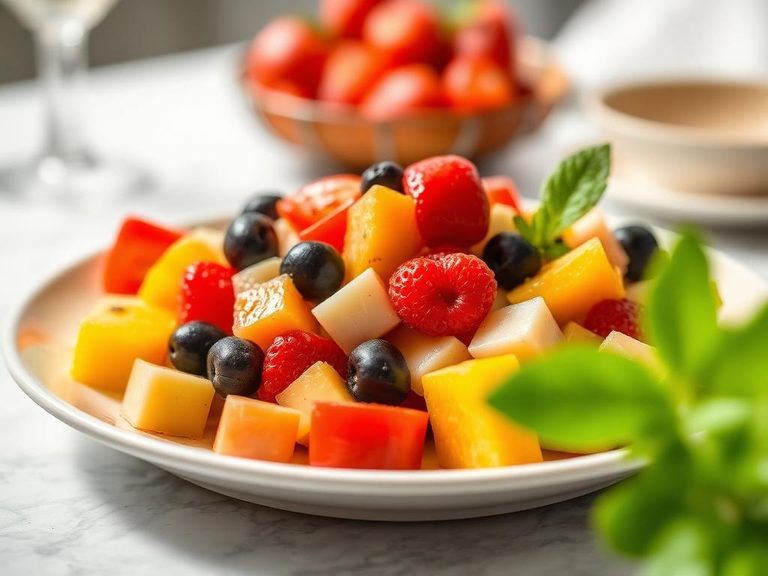
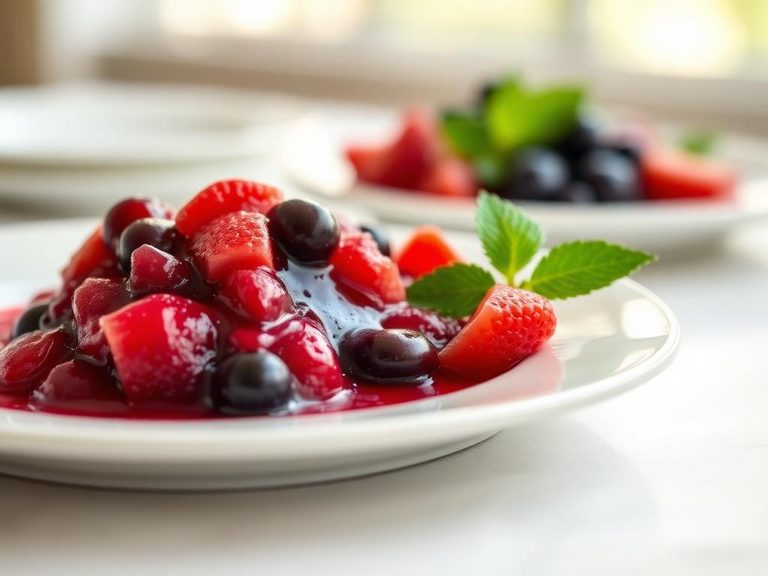
People adore berries for their explosive, sweet-tart flavor and the way they instantly elevate a dish with color and freshness. Their incredible versatility—from smoothies and jams to salads and desserts—makes them a beloved staple in kitchens worldwide.
⚠️ Watch-outs & how to enjoy it better
The natural sugars (6.21g per 100g) can cause blood sugar spikes if consumed in large quantities, especially for those with insulin sensitivity. To counteract this, pair berries with a source of protein or healthy fat (like Greek yogurt or nuts) to slow sugar absorption and promote satiety.
Key benefits
- High in dietary fiber (2g per 100g) to support digestive health.
- Rich in antioxidants like anthocyanins, which give them their deep colors.
- Very low in fat (0.25g per 100g) and calories (44 kcal).
- Provides natural sugars for a quick energy boost.
- Versatile for both sweet and savory culinary applications.
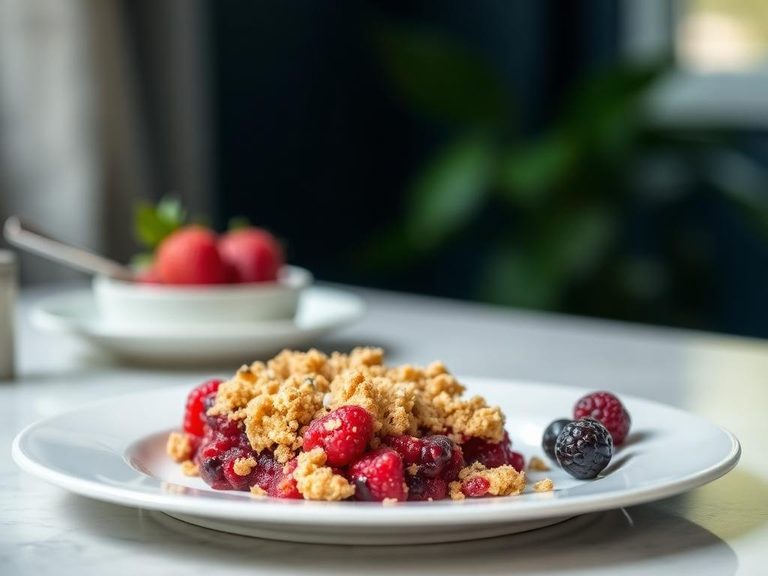
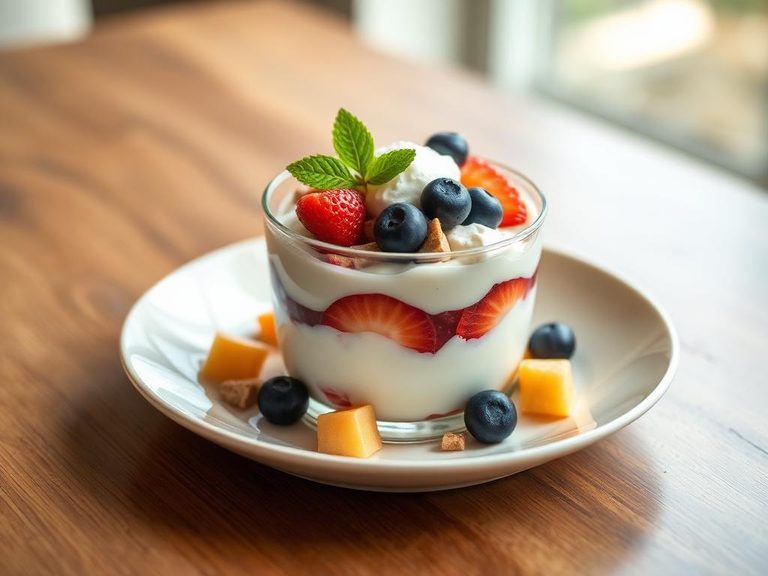
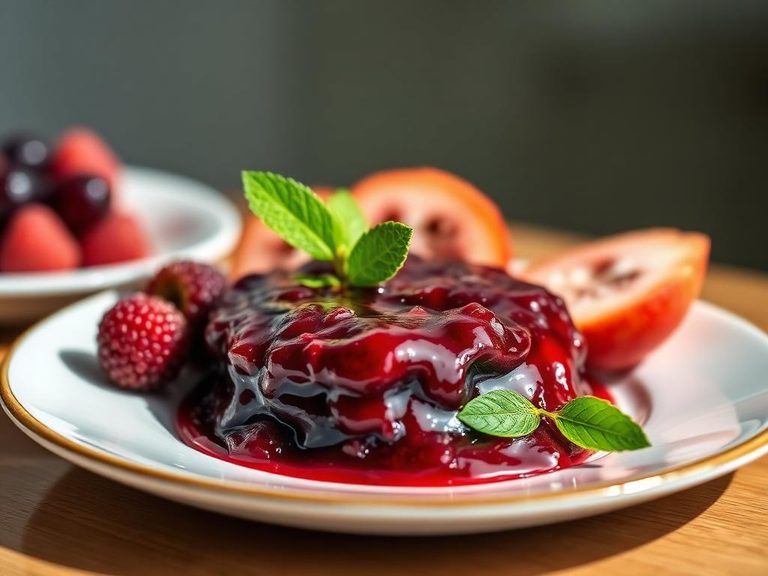
🍽️ Popular dishes
🌍 Where it's eaten
💡 Did you know?
The tiny seeds on the outside of a strawberry are actually the plant's true fruits, called achenes, each containing a single seed.
Full nutrition (USDA data · scales with serving)
| Water | 88.8 g |
| Energy | 44.0 kcal |
| Protein | 0.66 g |
| Total lipid (fat) | 0.25 g |
| Carbohydrate, by difference | 9.9 g |
| Fiber, total dietary | 2.0 g |
| Total Sugars | 6.2 g |
| Calcium, Ca | 16.0 mg |
| Iron, Fe | 0.28 mg |
| Magnesium, Mg | 11.0 mg |
| Phosphorus, P | 20.0 mg |
| Potassium, K | 138 mg |
| Sodium, Na | 0.00 mg |
| Zinc, Zn | 0.10 mg |
| Copper, Cu | 0.04 mg |
| Selenium, Se | 0.30 ug |
| Vitamin C, total ascorbic acid | 44.2 mg |
| Thiamin | 0.03 mg |
| Riboflavin | 0.02 mg |
| Niacin | 0.40 mg |
| Vitamin B-6 | 0.04 mg |
| Folate, total | 7.0 ug |
| Folic acid | 0.00 ug |
| Folate, food | 7.0 ug |
| Folate, DFE | 7.0 ug |
| Choline, total | 5.8 mg |
| Vitamin B-12 | 0.00 ug |
| Vitamin B-12, added | 0.00 ug |
| Vitamin A, RAE | 2.0 ug |
| Retinol | 0.00 ug |
| Carotene, beta | 14.0 ug |
| Carotene, alpha | 0.00 ug |
| Cryptoxanthin, beta | 0.00 ug |
| Lycopene | 0.00 ug |
| Lutein + zeaxanthin | 39.0 ug |
| Vitamin E (alpha-tocopherol) | 0.37 mg |
| Vitamin E, added | 0.00 mg |
| Vitamin D (D2 + D3) | 0.00 ug |
| Vitamin K (phylloquinone) | 7.3 ug |
| Alcohol, ethyl | 0.00 g |
| Caffeine | 0.00 mg |
| Theobromine | 0.00 mg |
Fat & fatty acid profile (per 100g)
| Fatty acids, total saturated | 0.01 g |
| SFA 4:0 | 0.00 g |
| SFA 6:0 | 0.00 g |
| SFA 8:0 | 0.00 g |
| SFA 10:0 | 0.00 g |
| SFA 12:0 | 0.00 g |
| SFA 14:0 | 0.00 g |
| SFA 16:0 | 0.01 g |
| SFA 18:0 | 0.00 g |
| Fatty acids, total monounsaturated | 0.01 g |
| MUFA 16:1 | 0.00 g |
| MUFA 18:1 | 0.01 g |
| MUFA 20:1 | 0.00 g |
| MUFA 22:1 | 0.00 g |
| Fatty acids, total polyunsaturated | 0.04 g |
| PUFA 18:2 | 0.03 g |
| PUFA 18:3 | 0.02 g |
| PUFA 18:4 | 0.00 g |
| PUFA 20:4 | 0.00 g |
| PUFA 20:5 n-3 (EPA) | 0.00 g |
| PUFA 22:5 n-3 (DPA) | 0.00 g |
| PUFA 22:6 n-3 (DHA) | 0.00 g |
| Cholesterol | 0.00 mg |
Amino acid profile (per 100g)
Estimated from Babyfood, banana with mixed berries, strained — USDA does not publish this profile for Berries.
| Tryptophan | 0.01 g |
| Threonine | 0.02 g |
| Isoleucine | 0.02 g |
| Leucine | 0.05 g |
| Lysine | 0.03 g |
| Methionine | 0.01 g |
| Cystine | 0.01 g |
| Phenylalanine | 0.04 g |
| Tyrosine | 0.01 g |
| Valine | 0.03 g |
| Arginine | 0.04 g |
| Histidine | 0.05 g |
| Alanine | 0.03 g |
| Aspartic acid | 0.09 g |
| Glutamic acid | 0.11 g |
| Glycine | 0.03 g |
| Proline | 0.02 g |
| Serine | 0.03 g |
FAQ
Are berries high in sugar?
While berries contain natural sugars (about 6.2g per 100g), they are considered low-glycemic due to their high fiber content, which helps moderate blood sugar response.
Can I eat berries if I have diabetes?
Yes, berries are generally a good choice for people with diabetes because they are low in calories and high in fiber. However, portion control is still important, and it's best to pair them with protein or fat.
What is the best way to store fresh berries?
Store berries in a single layer on a paper towel-lined container in the refrigerator. Do not wash them until just before eating to prevent mold and spoilage.
Nutrient density (calculated · NRF9.3)
Nutrient Rich Foods index: beneficial nutrients (protein, fiber, vitamins, minerals) minus saturated fat, added sugar & sodium, per 100 kcal.
NRF9.3 index — Fulgoni, Keast & Drewnowski, 2009. Computed from USDA nutrients.
Weight-loss friendliness (composite index)
Energy density 0.44 kcal/g · 6% calories from protein · 2.0 g fiber · 6.2 g sugar per 100 g.
Composite of energy density (Rolls et al., 1999), protein & fiber satiety, minus sugar. A calculated heuristic — ranks satiety-per-calorie, not a clinical measure.
Dietary load (calculated from USDA values)
Potential renal acid load. Positive = acid-forming, negative = alkaline-forming.
Sodium-to-potassium ratio: 0.00 (lower is better — aim for ≤ 1)
Sodium:potassium per WHO potassium guidance. Computed from USDA nutrients.