Berry Compote
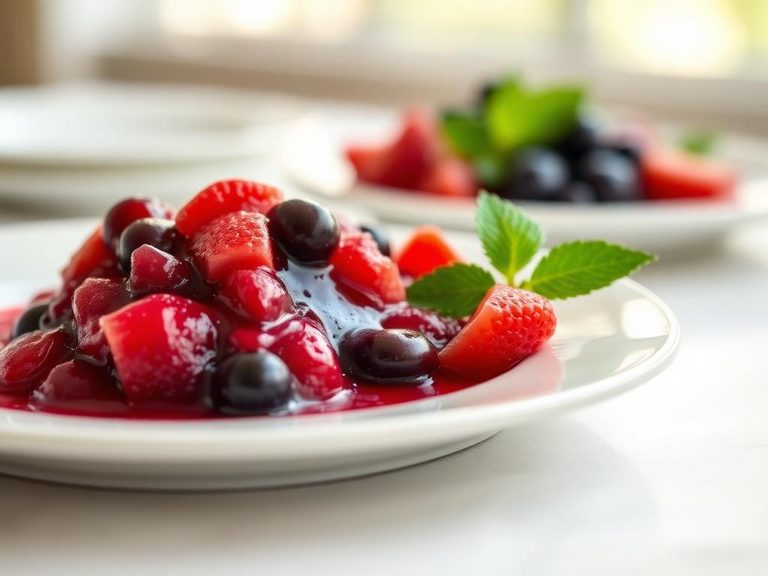
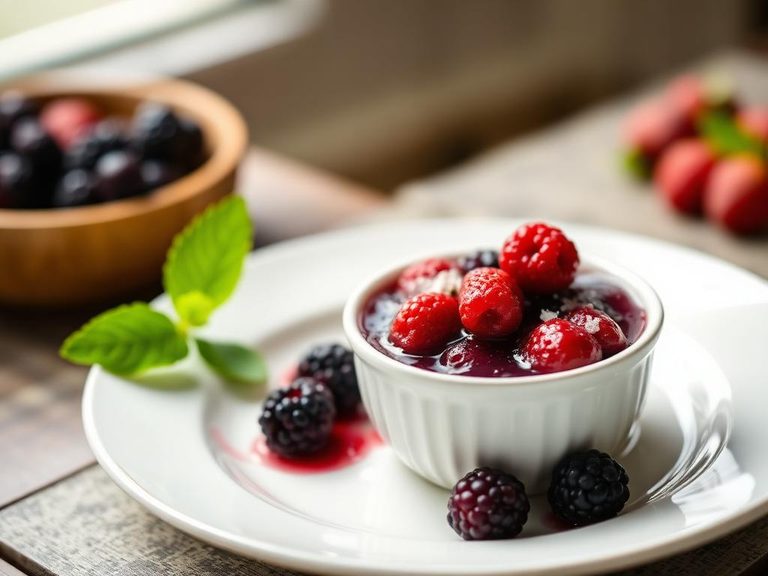
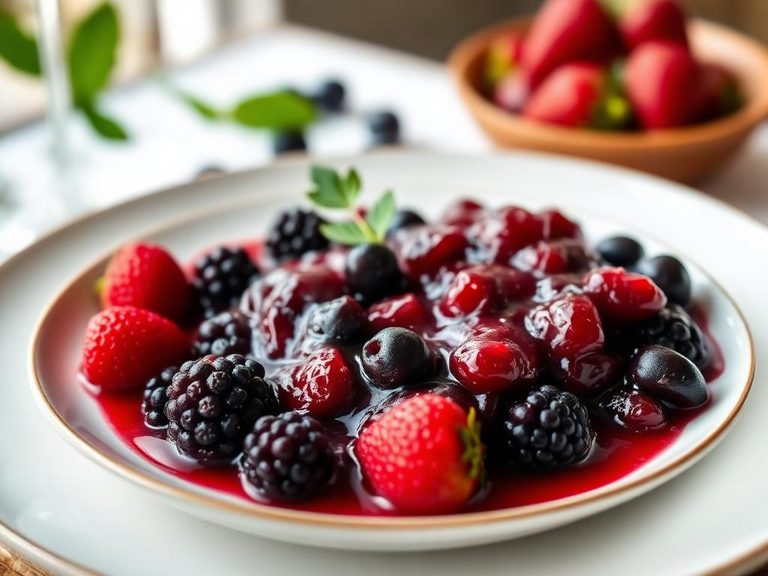
Berry compote is a simple, versatile fruit dish made by gently simmering berries—such as strawberries, blueberries, raspberries, or blackberries—with a sweetener like sugar or honey, and often a splash of lemon juice or water until they break down into a thick, saucy consistency. It has roots in European and North American home cooking, where it was a traditional way to preserve seasonal fruit before modern canning. Today, it's enjoyed worldwide as a topping for pancakes, yogurt, ice cream, or desserts.
🍽️ Nutrition at a glance
Berry compote is generally high in carbohydrates, primarily from the natural sugars in the fruit and any added sweetener, with minimal fat and protein. It provides a good source of dietary fiber, vitamin C, and antioxidants like anthocyanins, with a typical serving (about 1/4 cup) containing roughly 50-80 calories.
Nutrition breakdown
| Calories | 120 kcal |
| Protein | 1.5 g |
| Carbs | 28 g |
| Fat | 0.5 g |
| Fiber | 5 g |
| Sugar | 20 g |
| Sodium | 10 mg |
| Potassium | 350 mg |
| Vitamin C | 25 mg |
| Manganese | 0.8 mg |
| Vitamin K | 15 mcg |
| Folate | 30 mcg |
| Iron | 1.2 mg |
| Vitamin E | 1.5 mg |
| Magnesium | 20 mg |
Per 1 cup (240 g) · estimated, varies by recipe
💡 What's interesting
Culturally, compote has been a staple in European cuisine for centuries, often served as a light dessert or digestive aid, reflecting a tradition of using simple preparations to highlight seasonal produce. Nutritionally, the cooking process can make some antioxidants more bioavailable, while the natural pectin in berries helps create its jam-like texture without needing additional thickeners.